Home
» 🎮 Esports
»
Master League of Legends Skillshots: 7 Drills to Improve Your Accuracy
Master League of Legends Skillshots: 7 Drills to Improve Your Accuracy
Master League of Legends Skillshots With 7 Repeatable Practice Drills
To land more League of Legends skillshots, practice one variable at a time: first aim at a fixed target, then account for movement, minions, vision, and an opponent who can react. Use the Practice Tool for controlled reps and a custom game with a friend for realistic movement. These seven drills build the habits behind accurate casts; no setting or shortcut guarantees every hit.
What makes a skillshot hard to land?
A skillshot is an ability aimed at a direction or area instead of being locked directly onto an enemy. It can miss because the target moves during the cast or projectile travel, because another unit blocks the path, or because the angle is wrong. Some abilities are line projectiles, while others target an area, so confirm the spell’s current range, cast time, and collision rules in the client. The drills below focus mainly on directional skillshots such as Ezreal’s Mystic Shot and Ahri’s Charm.
Set up a useful skillshot practice session
Choose one champion and one ability to start. Keep the spell and cast settings consistent while you learn its timing.
Use a stationary target dummy for aim and range. For moving targets, ask a friend to join a custom game and agree on simple movement patterns.
Count hits and attempts by condition—stationary, moving, or screened by minions—and note why each miss happened. There is no universal hit-rate target that applies to every spell and matchup.
Riot’s Patch 25.21 notes describe champion access in solo Practice Tool, while Patch 26.8 notes document champion-specific keybind overrides, including Smart Cast options. Check the settings available in your current client, and practice with the cast style you actually intend to use.
7 League of Legends skillshot drills
1. Calibrate aim against a stationary target
In Practice Tool, fire 10 to 15 casts at a target dummy from close, medium, and near-maximum range. Repeat from two different angles. Make each cast deliberate: place the cursor, release the ability, and watch where the projectile travels. If you miss, adjust the cursor by a small amount instead of changing your mouse sensitivity or making a large flick. This baseline helps separate aim errors from prediction errors.
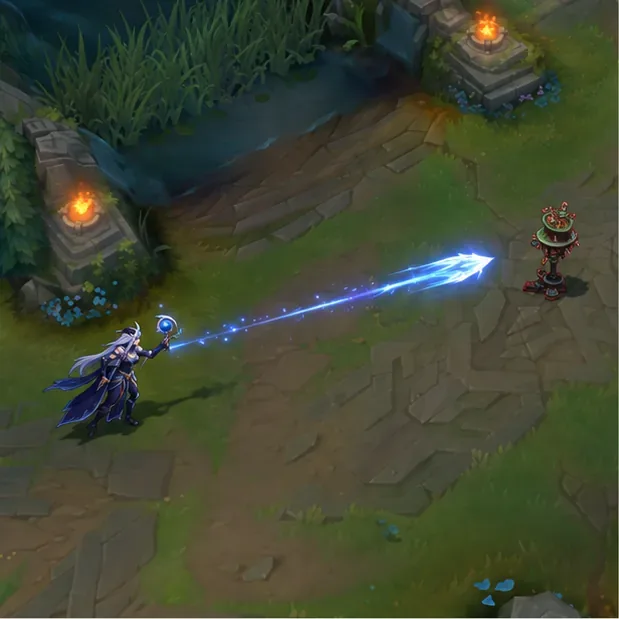
Use a stationary target to isolate aim direction, range, and cast timing before adding movement.
2. Lead a target moving in a straight line
Have a partner walk across the lane at a steady pace, then reverse direction and repeat. Aim at the point the opponent will reach when the ability arrives, not where the champion is when you press the key. Begin at medium range; increase the distance only after the timing feels predictable. This teaches you to account for projectile speed and travel time without adding sudden jukes.
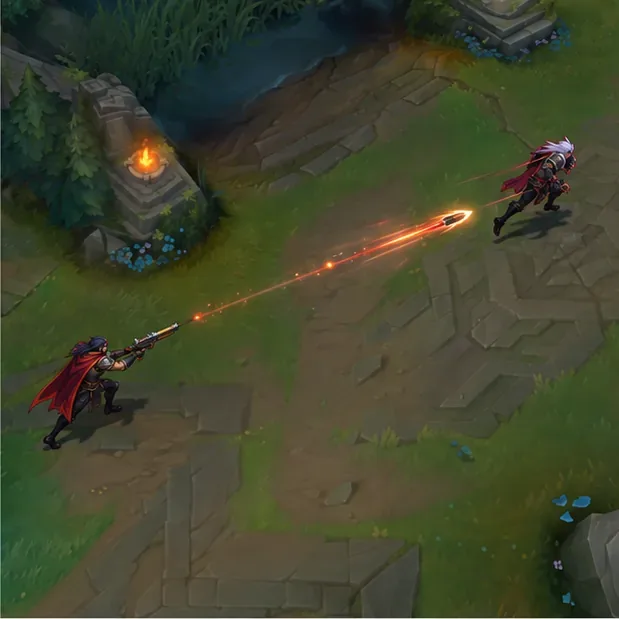
Lead the target’s path so the projectile and opponent meet at the same point.
3. Move, stop, cast, and move again
Practice acquiring a target after repositioning. Walk a short side-to-side path, pause briefly to cast, then resume movement as soon as the ability is released. Start with a predictable partner and repeat the same sequence in both directions. The goal is controlled movement between casts—not forcing a spell during an animation or clicking faster than you can aim. This is useful for poke in lane, where standing still can make your own movement easy to read.
Re-acquire the target after each movement, then cast with a clear cursor placement.
4. Read the sidestep instead of chasing the cursor
Ask your partner to walk normally, then sidestep at a varied moment. Do not fire at the first position you see. Watch for a repeated dodge direction, wait for the movement to commit, and aim along the opponent’s next path. Change your own timing after several attempts so the target cannot win by repeating one dodge. Review misses as “shot too early,” “led the wrong way,” or “aimed at current position.”
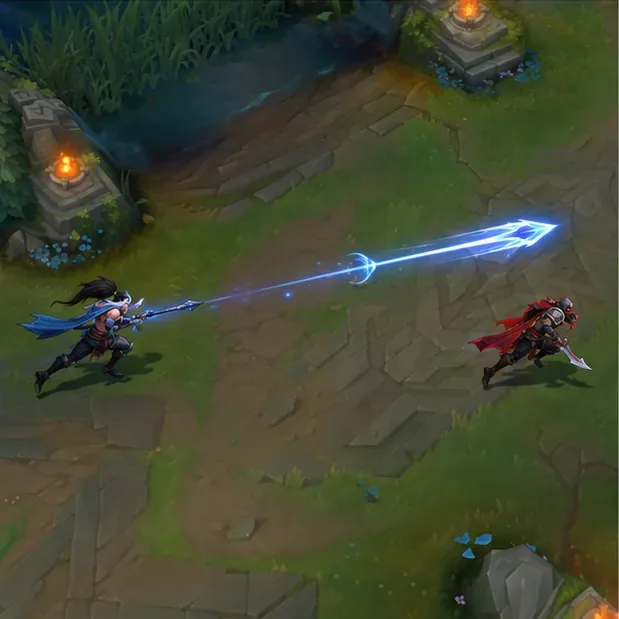
A changed angle or delayed cast can catch an opponent who sidesteps predictably.
5. Learn minion collision and lane openings
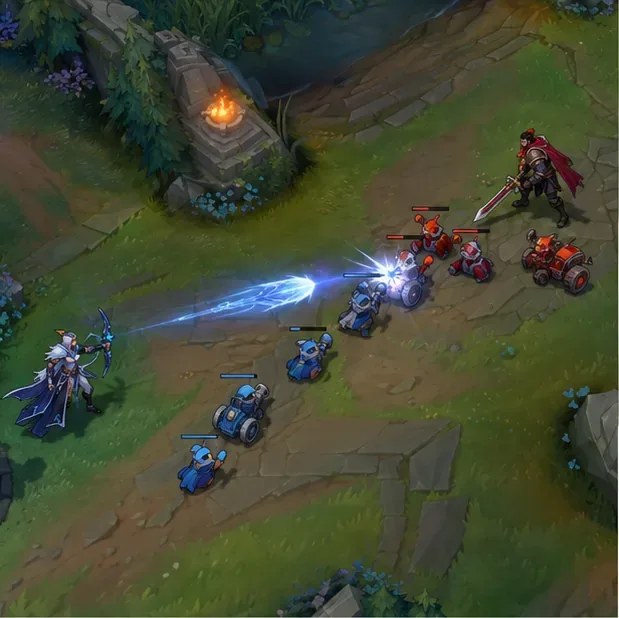
In a custom game, put a partner behind a minion wave and practice with an ability whose projectile is stopped by the first unit it hits. Fire once with the lane blocked, then wait for a gap or move to a different angle. Repeat as the wave changes. Not every skillshot has the same collision behavior, so test the exact spell you plan to use. The lesson is to read the line before casting, not to throw abilities through a crowded wave and hope.
A front-line minion can intercept a collision-based projectile before it reaches a champion.
6. Practice brush angles with a clear line of fire
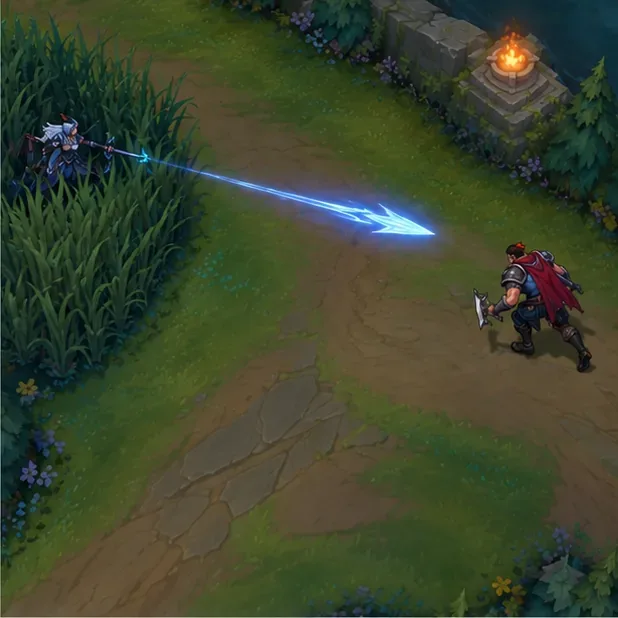
Set up near a brush or lane corner. Have your partner step into a visible, open path, then cast from a new angle. If you need vision to target the opponent, use a ward or wait until they are visible; do not assume you can aim accurately at an unseen target. A wall blocks many projectiles, although individual spells can have special rules, so reposition whenever terrain obstructs the path. The drill is about using a legal angle and timing the moment the opponent appears—not firing through stone.
Practice a brush-to-lane angle with a visible target and an unobstructed path.
7. Run a reactive exchange: dodge, then follow up
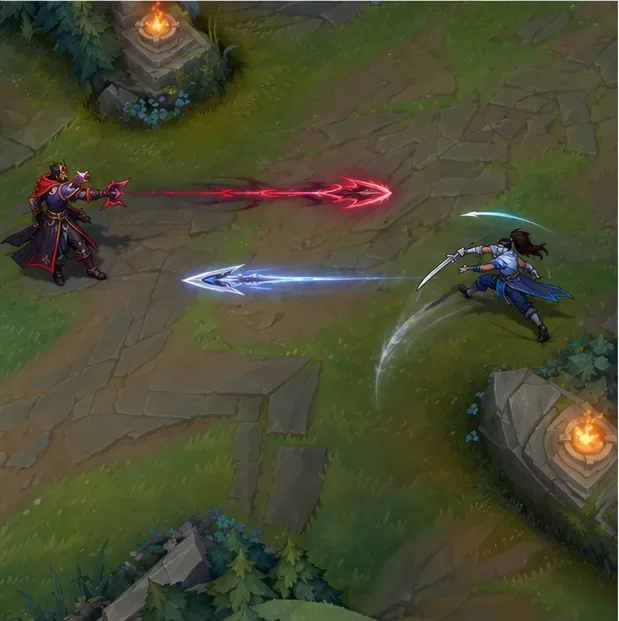
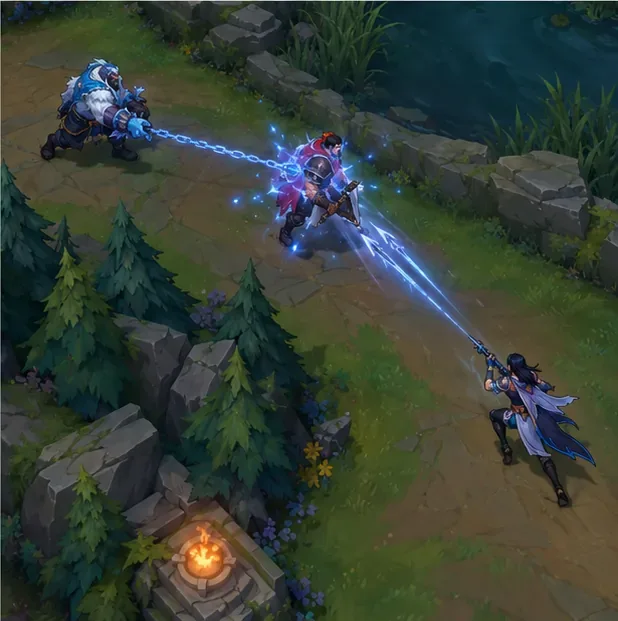
Use a friend in a custom game for eight short exchanges. The target dodges one incoming skillshot; the caster repositions and answers with a single return cast. Then switch roles. In the second half, practice a two-spell sequence: land a reliable first hit or crowd-control effect, confirm the connection, and only then aim the follow-up. This builds patience around cooldowns and reactions. A combo is not accurate just because you cast several abilities quickly.
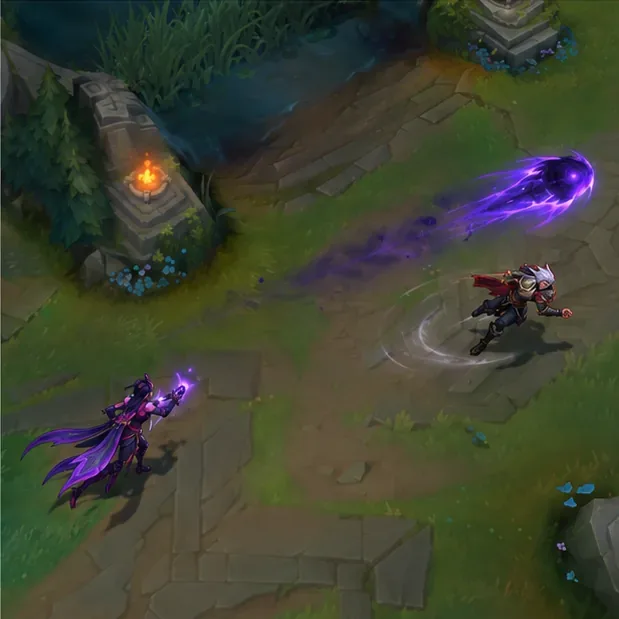
Alternate one incoming cast with one response to practice dodging and returning fire.After the first ability connects, take a moment to line up the next spell.
Track improvement without chasing a made-up percentage
Keep a simple note after each session: spell, range, target movement, whether a minion crossed the path, and the reason for each miss. Compare like with like—for example, medium-range straight-line attempts this week against the same drill next week. A high hit rate against a stationary dummy does not mean you will land every cast in a real fight, and a lower rate on a narrow long-range skillshot does not automatically mean your mechanics are poor. The useful signal is whether you are making fewer of the same mistakes.
When a cast misses, change one thing on the next attempt: lead distance, angle, release timing, or position. Leave DPI and sensitivity alone unless you have a separate reason to adjust them. With consistent LoL skillshot drills, your aim becomes easier to diagnose, your predictions become more intentional, and you will choose better moments to throw the ability.