Home
» 🎮 Esports
»
How to Fix the Minecraft Evoker Spell Error in Modded Worlds
How to Fix the Minecraft Evoker Spell Error in Modded Worlds
How to Fix the Minecraft Evoker Spell Error in Modded Worlds
If an Evoker stops summoning Vexes or producing fangs in a modded world, first check whether the problem also happens in a clean vanilla test world. If it only happens with a modpack, verify that Minecraft, the mod loader, each mod, and its dependencies target compatible versions. Then inspect latest.log and disable suspected mods or datapacks in a copied instance until you can reproduce the conflict.
The phrase “Coding Evoker Minecraft Error: Spell Struggles” is not a documented, universal Minecraft error name that I could verify in official Mojang or loader documentation. An Evoker is a vanilla illager that can summon Vexes and attack with fangs, but a failure in a modded world needs to be diagnosed from the specific setup and log. Mojang’s Evoker overview describes those attacks.
One claim in the older version of this guide needs correction: Minecraft Java Edition 1.21.1’s official notes describe a security hotfix and added language support, not an Evoker pathfinding change. That release note does not support the earlier claim that 1.21.1 introduced the spell problem. See Mojang’s 1.21.1 notes.
Before You Change Anything
This guide focuses on Minecraft Java Edition, because Fabric, Forge, and NeoForge mods run on Java Edition. If you play Bedrock Edition, skip the Java mod-loader steps and check add-ons or behavior packs using the documentation for that pack.
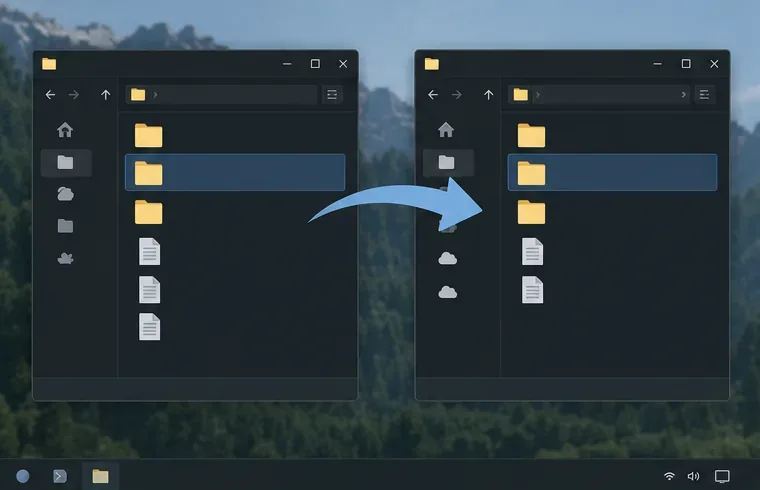
Make a copy of the world and the full modded instance before troubleshooting. Keep the copy separate from the live save, and record the Minecraft version, loader and loader version, mod list, and enabled datapacks. Avoid deleting guessed folders or editing entity data based on an unverified command. A backup lets you test changes without risking your main world.
A generic file manager illustration of copying a world save before changing a modded setup.
Step-by-Step Fixes for Minecraft Evoker Spell Problems
1. Match Minecraft, the loader, and every mod
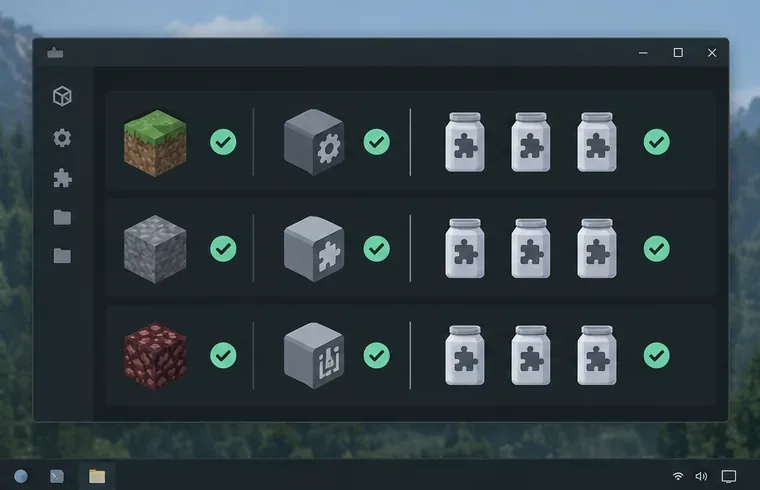
Check the version shown by the launcher profile and compare it with the version required by each mod. Confirm that all installed mods are built for the same Minecraft release and the same loader. Do not combine Fabric mods with a Forge or NeoForge profile unless a mod explicitly documents compatibility. Install required dependencies, such as Fabric API when the mod author lists it.
Updating everything to the newest release at once can make a working world harder to diagnose. Change one component at a time in the copied instance. Fabric’s mod installation guide specifically advises checking Minecraft version, loader, and edition compatibility. Forge also documents versioning as tied to Minecraft and API compatibility in its versioning guide.
A simplified compatibility checklist: the game version, loader, and each mod must belong to the same supported setup.
2. Compare a clean test world with the affected world
Launch a separate vanilla profile with no mods, then create a temporary test world. Make sure hostile mobs can act and that the Evoker has a valid target. If commands are enabled, summon one with /summon minecraft:evoker ~ ~ ~. Mojang documents /summon as a command for creating an entity; it does not by itself prove that an attack is working. Allow commands in the test world or use the required server permissions. See the official Minecraft command guide.
Observe the Evoker in a controlled encounter and compare the result with the modded instance. If it behaves normally in vanilla but not with the modpack, concentrate on the loader, entity or AI mods, raid changes, and datapacks. If the problem happens in an unmodded world too, write down the exact game version and report it through Minecraft’s official bug-reporting channel.
3. Inspect the log around the failed encounter
Reproduce the issue once, close the game, and open the log from that same session. With the official launcher, the current log is usually .minecraft/logs/latest.log on Windows, macOS, or Linux; crash reports are stored separately in crash-reports. Third-party launchers may use a different game directory. Fabric’s documentation explains where to find logs and how to read crash reports.
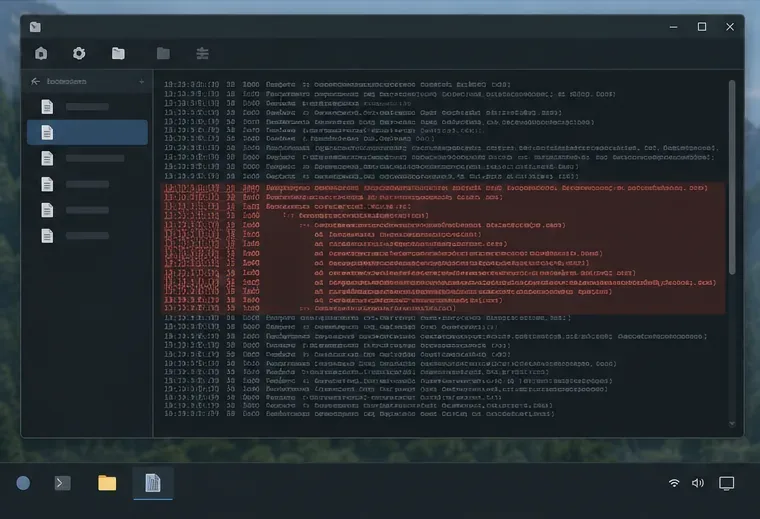
Search near the time the Evoker stopped acting for an exception, a mod ID, a mixin handler, or a class named in the stack trace. A crash report can identify the code path involved, but a mod mentioned first is not automatically the only cause; two mods can conflict. Do not rely on a made-up signature such as EvokerSpellFailedException or assume every setup prints the same “Spell casting failed” line. The actual message and stack trace matter.
A generic log viewer illustration showing how to focus on the error block around the time the Evoker problem occurred.
4. Isolate mods and datapacks safely
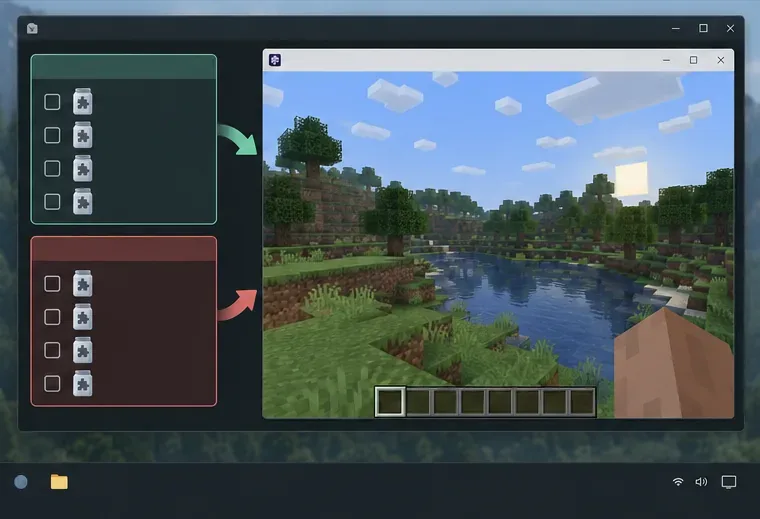
Work only in the copied instance. Temporarily move suspected entity, AI, raid, or compatibility mods out of that test profile, then reproduce the same encounter. If the issue disappears, add the removed mods back in small groups until it returns. This narrows the conflict to a specific mod or combination. Apply the same controlled test to datapacks that change raids, mobs, or entity behavior.
Keep a short note of each change and result. Do not remove mods from the only copy of a long-running world: mods can add registered blocks, items, or entities, so loading a save without them may change or remove world data. After identifying a likely cause, check the mod author’s page or issue tracker for a compatible build or known conflict. Share the exact versions and relevant log excerpt when asking for help.
A generic test setup illustration: separate mod groups and use a clean world to narrow down the cause.
For Mod Developers: Reproduce Before Patching
If you maintain the mod, reproduce the behavior with the same Minecraft release, loader, and dependency set before changing Evoker code. Compare a minimal mod set with the affected pack and inspect the stack trace around the entity or AI behavior that fails. Check that the code targets the correct mappings and loader API for that game version. The older suggestion to override a method named Evoker.castSpell is not a universal fix: method names and APIs vary by version and mapping set, and clearing unrelated brain memories can create new behavior problems.
Create a small test case that states the exact versions, steps, expected result, and observed result. If only one mod triggers the issue, report it to that mod’s author with the log and a minimal reproduction. If vanilla also reproduces the issue, send the report to Mojang with the game version and steps.
Fixes to Avoid
Do not delete an assumed .minecraft/config/evoker_mods folder unless the mod’s own documentation names it and explains the effect.
Do not run a broad /data modify command against an Evoker’s brain from an unverified guide. The command may be invalid for that version or may damage entity behavior.
Do not install extra APIs such as Architectury or Cloth Config unless the specific mod requires them. They are dependencies for some mods, not general-purpose fixes for spell behavior.
Do not reset the world or purge Evokers with an editor as a first response. Test in a copy and identify the cause before attempting any destructive repair.
What to Include When You Ask for Help
Provide the Minecraft edition and version, loader and loader version, mod list, enabled datapacks, the steps that reproduce the problem, whether a clean vanilla test works, and the relevant latest.log or crash-report section. Remove personal details such as your operating-system username or private server address before sharing logs publicly. This gives the mod author or support team evidence to investigate the specific Minecraft Evoker spell error instead of guessing at a universal “coding” bug.