Stardew Valley Crops Guide: Seasons, Seeds & Profit (2026)
The best way to make money from Stardew Valley crops is to match seeds to the season, leave enough days for them to mature, and choose crops that fit your budget and watering capacity. This guide compares useful crops by season, shows which seeds are worth watching for, and explains when raw produce, Kegs, or Preserves Jars give you better returns.
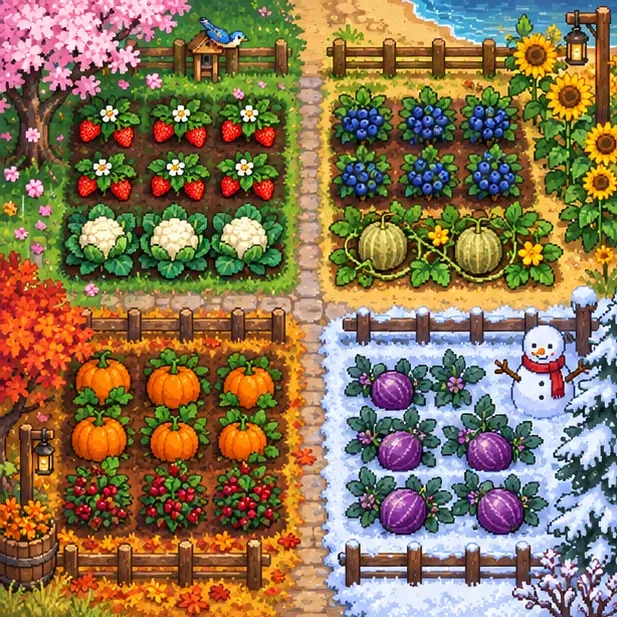
Each season lasts 28 days. Most crops die when the calendar turns if they cannot grow in the next season, so a late seed purchase can waste your gold. The game’s 1.6 update added Carrots, Summer Squash, Broccoli, and Powdermelon; these seeds are not sold at regular shops. The official Stardew Valley 1.6 changelog lists the new crops, while the community-maintained crop reference provides current growth times and base prices.
How crop seasons, watering, and harvests work
- Use the Hoe on clear ground, plant seeds in the tilled soil, then water most crops daily. Rain waters outdoor crops, and sprinklers take over once you unlock them. Fiber Seeds are a useful exception: they grow in any season, including winter, and do not need watering.
- An unwatered crop normally does not die; it loses a day of growth. Winter Seeds still need water even when it is snowing. A crop’s listed growth time is the time to its first harvest; a multi-harvest crop then regrows on its own schedule.
- Count the remaining days before buying seeds. Cross-season crops such as Corn and Wheat can continue across seasons in which they grow, but most seasonal crops wither at the transition.
- Protect large plots from crows with Scarecrows. A regular Scarecrow protects crops within an 8-tile radius; use the coverage guide to space several across a wide field.
Best Stardew Valley crops by season
These are practical Stardew Valley crop profit choices, not a promise that one seed is always best. The table uses regular-quality base sell prices before the Tiller profession, fertilizer, or artisan processing. It shows the price of one harvested item; multi-harvest plants can produce several items or pick again later.
| Season | Crop | Seed cost or source | First harvest and regrowth | Base sell price and use |
|---|---|---|---|---|
| Spring | Parsnip | 20g at Pierre’s | 4 days | 35g; fast, low-cost starter crop. |
| Spring | Potato | 50g at Pierre’s | 6 days | 80g each; a harvest can yield an extra potato. |
| Spring | Strawberry | 100g at the Egg Festival on Spring 13 | 8 days, then every 4 days | 120g each; plant after the festival for two possible harvests in year one. Save seeds for a full-season crop next spring. |
| Spring | Carrot | Not sold in shops; watch for Carrot Seeds | 3 days | 35g; a quick option from a seed drop. |
| Summer | Blueberry | 80g at Pierre’s | 13 days, then every 4 days | 50g per berry; each plant produces 3 berries at a harvest. |
| Summer | Starfruit | 400g at the Oasis | 13 days | 750g; a high-value single harvest that is especially useful for wine. |
| Summer | Summer Squash | Not sold in shops; watch for Summer Squash Seeds | 6 days, then every 3 days | 45g; a repeat-harvest crop added in version 1.6. |
| Summer | Hops | 60g at Pierre’s | 11 days, then daily | 25g; Kegs turn Hops into Pale Ale. Trellises block walking through the planted tile. |
| Fall | Cranberry | 240g at Pierre’s | 7 days, then every 5 days | 75g per berry; each plant produces 2 berries at a harvest. |
| Fall | Pumpkin | 100g at Pierre’s | 13 days | 320g; high-value single harvest and one of the crops that can form a Giant Crop. |
| Fall | Broccoli | Not sold in shops; watch for Broccoli Seeds | 8 days, then every 4 days | 70g; a repeat-harvest crop added in version 1.6. |
| Winter | Powdermelon | Not sold in shops; seeds come from special sources | 7 days | 60g; the winter-only melon added in version 1.6. |
For the full seasonal seed lists and their growing schedules, compare the Spring, Summer, Fall, and Winter tables. Winter Seeds grow seasonal forage rather than one fixed crop, while Fiber Seeds can grow in every season. New-crop seeds such as Carrot, Summer Squash, Broccoli, and Powdermelon can come from seed spots and other in-game sources instead of Pierre or JojaMart.
A simple planting routine
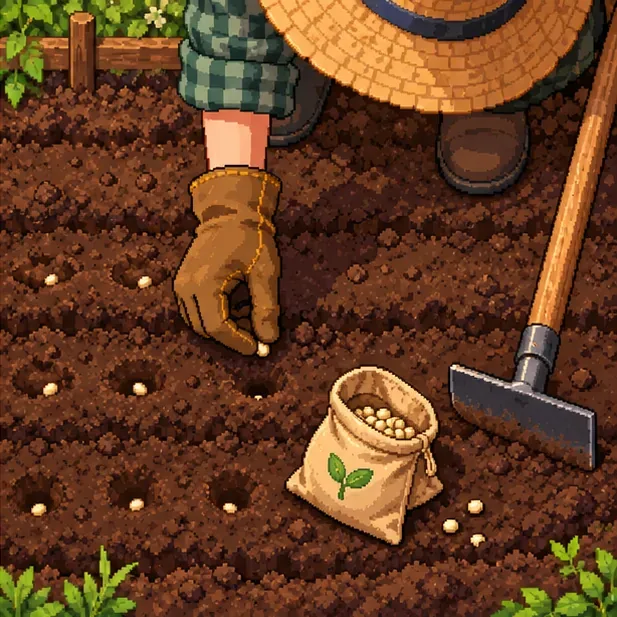
- Choose a crop and count the days. Check the season and seed description before spending gold. Leave enough time for the first harvest, and account for repeat harvests only when the crop’s regrowth schedule fits before the season ends.
- Clear and till the plot. Remove rocks, weeds, and stumps, then hoe the tiles you plan to plant. Leave paths so you can move around trellises such as Hops.
- Apply fertilizer if the crop merits it. Put fertilizer on tilled soil before the crop sprouts. Basic or Quality Fertilizer improves the odds of higher-quality produce; Speed-Gro reduces time to the first harvest. Fertilizer does not guarantee a premium crop, so early-game players may get more value from buying extra seeds or upgrading watering.
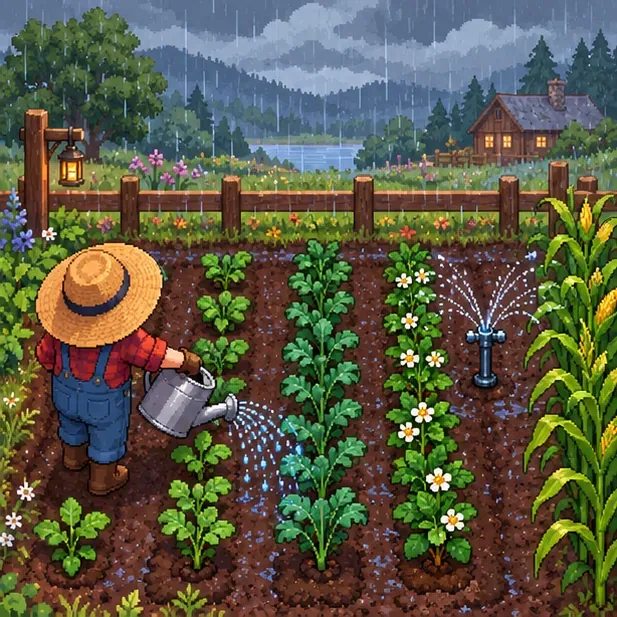
- Plant, water, and automate. Water most crops every day until sprinklers cover the plot. Check the forecast on the TV: rain saves a watering trip. Fiber Seeds need no water, but Winter Seeds do. A fertilizer reference explains the current effects and exceptions.
- Harvest and replant on time. Pick ripe crops as soon as convenient, then replant empty tiles only if the next crop can mature before the season turns. Keep some produce for bundles, quests, recipes, or processing instead of selling every item immediately.
How to turn harvests into more profit
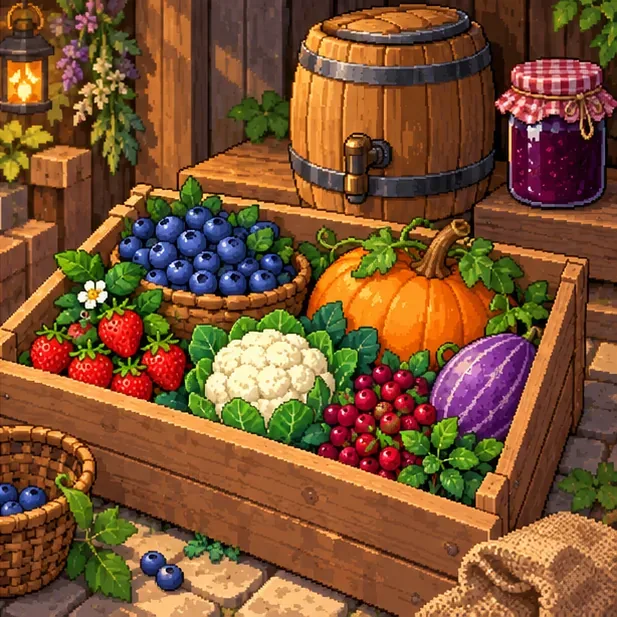
Selling raw crops is immediate and needs no equipment. Processing can raise the price, but machines take time and ignore the crop’s quality when calculating the finished good. A Keg makes Wine from fruit at three times the fruit’s base value and Juice from most vegetables at 2.25 times their base value. A Preserves Jar makes Jelly or Pickles at twice the crop’s base value plus 50g. That means the Jar can be attractive for cheaper produce, while a Keg often wins on high-value fruit such as Starfruit. The Keg and Preserves Jar formulas help compare a specific crop.
At base prices, Starfruit Wine sells for 2,250g and Ancient Fruit Wine for 1,650g before the Artisan profession or aging. Starfruit needs a fresh seed purchase from the Oasis each time; Ancient Fruit takes longer to establish but regrows every seven days and can grow in Spring, Summer, and Fall or year-round in the Greenhouse. If you have more produce than machines, process the highest-value items first and sell the rest rather than letting a full chest delay your next harvest.
Fertilizer, Greenhouse, and late-game planning
Fertilizer is most useful when you can apply it before planting and will harvest a high-value crop from that tile. Quality Fertilizers affect crop quality; Speed-Gro affects growth and the first harvest of a multi-harvest crop, not every later regrowth cycle. For a small first-year plot, prioritize a steady watering routine, Scarecrows, and seeds you can afford before investing heavily in fertilizer.
Unlock the Greenhouse through the Community Center Pantry bundles or the Joja route to grow most crops in any season. It also makes repeat-harvest plants such as Ancient Fruit reliable year-round. Winter outside is not empty: Powdermelon is winter-only, Winter Seeds produce forage crops, and Fiber Seeds grow without watering. Keep seasonal crop planning flexible as your seed supply, sprinklers, and processing machines improve.
Quick answers
What is the most profitable crop in Stardew Valley?
There is no single best crop for every save. Blueberries and Cranberries provide repeat harvests, Starfruit has a high base value and strong wine return, and Ancient Fruit is valuable once established in a Greenhouse. Seed cost, planting date, professions, machine capacity, and how long you keep playing all affect the result.
Can you grow crops outside in Winter?
Yes. Powdermelon, Winter Seeds, and Fiber Seeds can be planted outdoors in Winter. Most ordinary seasonal crops still cannot grow through the season change, and the Greenhouse is the simplest way to keep other crops growing year-round.