How to Turn Off Tap Jump in Super Smash Bros. Ultimate

If your fighter jumps when you flick the left stick upward, turn off Stick Jump in Super Smash Bros. Ultimate’s Controls settings. The change affects the controller profile you edit, so check that you select the same controller and profile you use in battles. After saving, confirm the result in Training: moving the left stick up should no longer jump, while your assigned jump button should still work.

Players often call this “tap jump” because a quick upward stick motion triggers a jump. In the game’s settings, look for the label Stick Jump. It is separate from the button mapping for Jump. Nintendo’s official beginner guidance explains the game’s basic use of the control stick and jump input; see its Super Smash Bros. Ultimate controls overview for related control basics.

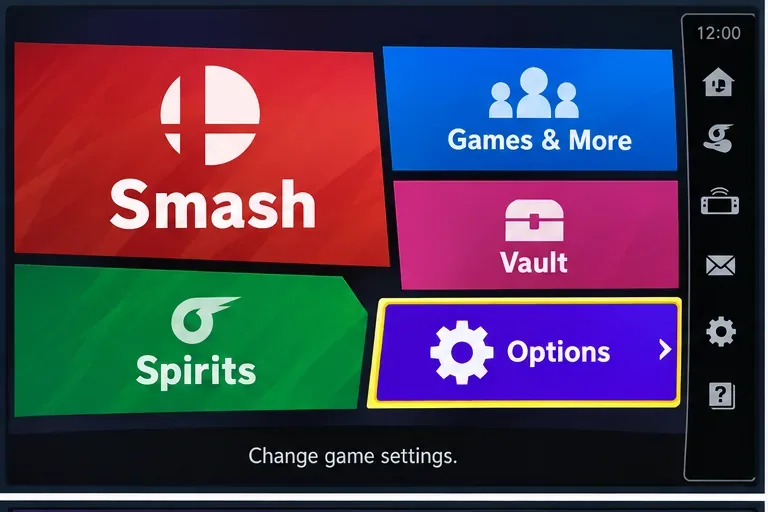
The Smash Ultimate main menu with Options highlighted
The main menu illustration shows Options highlighted, where the game’s controller settings are accessed.

Turn off Stick Jump in the Controls menu

  1. Open Options. From the game’s main menu, choose Options. You can adjust your controls before entering a battle.
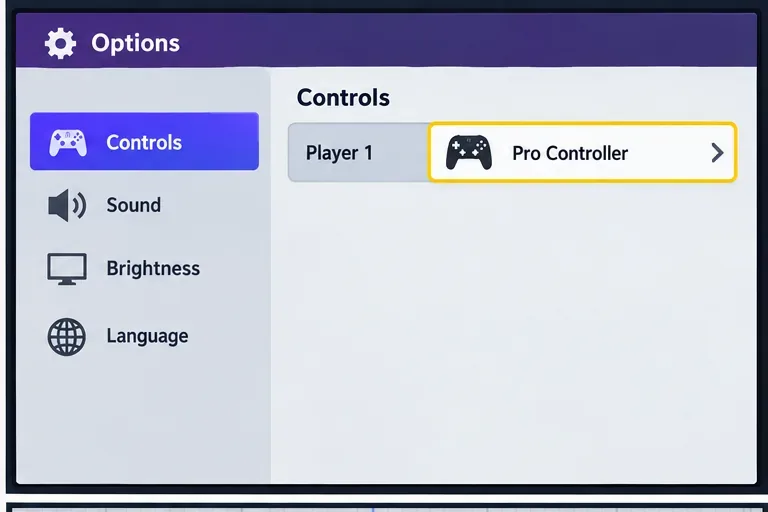
  2. Choose Controls. In Options, open Controls. Select the player and controller profile you want to edit. Profiles may be associated with a name, so check the one you actually use rather than changing a different player’s setup.
  3. Open the selected controller’s settings. Highlight the controller entry and confirm it to reach its detailed control settings. The available choices can depend on which controller is connected and selected.
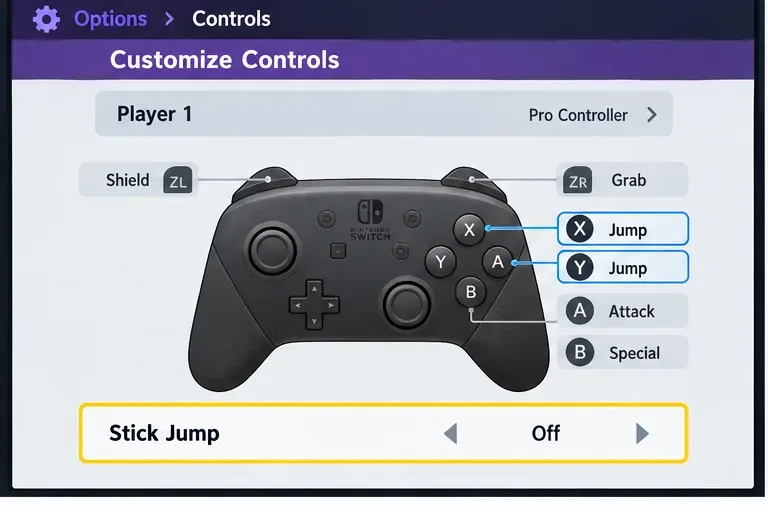
  4. Set Stick Jump to Off. Find Stick Jump and switch it off. If the setting appears as a choice you move between, highlight it and cycle to Off. Make sure the displayed setting reads Off before leaving the screen.
  5. Keep a button assigned to Jump. Check the button mapping and make sure at least one button you can comfortably press is assigned to Jump. The default button layout can differ by controller or custom profile. If you changed Jump earlier, choose the button you want and save the profile.
  6. Save or confirm the profile. Follow the on-screen save or confirmation prompt, then return to the menu. Some setups save when you leave the controller-edit screen; check for a confirmation indicator or reopen the profile to verify that Stick Jump still reads Off.
The Controls page with a controller profile selected
The Controls illustration highlights selecting the correct player and controller profile before changing a setting.

How to tell whether the change worked

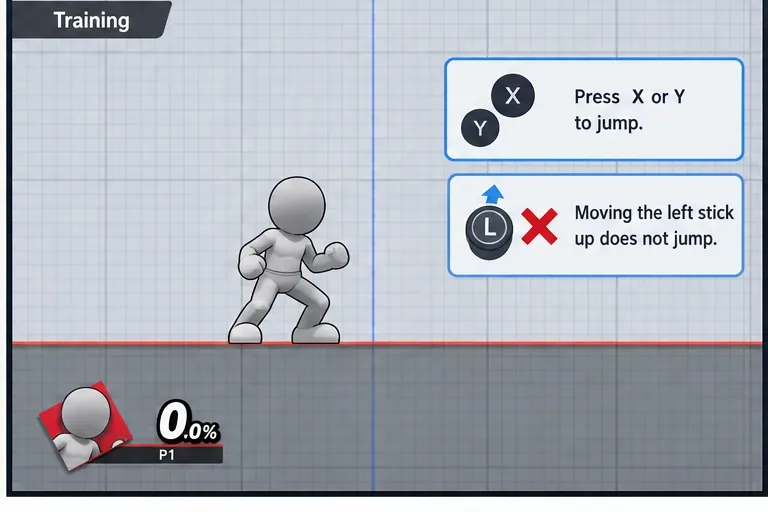
Use Training Mode for a controlled check. Start a training session with the controller profile you edited. On the ground, move the left stick straight up without pressing any face or shoulder button. Your fighter should stay grounded. Then press the button assigned to Jump; the fighter should jump normally. Repeat the two inputs once or twice so you can distinguish a deliberate jump-button press from a stick movement.

The useful result is not simply that accidental jumps happen less often. The clear signs are that an upward stick flick no longer triggers a jump, your chosen jump button still does, and the change holds when you leave and reopen the profile. This test also catches a common mix-up: editing Player 1’s Pro Controller profile but then testing with a different player, controller, or saved profile.

A controller settings illustration showing Stick Jump switched off and Jump assigned to buttons
The settings illustration shows Stick Jump set to Off while Jump remains assigned to buttons.

If the fighter still jumps when you move the stick

  • Check the active profile. Return to Options > Controls and confirm that you edited the same player and controller combination you are using in Training or a match.
  • Recheck the displayed value. Open the controller settings again and verify that Stick Jump says Off. If it reverted, change it again and complete the save or confirmation prompt.
  • Test one input at a time. Pressing a jump button while moving the stick can make it seem as though the stick caused the jump. Test upward stick movement by itself, then test the Jump button separately.
  • Check the controller’s physical input. If the character moves upward without an intentional stick flick, return to neutral and test gently. A worn or drifting stick can register movement you did not make; changing Stick Jump prevents upward stick input from acting as a jump, but it does not repair drift or other controller faults.
A Training Mode illustration comparing the Jump button with upward left stick movement
In Training, test the two inputs separately: the assigned button should jump, while moving the left stick up should not.

What this setting changes—and what it does not

Turning off Stick Jump stops the left stick’s upward direction from serving as a jump command. It does not disable jumping, remove the character’s midair jumps, change recovery moves, or adjust the stick’s sensitivity. It also does not change the system-wide controller button mapping in Nintendo Switch settings; this is a game control preference tied to the profile you edited.

If you prefer to jump with the stick sometimes, you may find the setting less convenient for quick jumps. You can return to the same Controls screen and turn Stick Jump back on. If the setting is not visible, check that the game is open to Super Smash Bros. Ultimate’s Options menu, that the right controller profile is selected, and that you have opened its detailed settings rather than only highlighting the profile.

Quick checklist

  • Open Options > Controls.
  • Select the player and controller profile used for play.
  • Set Stick Jump to Off and confirm the change.
  • Keep at least one button assigned to Jump.
  • In Training, test upward stick movement and the jump button separately.

The setting is successful when an upward flick of the left stick no longer makes your fighter jump, but the assigned Jump button still works. If that result does not hold, verify the selected profile and controller before changing other settings.

Sources

Leave a Comment

How to Check Real-Time Server Latency in the PUBG HUD

How to Check Real-Time Server Latency in the PUBG HUD

Enable PUBG’s network statistics HUD to monitor ping and packet loss in a match. See where to find it, what the numbers mean, and what they cannot diagnose.

How to Import Custom Crosshair Codes in VALORANT: Steps, Options, and Fixes

How to Import Custom Crosshair Codes in VALORANT: Steps, Options, and Fixes

Learn how to import VALORANT crosshair codes, compare presets with manual settings and spectator copy, and fix common import issues.

Best Dota 2 Minimap Size and Color Settings for Clearer Map Awareness

Best Dota 2 Minimap Size and Color Settings for Clearer Map Awareness

Choose Dota 2 minimap size, hero icons, team colors, and background settings by readability, fewer misclicks, and clear results on your own display.

How to Fix Fortnite Texture Pop-In on PC: 8 Checks That Actually Matter

How to Fix Fortnite Texture Pop-In on PC: 8 Checks That Actually Matter

Fix Fortnite texture pop-in on PC with official steps for GPU drivers, file verification, DirectX 12, high-resolution textures, VRAM, SSDs, and stutter.

Best Heroes of the Storm Minimap Setup: Size, Position, and Clicks

Best Heroes of the Storm Minimap Setup: Size, Position, and Clicks

Learn what Heroes of the Storm minimap size and position options are verified, improve readability, and choose camera-click controls that suit you.

How to Turn Off Stage Hazards in Smash Ultimate Quickplay

How to Turn Off Stage Hazards in Smash Ultimate Quickplay

Set Super Smash Bros. Ultimate Quickplay to prefer hazards-off stages. Follow the Preferred Rules menu steps and learn why matchmaking may not always honor them.

Best Warzone Telemetry Overlay Settings for Ping and Packet Loss

Best Warzone Telemetry Overlay Settings for Ping and Packet Loss

Enable Server Latency and Packet Loss in Warzone to monitor connection quality, read the overlay, and use recurring spikes to guide troubleshooting.

Master Mid Lane Roaming: How to Carry in League of Legends

Master Mid Lane Roaming: How to Carry in League of Legends

Learn how to carry from mid lane in League of Legends by setting up waves, choosing safe roam windows, reading side lanes, and converting pressure into objectives.

How to Fix the Minecraft Evoker Spell Error in Modded Worlds

How to Fix the Minecraft Evoker Spell Error in Modded Worlds

Fix Minecraft Evoker spell problems with a safe vanilla test, version checks, log review, and a step-by-step way to isolate mod or datapack conflicts.

How to Fix PUBG Stuck on “Initializing” on Steam

How to Fix PUBG Stuck on “Initializing” on Steam

Fix PUBG stuck on Initializing on Steam with a focused checklist for PC service notices, launch options, game files, downloads, and connection issues.