Fast-Growing Evergreens for Privacy starts with matching the plant to the place, not forcing the garden to fit a wish list. This guide walks through light, soil, planting, watering, and maintenance so you can choose better plants and keep them healthy after the first week.
Quick overview
The best choices for fast-growing evergreens for privacy depend on your climate, sun exposure, drainage, and how much maintenance you actually want. Reliable starting options include arborvitae, viburnum, skip laurel, holly, boxwood, wax myrtle, but the right pick is the one that fits your bed, container, or indoor setup. Use the steps below as a practical checklist before you buy plants or seed.
Step-by-step growing guide
-
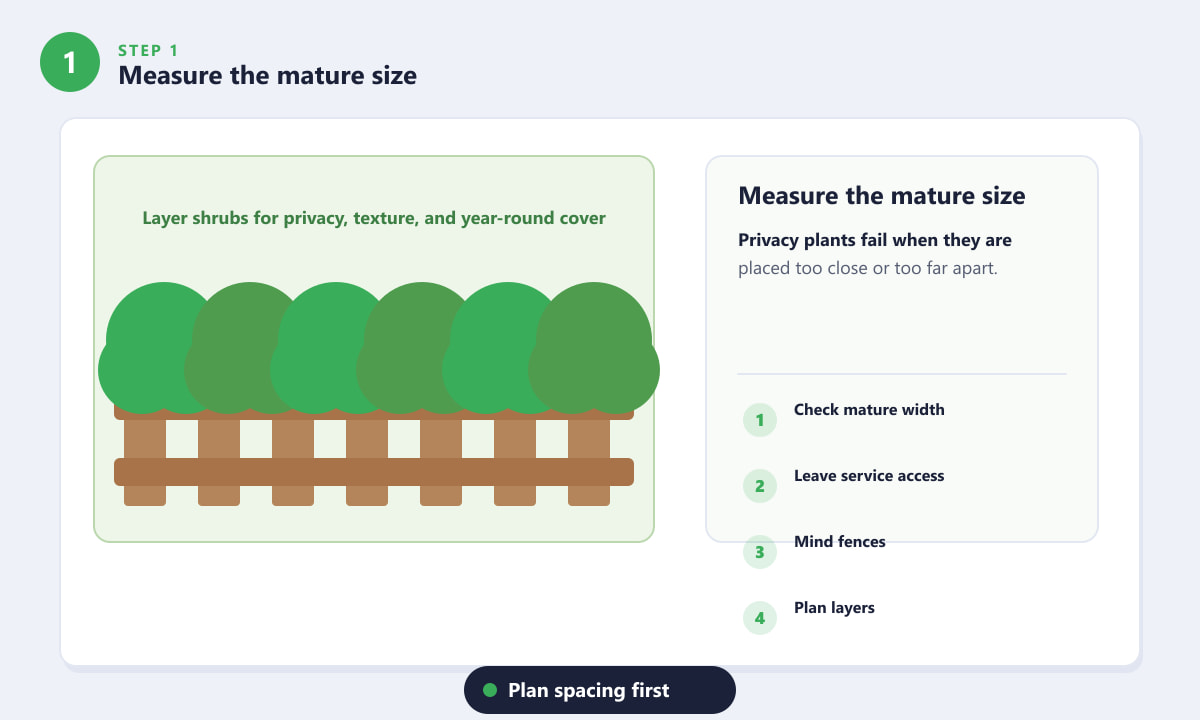
Step 1: Measure the mature size
For fast-growing evergreens for privacy, begin by measuring the condition instead of guessing. Light, drainage, mature size, and water access decide whether the planting will be easy or frustrating.
Plan spacing first. -
Step 2: Match light and soil
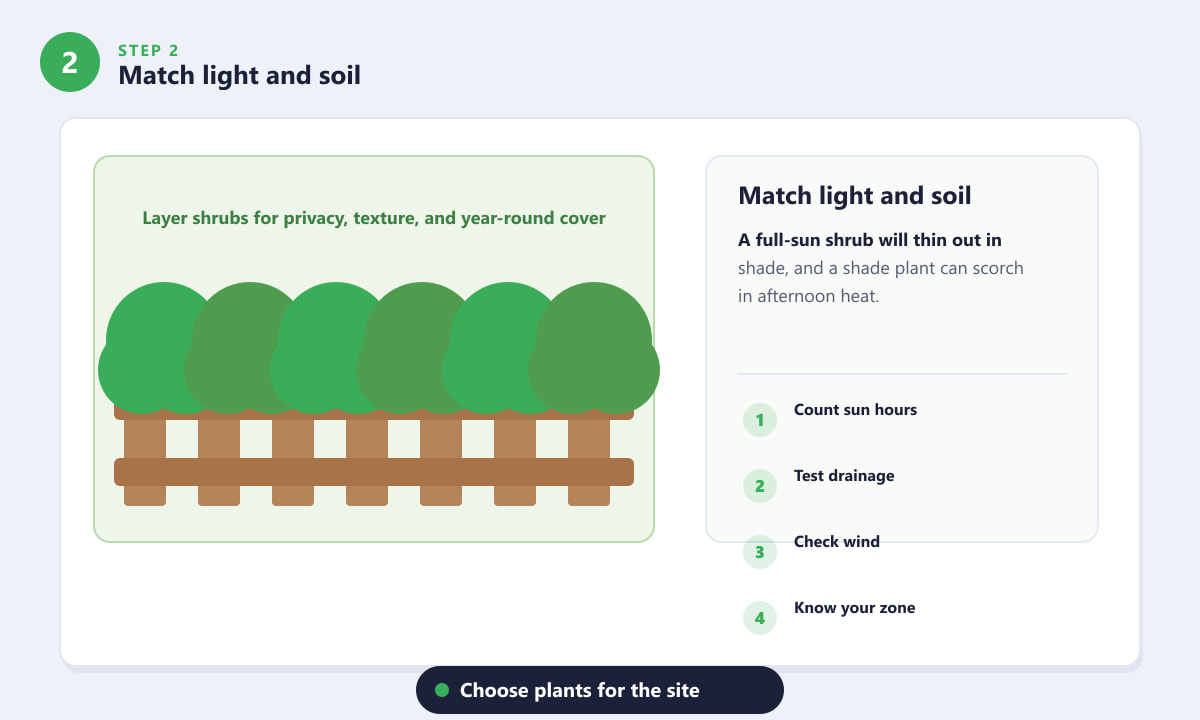
Soil preparation is the quiet step that makes the visible results better. Loosen compacted areas, mix in compost where appropriate, and avoid planting into soggy soil that never dries.
Choose plants for the site. -
Step 3: Plant for strong roots
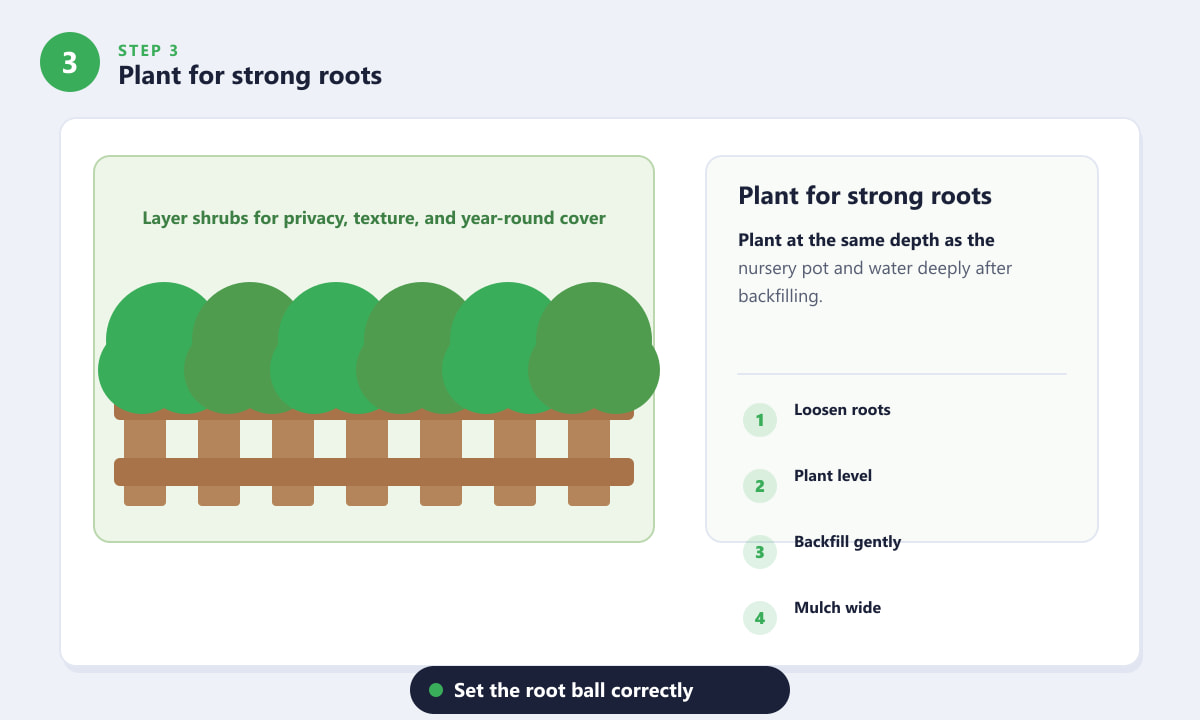
Plant at the same depth as the nursery pot and water deeply after backfilling. Buy fewer plants and place them correctly rather than crowding the bed on day one. Small plants fill in faster than most new gardeners expect.
Set the root ball correctly. -
Step 4: Water through year one
Water deeply after planting and keep the first few weeks consistent. Shallow daily splashes encourage weak roots, while slow watering helps plants settle and search deeper.
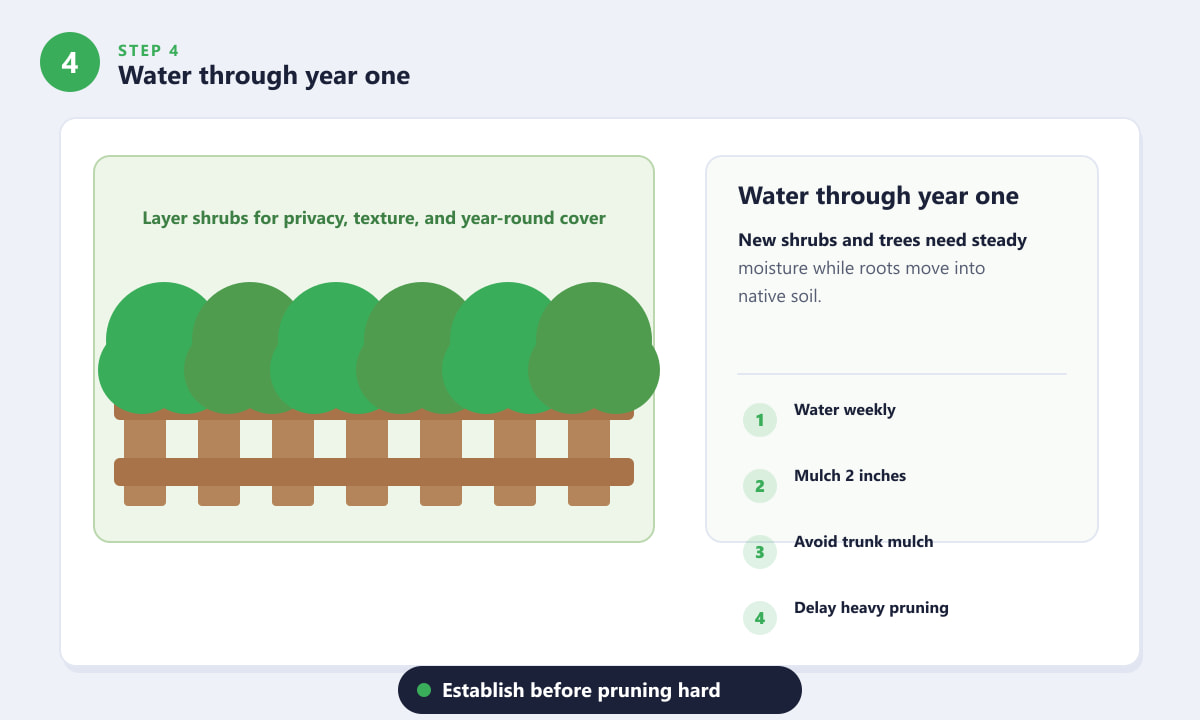
Establish before pruning hard. -
Step 5: Prune for shape
Maintenance should match the plant type. Deadhead bloomers, prune shrubs at the right season, harvest herbs often, and adjust mulch before weeds take over.
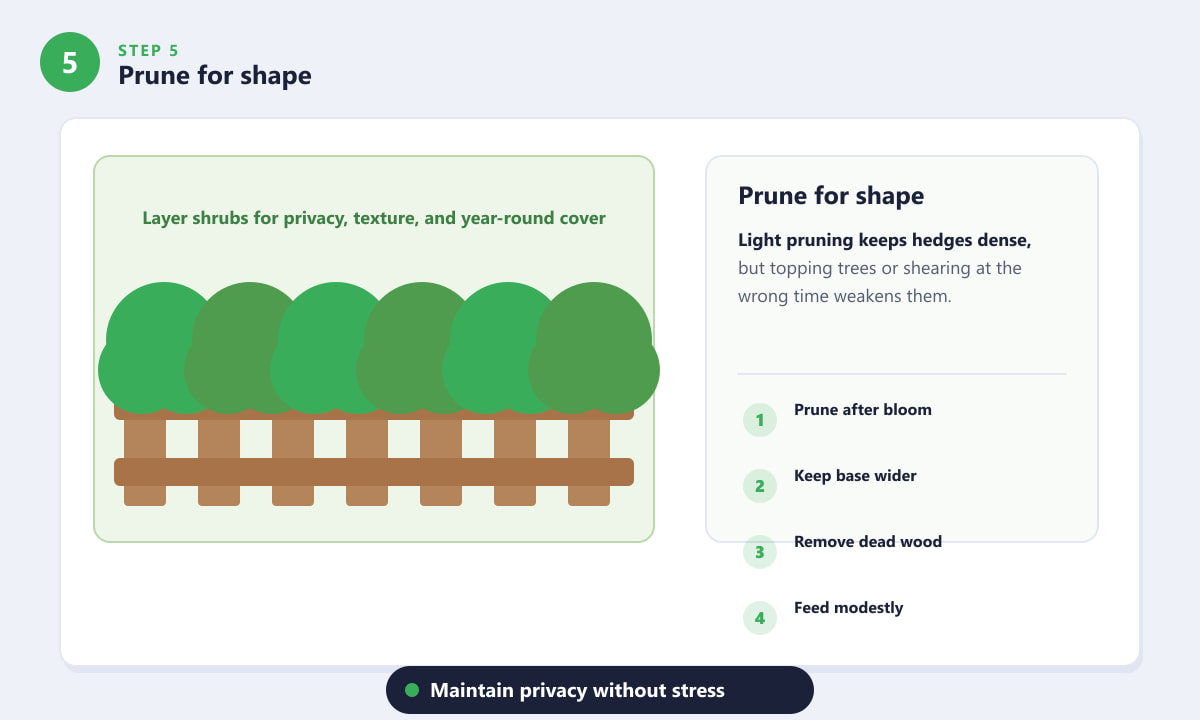
Maintain privacy without stress.
Helpful tips
- Buy plants after you know the light level, not before.
- Water deeply and less often once plants are established.
- Mulch bare soil to reduce weeds and temperature swings.
- Keep labels or notes so you remember mature size and bloom time.
Common mistakes to avoid
The biggest mistake with Fast-Growing Evergreens for Privacy is choosing plants by picture alone. A beautiful tag photo does not tell you whether the plant can handle your shade, afternoon heat, soil drainage, winter lows, or container size.
Another common problem is overcorrecting. Too much fertilizer, daily shallow watering, or aggressive pruning can stress plants more than neglect. Start with the basics, observe the plant for a week or two, and change one habit at a time.
Seasonal care and follow-up
After Fast-Growing Evergreens for Privacy is planted or set up, watch how it behaves through weather changes instead of judging success on the first day. Spring growth, summer heat, autumn cleanup, and winter dormancy all ask for slightly different care. Keep notes on what blooms, what struggles, and which spots dry out fastest.
At the end of the season, review spacing, soil moisture, and maintenance time. Move crowded plants, replace weak performers with better-matched varieties, refresh containers, and update your plan before buying more. This small review is what turns one planting project into a garden that improves every year.
Frequently asked questions
What is the easiest way to start with Fast-Growing Evergreens for Privacy?
Start small, choose plants that match your light and soil, and water consistently through the establishment period.
How often should I water?
New plants need more frequent checks, but established plants usually prefer deeper watering with time to dry slightly between sessions.
Do I need expensive supplies?
No. Good light, drainage, compost, mulch, and consistent care usually matter more than fancy gadgets.
What should I do if results are poor?
Recheck light, drainage, watering, spacing, and plant choice before replacing everything. One mismatch is often the real cause.
Conclusion
Fast-Growing Evergreens for Privacy works best when you match the goal to the site, prepare the basics carefully, and keep the first few weeks steady. Use this guide as a checklist, then adjust for your climate, soil, containers, and the amount of care you can realistically give. Revisit the plan after each season so your next planting choice is easier and more confident.









