How to Check Real-Time Server Latency in the PUBG HUD

Enable PUBG’s network statistics HUD to monitor ping and packet loss in a match. See where to find it, what the numbers mean, and what they cannot diagnose.
For most Heroes of the Storm players, 64 sound channels is the best place to start for team-fight clarity. It gives the game room to play many simultaneous effects without pushing the audio workload as aggressively as the highest setting. If large fights cause stutter, delayed audio, crackling, or missing effects, drop to 32. If your PC remains completely smooth at 64 and you want the game to preserve as many overlapping sounds as possible, you can test 128.
The important point is that a higher channel count is not automatically “better audio.” It does not turn stereo headphones into surround sound, and it does not inherently improve sample quality. It mainly affects how many game sounds can coexist at once before the engine has to prioritize or discard less important effects. In a five-versus-five fight, that can matter because ability casts, impacts, hero voice lines, structures, minions, announcer cues, and interface sounds can all overlap.
This recommendation is based on the live state of the game in October 2026. Blizzard’s September 28, 2026 live patch notes, including the October 5 hotfix section, do not list a change to the Sound Channels system. Blizzard also documents the Sound menu in its Heroes of the Storm performance troubleshooting guidance, where it specifically recommends disabling in-game reverb if performance is a problem. Blizzard does not currently publish a public support article that names one Sound Channels value as universally optimal, so the numbers below should be treated as practical starting points, not official presets.
| Your situation | Recommended Sound Channels | Why |
|---|---|---|
| Most modern PCs | 64 | Balanced headroom for busy fights without using the highest audio workload |
| Older CPU, laptop, or team-fight stutter | 32 | Reduces the number of simultaneous sounds the game must manage |
| High-end PC with no audio or frame-time issues | 128 | Allows more overlapping sounds before the engine needs to prioritize them |
| Bluetooth or virtual surround setup with delay | 32 or 64 | Helps isolate whether the problem is game-side load or the output chain |
| You cannot hear important cues in big fights | 64 first, then 128 if stable | Gives more simultaneous effects a chance to remain audible |
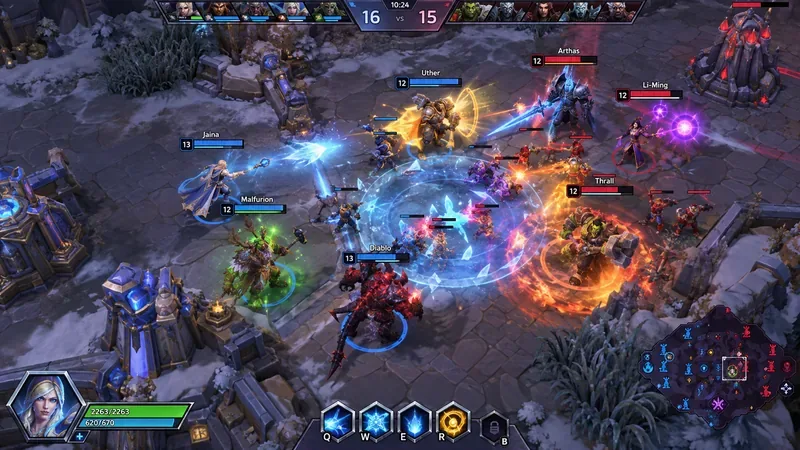
A Heroes of the Storm team fight is not a simple stereo mix with one or two effects playing. Ten heroes can cast abilities within a few seconds, while minions attack, structures fire, objectives make noise, the announcer speaks, and the interface generates alerts. The Sound Channels setting gives the audio engine a ceiling for how many of those concurrent sounds it can keep active.
At a very low value, the engine has less room for overlapping effects. That can be useful if your system is struggling, but it also increases the chance that quieter or lower-priority sounds are not heard during the most chaotic moments. At the other extreme, a very high value gives the engine more room but can increase processing demand.
That is why 64 makes sense as the first setting to try. It is high enough to preserve a busy soundscape, yet not so aggressive that you immediately assume your system can handle the maximum. It is also easy to evaluate: play several full team fights, then decide whether you are hearing the cues you care about without stutter or audio delay.
If your goal is competitive clarity, smooth delivery is more important than keeping every minor sound. A clean 32-channel mix is more useful than a 128-channel mix that arrives late, breaks up, or coincides with frame-time spikes.
Lower the setting to 32 when you notice one or more of these symptoms:
Blizzard’s current performance support page already points players toward the Sound menu when troubleshooting and specifically recommends disabling Enable Reverb as one performance-oriented step. If dropping channels to 32 is not enough, testing with reverb disabled is therefore a sensible next move rather than randomly changing graphics options.
Imagine your game sits at a steady frame rate while laning, but the first five-versus-five objective fight produces a short freeze every time several area abilities land together. That is a good case for testing 32 channels. The issue is not necessarily your network, because the trigger is tied to moments with unusually dense audiovisual activity.
After changing the value, test the same type of scenario again. If the hitching improves while important ability and announcer cues remain audible, 32 is the better competitive choice for that machine.
The maximum value can be useful, but it should be earned through testing rather than selected because “more must be better.” In theory, more simultaneous channels give the game more room to preserve overlapping effects. That can be appealing if you play heroes where sound cues help you notice an engage, a nearby heroic ability, or an off-screen effect.
However, 128 is appropriate only when all of the following are true:
If 64 and 128 sound identical to you in actual matches, keep 64. There is no competitive advantage in using a heavier setting when it does not change the information you perceive.
This is a common source of confusion. “Sound Channels” in this context refers to the number of simultaneous in-game sounds the engine can process, not the number of physical speakers in your listening setup.
Your Windows or device output can still be stereo, 5.1, or another format. You can use headphones and still benefit from a higher in-game channel count because many virtual sound sources can be mixed into two headphone outputs. Likewise, selecting 128 game channels does not create 128 physical speaker channels.
For practical tuning, treat these as two separate questions:
Channel count cannot fix a mix where music, ambient sound, or voice chat overwhelms the cues you care about. If you want to hear combat information more clearly, tune the whole sound profile rather than only one slider.
A useful competitive setup is to keep sound effects prominent, then reduce less critical layers until key casts and impacts are easy to distinguish. Do not automatically mute everything else, because announcer and interface cues can also carry useful information.
Voice chat needs separate consideration. Blizzard’s official voice communication guide explains that Heroes of the Storm supports both party and team voice channels and lets players choose output devices and adjust voice behavior in the Voice Chat options. If teammates are drowning out the game mix, lower voice volume before assuming you need more Sound Channels.
You do not need synthetic benchmarks. The best test is a repeatable in-game situation that creates the same kind of audio load you actually care about.
The phrase “important cues” matters. You are not trying to hear every decorative sound. You are trying to preserve the effects that help you react: a dangerous heroic ability, a displacement, a stun, a nearby engage, a structure shot, or a teammate call over voice chat.
If 32, 64, and 128 all behave the same, the channel count may not be the cause. Blizzard’s current support guidance gives several broader troubleshooting steps: update drivers and the operating system, close background applications, make sure the game is fully updated, lower in-game settings, run the repair tool, check for overheating, and disable reverb as a specific sound-related test.
That is especially relevant if the problem affects all audio, not only dense team fights. A bad output driver, Bluetooth latency, an audio enhancement layer, or another application can produce symptoms that look like a game-channel problem.
If you use Bluetooth headphones, USB audio software, or virtual surround processing, test plain stereo output as a comparison. Extra processing can add latency or buffering. If the game is responsive on speakers but delayed through one specific headset path, changing Sound Channels may not solve the underlying issue.
No relevant audio change is documented in the current live notes. Blizzard’s September 28, 2026 update added major gameplay content and later received an October 5 hotfix, but the published notes do not list a Sound Channels adjustment. That means there is no verified reason to abandon the same tuning logic: start at 64, lower to 32 if the system struggles, and test 128 only when the machine is already stable.
Blizzard can change client behavior in future patches, so re-test after a major update if you suddenly notice different audio behavior. Avoid assuming an old setting remains ideal forever.
Set Heroes of the Storm to 64 Sound Channels first. For most players, that is the best balance between preserving the crowded audio of a team fight and avoiding unnecessary processing load. Move down to 32 if large fights produce stutter, lag, crackling, or audio cutouts. Move up to 128 only if your system is already smooth and you have a real reason to keep more overlapping effects active.
The best setting is not the highest number. It is the lowest channel count that still preserves the combat cues you rely on while keeping the game responsive. For current official troubleshooting, use Blizzard’s Heroes of the Storm performance support article, and check the latest live patch notes whenever the game’s audio behavior changes after an update.
Enable PUBG’s network statistics HUD to monitor ping and packet loss in a match. See where to find it, what the numbers mean, and what they cannot diagnose.
Learn how to import VALORANT crosshair codes, compare presets with manual settings and spectator copy, and fix common import issues.
Choose Dota 2 minimap size, hero icons, team colors, and background settings by readability, fewer misclicks, and clear results on your own display.
Fix Fortnite texture pop-in on PC with official steps for GPU drivers, file verification, DirectX 12, high-resolution textures, VRAM, SSDs, and stutter.
Learn what Heroes of the Storm minimap size and position options are verified, improve readability, and choose camera-click controls that suit you.
Set Super Smash Bros. Ultimate Quickplay to prefer hazards-off stages. Follow the Preferred Rules menu steps and learn why matchmaking may not always honor them.
Enable Server Latency and Packet Loss in Warzone to monitor connection quality, read the overlay, and use recurring spikes to guide troubleshooting.
Learn how to carry from mid lane in League of Legends by setting up waves, choosing safe roam windows, reading side lanes, and converting pressure into objectives.
Fix Minecraft Evoker spell problems with a safe vanilla test, version checks, log review, and a step-by-step way to isolate mod or datapack conflicts.
Fix PUBG stuck on Initializing on Steam with a focused checklist for PC service notices, launch options, game files, downloads, and connection issues.








