Home
» 🎮 Esports
»
Best Audio Alert Settings for Base Attack Notifications in StarCraft II
Best Audio Alert Settings for Base Attack Notifications in StarCraft II
For a clear base-attack warning in StarCraft II, keep the game’s alert audio easy to distinguish from music and routine unit sounds. A practical starting point is to leave normal game audio at a comfortable level, turn music down enough that it does not mask alerts, and adjust Game Volume During Alerts until the rest of the mix recedes without making the warning itself uncomfortable. There is no official one-size-fits-all volume preset: speakers, headphones, room noise, and hearing preferences all change what is easy to notice.
Blizzard’s published control guides identify “base is under attack” as a warning notification, and its patch notes document a Sound Options control called Game Volume During Alerts. No newer official change to that alert control surfaced in the sources reviewed for this guide, so these recommendations focus on the durable settings and the way to test them on your own setup.
Which StarCraft II audio settings matter most?
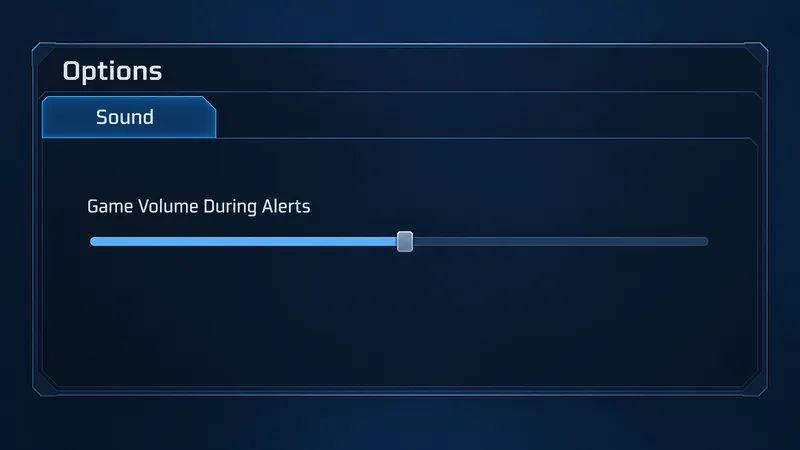
Open the game’s Options menu and select the Sound tab. Blizzard’s older official guide documents the Sound tab under Options, while its Patch 1.4.2 notes say that an earlier option called “Alert Fade” was renamed “Game Volume During Alerts.” The exact appearance and wording can vary with the client version or localization, so use the label and tooltip shown in your current game.
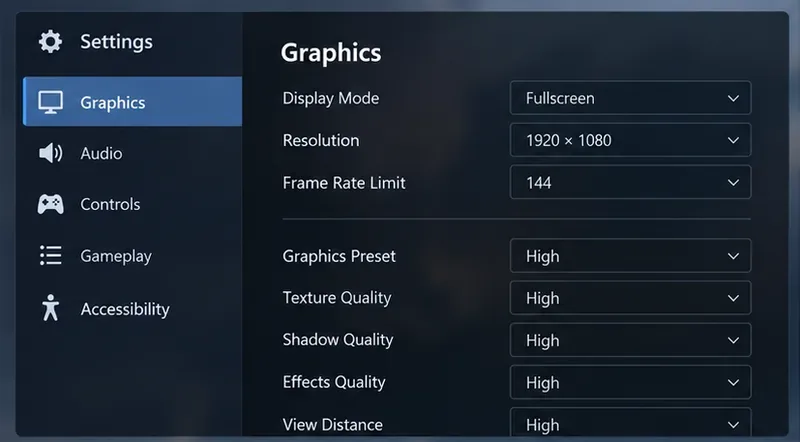
An illustrative view of the Game Volume During Alerts control; the current client’s layout may differ.
That setting is the most direct place to start when alerts are being buried by the rest of the sound mix. It controls how much ordinary game audio changes while an alert is playing. Move it toward stronger attenuation if an attack warning is hard to hear over battle noise. Move it back toward a fuller game mix if the audio dip feels distracting or makes combat sounds disappear too abruptly.
What is a good starting balance for base-attack alerts?
Use this as a listening profile rather than a set of required percentages:
Game Volume During Alerts: Start near the middle of its range. Lower the surrounding game volume further if alerts blend into explosions or unit sounds; raise it if the game becomes too quiet whenever a warning plays.
Music: Keep it below effects and alert audio, or temporarily turn it down while learning the cues. Music adds atmosphere but is less useful than a warning you need to react to quickly.
Effects and voices: Keep these clearly audible. If your current Sound menu separates them, avoid turning down every non-music category just to make alerts stand out; that can also hide useful combat and unit feedback.
Overall output: Set a comfortable, consistent listening level before a match. Do not compensate for a quiet alert by pushing all audio to an uncomfortable volume.
These are practical recommendations, not Blizzard-prescribed values. The goal is separation: a base-attack cue should catch your attention while ordinary game sounds remain useful. If music is the main thing masking the warning, lowering music is usually a better first adjustment than drastically changing the entire game mix.
Should you turn the alert mix all the way down?
Usually, test a moderate adjustment first. A very strong drop in background audio can make the alert obvious, but it can also interrupt the flow of combat sounds every time a warning plays. That may be helpful for a player who misses attacks while focused on a fight; it may be irritating for someone who already tracks the minimap and wants a more continuous soundscape.
Change one control at a time. Play a short practice game or another low-pressure match with music at your normal level. If you miss a warning, reduce the game volume during alerts or lower the music. If alerts are clear but the rest of the mix repeatedly disappears, ease the setting back. This simple A/B test is more useful than copying another player’s slider position because playback devices and rooms differ.
Can an audio setting warn you before your base takes damage?
Do not treat the alert as an advance sensor. Blizzard describes the notification as a warning such as “base is under attack,” which is a cue to check what is happening, not a promise that the game will announce an approaching enemy before an attack begins. Keep checking the minimap and use scouting, vision, and defensive positioning as your main ways to detect threats earlier.
When you hear the warning, press Spacebar to center the camera on the last warning notification. Blizzard’s simplified-controls guide says pressing Spacebar again cycles through previous notifications. This can help you locate the reported fight quickly, but it does not replace the minimap: multiple alerts can arrive close together, and you may still need to inspect the map to decide which threat needs attention first.
What if the alert is still too easy to miss?
Check the basics before making the entire game louder:
Confirm StarCraft II is not muted in the game, Windows volume mixer, or your headset software.
Make sure the game is sending sound to the headphones or speakers you are actually using.
Lower music first, then adjust Game Volume During Alerts in small steps.
Listen during a practice match at the same volume and with the same headset or speakers you use for competitive play.
If the sound skips, pops, or disappears, troubleshoot the audio problem itself rather than relying on a volume change.
Blizzard’s patch notes explain the control’s history: alert sounds received fade behavior, and the older “Alert Fade” label was renamed “Game Volume During Alerts.” Those notes are historical, not a current numeric preset. Use the tooltip in your installed client if it provides a more specific explanation, and treat the recommendations above as a starting point for a comfortable, noticeable warning.