FIVB Ranking Points Explained: Opponent Strength and Match Results
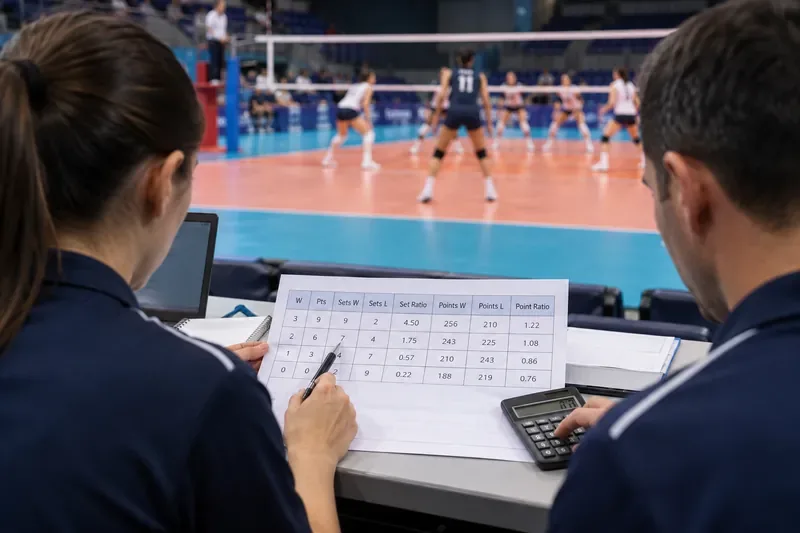
See how opponent strength, six possible set scores, and event weight shape FIVB ranking points—and how to check a match’s likely impact.
The most important 2026 update is that serving-team players may not raise their hands above their heads during the service until the ball has passed beyond the net. That explicit restriction appears in the current FIVB 2025–2028 rules and in the USA Volleyball 2025–2027 indoor rulebook. It matters because older explanations of screening often focused only on whether teammates actually blocked the receiver’s view. Under the current rules, raised hands are now directly addressed.
For the broader screening fault, the core test is still about visibility. In indoor volleyball, a serving-team player or group must not prevent the receiving team from seeing both the service hit and the flight path of the ball. Under the current FIVB wording, if either the service contact or the ball’s flight remains visible to the receivers, the situation is not a screen under that test.
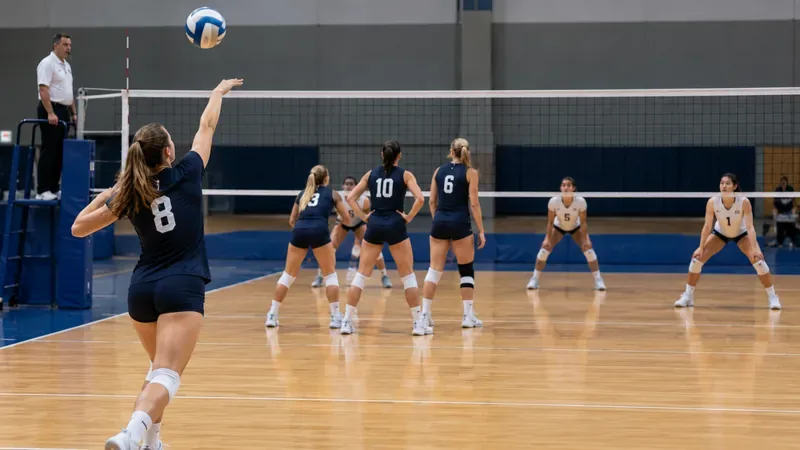
Rule 12.5 of the FIVB Official Volleyball Rules 2025–2028 identifies several actions by the serving team that can form a screen during the execution of the serve. These include waving the arms, jumping, moving sideways or standing grouped in a way that hides the service hit and the ball’s flight until the ball reaches the vertical plane of the net.
The USA Volleyball 2025–2027 Indoor Rules Book uses the same basic framework and adds practical guidance for referees. It says the judgment should take into account the relative positions of the serving team, the path of the serve, the speed of the serve and its trajectory.
This is the point that causes the most arguments in gyms. A teammate can stand between the server and a receiver without automatically committing a screening fault. The rule is not simply “you may not stand in front of the server.” The issue is whether the receiving team is prevented from seeing the required parts of the service action.
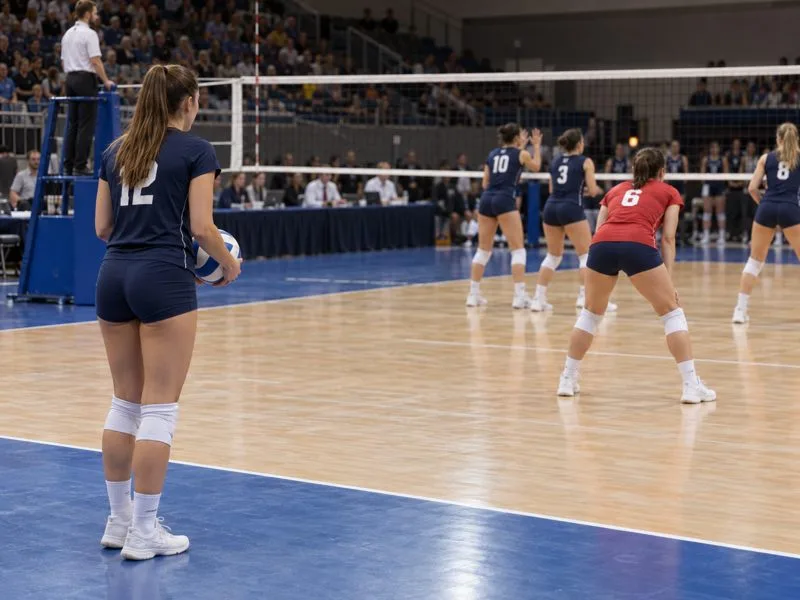
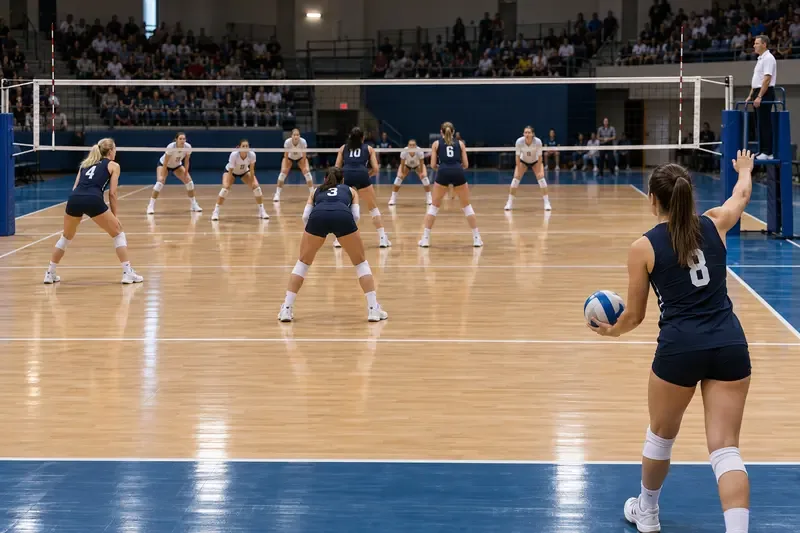
For example, imagine three front-row players standing close together near the middle of the net. The server is near the right sideline and serves straight down the line. If the ball never passes over or behind that group from the receiver’s perspective, the formation may look suspicious but does not necessarily meet the screening definition.
Likewise, a high, slow serve can be less likely to produce a screen even if it initially passes near a group of teammates. USA Volleyball’s current referee guidance specifically identifies a slow serve and a high trajectory as factors that reduce the likelihood that a screen occurred.
The current FIVB wording is unusually helpful because it gives a direct way to analyze a disputed play. To establish a screen under Rule 12.5.2, the positioning or movement must hide both:
If the receiving team can see the server make contact but briefly loses the ball afterward, that does not satisfy this particular definition. If the contact is hidden but the ball becomes clearly visible immediately after it leaves the server’s hand and remains visible in flight, the FIVB rule likewise says that if either element is visible, it is not a screen.
That does not make every awkward formation legal. The separate raised-hands restriction still applies, and referees are responsible for judging the real visual effect of player positions and movements.
The significant current-rule change is Rule 12.5.3. USA Volleyball labels it as a new rule in its 2025–2027 edition: any player on the serving team is forbidden to raise the hands above the head during service until the ball has passed beyond the net. The FIVB 2025–2028 rulebook contains the same provision.
The practical effect is straightforward. A player should not stand near the net with both arms extended overhead while a teammate serves, even if that player believes the receiver can still see around them. Keeping the hands below head level removes that specific violation and also reduces the chance that the player’s body position will be judged as part of a deliberate screen.
The FIVB also permits the first referee to caution a team through the game captain if deliberate screening is suspected. USA Volleyball includes the same referee-management language. A caution is different from waiting for repeated behavior to become acceptable; it is a warning mechanism intended to prevent deliberate screening tactics.
| Situation | Likely analysis under current FIVB/USAV rules |
|---|---|
| Three teammates stand tightly together; a fast, flat serve passes directly over them and the receiver cannot see the contact or early ball flight. | Strong screening-fault scenario because the group, serve path, speed and low trajectory all support the conclusion that both required views were hidden. |
| A teammate is in front of the server, but the serve travels down the opposite sideline and never crosses behind that teammate. | Not automatically a screen. The player’s location alone is not enough; the actual line of sight and serve path matter. |
| A grouped formation is present, but the serve travels high and slowly, becoming clearly visible well before it reaches the net. | Less likely to be judged a screen under USA Volleyball’s listed factors, provided the service hit or flight path remains visible as required. |
| A serving-team player raises both hands above the head while the serve is in progress. | Not permitted under current Rule 12.5.3 until the ball has passed beyond the net. |
| A player jumps sideways at the instant of contact and blocks the receiver’s view of both contact and ball flight. | Can be a screening fault; jumping and sideways movement are expressly listed actions when they create the prohibited visual obstruction. |
Screening is partly a judgment call because the referee must evaluate geometry and timing in real time. USA Volleyball gives four useful factors: where the serving-team players are positioned, where the serve travels, how fast it travels and how high or low its trajectory is.
A tight group plus a fast, low serve directly over the group is more likely to create an illegal screen. Players who are spread apart, bend down to preserve the receiver’s view, or are nowhere near the serve’s path are less likely to create one. The same is true when the serve is slow or high enough for receivers to see it clearly.
For players and coaches, that means the safest practice is not to argue about inches of visibility. Instead, build a serve formation that obviously preserves a clear sight line. Keep hands below head level, avoid unnecessary lateral movement or jumping during the service action, and do not intentionally stack players in the expected flight path of a fast serve.
A served ball that passes over a screen is a service fault under Rule 12.6.2.3. Because volleyball uses rally scoring, the opponent wins the rally and therefore receives the point; if the opponent was receiving, it also gains the right to serve.
The standard referee signal for screening is the same signal category used for a blocking fault: both arms are raised vertically with the palms facing forward. USA Volleyball publishes the signal on its official indoor referee hand-signals page.
This explanation is specifically about indoor volleyball under the current FIVB and USA Volleyball rules. Beach volleyball also has a screening rule, but its two-player format changes how screening situations arise. School, collegiate or local recreational competitions may use a separate code or adopted modifications.
If you are playing in a league that follows a different governing body, check that competition’s current rulebook before relying on the FIVB/USAV wording. For U.S. club volleyball, the USA Volleyball rulebooks and interpretations page is the appropriate current reference.
Before the whistle, look at the receiving side from their perspective. Can they clearly see the server’s contact point? Will they be able to follow the ball immediately after contact? Are your teammates keeping their hands below their heads? Is anyone about to jump, wave, or slide sideways into the sight line?
If the answers are clear and the formation does not deliberately hide both the service hit and the ball’s early flight, the risk of a screening call is much lower. If players are tightly stacked in front of a hard, flat serve or are using movement to obscure the receiver’s view, change the formation before the serve. That is a more reliable approach than hoping the referee sees the geometry differently.
See how opponent strength, six possible set scores, and event weight shape FIVB ranking points—and how to check a match’s likely impact.
A volleyball screen is more than standing in front of a server. Under current FIVB and USA Volleyball rules, learn what actions create a screening fault and what does not.
Learn when touching the volleyball net costs a point, which contact can be legal under FIVB and USA Volleyball rules, and why timing and interference matter.
Learn when a volleyball setter dump is legal under FIVB rules, including double contacts, back-row attack limits, the 3-meter line and 2026 rule tests.
Learn when a back-row attack is a fault: check the player’s takeoff at the attack line, ball height at contact, and why landing position can mislead.
Can a libero serve? Compare current FIVB, NCAA women’s and men’s, and 2026–27 NFHS high-school rules, including the one-position limit and two-libero exception.
Learn the FIVB-style order for breaking volleyball pool ties: wins, match points, set ratio, point ratio, then head-to-head results.
Learn which players must stay in rotational order at service, how referees judge volleyball overlap by foot position, and how 2026 FIVB rule tests change the timing.
A practical guide to volleyball video challenges: which calls can be reviewed, how many challenges teams get per set, timing rules, outcomes, and 2026 FIVB tests.