FIVB Ranking Points Explained: Opponent Strength and Match Results
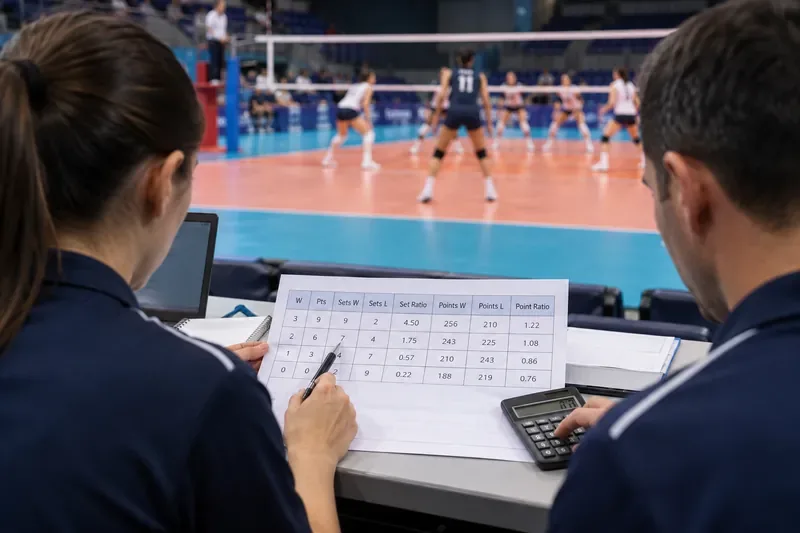
See how opponent strength, six possible set scores, and event weight shape FIVB ranking points—and how to check a match’s likely impact.
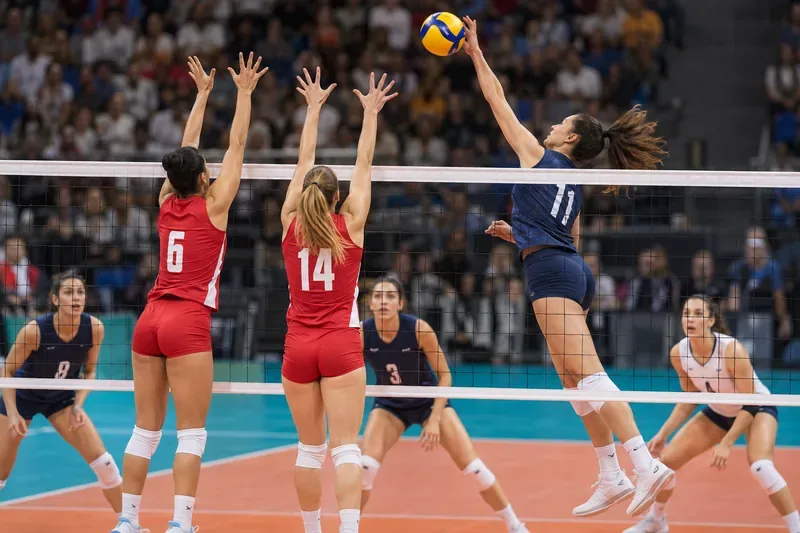
A setter jumps near the net, shapes as if to set, then sends the ball over on the second contact. One referee lets the rally continue; another whistles immediately. The confusing part is that “setter dump” is not a separate rule category. Its legality depends on four questions: Was the contact clean? Was the setter a front-row or back-row player? Where did the player take off or contact the ball relative to the front zone? And was the ball entirely above the top of the net?
This reference uses the FIVB Official Volleyball Rules 2025–2028 as the baseline and separately flags the FIVB rule tests announced for specified 2026 international competitions. That distinction matters because the 2026 test treatment of some second-contact doubles is not simply identical to the published rulebook.
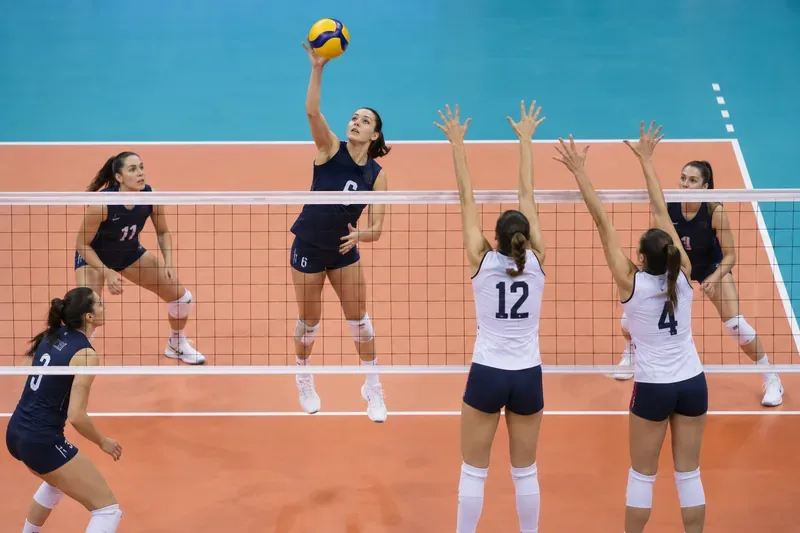
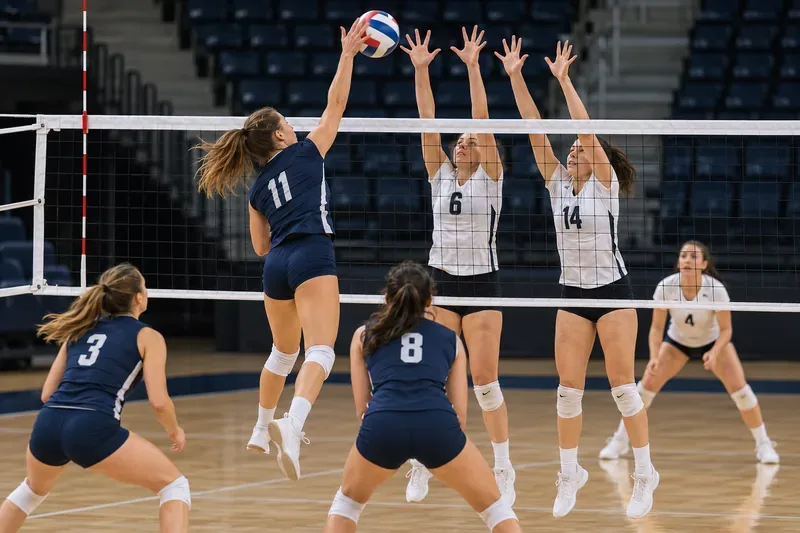
A one-handed setter dump near the net can be legal, but the ruling changes if the setter is a back-row player in the front zone and contacts a ball entirely above net height.
Under the published FIVB rules, the ball may touch any part of the body, but it must not be caught or thrown. Rule 9.3.4 defines a double contact as a player hitting the ball twice in succession or having the ball contact different body parts successively outside the permitted exceptions. The first team hit has a broader exception for consecutive contacts during one action; a normal second-team contact does not have that same written exception in the 2025–2028 rulebook.
For a setter dump, this means the referee can judge two different faults before even considering front-row or back-row status. A visibly prolonged hold, carry or throw can be called under the handling rules. A successive double contact can also be a fault under the standard rulebook.
There is an important 2026 exception in selected FIVB events. On February 27, 2026, FIVB announced a rule test for the 2026 Volleyball Nations League, FIVB U17 World Championships and 2026 Continental Championships under which a double contact during a setting action on the second team contact is allowed if the ball remains on the same side of the court. FIVB also said no rule change was required for that test. If you are watching or officiating outside those named test competitions, do not assume that interpretation automatically applies.
The same FIVB announcement said attack contacts would receive strict treatment under Rule 9.2.2: catches, throws, pushes, two-hand attacks and similar prolonged or redirected contacts were not to be permitted, while a very short tip remained allowed. That is especially relevant to a dump because a legal surprise attack is not permission to carry the ball over the net.
A setter's tactical role does not determine whether that player is front row or back row. Rotation does. When the setter rotates into a back-row position, the setter remains a back-row player even if the offense brings that player forward to set near the net.
A front-row player may complete an attack hit at any height, provided the contact is made within that player's own playing space and no other specific restriction applies. A front-row setter therefore may legally dump a cleanly contacted ball over the net from the front zone.
A back-row setter has a different limit. Under Rule 13.3.3, a back-row player commits an attack-hit fault by completing an attack from the front zone when, at the moment of contact, the ball is entirely higher than the top of the net. This is the classic illegal back-row setter dump.
FIVB Rule 13.1.1 treats any action that directs the ball toward the opponent as an attack hit, except a serve or block. A setter dump is therefore an attack hit if it sends the ball toward the opposing court. Rule 13.1.3 says the attack is completed when the ball completely crosses the vertical plane of the net or is touched by an opponent.
This completion detail explains an unusual-looking sequence. If a back-row setter in the front zone contacts a ball entirely above the net and the ball never crosses the net plane and is not touched by an opponent, the illegal attack has not yet been completed under the rule definition. If the ball crosses completely or an opponent touches it, the back-row attack restriction can be applied.
A common mistake is to think a back-row setter cannot step inside the attack line. That is not the rule. The attack line, 3 meters from the center line under FIVB rules, marks the rear boundary of the front zone. Back-row players can move into that zone and set there.
The restriction concerns a completed attack hit with the ball entirely above the top of the net. A back-row setter standing or jumping in the front zone may legally send the ball toward the opponent if, at the moment of contact, at least part of the ball is below the top of the net. Rule 13.2.3 explicitly allows a back-row player to complete an attack hit from the front zone in that situation.
Rule 13.2.2 allows a back-row player to complete an attack hit at any height from behind the front zone. For a jumping attack, the key location is takeoff: the player's foot or feet must not touch or cross the attack line at takeoff. After the hit, the player may land inside the front zone.
So a back-row setter can legally jump from behind the attack line, contact the ball entirely above the net and land beyond the line. What matters is the takeoff location for that back-row attack, not the landing spot.
| Situation | Likely FIVB ruling | What to check |
|---|---|---|
| Front-row setter makes a clean one-handed dump | Legal | Clean contact, own playing space, no other fault |
| Back-row setter in the front zone dumps a ball entirely above net height and the attack is completed | Illegal back-row attack | Back-row status, front-zone location, ball entirely above net |
| Back-row setter in the front zone contacts the ball with part of the ball below the top of the net | Legal as to the back-row attack restriction | Ball height at the instant of contact |
| Back-row setter jumps from behind the attack line, contacts above the net, then lands in front | Legal as to the back-row attack restriction | Feet were behind the line at takeoff |
| Setter catches, carries or throws the dump | Fault | Whether the ball rebounded cleanly instead of being held or thrown |
| Second-contact setting double that stays on the same side in specified 2026 FIVB test events | Allowed under the announced test | Competition is covered by the 2026 test and ball stays on the same side |
Do not infer front-row status from where the setter is standing. Check the rotation. If the setter is a front-row player, the special back-row attack restriction is not the issue.
If the setter is back row, determine whether the relevant action came from the front zone. For a jump from behind the line, focus on where the feet were at takeoff. Landing in the front zone is allowed.
The rule is not based on the setter's hand height, head height or jump height. For a back-row player attacking from the front zone, the critical question is whether the ball was entirely above the top of the net at contact. If any part of the ball was below net-top height, Rule 13.2.3 allows the attack as far as this restriction is concerned.
A dump directed toward the opponent becomes a completed attack when it fully crosses the vertical plane of the net or is touched by an opponent. This timing can matter in unusual plays where the ball clips the net and comes back without crossing.
Ask whether the dump was a short, clean contact or whether the ball was caught, thrown or successively contacted. If the match is one of the specific 2026 FIVB test competitions, also apply the announced second-contact double interpretation rather than assuming the normal published wording governs that exact situation.
If you can answer those five questions, most setter-dump disputes become straightforward. The remaining uncertainty usually comes from a close factual judgment—especially ball height, foot position at takeoff or whether contact was prolonged—not from a special rule for setters.
The baseline rules cited here are the FIVB Official Volleyball Rules 2025–2028, including Rules 9.2, 9.3, 13.1, 13.2 and 13.3. FIVB states that this edition applies to competitions beginning after January 1, 2025.
The 2026 setting-contact and attack-contact tests come from FIVB's February 27, 2026 announcement, FIVB Board of Administration approves rule tests for 2026 competitions. FIVB identified the Volleyball Nations League, FIVB U17 World Championships and 2026 Continental Championships as test events and said any update to the official rules would be subject to review during the testing phase.
National federations, school associations and domestic leagues can use different codes or interpretations. For a disputed call outside an FIVB-governed event, check that competition's current rulebook and any season-specific officiating bulletins before applying the 2026 FIVB test language.
See how opponent strength, six possible set scores, and event weight shape FIVB ranking points—and how to check a match’s likely impact.
A volleyball screen is more than standing in front of a server. Under current FIVB and USA Volleyball rules, learn what actions create a screening fault and what does not.
Learn when touching the volleyball net costs a point, which contact can be legal under FIVB and USA Volleyball rules, and why timing and interference matter.
Learn when a volleyball setter dump is legal under FIVB rules, including double contacts, back-row attack limits, the 3-meter line and 2026 rule tests.
Learn when a back-row attack is a fault: check the player’s takeoff at the attack line, ball height at contact, and why landing position can mislead.
Can a libero serve? Compare current FIVB, NCAA women’s and men’s, and 2026–27 NFHS high-school rules, including the one-position limit and two-libero exception.
Learn the FIVB-style order for breaking volleyball pool ties: wins, match points, set ratio, point ratio, then head-to-head results.
Learn which players must stay in rotational order at service, how referees judge volleyball overlap by foot position, and how 2026 FIVB rule tests change the timing.
A practical guide to volleyball video challenges: which calls can be reviewed, how many challenges teams get per set, timing rules, outcomes, and 2026 FIVB tests.