FIVB Ranking Points Explained: Opponent Strength and Match Results
See how opponent strength, six possible set scores, and event weight shape FIVB ranking points—and how to check a match’s likely impact.
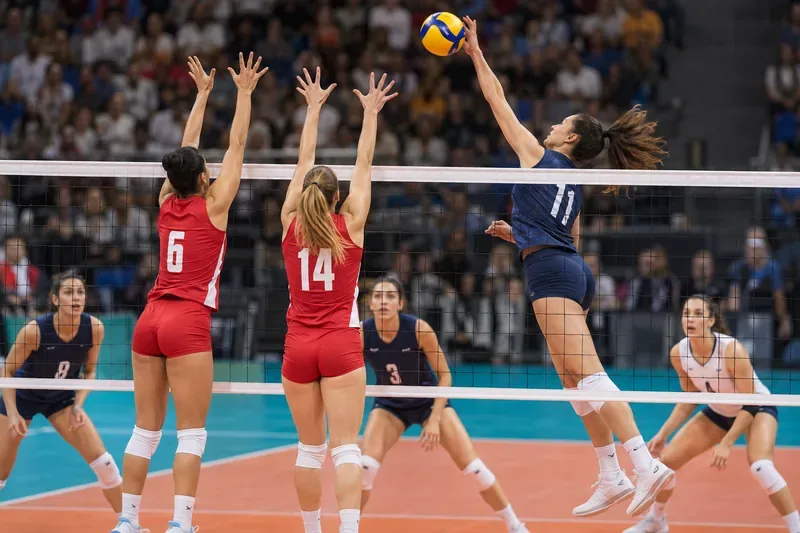
A player touching the volleyball net does not automatically stop every rally. Under the current FIVB indoor rules, contact with the net between the antennae during the action of playing the ball is a fault. Other net contact can be legal when it happens outside the antennae and does not interfere with play. A player can also commit an interference fault by using the net for support, gaining an unfair advantage, hindering an opponent, or holding onto it.
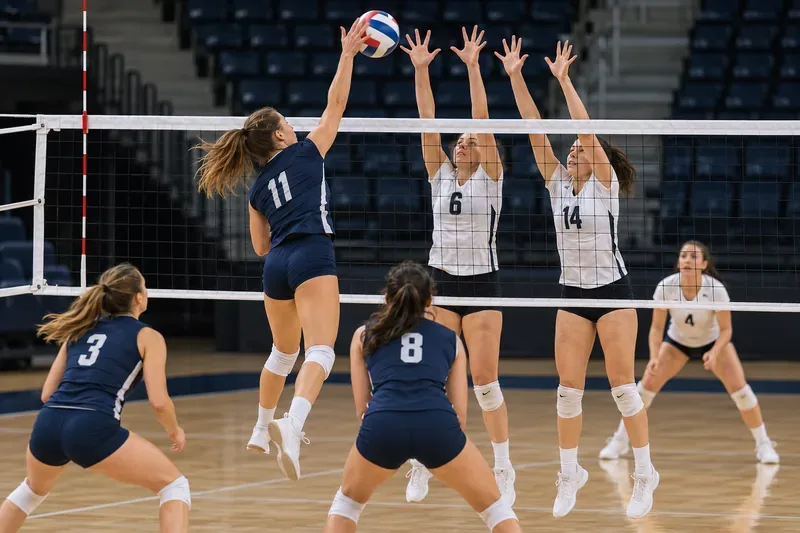
This explanation follows the FIVB Official Volleyball Rules 2025–2028 for indoor volleyball. USA Volleyball’s 2025–2027 indoor rules use the same main net-contact criteria, but NCAA, school, youth, beach, and local competitions can have their own rulebook or modifications. Check the rules governing your match before applying a ruling.
For a live rally under FIVB indoor rules, an official should separate three questions:
The practical tradeoff is important for both players and officials: a net touch in the defined zone during the action of playing the ball is not excused just because nobody appears to be hurt or the ball remains playable. Outside that situation, however, the rule does not treat every brush with any part of the net as a fault.
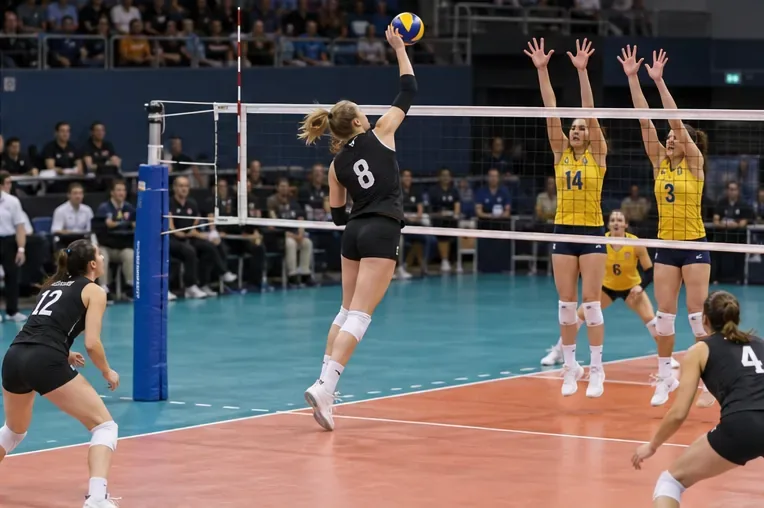
Rule 11.3.1 makes a player’s contact with the net between the antennae during the action of playing the ball a fault. The rule specifically includes the player’s takeoff, hit or attempt, and landing safely while ready for a new action. This is why a blocker who brushes the mesh while coming down from a block can still be called for a net fault, even though the ball has already left the attacker’s hand.
The action window can include a player who moves to play a nearby ball but misses it. For example, a front-row player may jump beside a teammate’s set, reach toward the ball, miss, and contact the net. Under the FIVB rule, the player can still be in the action of playing the ball. The useful officiating cue is to judge the player’s attempted action, not only the player who makes the ball contact.
Rule 11.4.4 lists other ways a player can interfere with play at the net: using the net between the antennae as support or a stabilizing aid, creating an unfair advantage by touching it, hindering an opponent’s legitimate attempt to play the ball, or catching or holding the net. These are practical signs that the contact affected the rally even if the official did not see a clear action-of-play touch under Rule 11.3.1.
For instance, a player who grabs the net to steady themselves while reaching for a ball is not simply making an incidental touch. The support changes the player’s ability to play. Likewise, a player who pulls the net into an opponent’s path may interfere even if the opponent ultimately avoids contact. Officials should identify the specific effect rather than rely only on a player’s protest or the sound of the net.
The FIVB rules allow a player to touch the post, ropes, or another object outside the antennae, including the net itself, provided the contact does not interfere with play. Rule 11.4.4 also says that touching the net outside the antenna is not to be considered a fault, subject to the listed exception. So a player brushing the outer part of the net while moving away from the ball may be legal if the contact neither interferes nor creates an advantage.
There is also a specific ball-driven-net exception. If the ball is driven into the net and the net then touches an opponent, no fault is committed. The player has not necessarily touched the net by their own action; the ball has moved the net into them. This differs from grabbing or contacting the net to play the ball.
And remember that the ball touching the net is a separate issue from a player touching it. A served or played ball may touch the net while crossing, and a ball driven into the net may be recovered within the team’s three hits. The fact that the net moved or the ball grazed it does not by itself prove a player committed a net fault.
| What happened | FIVB indoor ruling guide | What the official should check |
|---|---|---|
| An attacker’s hand or body contacts the net between the antennae while hitting the ball. | Fault. | Confirm the contact occurred during the attack action. |
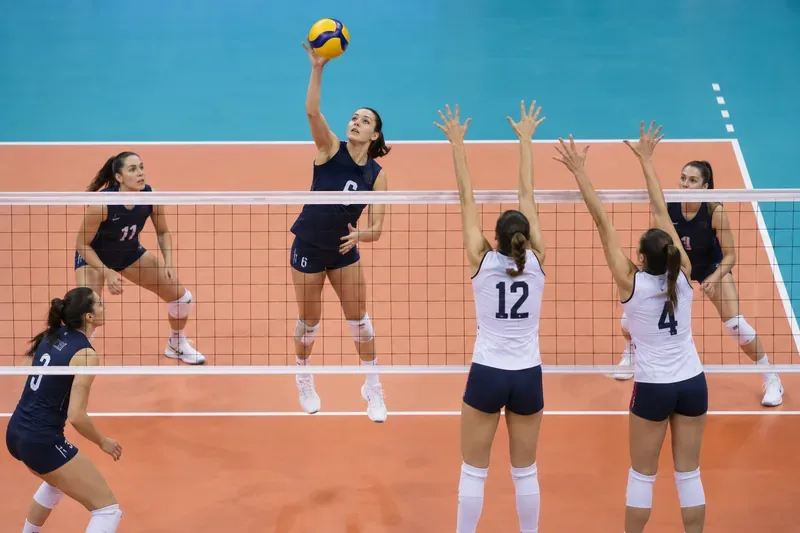
| A blocker touches the net while taking off, reaching, or landing from an active block. | Fault if contact is between the antennae during that action. | Do not end the action window at the instant the ball is contacted. |
| A player close to a ball tries to play it, misses, then touches the net. | Can be a fault. | The rule treats a nearby player attempting to play the ball as in the action even without ball contact. |
| A player touches the net outside the antennae and the contact does not affect play. | Play may continue. | Check that the touch neither interferes nor creates an advantage. |
| The ball is driven into the net and the net springs into an opponent. | No fault under the specific exception. | Distinguish the ball moving the net from a player using or contacting it. |
| A player uses the net to steady themselves or holds it while playing. | Fault for interference. | Identify the support, advantage, hindrance, or hold. |
For players, keep playing until the whistle. A touch may be legal, and a teammate may still be able to save the ball. Stopping on your own can concede a point that the rules do not require you to concede. If a referee whistles, accept the decision and move on; do not assume that a visible net movement alone tells you what the official saw.
For coaches, train the action window rather than a slogan. “Never touch the net” can be a useful safety reminder, but it is not a complete statement of the FIVB rule. Players benefit more from learning that in-play contact between antennae during a jump, hit, or landing is a fault, while outside contact may continue if there is no interference. The cautious coaching choice is to teach players to avoid the net in the front row, while also explaining legal contact so athletes understand why every rally does not end on a brush.
For officials, decide what observable criterion applies. If a clear touch occurs between the antennae during the action of playing the ball, Rule 11.3.1 applies. If the contact is outside that zone or outside the action window, use the interference criteria in Rule 11.4.4. This approach is easier to explain consistently than calling every net vibration or relying on whether the rally looked affected after the fact.
USA Volleyball’s 2025–2027 indoor rulebook repeats the key FIVB provisions: action-of-play contact between antennae is a fault; contact outside the antennae can be legal if there is no interference; and the ball-driven-net exception remains. That makes the same three-part checklist a practical starting point for both FIVB and USAV indoor play.
Do not assume that a pro, college, school, beach, or recreation match automatically uses the same rule language. NCAA maintains a separate women’s volleyball rulebook and publishes current rules resources; tournament organizers may also issue competition-specific modifications. If the result depends on a disputed touch, check the match’s governing rules and the official interpretation resource, then ask the referee or league administrator which provision controls.
For a quick self-check after a call, write down: the player’s location relative to the antennae, what phase of the play the player was in, whether the player was trying to play the ball, and any support or interference that occurred. Those details distinguish a genuine net fault from contact the rules permit the rally to continue through.
Official references: FIVB Official Volleyball Rules 2025–2028, Rules 11.3–11.4; USA Volleyball Indoor Rules 2025–2027, Rules 11.3–11.4; USA Volleyball rulebooks and interpretations; and the NCAA women’s volleyball playing rules page.
See how opponent strength, six possible set scores, and event weight shape FIVB ranking points—and how to check a match’s likely impact.
A volleyball screen is more than standing in front of a server. Under current FIVB and USA Volleyball rules, learn what actions create a screening fault and what does not.
Learn when touching the volleyball net costs a point, which contact can be legal under FIVB and USA Volleyball rules, and why timing and interference matter.
Learn when a volleyball setter dump is legal under FIVB rules, including double contacts, back-row attack limits, the 3-meter line and 2026 rule tests.
Learn when a back-row attack is a fault: check the player’s takeoff at the attack line, ball height at contact, and why landing position can mislead.
Can a libero serve? Compare current FIVB, NCAA women’s and men’s, and 2026–27 NFHS high-school rules, including the one-position limit and two-libero exception.
Learn the FIVB-style order for breaking volleyball pool ties: wins, match points, set ratio, point ratio, then head-to-head results.
Learn which players must stay in rotational order at service, how referees judge volleyball overlap by foot position, and how 2026 FIVB rule tests change the timing.
A practical guide to volleyball video challenges: which calls can be reviewed, how many challenges teams get per set, timing rules, outcomes, and 2026 FIVB tests.