Home
» 🏑 Field Hockey
»
When Is a Field Hockey Penalty Corner Retaken? Early Breaks and Defensive Infringements Explained
When Is a Field Hockey Penalty Corner Retaken? Early Breaks and Defensive Infringements Explained
A penalty corner can look confusing when the whistle goes before the attacking routine has really started. One defender steps off the back line too soon, the umpire stops play, somebody is sent beyond the center line, and the teams reset. Was that the same penalty corner being retaken, or was a new penalty corner awarded?
That distinction matters because the number of defenders allowed to take part can change, and players who were removed for an early break cannot simply return to a retake. Under the International Hockey Federation's Rules of Hockey effective from March 1, 2026, the answer depends first on when the infringement happened and then on who committed it. The current rulebook is available through the FIH Rules of Hockey page and the 2026 Rules of Hockey PDF.
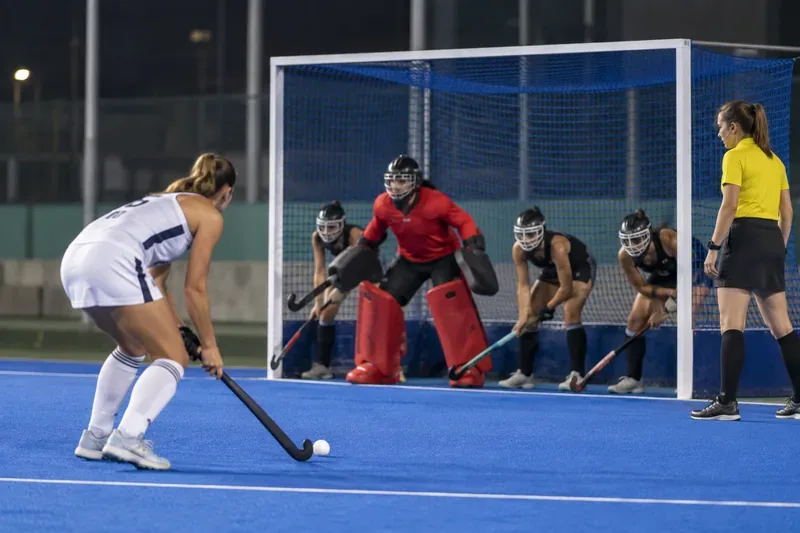
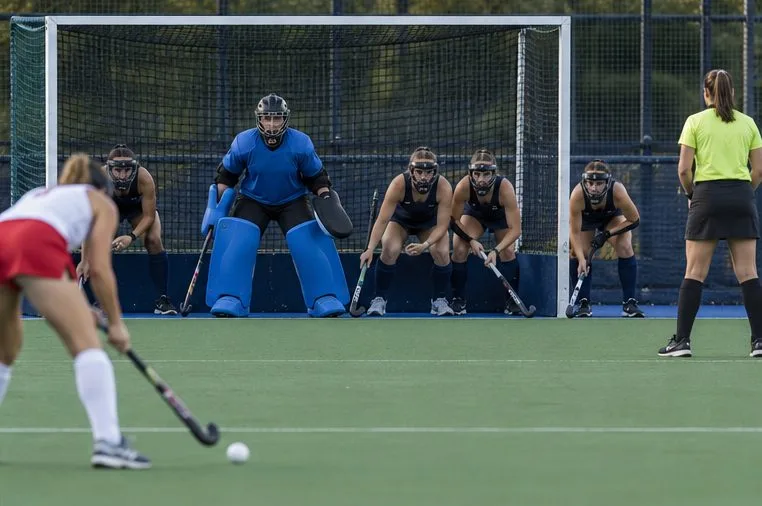
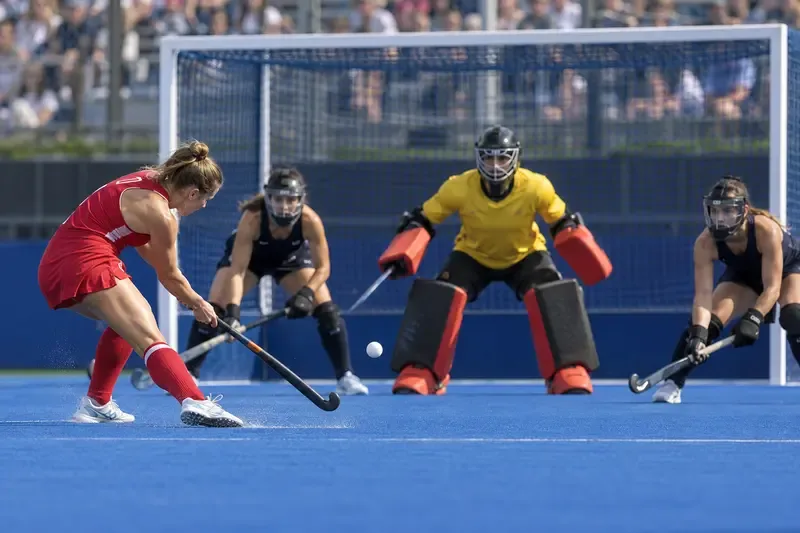
A penalty corner begins with strict starting positions: the injector is at the back line, the other attackers wait outside the circle, and the permitted defenders stay behind the back line until the ball is played.
Why does the umpire sometimes stop a penalty corner before the attack develops?
The most common reason is an early break: a player crosses a line before the ball has been played from the back line. Rule 13.3 sets the starting positions. Up to five defenders, including the goalkeeper, may stand behind the back line, while any other defenders must remain beyond the center line. The attackers other than the injector must stay outside the circle. Until the injector plays the ball, those players may not cross their respective lines.
When one of those starting-position rules is broken, Rule 13.6 gives specific remedies. In several cases, play does not simply continue with an ordinary free hit. Instead, the penalty corner is taken again, often with a player removed from the defensive or attacking setup.
When is an early defensive break a retake?
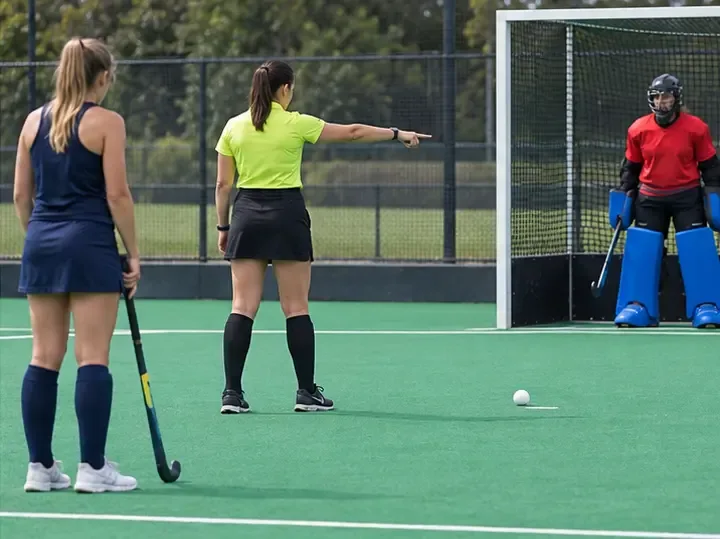
If a defending field player other than the goalkeeper crosses the back line or goal line before the ball is played, that defender must go beyond the center line and cannot be replaced by another defender for the retaken corner. The penalty corner is then taken again.
For a spectator, the easiest way to recognize this is to watch the defenders' feet relative to the goal line and back line before the injector moves the ball. If one defender leaves early and the umpire immediately whistles, the usual sequence is:
The umpire stops the attempted penalty corner.
The offending defender is sent beyond the center line.
No replacement defender is allowed for that retake.
The attacking team resets and takes the penalty corner again.
This is why a retaken penalty corner may be defended by fewer than five players even though the original corner could have had five defenders.
What if a defender who is already beyond the center line crosses it too early?
That also causes a retake. Rule 13.6 states that if a defender crosses the center line before permitted, the penalty corner is taken again. The practical point is that the restriction applies not only to the defenders lined up behind the back line, but also to teammates held back beyond midfield.
When you are reviewing a replay, do not focus only on the goalmouth. A player sprinting forward from the center line can also trigger the whistle before the injection is legally made.
What happens if the goalkeeper breaks early?
The goalkeeper is treated differently from an ordinary defending field player. If the goalkeeper crosses the goal line before the ball is played, the defending team must defend the retaken penalty corner with one fewer player. The defending team nominates a player to go beyond the center line, and that player cannot be replaced for the retake.
If the goalkeeper breaks early again during the same penalty-corner sequence, the defending team must nominate a further player to go beyond the center line. This means repeated goalkeeper breaks can progressively reduce the number of defenders available for the retake.
This is one of the most important reasons to distinguish a retake from a newly awarded penalty corner. The reduced defensive lineup carries through the retake sequence until that penalty corner is considered completed under Rule 13.5.
How long does a corner stay a “retake” rather than become a new penalty corner?
The 2026 rules make this explicit: a penalty corner remains a retaken penalty corner until one of the completion conditions in Rule 13.5 occurs. Those conditions include a goal being scored, a free hit being awarded to the defense, the ball traveling more than five meters from the circle, the ball going over the back line without another penalty corner being awarded, certain defensive offenses that do not lead to another penalty corner, or the award of a penalty stroke.
Once the original penalty corner has been completed, a later penalty corner is a new award rather than another retake. A newly awarded penalty corner may again be defended by up to five players, subject to any separate personal penalties or suspensions in force.
Does every defensive infringement lead to a retake?
No. This is where many viewers mix up two different ideas. An early break is a special procedural infringement covered by Rule 13.6. A defensive foul committed after the corner has properly started is judged under the normal penalty provisions.
For example, if a defender commits an offense in the circle that does not prevent the probable scoring of a goal, the umpire may award another penalty corner. If a defender commits an offense that prevents the probable scoring of a goal, the correct penalty can be a penalty stroke. Those outcomes are not automatically described as “retakes” just because they occur during a penalty-corner phase.
Situation
Typical result under FIH rules
Key consequence
Defending field player breaks the back line early
Penalty corner retaken
Offender goes beyond center line and cannot be replaced
Goalkeeper breaks the goal line early
Penalty corner retaken
Defense loses one player for the retake; team nominates who goes beyond center line
Defender beyond midfield crosses center line early
Penalty corner retaken
Teams reset before the injection
Defender commits an ordinary foul after a legal start
Penalty depends on the offense
May be a new penalty corner, free hit, or penalty stroke
Defensive offense prevents the probable scoring of a goal
Penalty stroke
The penalty-corner sequence ends because Rule 13.5 treats a penalty stroke as completion
Can an attacking mistake also cause a penalty corner to be retaken?
Yes. The retake rules are not only for defenders. If the injector does not have at least one foot outside the field, the penalty corner is taken again. If the injector feints at playing the ball, that player must go beyond the center line and is replaced by another attacker before the corner is retaken.
If another attacker enters the circle before the ball is played, the injector is the player required to go beyond the center line, and the penalty corner is retaken. Players sent beyond the center line for this reason cannot return for subsequent retakes of that same penalty corner, although they may return for a later, newly awarded penalty corner.
There is also an important causation rule: if an injector's illegal feint causes a defender to break early, only the attacker is penalized under that specific provision. This prevents the defense from being punished for reacting to an illegal action by the injector.
What about protective equipment and competition-specific procedures?
At FIH events, tournament regulations can add operational requirements to the underlying Rules of Hockey. The May 2026 FIH Outdoor Tournament Regulations, for example, require defending field players at a penalty corner to wear face masks until the first shot at goal; removing the mask before that point results in the penalty corner being retaken. The same regulations also govern the 40-second penalty-corner setup procedure used at applicable FIH competitions. See the FIH Outdoor Tournament Regulations, May 2026.
This is why players, coaches, and officials should check both the core rulebook and the regulations for the specific competition. National associations can also determine implementation dates or approved variations at certain levels, so a local league should not automatically be assumed to use every FIH tournament procedure.
How should you read a confusing penalty-corner restart?
Start with the simplest question: did the infringement happen before the injector legally played the ball? If yes, check whether it was an early break or another setup offense covered by Rule 13.6. Then identify whether the offender was a field defender, goalkeeper, attacker, or injector, because the personnel consequence is different in each case.
If the ball had already been legally injected, shift your attention away from the early-break rules. Ask what offense occurred, where it occurred, and whether it prevented the probable scoring of a goal. Those facts determine whether the next decision is another penalty corner, a defensive free hit, or a penalty stroke.
How can you check whether the umpire's restart matches the rule?
Use this short self-check when watching live or reviewing video:
Check the moment of the whistle. Was it before or after the injector played the ball?
Identify the line that was crossed. Back line, goal line, center line, or circle?
Identify the player. Field defender, goalkeeper, injector, or another attacker?
Watch who leaves the setup. For an early break by a field defender, that defender should go beyond the center line and cannot be replaced for the retake.
Count defenders on the next setup. A retake after a defensive break may have fewer defenders than a newly awarded penalty corner.
Decide whether the original corner had already been completed. Rule 13.5 is the dividing line between a continuing retake sequence and a later new award.
The central idea is straightforward once the timing is clear: an early break is primarily a setup violation, so the rules usually reset the penalty corner and adjust who may participate. A defensive foul after a legal start is a different problem and is penalized according to its location, intent, and effect on a scoring chance. Keeping those two categories separate makes most penalty-corner decisions much easier to follow.