Home
» 🏑 Field Hockey
»
Field Hockey Video Referral Rules: Who Can Ask, What Gets Reviewed, and When Teams Lose a Challenge
Field Hockey Video Referral Rules: Who Can Ask, What Gets Reviewed, and When Teams Lose a Challenge
A video referral can feel like a direct appeal to the screen, but in field hockey it is a tightly limited request routed through the on-field umpires. Knowing who may initiate it, which decisions are reviewable, and what happens to a team’s remaining referral helps players use the system when it can actually change an important call.
This guide describes the International Hockey Federation (FIH) outdoor tournament framework. FIH event regulations and national or collegiate competitions can differ, so teams should check the competition’s current rules before play. The FIH’s general tournament regulations file currently posted online carries an October 2023 label for its outdoor video-umpire appendix; more recent FIH competition regulations retain the core team-referral framework, with some differences in shoot-out wording.
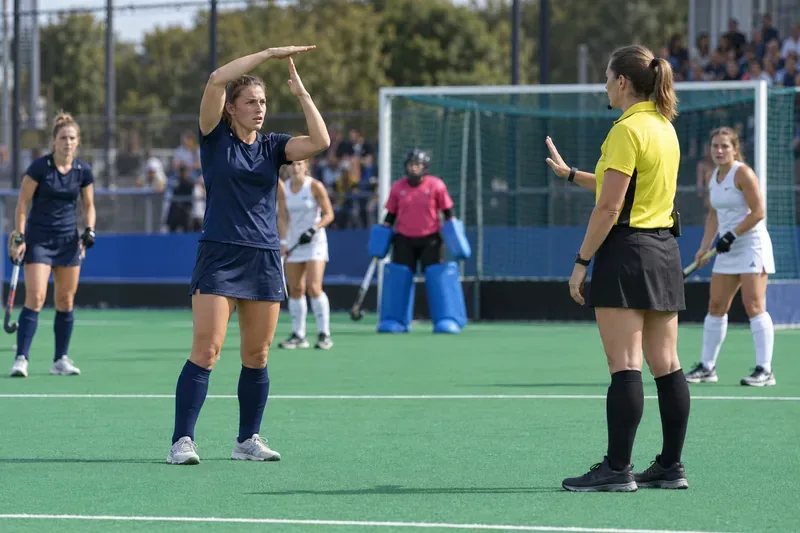
A player signals a team video referral while the on-field umpire acknowledges the request.
Who can ask for a video referral?
There are two routes, and the distinction matters. A match umpire may independently refer an eligible incident to the video umpire when uncertain about a decision. A team referral begins with a player, but only the match umpire can formally stop play and send the incident to video review. Coaches, managers, substitutes, spectators, the technical table, and the video umpire cannot stop the match to demand a referral. A protest or repeated appeal from the sideline is not a valid substitute.
For a team referral under the FIH outdoor tournament framework, any player from that team who was on the field at the time of the incident may request it. The player must indicate the request immediately, show the recognized “T” signal, and tell the umpire verbally that the team wants to use its referral. The player must also identify the exact decision or non-decision to be reviewed within 20 seconds. If the player does not give a question in that period, the referral defaults to the last eligible decision or non-decision involving a goal, penalty stroke, penalty corner, or shoot-out retake.
In practice, a specific request is more useful than a general protest: for example, identify whether the ball crossed the goal line or whether a defender committed an eligible circle offence leading to a penalty stroke. The umpire still controls the referral and communicates the question to the video umpire.
What can be reviewed?
A team does not receive a general replay challenge for every disputed foul. In the FIH outdoor tournament regulations, a team referral in regulation time is limited to eligible decisions within the 23-meter areas that relate to awarding or not awarding a goal, penalty stroke, or penalty corner. Personal penalty cards are not reviewable through a team referral. This boundary is why a marginal midfield free hit, an ordinary restart, or a card a team dislikes may fall outside the team’s referral rights even if the broadcast shows replays.
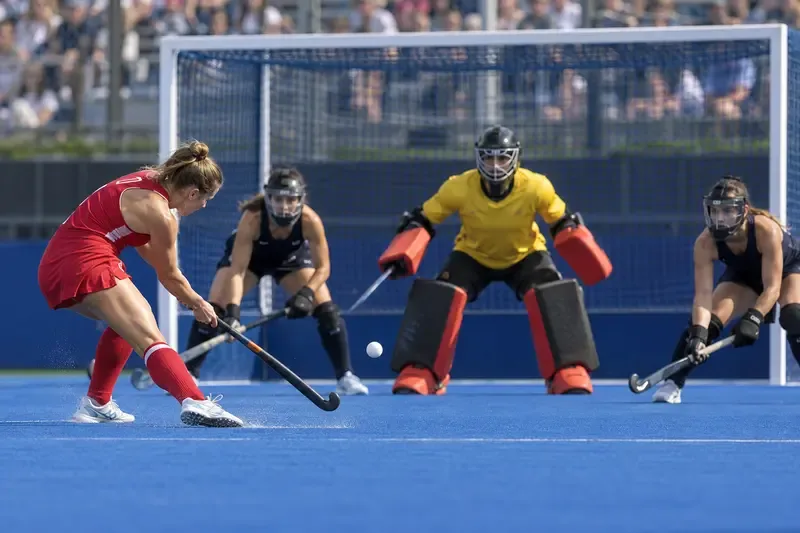
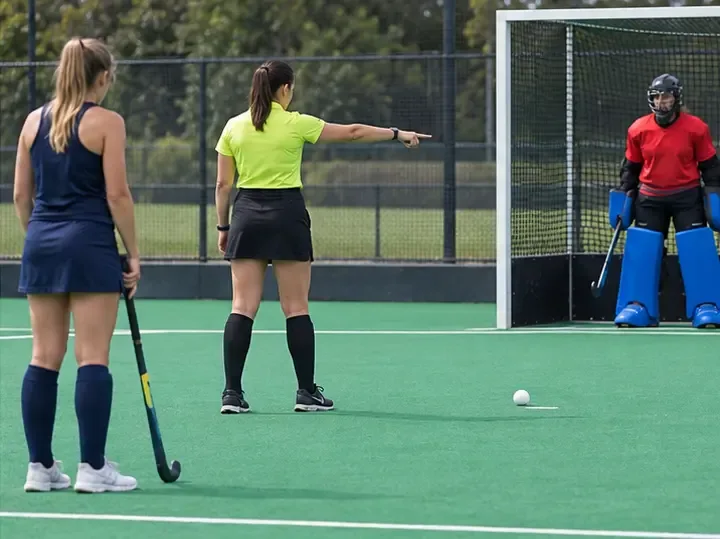
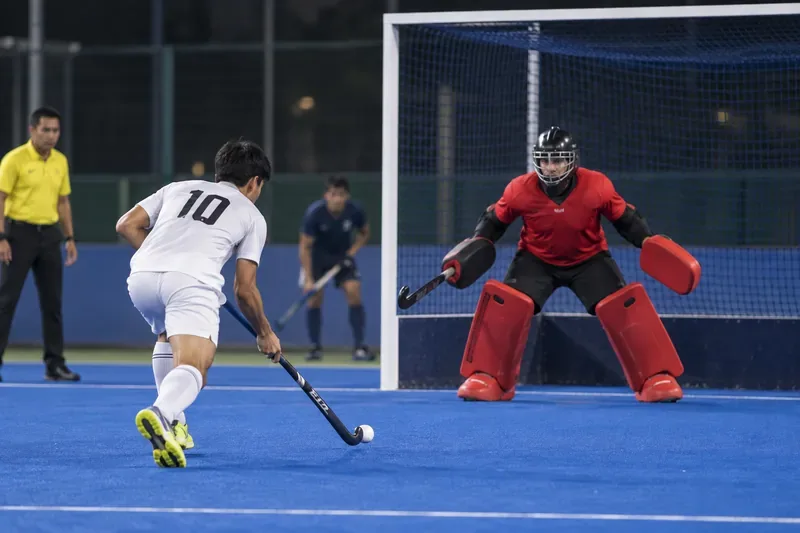
For a goal decision, the review can address whether the goal was legally scored. Relevant questions can include whether the ball completely crossed the goal line, whether an attacker legally played or touched it in the circle, whether it left the circle before entering from a penalty-corner shot, or whether a rule breach in the attacking 23-meter area occurred in the play leading to the goal. For a penalty-stroke decision, the video umpire may help determine whether a stroke was correctly awarded or should have been awarded. A team referral can also challenge an eligible penalty-corner award or non-award.
The umpire’s own referral can have a broader purpose than a team referral. FIH video-umpire protocols allow the match umpires to seek help on eligible goal and penalty-stroke questions and serious-misconduct incidents anywhere on the field. That does not give a team the right to use its referral to review a card or any incident anywhere on the pitch. Keep the two routes separate when interpreting a televised review.
Shoot-outs are a separate case
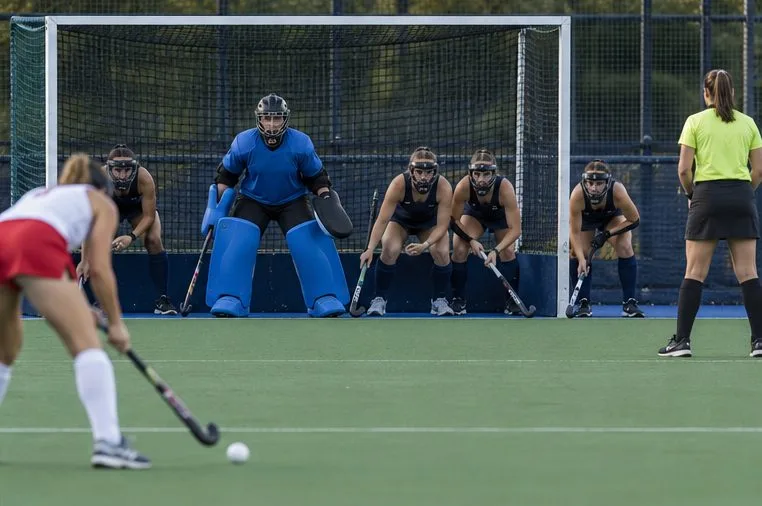
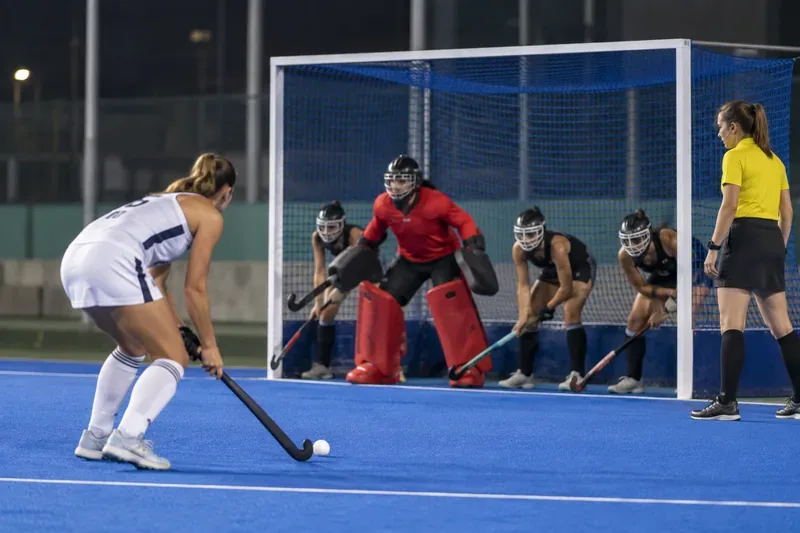
FIH regulations generally provide a separate team-referral opportunity during a shoot-out competition, subject to the event’s rules. Depending on the specific competition regulations, the question can concern a shoot-out retake and may also include whether a penalty stroke should be awarded. Because the wording is not identical across every event document, players should confirm the event-specific provision rather than assume a regulation-time referral automatically carries over or that every shoot-out decision is challengeable.
When does a team lose its referral?
Under the FIH framework, a team keeps its referral if the video review upholds its challenge. It also keeps the right when the video umpire returns “No Advice Possible.” That outcome can occur when the relevant action is not visible, the available footage is inconclusive or poor quality, the right camera angle is missing, or a technical problem prevents a decision. In those situations, the original on-field decision stands; if there was no prior decision, the regulations specify the applicable default, such as no goal or no penalty stroke.
A team loses its referral when the review finds no clear reason to change the match umpire’s original decision. In everyday terms, an unsuccessful challenge costs the team its remaining team referral for that part of the match. Under the standard FIH format, each team has one team referral during regulation time and one during a shoot-out competition, subject to the competition regulations. A successful referral or a “No Advice Possible” result does not consume the team’s right.
A team cannot ask the opposing team to review the same incident after it has already been adjudicated. That rule prevents the same call from being reopened back and forth. Also, video advice is not itself the final ruling: the match umpire retains the final decision, including interpretation of the rules.
How to judge whether a referral is worth using
Before signaling, weigh three things: eligibility, timing, and likely evidence. First, is the incident one the team is allowed to refer under the applicable event rules? Second, can the on-field player signal immediately and state the issue precisely within the deadline? Third, is there a realistic camera view that could establish the relevant fact? A close call inside the circle may be worth reviewing if the ball, stick, feet, and goal line are visible. A request based only on a feeling that contact occurred may be less useful if bodies block the view.
Teams should also consider game context. When the possible change is a goal, penalty stroke, or penalty corner, the stakes may justify using a referral even if the replay outcome is uncertain. When the requested review is outside the permitted category, or is only an attempt to contest an ordinary restart, the team risks losing the opportunity without getting the question it wants answered. The system is designed to correct material errors, not to guarantee that every angle produces certainty.
Limits to keep in mind
Video review depends on the camera coverage and the event’s technology. It cannot recover an angle that was never recorded, and a slow-motion image can make incidental contact look more decisive than it was. The video umpire provides advice and may identify an observed rules breach, but the match umpire decides how that advice applies. The answer may therefore remain the original call, even after several replays.
For players and viewers, the best test of a referral is not whether the screen shows a replay, but whether the question was eligible, was identified promptly, and produced clear evidence that supports changing the decision. If those conditions are missing, the referral system has reached its limit; the remaining judgment belongs to the umpires on the field.
Rules reviewed September 30, 2026. Check the regulations for the specific competition before relying on a referral allowance or review category, especially for domestic, school, collegiate, indoor, and shoot-out play.