Home
» 🏑 Field Hockey
»
Asian Games Field Hockey Tiebreakers: Goal Difference, Goals Scored and Shootouts Explained
Asian Games Field Hockey Tiebreakers: Goal Difference, Goals Scored and Shootouts Explained
When two teams finish an Asian Games field hockey pool with the same number of points, the table is not decided by goal difference immediately. The official 20th Asian Games Aichi-Nagoya 2026 tournament regulations, published in August 2026, use a longer sequence: first points, then matches won, then goal difference, then goals scored, followed by head-to-head and additional criteria if teams are still level.
That order matters because a team with the better goal difference can still rank lower if the other tied team has won more matches. It also means a late goal can change the standings even when it does not change the result of the match itself.
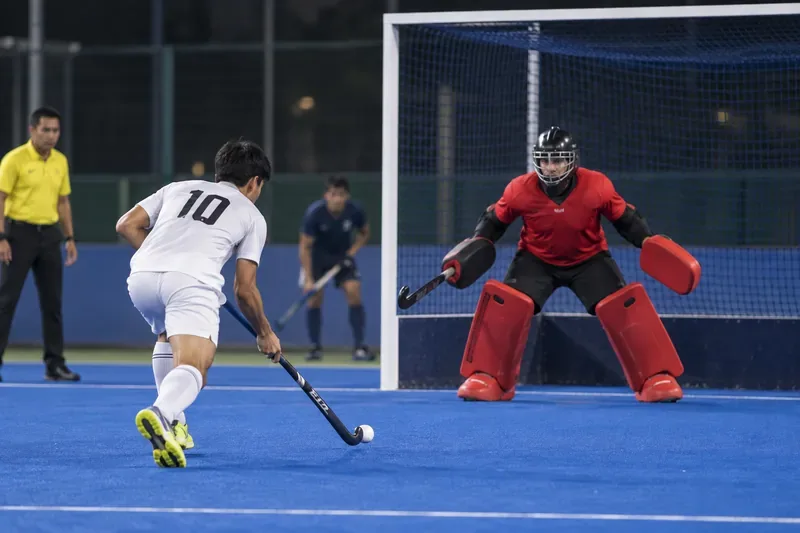
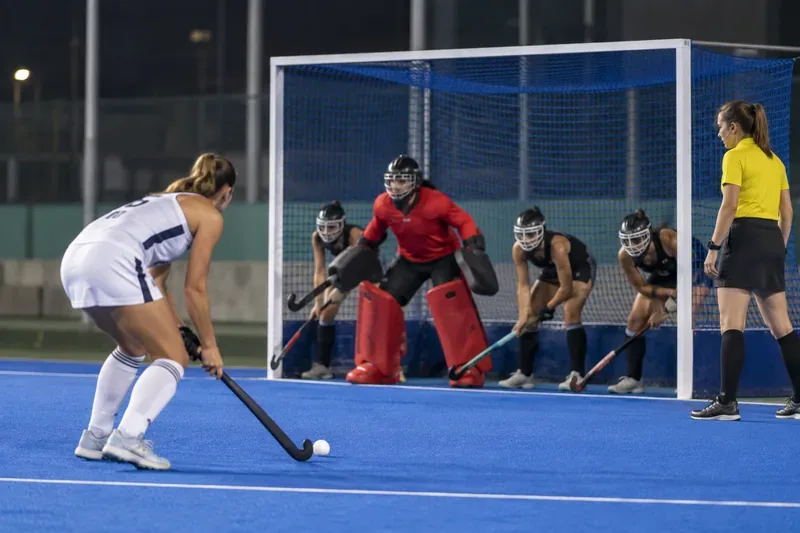
A one-on-one field hockey attack illustrates the type of situation used in a shootout when a tied Asian Games match or pool ranking still needs a winner.
What is the first tiebreaker when teams finish level on points?
The first tiebreaker is matches won, not goal difference.
Asian Games pool matches award three points for a win, one point to each team for a draw, and zero points for a loss. Teams are first ranked by total points. If two or more teams have the same total, the regulations compare the number of matches each team won.
This can produce a result that surprises fans who are used to competitions where goal difference comes immediately after points. For example, imagine Team A and Team B both finish on 10 points. Team A has three wins, one draw and one loss, while Team B reaches 10 points through a different set of results that includes fewer wins. Team A ranks higher before goal difference is even checked.
What to check first: when the standings are tied on points, count wins before comparing goals.
When does goal difference decide the ranking?
Goal difference is the next criterion if the tied teams are still equal after matches won.
The regulations define goal difference as goals for minus goals against. A positive figure ranks above a negative one. So a team that scores 18 and concedes 6 has a goal difference of +12, while a team that scores 15 and concedes 5 has +10. If all earlier criteria are equal, the +12 team ranks higher.
This is why the margin of victory can matter late in the pool stage. A 5-0 win changes goal difference by five; a 2-1 win changes it by only one. The match still awards the same three points, but the larger margin can become decisive if teams later finish level on both points and wins.
Does conceding matter as much as scoring?
Yes. Goal difference rewards the balance between attacking output and defensive record. Winning 6-3 produces the same +3 goal difference as winning 3-0. The total number of goals scored is considered only at the next step.
When do goals scored become the tiebreaker?
If teams are still tied after points, wins and goal difference, the next comparison is their total number of goals for in pool matches.
Suppose two teams both finish on 12 points, both have four wins, and both have a +9 goal difference. Team A has scored 20 goals and conceded 11; Team B has scored 17 and conceded 8. Their goal difference is identical, but Team A ranks higher because it has scored more goals.
This is a useful distinction when following a final pool match. A team may need not only to improve its goal difference, but also to reach a specific goals-scored total if another team is level on the earlier criteria.
Order
Pool-stage criterion
What it means
1
Points
3 for a win, 1 for a draw, 0 for a loss
2
Matches won
More victories ranks higher
3
Goal difference
Goals for minus goals against
4
Goals for
More total goals scored ranks higher
5
Head-to-head or tied-team mini-table
Depends on whether two or more teams remain tied
6
Field goals scored
Used if the tie still remains
7
Shootout procedure
Used if teams are still inseparable
Does head-to-head come before or after goal difference?
At the 2026 Asian Games, head-to-head comes after wins, goal difference and goals scored in the pool-ranking sequence.
If exactly two teams are still tied, the result of the match between those teams determines their order. If more than two teams remain tied, the regulations create a ranking using only the matches played among those tied teams. The same points-based process is then applied to that mini-table.
This is important when three teams finish together. Looking only at the overall table may not be enough. You may have to isolate the results among the tied teams and recalculate the relevant comparisons.
What happens if teams are still tied after head-to-head?
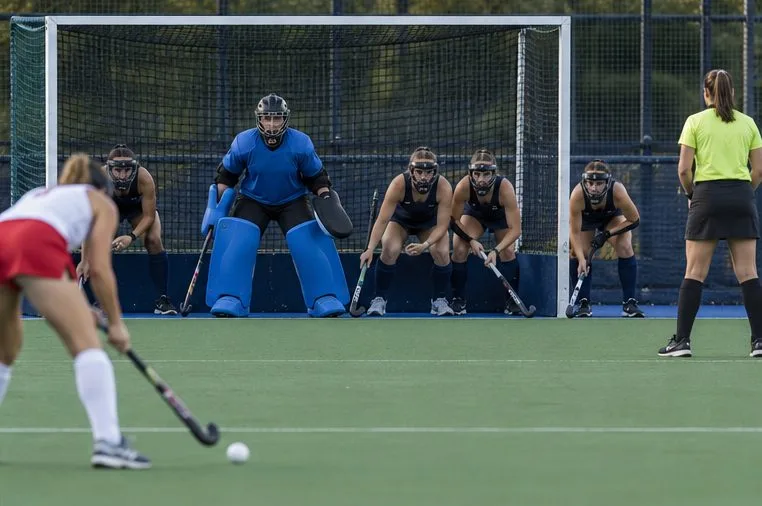
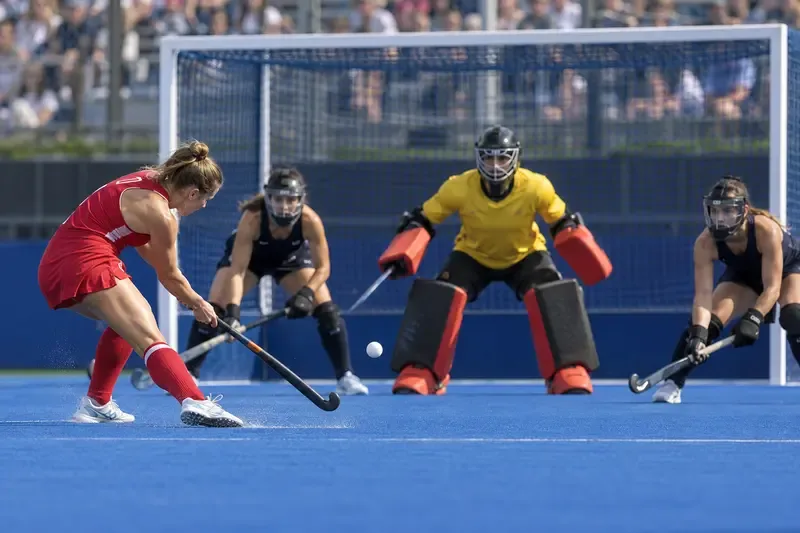
The next criterion is the number of field goals scored in pool matches. In hockey terminology, field goals are goals scored from open play rather than from a penalty corner or penalty stroke.
If two teams are still equal after that, their pool ranking is decided by a shootout competition. If more than two teams remain tied, each plays a shootout against the other tied teams under the special ranking procedure in the regulations.
That makes shootouts a last-resort pool-ranking mechanism, not the normal first answer to a tied table.
How does an Asian Games field hockey shootout work?
A hockey shootout is different from a soccer penalty shootout. Each team nominates five players to take one-on-one attempts against the opposing goalkeeper or defending player.
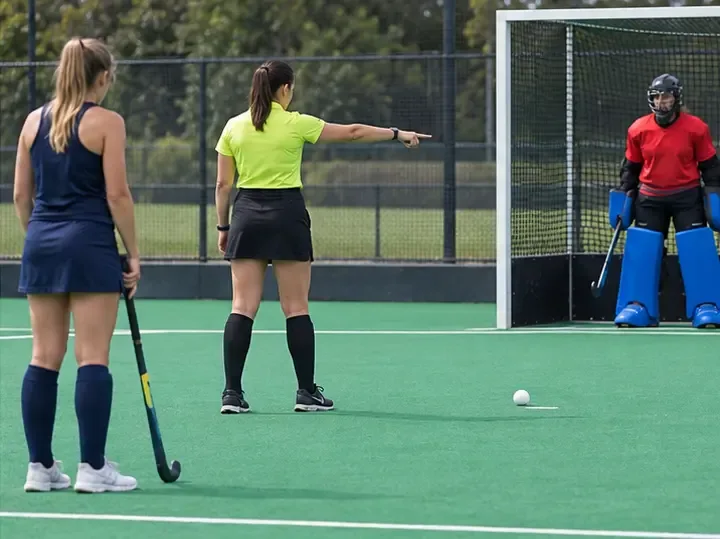
For each attempt, the ball starts on the 23-meter line opposite the center of the goal. After the umpire starts the attempt, the attacker has eight seconds to try to score. The attacker and goalkeeper can both move, so the play can involve dribbling, changes of direction and a shot rather than a single stationary strike.
Five players from each team take turns, for a maximum of 10 attempts in the first series. The shootout can finish early if one team moves ahead by more goals than the other team can recover with its remaining attempts.
If the score is still tied after five attempts each, another series begins. From that stage, once both teams have taken the same number of attempts and one team is ahead by one goal, that team wins. Further series are used if necessary.
Do knockout matches go to extra time before a shootout?
No extra-time period is specified for tied classification matches in the 2026 Asian Games hockey regulations. If a classification match is tied at the end of regulation time, a shootout is used to establish the winner.
That applies to the medal-phase structure as well as other classification matches that require an outright winner. The regulations say the first shootout should begin as soon as possible after the match and no later than five minutes after regulation time ends.
For fans, the practical takeaway is simple: if a semifinal, medal game or classification match is level at full time, prepare for a shootout rather than assuming there will be an extra period.
What should you calculate during the final pool matches?
If qualification or semifinal seeding is close, use the official order rather than looking only at goal difference. A quick calculation should follow these questions:
Will the teams finish on the same number of points?
If yes, which team has more wins?
If wins are equal, what is each team's goal difference?
If goal difference is equal, which team has scored more goals?
If they remain tied, what happened in the head-to-head match, or what does the mini-table among tied teams show?
If still level, compare field goals scored.
Only after those criteria are exhausted does the pool-ranking shootout procedure become relevant.
Because goals scored and conceded in the closing minutes can affect several layers of this calculation, live standings can shift even after the semifinal places appear nearly settled.
What is the safest way to verify the standings?
Use the tournament-specific regulations first. Hockey competitions can use different formats, and relying on a generic explanation from another event can produce the wrong answer.
For Aichi-Nagoya 2026, Appendix 2 of the official tournament regulations contains the pool-ranking sequence, Appendix 3 explains the competition plan and classification matches, and Appendix 4 sets out the shootout procedure. The FIH event pages are the best place to confirm official match scores and pool results.
The key sequence to remember is: points, wins, goal difference, goals scored, head-to-head or mini-table, field goals, then shootouts if the tie still survives. For a tied knockout or classification match, the route is much shorter: full time, then shootout.