Home
» 🏑 Field Hockey
»
Field Hockey Shoot-Out Rules: The Eight-Second Clock and Goalkeeper Fouls
Field Hockey Shoot-Out Rules: The Eight-Second Clock and Goalkeeper Fouls
A field hockey shoot-out is a quick one-on-one tiebreaker: an attacker starts near the 23-meter line and has eight seconds to try to score against a goalkeeper or defending player. The clock is short, but it is only one part of the decision. The attempt can also end with a goal, an attacker’s offense, a defending player’s offense, or the ball going out of play. The goalkeeper’s offense can lead to either a retake or a penalty stroke, depending on whether it is judged intentional.
This guide follows the FIH Rules of Hockey effective March 1, 2026, and the FIH Outdoor Tournament Regulations published June 2026. A shoot-out tiebreaker is used only when a competition’s regulations call for it; national associations and specific tournaments can set variations. Check the event’s own regulations if they differ from the standard outdoor procedure described here.
First, know what kind of “penalty” you are watching
A penalty shoot-out competition is not the same as a penalty stroke. In the shoot-out tiebreaker, one attacker and one goalkeeper or defending player move in an open one-on-one for up to eight seconds. A penalty stroke is a separate, formal attempt from the penalty spot after certain offenses. It has its own setup and does not continue the original eight-second duel.
That distinction explains the rule that often surprises new viewers: an intentional goalkeeper offense during a shoot-out awards a penalty stroke, but an unintentional offense leads to a retake of the shoot-out. Don’t assume every contact or obstruction produces a stroke; the umpire must judge the offense under the competition rules.
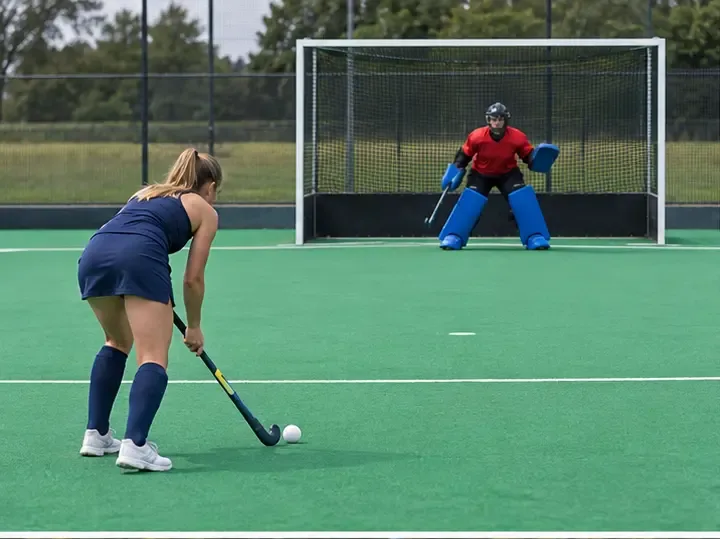
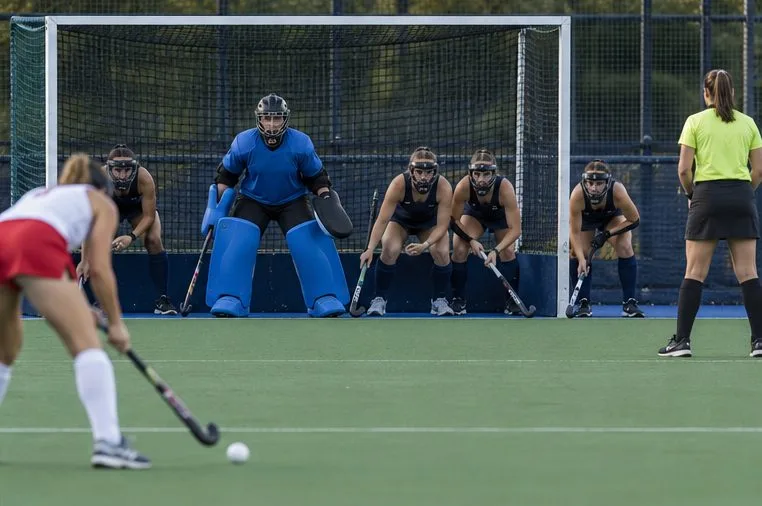
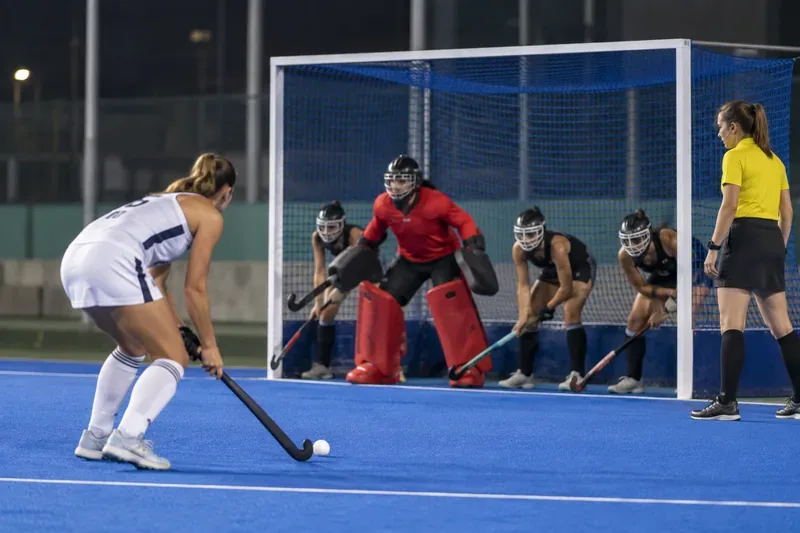
At the start, the ball is set on the 23-meter line opposite the goal center, with the attacker outside the area and the goalkeeper on or behind the goal line.
How the shoot-out starts
Under the standard FIH outdoor tournament procedure, teams nominate five players to take attempts, alternating one at a time. A nominated player may also defend the opponent’s attempts. The goalkeeper or defending player starts on or behind the goal line between the posts. The ball is placed on the nearest 23-meter line opposite the center of the goal, and the attacker waits outside the 23-meter area near the ball.
A coin toss gives the winner the choice to take or defend first. The umpire starts the attempt with a whistle, or, where the venue has the linked equipment, signals for an automatic whistle that starts the clock. An official at the technical table operates the clock. After the starting signal, both attacker and defender may move in any direction.
For a beginner watching from the stands, focus on three things before the whistle: the ball’s position on the 23-meter line, the goalkeeper’s starting position on the goal line, and the moment the official starts the clock. The eight seconds run from that signal, not from the first touch by the attacker.
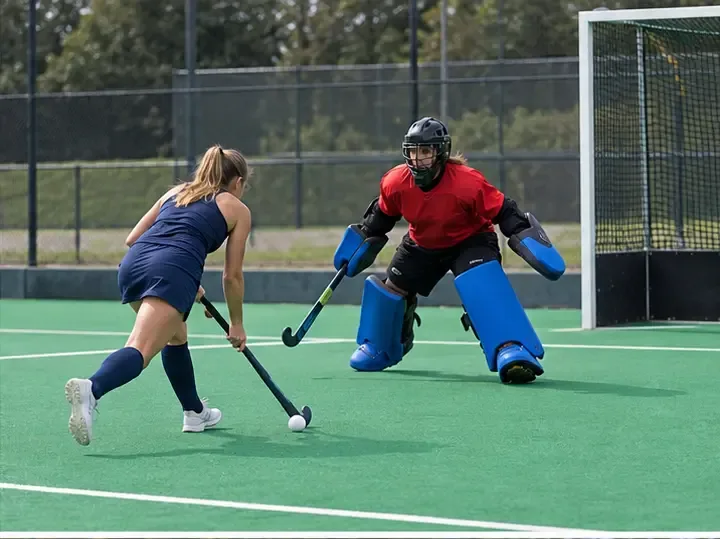
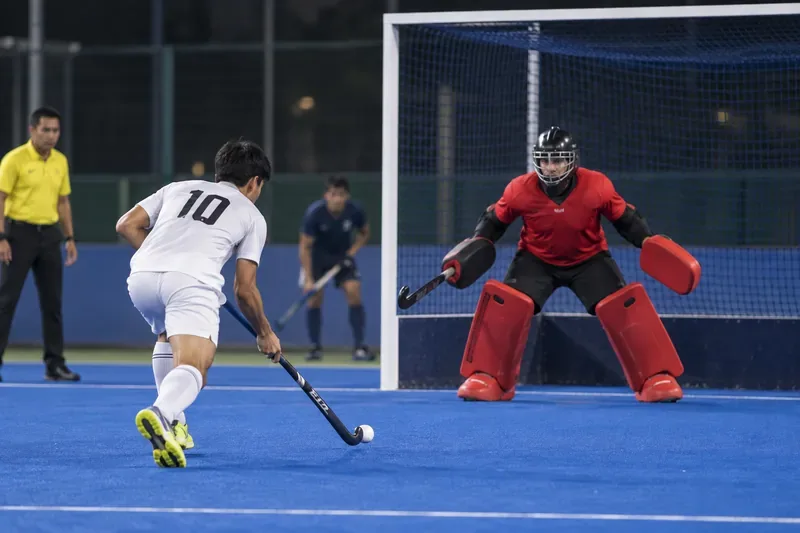
Once the umpire starts the attempt, the attacker and goalkeeper may move in any direction while the eight-second clock runs.
What does the eight-second clock allow?
The attacker has a maximum of eight seconds to complete the scoring attempt. The shooter can carry the ball, change direction, or try to draw the goalkeeper out, while the defender can advance, retreat, or move laterally. The attempt ends as soon as one of the rule’s ending events occurs; the attacker does not get eight seconds plus extra time for a shot already in motion.
The shoot-out is complete when:
Eight seconds have elapsed from the starting signal.
A goal is scored.
The attacker commits an offense.
The goalkeeper or defending player commits an offense, with the result determined by whether it was unintentional or intentional.
The ball goes out over a side-line or the back-line. The regulation expressly includes a goalkeeper or defender intentionally playing it over the back-line.
If play is stopped for another reason before any of those events ends the attempt, the standard outdoor regulation says the shoot-out is retaken. That covers an interruption that leaves the attempt unresolved; it is not a general “try again” option after a miss or after time expires.
What happens when the goalkeeper commits an offense?
The FIH outdoor regulations make the intent distinction explicit, and it applies whether the defender’s offense happens inside or outside the circle:
Defender’s action
Ruling
What happens next
Unintentional offense
Shoot-out is retaken
The same attacker goes again against the same goalkeeper or defending player.
Intentional offense
Penalty stroke awarded
An eligible player listed on the match report takes the separate stroke, with an eligible defender.
Goalkeeper deliberately plays the ball over the back-line
The shoot-out ends because the ball has gone out of play
This action is specifically included among the events that complete the attempt.
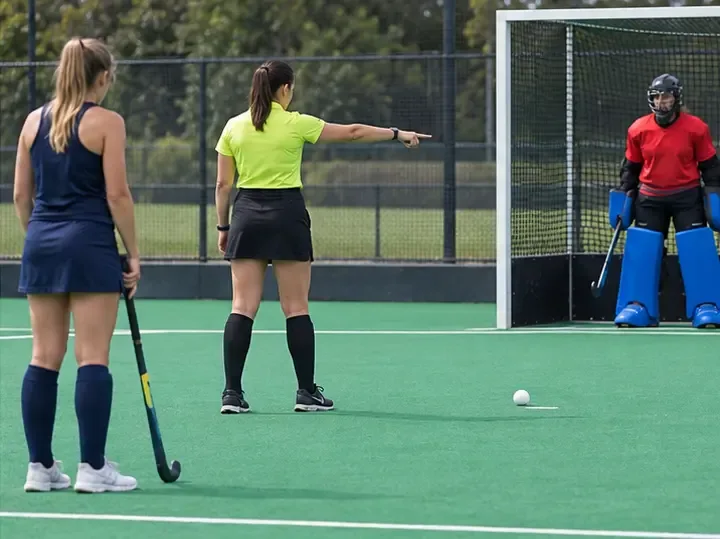
For the intentional-offense penalty stroke, the ball is placed on the penalty spot. The attacker and defender follow the ordinary penalty-stroke procedure: everyone else stays outside the 23-meter area; the defending player begins with both feet on the goal line and cannot leave it before the ball is played; the attacker must not feint and can play the ball once. That is a different restart from replaying the moving eight-second contest.
If the defender is judged to have committed an unintentional offense, the same attacker takes the shoot-out again against the same defender.
How do officials decide between a retake and a penalty stroke?
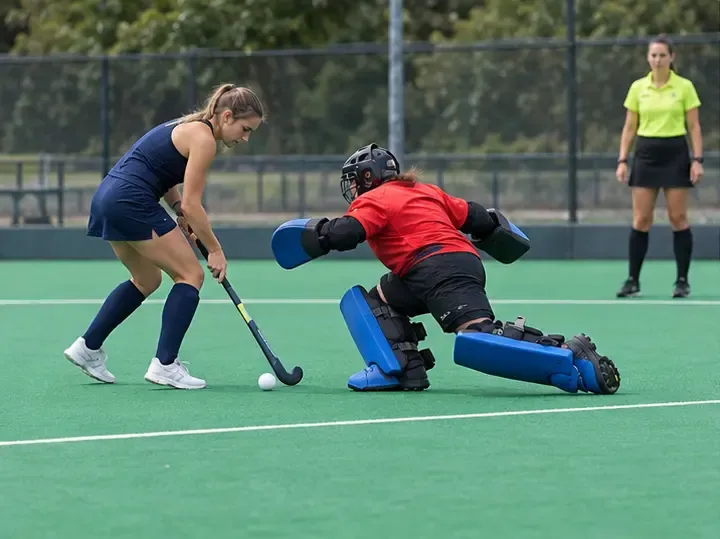
The rule text uses “unintentional” and “intentional offense,” so a spectator cannot decide the outcome solely from the fact that the goalkeeper made contact, slid across a path, or tried to block the ball. The key is the umpire’s ruling on the defender’s action. A goalkeeper’s ordinary attempt to save the ball is not automatically an offense; the issue is whether a rule breach occurred and how it was classified.
Keep the outcomes separate:
Unintentional offense: repeat the same one-on-one, preserving the same attacker and defender.
Intentional offense: stop the shoot-out and award a penalty stroke, which is taken under the separate stroke procedure.
No offense: play continues until a goal, attacker offense, eight seconds, or the ball going out completes the attempt.
Do not confuse this with the normal in-match rule for a penalty stroke, which concerns specified defender offenses in the circle. The shoot-out appendix supplies a specific sanction for intentional offenses by the goalkeeper or defending player inside or outside the circle. Apply the shoot-out rule to the tiebreaker rather than importing only the regular-match penalty-stroke test.
An intentional goalkeeper or defending-player offense during the shoot-out awards a separate penalty stroke under the FIH outdoor regulations.
How the teams finish the tiebreaker
The standard outdoor format starts with five alternating attempts for each team. The team with more goals wins; play can stop before all five attempts if the opponent no longer has enough remaining attempts to catch up. If the teams are level after five apiece, they take another series. In a tied series, the first team to take in one series defends first in the next, and the sequence of shooters may change. If another series is needed after a second tied set, the team that starts alternates.
Some competition formats award points differently even though the shoot-out winner is decided this way. For example, the FIH Pro League has its own competition regulations. Use the event rules to understand whether the shoot-out decides the match winner, a bonus point, qualification, or a ranking position.
Common mistakes to avoid
Starting the count at first touch: the eight seconds begin with the umpire’s start signal.
Calling every goalkeeper infringement a penalty stroke: an unintentional offense means the same matchup is replayed; an intentional one means a stroke.
Assuming the attacker must shoot immediately: the attacker may use the full eight seconds, but time ends the attempt when it expires.
Confusing a back-line clearance with a foul sanction: if the defender deliberately sends the ball over the back-line, the listed result is that the shoot-out is complete.
Applying the rules of another format: a penalty shoot-out is different from football/soccer penalties and from an in-match hockey penalty stroke. Confirm the sport and tournament before interpreting the call.
Quick check while watching
To follow any disputed attempt, ask in order: Did the official start the clock? Has the eight-second limit expired? Did the ball enter the goal or leave the field? Did the attacker commit an offense? If the defender did, was it ruled intentional or unintentional? Those checks point to the right outcome: completed attempt, retake, or penalty stroke.