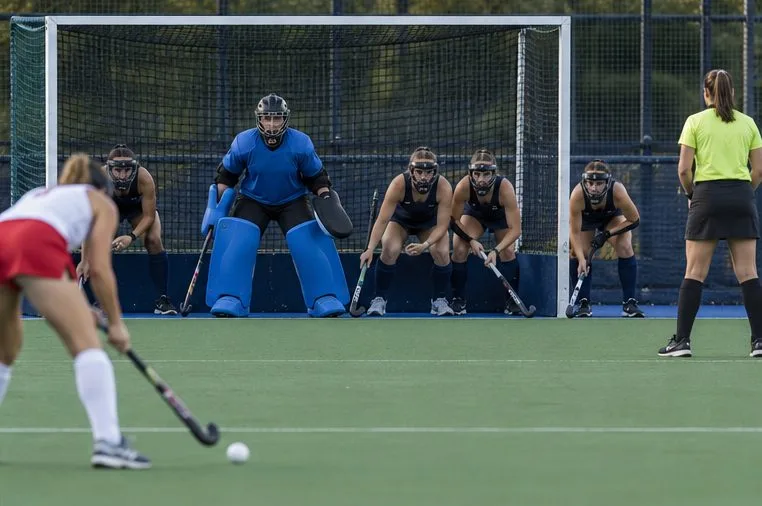
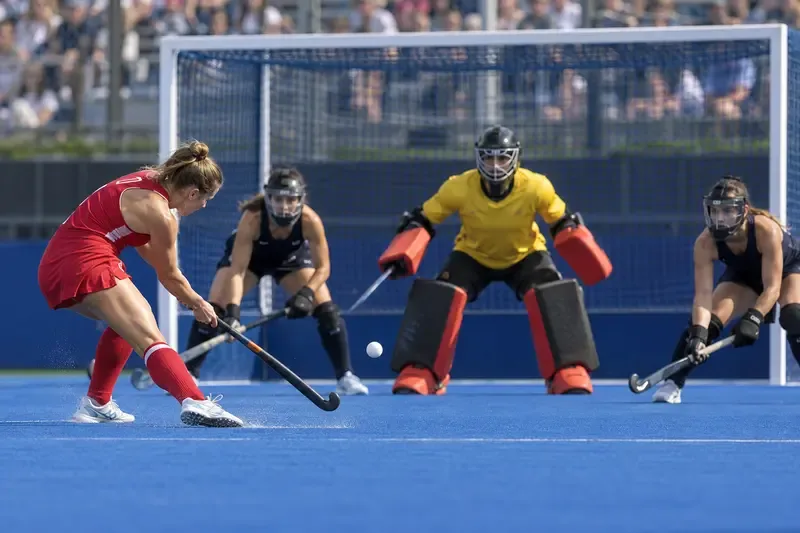
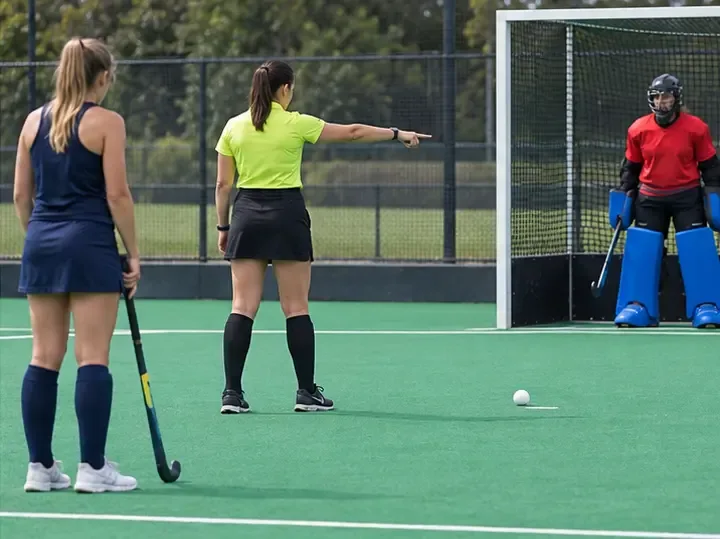
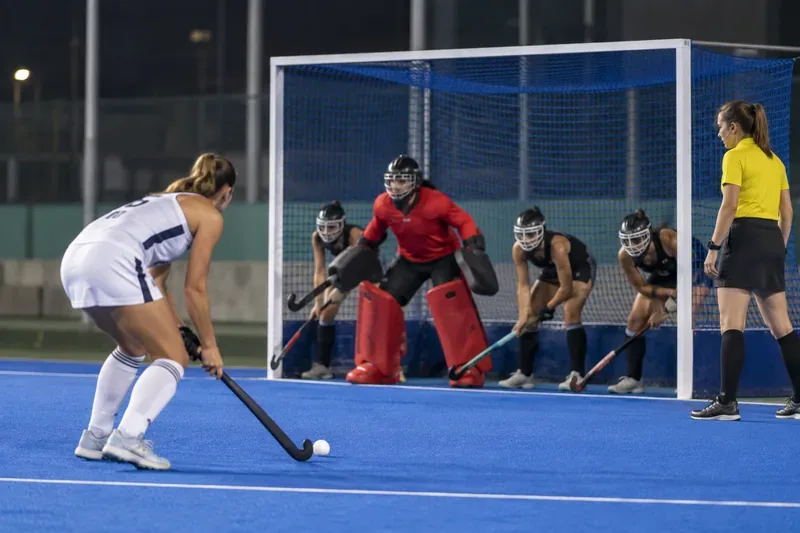
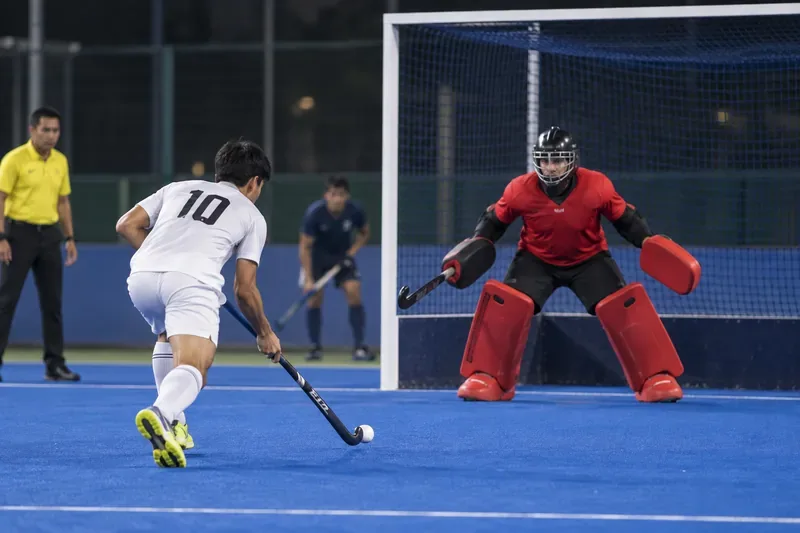
A field hockey card does more than identify a foul: it can change how many players a team has on the field and for how long. Under the International Hockey Federation (FIH) outdoor 11-a-side rules in force internationally from March 1, 2026, a green card means a two-minute suspension, a yellow card means at least five minutes, and a red card removes the player for the rest of the match. During a green or yellow suspension, the team plays with one fewer player; after a red card, it stays one player short for the remainder of the match.
This guide covers outdoor 11-a-side field hockey. Indoor hockey, Hockey5s, school competitions, and national leagues can use different rules or competition-specific procedures. Before a match, check which rulebook governs it. The FIH says its current outdoor rulebook is the March 2026 edition; its official Rules of Hockey page lists the current versions by discipline.
Start with the numbers: what each card means
| Card | Suspension under FIH outdoor rules | What happens to the team |
|---|
| Green | 2 minutes of playing time | Plays with one fewer player while the suspension is served |
| Yellow | At least 5 minutes of playing time; the umpire sets the duration | Plays with one fewer player while the suspension is served |
| Red | Permanent exclusion from the current match | Plays with one fewer player for the rest of the match |
“Playing time” means match-clock time, not simply the number of minutes on a wall clock. If the match clock stops, suspension timing follows the competition’s timing procedures. A card is a personal penalty: it applies to the player who receives it. The team consequence is separate and immediate, because that player’s team must continue short-handed.
What should a new spectator know about each card?
Green: a warning with a two-minute suspension
In the current FIH outdoor 11-a-side rules, a green card is not just a verbal reminder: it warns the player and temporarily suspends them for two minutes of playing time. The player must leave the field and go to the designated suspension area. The team loses one player during that period. A spoken caution without a card is also available to umpires, so not every correction is a green-card suspension.
For FIH outdoor tournaments governed by the May 2026 regulations, the suspension clock starts when the player is seated in the designated area, and a technical official controls the timing. A player who receives another suspension while already sitting out serves the added time after the first suspension. That timing detail is set out in the FIH Outdoor Tournament Regulations, May 2026; local competitions may specify their own table and restart procedures.
Yellow: a temporary suspension of five minutes or longer
A yellow card means the player is temporarily suspended for a minimum of five minutes of playing time. Five minutes is the floor, not a guaranteed return time: the umpire communicates the actual duration to the technical officials. The length should reflect the seriousness of the incident, and the FIH umpiring guidance says a second yellow card in the same match must result in a significantly longer suspension than the first.
While the player serves the yellow-card suspension, the team plays with one fewer player. If that player receives an additional suspension before the first is complete, the extra time is added and served afterward under the FIH tournament procedure. The player may resume only when the officials indicate the suspension has ended.
Red: out for the rest of the match
A red card permanently suspends a player from the current match. “Permanent” here means the player cannot return during that match; the player must leave the field and its surrounding area. Their team plays with one fewer player for the remainder of the game. A red card does not mean that the player’s team can send a substitute on to restore its numbers.
Any additional discipline beyond the match is a separate matter governed by the competition’s disciplinary rules. The card rule itself states the in-match consequence. Do not assume from the red card alone how many future games, if any, a player will miss.
How many players remain on the field?
Outdoor 11-a-side hockey allows a maximum of 11 players from each team on the field at one time. A team often has substitutes available, but the FIH rulebook says a suspended player cannot be substituted during the suspension. That means a normal green or yellow card temporarily reduces the side from 11 to 10; the player’s place cannot be filled from the bench while the suspension is active. When the suspension ends, the player may return or be substituted.
Imagine Team A has all 11 players on the field. One player receives a yellow card, so Team A defends and attacks with 10 while that player is off. If a different Team A player then receives a green card, the team has two players serving suspensions and is down to nine. The first suspended player may return when their own time is complete; the second remains off until their separate two minutes have been served. If the same already-suspended player receives more suspension time, that time is added to their existing period rather than automatically taking another teammate off.
Goalkeepers are included in the team count. The rules say a team plays with one fewer player when its goalkeeper is suspended. Tournament procedures give goalkeepers a specific return process, and there are special substitution provisions around a defending goalkeeper at a penalty corner. For that unusual situation, follow the umpires and the event regulations instead of assuming the team can simply replace the goalkeeper and remain at full strength.
What should players and coaches do when a card is shown?
- Identify the player and card. Note whether the umpire showed green, yellow, or red, and which player received it.
- Leave promptly when directed. A suspended player should go directly to the designated area. Interfering with play on the way out can lead to another penalty.
- Confirm the duration and timing procedure. For a yellow card, the umpire sets the length above the five-minute minimum. At FIH outdoor events, technical officials time suspensions; a player should wait for the official signal before rejoining.
- Adjust the formation immediately. The team must play with one fewer player for each teammate serving a temporary suspension, or for each player permanently sent off.
- Track the return correctly. A temporary suspension does not automatically expire at a quarter or halftime break. Under the FIH rules, a suspended player may join the team during the interval but must return to the designated area afterward to finish the remaining time.
The captain should appoint a replacement captain if the captain is suspended. This is easy to miss when the card changes the team’s shape at the same time as its leadership responsibilities.
Common mistakes to avoid
- Assuming a yellow card always lasts exactly five minutes. Five minutes is the minimum; the umpire may set a longer period.
- Counting real-time minutes instead of playing time. Match-clock stoppages and competition procedures matter.
- Expecting a substitute to replace a suspended player. Substitutions are not permitted for suspended players during their suspension under the FIH outdoor rules.
- Treating a red card as a temporary timeout. The player is finished for that match, and the team remains short for the rest of it.
- Assuming every field hockey format has identical timings. Indoor hockey and local or school rules may differ. Check the actual competition regulations, especially in the United States, where the applicable school or collegiate rules may not be the international FIH code.
- Assuming cards always follow a fixed ladder. The umpire chooses the personal penalty based on the offence and match context. If a player repeats an offence already carded, FIH guidance calls for a more severe penalty; different minor offences can be handled separately.
A quick pre-match checklist
- Confirm that the game is outdoor 11-a-side and identify its governing rulebook.
- Remember the FIH baseline: green = 2 minutes, yellow = minimum 5 minutes, red = rest of the match.
- Count players on the field, not the full roster: each active suspension reduces the team by one.
- Check who operates the suspension timer and how players are signaled back into play.
- Read event-specific rules for goalkeeper suspensions, penalty corners, and discipline after a red card.
These figures reflect the FIH outdoor 11-a-side rules effective internationally from March 1, 2026, and the FIH Outdoor Tournament Regulations published in May 2026. National associations may choose implementation dates at national level, and competitions may publish additional procedures. For a specific school, league, or tournament, its current rulebook and officials’ instructions take priority.
Official sources