Home
» 🏑 Field Hockey
»
Field Hockey Rolling Substitutions: When Players Can Enter and the Goalkeeper Exception
Field Hockey Rolling Substitutions: When Players Can Enter and the Goalkeeper Exception
A player is waiting at the sideline while a teammate is still a few steps inside the field. Can the substitute run on now? And does the goalkeeper have to wait for the umpire to stop the clock? The second answer is about to change under a newly published FIH rulebook. As of September 30, 2026, the current international outdoor rules require time to stop for a goalkeeper substitution. The next edition, effective in international competition November 1, says substitutions do not stop time, although a team may request a stoppage for a goalkeeper change. It also specifies the substitution area on the team-bench side of halfway.
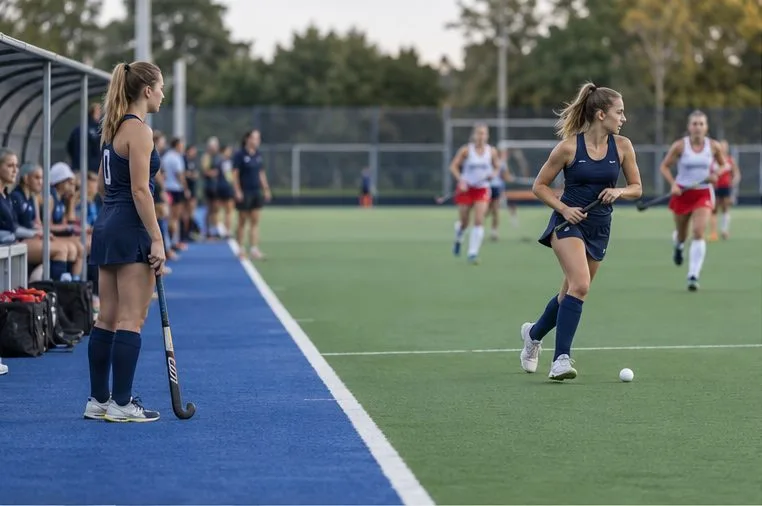
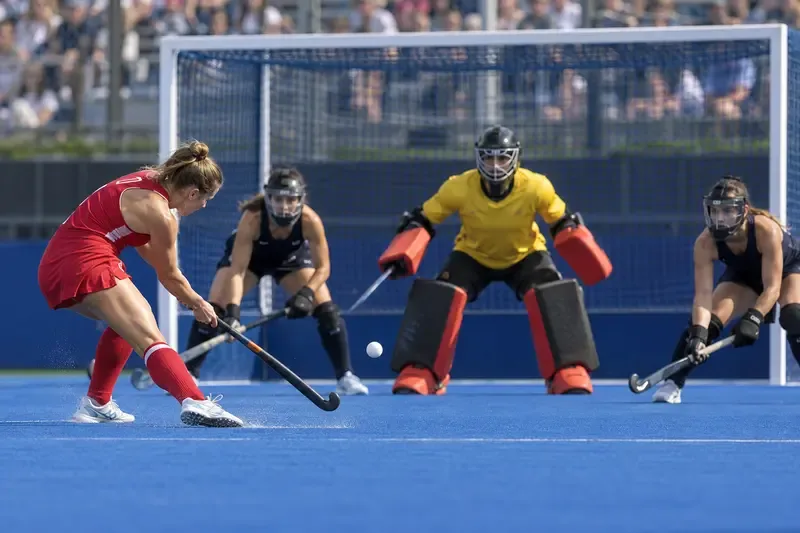
The everyday rule remains simple: rolling substitutions are allowed throughout play, but the player coming off must leave the field before the replacement enters. A substitution is not permission to put a twelfth player on the pitch. The details below are for FIH outdoor 11-a-side hockey; national associations and competition regulations can set different implementation dates or provisions.A substitute waits by the bench-side touchline as a field player approaches the substitution area.
What counts as a rolling substitution?
A rolling substitution replaces one on-field player with a teammate who is off the field while the match continues. Under FIH Rule 2.3, teams may make substitutions at any time except during the protected period for a penalty corner described below. There is no limit in the general rule on how many players can be substituted at once or how many times a player may leave and re-enter. That does not mean a team may list an unlimited bench: the FIH rulebook describes a standard team as up to 11 players on the field plus up to five substitutes, while allowing competition regulations to vary the number. Action: check the event roster rules as well as the substitution rule.
“Unlimited substitutions” does not mean unlimited players on the pitch. FIH Rule 2.1 allows no more than 11 players from a team on the field at any moment. If an extra player is on, officials stop play to correct it; the captain may also receive a personal penalty, and a yellow card is required if the extra player materially affects the match. Action: count the players as the exchange happens, especially when several teammates rotate at once.
When may the incoming player enter?
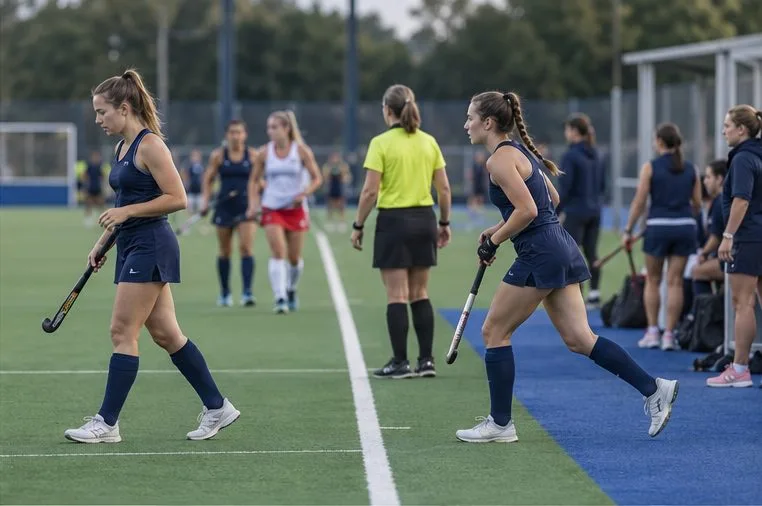
The outgoing player must first leave the field. Only then may the replacement enter. This order prevents a temporary extra-player advantage. The usual exchange happens near the halfway line on the designated side of the field, not wherever the outgoing player happens to be standing.
Under the FIH 2026 rules currently in force, players enter and leave within three meters of the center line on the side agreed with the umpires. Starting November 1, 2026, the new edition specifies the three-meter area on the team-bench side. The update gives teams a fixed side to use in international play. Action: before a match, identify which side has the benches and review the competition’s current substitution procedure.
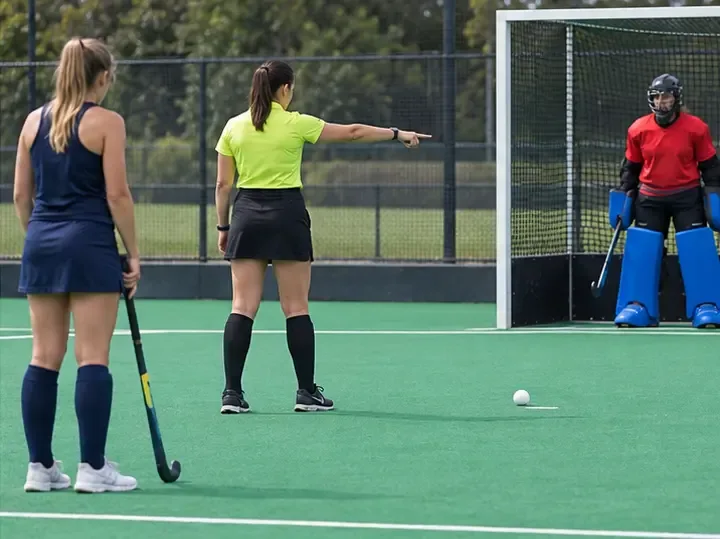
During a normal field-player exchange, play and time continue. A substitute should not enter early because the departing player is near the line, has one foot outside, or is heading toward the bench. Wait until the player has actually left the field. A suspended player cannot be replaced during the suspension; after the suspension ends, that player may be substituted without first returning to the field. Action: if there is any doubt about whether a player has left or completed a suspension, wait for the umpire’s signal or ask the team official rather than guessing.One player leaves as a teammate enters through the substitution area near halfway.
What changes for goalkeeper substitutions on November 1?
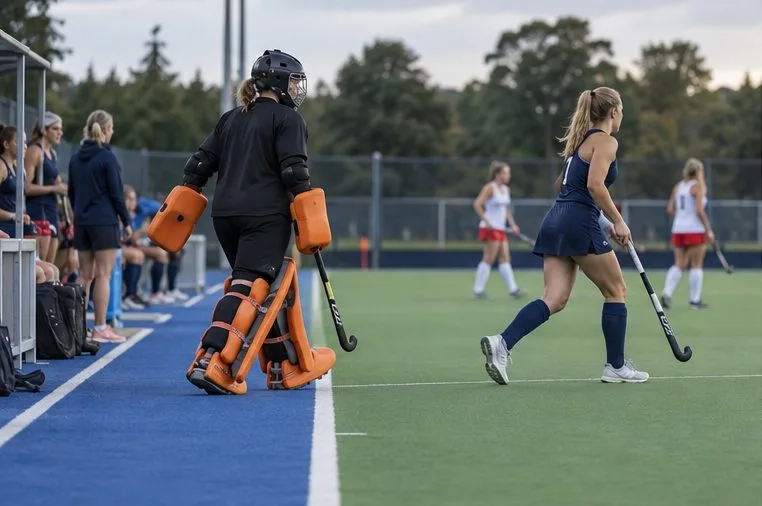
The upcoming FIH rules change how the clock works for a goalkeeper substitution. In the version effective March 2026, Rule 2.3(g) says time is stopped for any substitution involving goalkeepers. In the new rulebook effective November 1, 2026, time and play are not stopped for substitutions; however, a team may request that time be stopped for a substitution involving a goalkeeper. The stoppage is not extended to give a player extra time to put on or remove protective equipment.
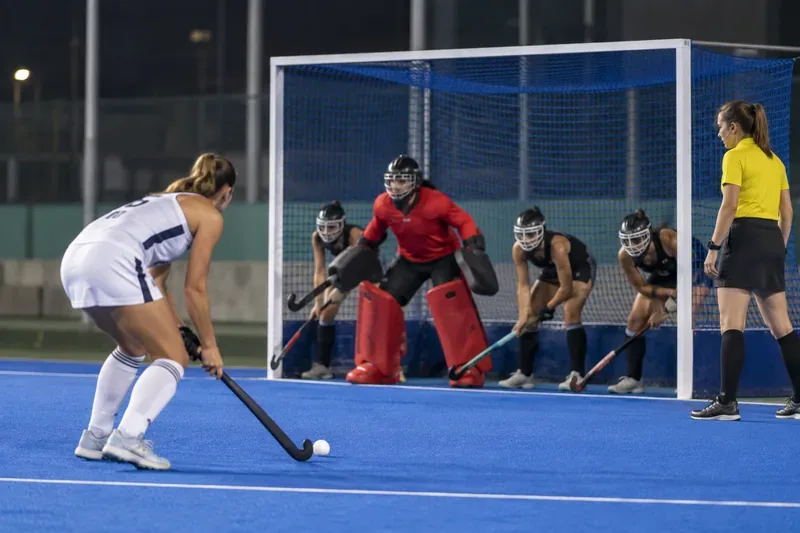
The practical effect is that, in international matches under the new rules, a goalkeeper may leave and be replaced during live play through the normal halfway substitution area, including by a field player. If time is stopped and a goalkeeper is replaced by a field player, the goalkeeper may leave near the defending goal but must go directly to the team bench. If the team wants the clock stopped for a goalkeeper change, it should make the request under the applicable procedure. Action: check the implementation date and any event regulation before applying the new timing to a match played before November 1 or under a national association’s rules.A goalkeeper and field player are positioned near the bench-side area used for a rolling goalkeeper change.
Switching between a goalkeeper and a team of field players is still a substitution. A goalkeeper wears a shirt color different from both teams and the required protective equipment; a field player has no goalkeeping privileges and does not wear a different-color goalkeeper shirt. Action: do not assume that a field player who enters after the goalkeeper leaves can use goalkeeper privileges without qualifying and wearing the required goalkeeper equipment.
What is the goalkeeper exception at a penalty corner?
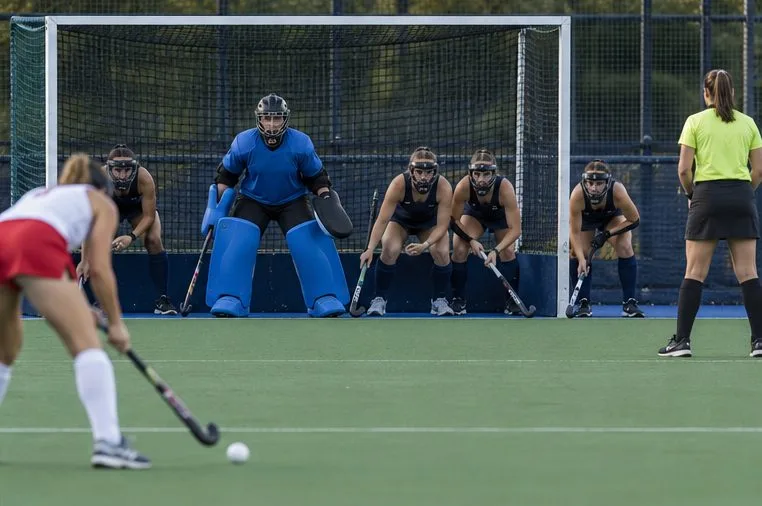
The penalty-corner restriction is separate from the ordinary goalkeeper clock rule. From the award of a penalty corner until it is completed, substitutions are generally prohibited. During that period, the only substitution allowed is for injury to or suspension of the defending goalkeeper. The replacement may be another goalkeeper or a field player. If the goalkeeper is suspended, the team plays with one fewer player. A team playing only with field players cannot make a substitution during a penalty corner until it is completed.
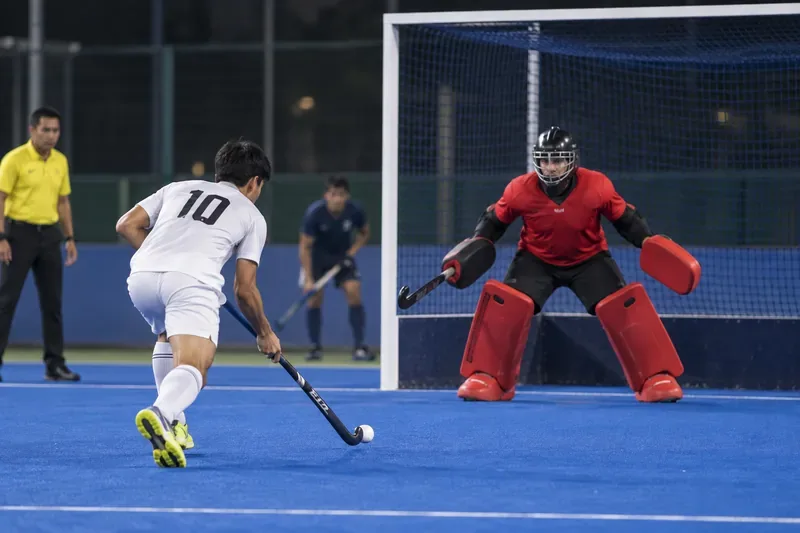
If another penalty corner is awarded before the first one has been completed, other substitutions remain on hold until the retaken corner is completed, except for the injured or suspended defending goalkeeper. Action: when you see a substitution during a penalty corner, ask whether it is the defending goalkeeper and whether the reason is injury or suspension. A tactical goalkeeper change during the protected period is not allowed under the standard FIH rule.A goalkeeper and masked defenders prepare for a penalty corner, when substitution is generally restricted.
Outside that penalty-corner window, the team may change its goalkeeper under the ordinary substitution rule. The new November rule does not remove the penalty-corner restriction; it changes whether the clock automatically stops for goalkeeper substitutions at other times. Action: keep “when a goalkeeper may be replaced” separate from “whether the clock stops for that replacement.”
Common misunderstandings, checked
“Rolling substitutions mean the new player can enter as the old one reaches the sideline.” No. The outgoing player must leave the field first. Action: watch for a clear exit before the substitute steps on.
“A goalkeeper change always requires the umpire to stop time.” This is true under the FIH 2026 edition currently in force, but not as an automatic rule under the edition effective internationally November 1, 2026. The new edition allows a team to request a stoppage, and a competition regulation may also require one. Action: check the date and event rules.
“The goalkeeper exception means a team can substitute during any penalty corner.” No. The exception is limited to an injured or suspended defending goalkeeper. Action: do not treat a tactical change as an injury exception.
“A field player can become a goalkeeper just by taking the goalkeeper’s place.” Not under the standard FIH team-composition rule. The team must be playing with a properly equipped, differently dressed goalkeeper or with field players only. Action: confirm the replacement’s role and equipment before play continues.
“The FIH rulebook automatically governs every local match on the same date.” Not necessarily. The new 2027 edition says it applies to international competition from November 1, 2026, while national associations choose the date for national play and may have competition regulations. Action: consult the local governing body or event rules for domestic, school, youth, indoor, or modified formats.
Which rulebook should you use?
The FIH Official Documents page identifies the Rules of Hockey 2026 as effective March 2026 and now also publishes the 2027 edition. The new book’s own front matter gives November 1, 2026, as its implementation date for international competition. The change is verified, but it is prospective as of September 30; it is not yet the rule in force for an international match played before that date.
Read the current FIH Rules of Hockey 2026 for matches before the new edition takes effect, and compare it with the FIH Rules of Hockey 2027 for international matches from November 1 onward. The FIH official rules page lists the editions and says national associations set their own implementation date at national level. Tournament regulations can also vary the playing conditions.
Quick self-check for players and officials
Is the match outdoor 11-a-side hockey under FIH rules, or a domestic, indoor, youth, or modified competition?
Which edition applies on the match date: the 2026 rulebook or the 2027 edition effective internationally November 1?
Has the outgoing player completely left before the substitute enters?
Are both players using the correct substitution area and staying within the 11-player limit?
Is a penalty corner still in progress? If so, is a defending goalkeeper being replaced because of injury or suspension?
For a goalkeeper substitution outside a penalty corner, does the governing edition require a time stoppage, allow a team request, or add an event-specific requirement?
These checks separate what is verified in the FIH rulebooks from what depends on local implementation. If the event regulations are unavailable or the umpire has not confirmed a local modification, the exact procedure for that competition is unknown; do not present the international rule as universal. Ask the match official or governing association before play, then follow the applicable book on the field.