Home
» 🏉 Rugby
»
When Can a Referee Penalize a Collapsed Maul? Rugby Union Rules Explained
When Can a Referee Penalize a Collapsed Maul? Rugby Union Rules Explained
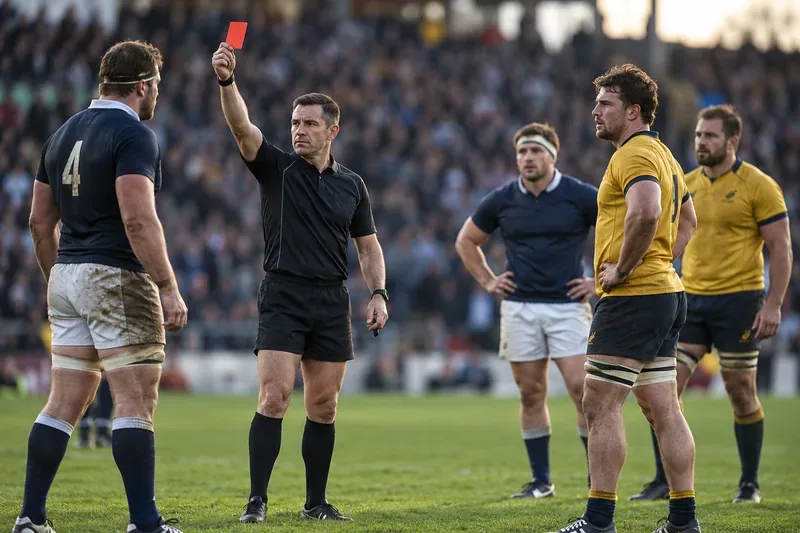
A maul going to ground can produce two very different outcomes: a penalty for illegal play or a scrum because the maul simply ended unsuccessfully. The key question is not just whether the maul collapsed. It is why it collapsed and what the players were doing immediately before it went down.
A referee watches a contested maul closely. Whether a later collapse is penalized depends on the cause, not merely on the fact that bodies end up on the ground.
The short answer: intentional collapse is a penalty; an accidental collapse is usually a scrum
Under the current World Rugby Laws of the Game, Law 16.11(a) says players must not intentionally collapse a maul or jump on top of it. The sanction is a penalty. By contrast, Law 16.17(b) says that when a maul collapses not as a result of foul play, the maul ends unsuccessfully and the restart is a scrum.
That distinction is the starting point for every decision. A referee is therefore looking for an illegal action that caused or materially contributed to the collapse, rather than automatically penalizing whichever side appears to fall first.
The governing text is available in World Rugby Law 16: Maul. World Rugby also issued a maul Law Application Guideline effective for new competitions from June 1, 2026, emphasizing legal binding, pushing and driving, and sanctioning pulling or dragging actions. See the June 2026 World Rugby maul guideline.
First, know what counts as a maul
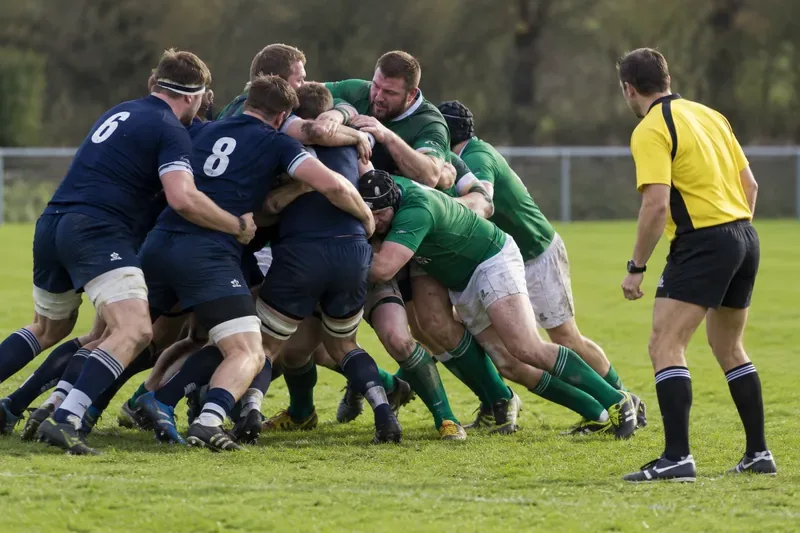
A maul is not simply a group of players standing around a ball carrier. Under Law 16, it consists of the ball carrier and at least one player from each team, all bound together and on their feet. The ball is held off the ground.
This matters because the laws for a maul only apply once that structure actually exists. If the ball carrier is tackled before a maul forms, the tackle laws apply instead. If the ball is already on the ground, the situation may have become a ruck or open-play breakdown rather than a maul.
When a referee can award a penalty
1. A player intentionally pulls the maul down
The clearest case is a deliberate collapse. A defender cannot respond to a powerful driving maul by deliberately dropping, twisting, or pulling the structure to ground simply because holding it upright has become difficult. Law 16.11(a) specifically prohibits intentionally collapsing the maul.
For players, the practical tradeoff is simple: staying bound and driving legally may concede meters, but deliberately bringing the maul down risks a penalty. Near the try line, that penalty may also create another attacking platform, so an illegal attempt to stop momentum can leave the defending team in an even worse tactical position.
2. A player pulls or drags an opponent out in a way that destabilizes the maul
Law 16.11(b) separately prohibits attempting to pull or drag an opponent out of a maul. The June 2026 guideline reinforces this point. A player legally bound on the outside may contest possession with a free arm or keep pushing and driving, but must not move into a position where the action becomes pulling or dragging.
This is an important choice for defenders. Remaining square, bound, and pushing keeps the contest legal. Swinging around the side to haul an opponent backward may feel like an effective way to disrupt the drive, but it increases the risk of a penalty, particularly if that action contributes to the collapse.
3. A player fails to endeavor to stay on their feet
Law 16.9 requires players in the maul other than the ball carrier to endeavor to stay on their feet, with a penalty as the sanction. That does not mean every player who loses footing has committed an offense. Rugby is dynamic, and legal pressure can force players off balance. The referee has to distinguish between a genuine loss of footing and conduct that shows the player was not trying to remain upright.
The ball carrier has a specific option under Law 16.8: the ball carrier may go to ground if the ball is made available immediately. If the ball is not made available, the sanction is a scrum. That is different from another maul participant deliberately collapsing the structure.
4. Another illegal act causes the collapse
The referee does not have to see a textbook “pull down” to penalize. Other maul offenses can create the collapse. Examples include joining from an illegal position, losing legal binding and then interfering, or using a pulling action after moving around the outside. The referee may penalize the underlying offense if it is clear and materially affects play.
The 2026 guideline tells players who become unbound or are no longer in a position to push or drive to leave the maul and, if appropriate, rejoin legally from their own side. That gives players a safer legal option than remaining in a compromised position and trying to disrupt the maul from the side.
When a collapsed maul should lead to a scrum instead
Not every collapsed maul contains foul play. Law 16.17(b) explicitly recognizes that a maul can collapse without an illegal act. In that case, it ends unsuccessfully and the sanction is a scrum.
Typical factors can include several players simultaneously losing balance under legal pressure, feet becoming tangled during a legitimate drive, or the structure naturally buckling when neither side commits a clear offense. The exact cause has to be judged from the action the referee sees; the laws do not create a penalty merely because one team was moving forward when the maul fell.
What the referee observes
Likely law outcome
Why
Clear deliberate action to bring the maul down
Penalty
Intentional collapse is prohibited by Law 16.11(a).
Player pulls or drags an opponent out of the maul
Penalty
Pulling or dragging an opponent out is prohibited by Law 16.11(b).
Non-ball-carrier makes no genuine effort to stay on feet
Penalty
Law 16.9 requires other maul players to endeavor to stay upright.
Maul falls with no identifiable foul play
Scrum
Law 16.17(b) treats a non-foul-play collapse as an unsuccessful end to the maul.
Ball carrier goes to ground and makes the ball immediately available
Play can continue
Law 16.8 permits the ball carrier to go to ground if the ball is immediately available.
Ball carrier goes to ground and the ball is not immediately available
Scrum
Law 16.17(d) provides for an unsuccessful end when the ball is not immediately available.
What players should do instead of risking a collapse penalty
For a defending team under pressure, the safer choices are to stay legally bound, keep body position strong enough to remain upright, and drive through the maul rather than pull it down. A defender on the outside should keep the original legal bind and avoid swinging into a position where the action becomes a drag rather than a push.
For the attacking team, maintaining shape has its own tradeoffs. Driving too high can make the maul easier to stop; driving too low can make players unstable or put heads and shoulders into illegal positions when joining. Attackers joining late must also bind onto the hindmost player rather than entering ahead of that point.
The goal for either side is not merely to avoid a whistle. It is to preserve a legal contest for possession and field position. If legal pressure wins the contest and the maul collapses naturally, the law already provides a scrum outcome. Players do not need to manufacture the collapse.
How referees separate a penalty from a scrum
A referee will usually assess the sequence rather than the final pile of bodies. Useful observable questions include: Who was legally bound? Was someone pushing or pulling? Did a player change body position immediately before the collapse? Did an outside player lose the bind and then drag? Did the collapse follow a legal contest with no obvious offender?
Those observations are more reliable than assumptions based on which team was advancing. A dominant attacking maul can collapse accidentally. A stationary maul can be illegally pulled down. The direction of movement is evidence of context, not proof of an offense by itself.
Common mistakes when watching a collapsed maul
“The defending team always gets penalized if the attacking maul is moving forward.” Not automatically. The referee still needs an offense. A collapse without foul play is covered by the scrum provision.
“Anyone going to ground makes it a penalty.” No. The ball carrier may legally go to ground if the ball is made immediately available, while accidental collapse without foul play leads to a scrum.
“A defender can pull an opponent out as long as the defender stays bound.” The law separately prohibits pulling or dragging an opponent out, and the 2026 guideline stresses that outside players must remain in a pushing/driving or genuine contesting position rather than a pulling one.
“Once the maul looks messy, anything goes.” Binding, offside, entry, staying on feet, and anti-dragging requirements continue to matter until the maul legally ends.
The practical rule to remember
When a maul collapses, do not ask only, “Who fell?” Ask, “What action caused the maul to fall?” If the referee identifies intentional collapse, pulling, dragging, or another maul offense that caused the breakdown, a penalty is available. If the maul simply collapses through legal pressure and loss of balance, World Rugby Law 16 provides for a scrum instead.
As of September 2026, that penalty-versus-scrum distinction remains explicit in World Rugby Law 16, while the June 2026 application guideline adds practical emphasis on legal binding and on removing players who have moved from pushing or contesting into pulling or dragging positions.