Home
» 🧭 Other Sports
»
Marathon Road Closures: How to Verify the Exact Reopening Time
Marathon Road Closures: How to Verify the Exact Reopening Time
Why the posted reopening time is not always the moment a street actually opens
Marathon road closures are unusual because they move with the race. A city may close a road at a fixed clock time, but reopening often happens on a rolling basis: each section is released after the final permitted runners, sweep operation, medical support, volunteers, equipment, and safety checks have cleared that part of the course.
That distinction matters to runners trying to reach the start or leave the finish area, residents waiting to access a garage, businesses expecting deliveries, and drivers trying to cross the course. The most useful question is not simply “When does the marathon end?” It is: What controls reopening on my exact street segment, and who has authority to declare it open?
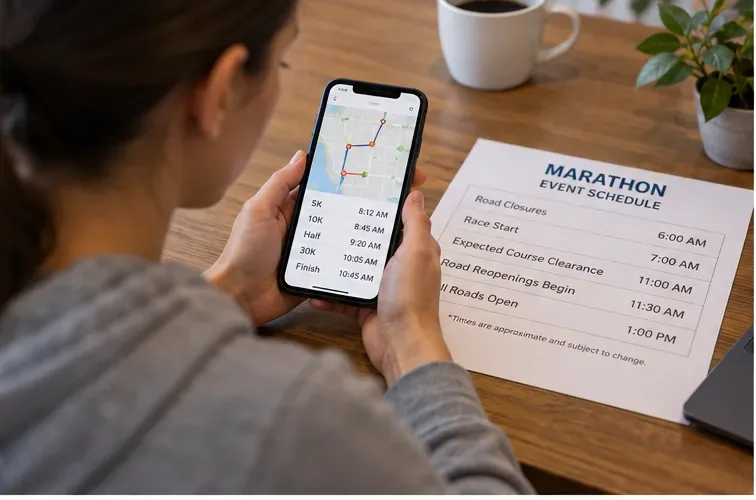
Official 2026 guidance shows why a single citywide time can mislead. The Bank of America Chicago Marathon street-closure page says course streets are scheduled to be closed from 6:00 a.m. to 4:00 p.m., but also says streets reopen promptly as the final runners pass at the event’s stated course pace and that Chicago Police are responsible for closing and reopening them. The Boston Athletic Association’s 2026 spectator guidance publishes different estimated reopening times for each of the eight cities and towns along the route and explicitly states that times are subject to change.
For a beginner, the practical rule is simple: use the published time as a planning window, then verify the live status from the authority controlling that segment before driving across it.
What you need before you start checking
Gather four pieces of information first. You need the race date, the exact street or intersection you care about, the official course map, and the official road-closure notice. If you are a runner, also note your start wave and the event’s course-closure or sweep policy. If you are a resident, identify the nearest driveway, alley, parking garage, bridge, or cross street that could determine whether you can actually leave even after your block reopens.
Do not assume that a navigation app knows the event’s operational status. Map apps can be helpful for alternate routing, but the race organizer, transportation agency, police department, emergency-management office, or municipality is the authoritative source for the closure plan.
Step-by-step: how to verify the reopening time
1. Find the official race closure page
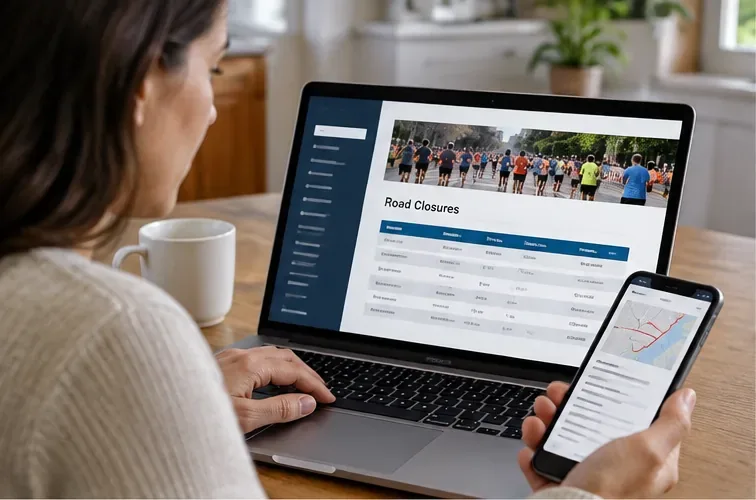
Step 1: Start with the official race organizer’s closure page, then cross-check municipal traffic information rather than relying on a general map app alone.
Start on the organizer’s official website and look for “road closures,” “traffic,” “spectator information,” “resident information,” or “course transportation.” Prefer a page for the current race year. If the organizer links to a city transportation or police notice, open that too.
Check the date carefully. Marathon sites often leave prior-year pages online, and search engines can surface them above the current notice. A familiar street list with the wrong year is not enough.
2. Identify your exact segment, not just the neighborhood
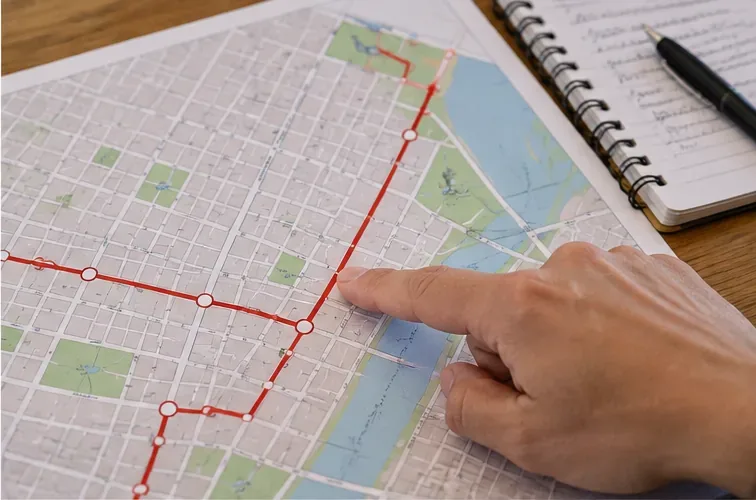
Step 2: Match your exact block, bridge, intersection, or driveway to the published course segment; reopening can differ street by street.
A marathon can pass through the same neighborhood on several streets, and nearby blocks may reopen at different times. Match the address to the published course, then note the nearest named intersection or segment. For bridges, tunnels, park drives, and divided roads, confirm the direction or level if the notice distinguishes them.
This is especially important for residents. Your front door may face an open side street while the only vehicle exit from your garage feeds into a closed course road. Plan around the actual access point.
3. Read the wording around the time
Step 3: Treat words such as “anticipated,” “estimated,” and “rolling reopening” literally. They describe a target, not a guaranteed minute.
Look for words such as anticipated, estimated, scheduled, rolling, and subject to change. They are operational qualifiers, not fine print.
“Estimated reopening 2:15 p.m.” means you can plan around 2:15 p.m., but you should not arrange a time-critical pickup at 2:16 p.m. unless the street has actually been released. “Rolling reopening” means upstream streets may reopen while later sections remain closed. “After the final runner passes” usually means the field must clear, but police may still wait for race vehicles, cleanup, barricade removal, or another safety condition.
4. Check the city or police source named by the organizer
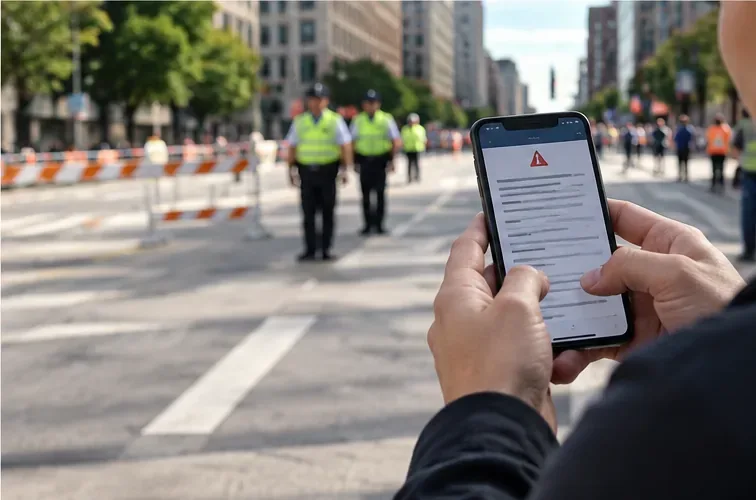
Step 4: On race day, use the city or police traffic channel named by the organizer for the final operational update.
On race morning, recheck the official source. The Chicago Marathon, for example, directs the public to city event notifications and states that the Chicago Police Department controls street reopening. A municipal traffic portal can also show event-related impacts; Chicago’s ChiStreetWork map is an official city resource for street impacts and special events, although its own disclaimer says information can change.
If the organizer lists an emergency-management app, traffic-alert service, police social account, hotline, or local authority page, use that channel for live confirmation. For a non-emergency access question, do not call 911.
5. Understand the race milestone that controls clearance
Step 5: Compare the reopening estimate with runner flow and the course-clearance policy so you understand what event milestone controls the street.
Reopening often follows the back of the race, not the winner. A course may remain closed for hours after elite runners have passed because later waves are still competing.
Chicago’s 2026 guidance ties reopening to the final runners moving at the stated 15-minute-per-mile course pace. Boston’s course guidance says runners who are still on the road when officials begin reopening may be directed to the side, and course infrastructure then starts shutting down. See the B.A.A. course-closure information for the current policy.
This helps you interpret a schedule, but do not calculate a homemade reopening time from a runner tracker and treat it as official. A tracked athlete may not be the last participant, and cleanup or emergency conditions can delay release.
6. Check parking restrictions separately
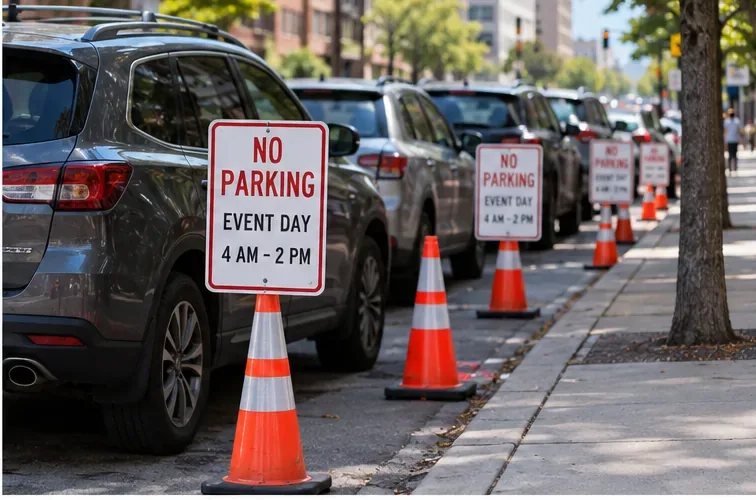
Step 6: Check parking restrictions separately from driving restrictions; curb rules often begin hours before the roadway itself closes.
Street reopening and legal parking are different questions. Temporary no-parking rules may start before the race and can remain in force after runners leave. Some routes require vehicles to be removed overnight so organizers can place barriers, medical stations, hydration tables, broadcast equipment, or security infrastructure.
Read posted curb signs on your block as well as the online notice. If your car is inside a garage whose exit crosses the course, moving it outside the restricted zone the night before may be more reliable than waiting for vehicle access to return.
7. At the intersection, follow the live barricade and officer control
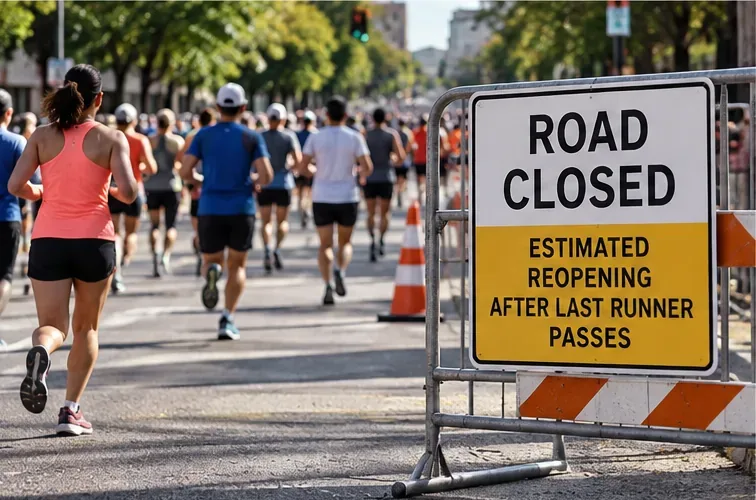
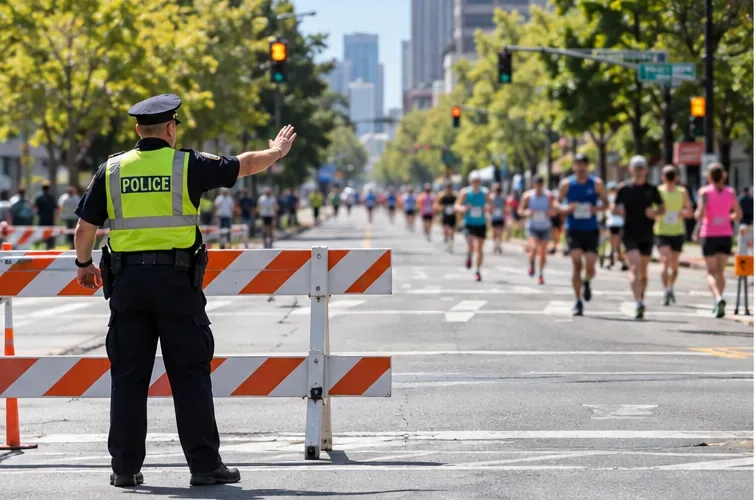
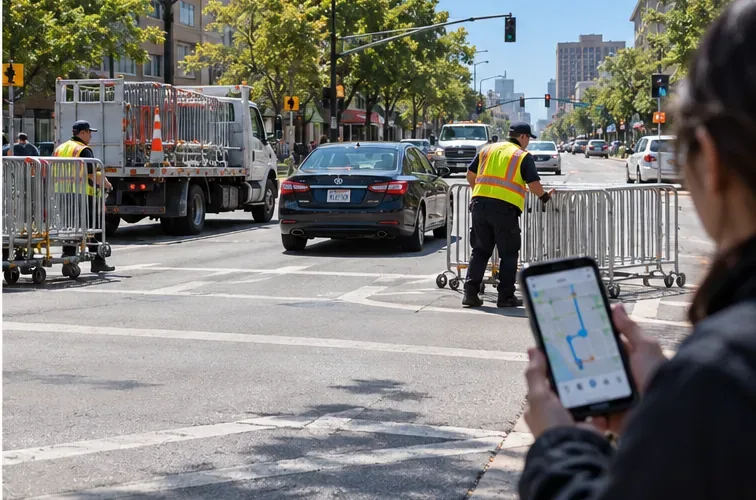
Step 7: A barricade or officer at the intersection overrides a published estimate. Do not enter the course until authorities release the street.
A published estimate does not give permission to move a barricade, drive onto the course, or cross against an officer’s direction. If barriers remain in place, the road is still operationally closed.
For pedestrians, use designated crossing points when the organizer provides them. Do not step into gaps in the runner field just because traffic is absent. Race officials may be managing runners, wheelchairs, lead or sweep vehicles, emergency access, and cleanup crews that are not obvious from one viewpoint.
8. Confirm reopening before abandoning your backup route
Step 8: Consider the road reopened only when barriers are removed or traffic authorities explicitly restore access; keep an alternate route until then.
The best evidence that a street is open is a live official update or visible restoration of normal traffic control: barricades removed, officers releasing vehicles, and ordinary traffic flowing through the segment. Even then, nearby streets can remain restricted.
Keep your alternate route until you are clear of the event footprint. A reopened east-west street does not guarantee that the next north-south crossing is open.
A quick verification checklist for runners and residents
Question
What to verify
Best source
Is this the current race year?
Date and edition on the closure notice
Official race organizer
Does the time apply to my block?
Street, cross street, direction, bridge level, or town
Official closure table or map
Is the time guaranteed?
Words such as estimated, anticipated, rolling, subject to change
Organizer or municipality
Who actually reopens the road?
Police, transportation agency, race command, or local authority
Official notice
Can I park there?
Separate no-parking start and end times
Posted signs plus official notice
Is it open right now?
Live alert, removed barriers, and authorities releasing traffic
City/police live channel and on-site control
Common mistakes that create race-day problems
Using the finish time as the reopening time. The winner can finish long before the back of the field reaches later neighborhoods. Reopening follows operational clearance, not the podium ceremony.
Reading a citywide window as a block-specific promise. Chicago’s overall 6:00 a.m.–4:00 p.m. course window is useful planning information, but its own guidance explains that reopening occurs as final runners pass and is controlled by police. Boston publishes different estimates by municipality. The pattern is the same: location matters.
Trusting an old PDF. Race routes, construction conflicts, start waves, security plans, and transit arrangements can change. Check the year and recheck close to race day.
Relying only on a runner-tracking app. Tracking can help you estimate where the field is, but it does not show whether police have cleared race vehicles and removed barriers.
Ignoring the difference between pedestrian and vehicle access. You may be able to walk to your building while your car remains trapped behind a closed crossing.
Assuming one reopened intersection means the whole neighborhood is open. Marathon control is segment by segment. Continue to follow signs and live directions until you are outside the closure zone.
How much buffer should you build in?
If you have a flight, hospital appointment, work shift, delivery window, child pickup, or other time-sensitive commitment, do not schedule your departure at the published reopening minute. The exact buffer depends on the event and your location, but the safer strategy is to leave before the closure begins, park outside the course footprint, or use transit that does not cross the route.
For non-urgent plans, wait for confirmed reopening rather than trying to predict the minute. For urgent medical needs, follow local emergency instructions; marathon traffic plans normally preserve emergency access through controlled procedures that are not available to ordinary vehicles.
What “verified” should mean on race day
You have a strong verification when three things agree: the current-year official schedule identifies your exact segment, the organizer or city has not issued a newer change, and the live authority controlling the street has released it. If any one of those is missing, treat the reopening time as provisional.
The central lesson is that marathon road closures are managed dynamically. A timetable tells you when reopening is expected. The race-control and public-safety operation determines when it actually happens. Check the correct block, read the qualifiers, recheck the live source, and keep a backup route until the street is visibly or officially open.