Home
» ⚾ Baseball
»
World Series 2026 Home-Field Advantage: Who Hosts and How Ties Are Broken
World Series 2026 Home-Field Advantage: Who Hosts and How Ties Are Broken
As of September 30, 2026, MLB’s World Series home-field rule is straightforward at the top: the pennant winner with the better regular-season record gets home-field advantage in the World Series. That club hosts Games 1 and 2 and, if the series lasts that long, Games 6 and 7. Postseason seed within the American League or National League does not override that rule.
The harder part begins when the two league champions finish the regular season with the same record. That is where head-to-head results and additional mathematical tiebreakers matter. It is also where fans can easily mix up World Series rules with Division Series or League Championship Series seeding.
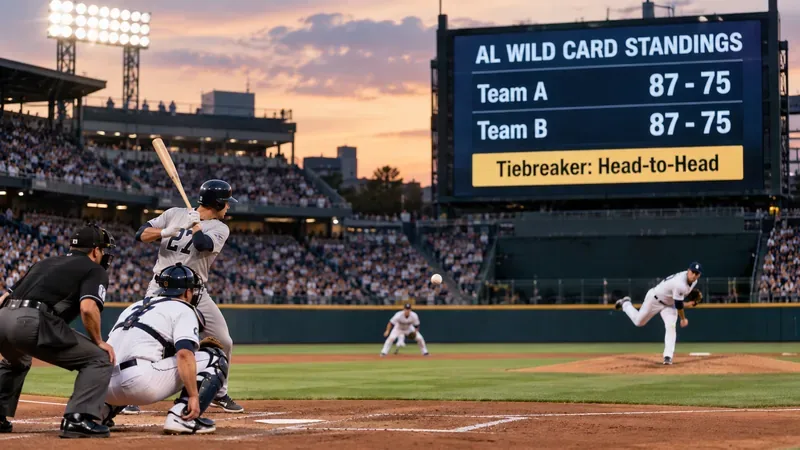
A full baseball stadium at sunset. In the World Series, the club that earns home-field advantage hosts Games 1 and 2 and, if needed, Games 6 and 7.
What should you check first: postseason seed or regular-season record?
Check the regular-season record first. MLB’s postseason format explainer says World Series home field goes to the pennant winner with the best regular-season record, regardless of that team’s postseason seed within its league. The official rule summary is available in MLB’s postseason format FAQ.
This distinction matters because seeding plays a larger role earlier in October. In the Division Series, the higher seed has home-field advantage. In the League Championship Series, seeding also determines who hosts first. The World Series changes the comparison: once one AL team and one NL team remain, MLB compares their regular-season records.
For a practical example, suppose an AL Wild Card team reaches the World Series after finishing 99-63, while the NL pennant winner was a division champion at 96-66. The AL club would hold World Series home-field advantage despite entering October through the Wild Card path. The label “division winner” does not outweigh the better regular-season record at this stage.
Which World Series games does the home-field team host?
The World Series uses the familiar 2-3-2 home pattern. The club with home-field advantage hosts Games 1 and 2. The series then moves to the other team’s park for Games 3, 4 and, if necessary, Game 5. If Games 6 and 7 are required, the series returns to the original host.
Game
Host
Game 1
Home-field team
Game 2
Home-field team
Game 3
Other team
Game 4
Other team
Game 5, if necessary
Other team
Game 6, if necessary
Home-field team
Game 7, if necessary
Home-field team
That layout explains why “home-field advantage” is more than simply hosting the opener. It can also mean hosting a potential Game 7. Still, the rule determines venue order, not the result of the series. Recent World Series have included road clinchers and road-heavy outcomes, so home field should not be treated as a guarantee of competitive advantage.
What happens if the two pennant winners have the same regular-season record?
The first tiebreaker is head-to-head record. That is especially relevant under MLB’s current balanced scheduling structure because every club plays every other club during the regular season. If the eventual AL and NL champions finished, for example, 97-65 apiece, the season series between those two clubs becomes the first place to look.
If Team A went 2-1 against Team B during the regular season and both later reached the World Series at 97-65, Team A would have the head-to-head edge for the home-field tiebreaker.
Intradivision record. Compare each team’s winning percentage against opponents in its own division.
Intraleague record. Compare each AL team’s results against AL opponents or each NL team’s results against NL opponents.
Last half of intraleague games. MLB describes this as the latter portion of each club’s intraleague schedule, not simply “games after the All-Star break” as a generic calendar shortcut.
Last half of intraleague games plus one. If still tied, MLB moves backward through additional intraleague games until the tie is broken.
For most fans checking a potential World Series matchup, the first three steps are the useful ones to know. The later steps exist for rare cases in which the earlier comparisons are all even.
Is head-to-head always enough now?
Not necessarily. Every team facing every other team makes a head-to-head comparison available, but the season series itself can still finish tied. A two-game or four-game set, for example, can be split evenly. If the regular-season records are also equal and the head-to-head matchup is even, MLB needs the next tiebreaker.
That is why “they played each other” and “head-to-head decides it” are not quite the same statement. Head-to-head is the first comparison; it does not guarantee a winner in every case.
Does the All-Star Game still decide World Series home field?
No. The league that wins the All-Star Game no longer receives World Series home-field advantage. MLB used that system from 2003 through 2016. Beginning in 2017, the World Series shifted to the regular-season-record approach, aside from the unusual neutral-site 2020 postseason.
For a 2026 decision, the useful check is therefore the two pennant winners’ regular-season winning percentages, not which league won the Midsummer Classic.
Does winning a division matter more than being a Wild Card team?
Not for World Series home field. A division title can be extremely important for getting a better seed, a first-round bye or a more favorable path through a league bracket. But once the AL and NL champions are known, MLB does not automatically reward the division winner over the Wild Card entrant.
Use this decision rule: if two World Series teams have different regular-season records, the better record settles home field. Only when those records are equal do you move to tiebreakers.
Should you compare wins, winning percentage or seed?
Use regular-season winning percentage as the formal comparison. In a normal completed 162-game season, simply comparing records such as 101-61 and 98-64 produces the same answer. Winning percentage is the cleaner rule language because it handles the comparison consistently if teams were ever to finish with different numbers of games played.
Do not compare postseason wins. A club that survives a Wild Card Series may accumulate more October victories before the World Series than a team that received a bye, but those postseason wins do not determine World Series home field.
Why can the deeper tiebreaker wording be confusing?
There is a small source-reading issue worth knowing. MLB’s general postseason FAQ currently summarizes an identical-record World Series tie with head-to-head, intradivision and “interdivision” record. MLB’s dedicated tiebreaker page, however, gives the formal two-team sequence as head-to-head, intradivision and intraleague record, followed by last-half intraleague comparisons.
When checking a deeper tie, the dedicated tiebreaker explainer is the more detailed reference because it defines the full sequence and the later steps. This article therefore uses the terminology from that dedicated MLB tiebreaker page. The discrepancy is worth rechecking if MLB updates either page before the World Series begins.
What is the quickest way to determine 2026 World Series home field?
Once the two pennant winners are known, this short checklist is enough for most situations:
Compare their 2026 regular-season winning percentages.
If one is better, that team hosts Games 1, 2, 6 and 7, with Games 6 and 7 played only if necessary.
If the percentages are identical, check the 2026 head-to-head season series.
If that is tied, compare intradivision records.
If still tied, compare intraleague records and then the deeper MLB tiebreaker sequence.
Do not substitute league seed, division-winner status, All-Star Game result or postseason win total for the World Series rule.
A worked hypothetical
Imagine the 2026 AL champion and NL champion both finish 95-67. Their regular-season records do not separate them. They played three times, and the AL club won two of those games. Under the first tiebreaker, the AL club would receive World Series home-field advantage and host Games 1 and 2, plus Games 6 and 7 if needed.
Now change only one fact: suppose the teams split a four-game regular-season series 2-2. Head-to-head no longer resolves the tie. The next comparison becomes each club’s record within its own division. If those records are also identical in winning percentage, move to intraleague record. Only after those common checks would the more unusual last-half procedures become relevant.
This is also why a “who hosts Game 1?” answer can remain unsettled even after both league pennants are won: if the clubs finished with identical records, the supporting tiebreaker data still has to be applied correctly.
Bottom line for 2026
The core World Series rule is simple: better regular-season record gets home-field advantage. That means hosting Games 1 and 2 and, when necessary, Games 6 and 7. If the pennant winners finish with the same record, start with head-to-head results, then move through MLB’s mathematical tiebreakers rather than looking for a Game 163 or using league seeding.
Because MLB can revise postseason procedures, anyone making travel, ticket or scheduling decisions should recheck the official MLB postseason format and tiebreaker pages once the 2026 pennant winners are set. The rule summary above was verified against MLB’s published guidance on September 30, 2026.