Home
» ⚾ Baseball
»
MLB Postseason Extra Innings: Is the Automatic Runner Used in the 2026 Playoffs?
MLB Postseason Extra Innings: Is the Automatic Runner Used in the 2026 Playoffs?
No. MLB does not use the automatic runner in extra innings during the 2026 postseason. If a playoff game is tied after nine innings, the 10th and every later inning starts with the bases empty and no outs. The automatic runner on second base is a regular-season rule, not a postseason tiebreaker.
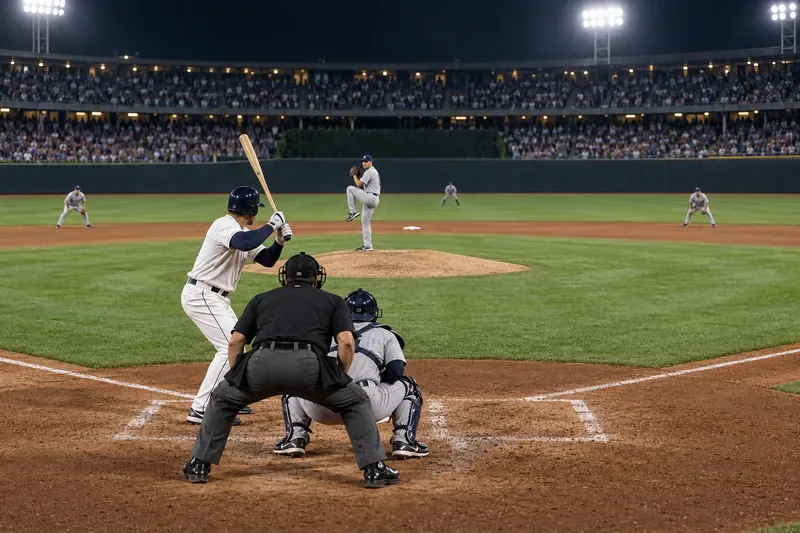
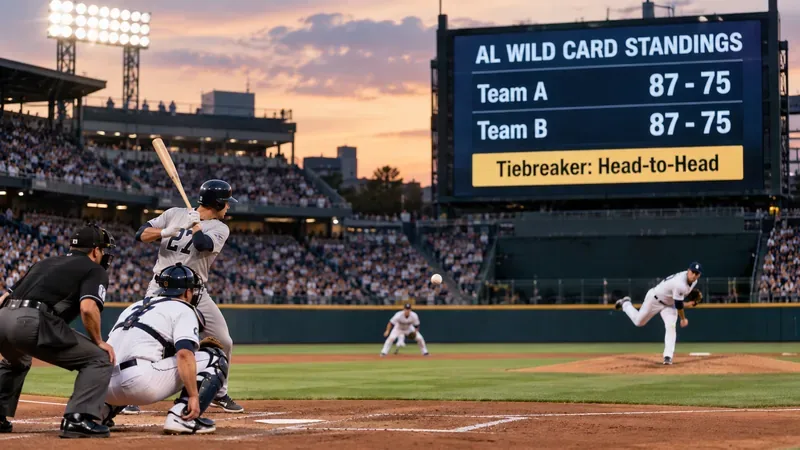
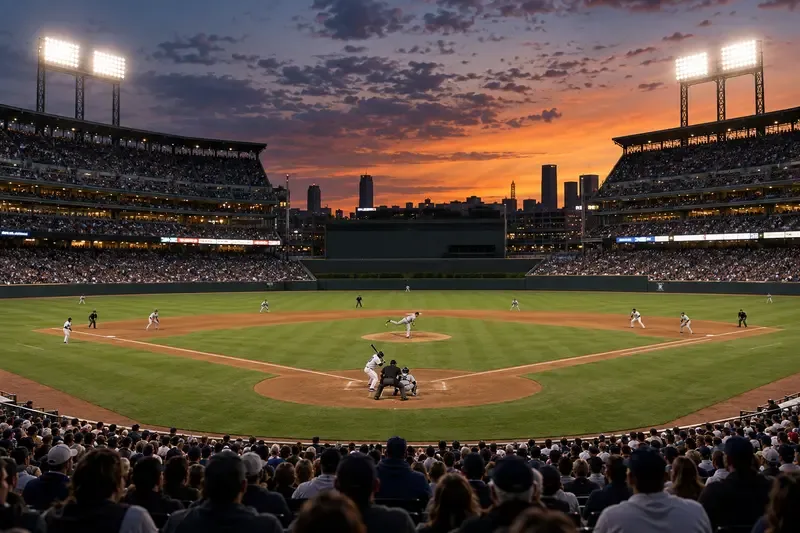
A pitcher prepares to deliver with the infield bases empty, the starting setup for an MLB postseason extra inning.
MLB’s current postseason FAQ and rules glossary confirm this distinction for 2026. The important comparison is between regular-season extra innings, which add a runner before the half-inning begins, and playoff extra innings, which continue under the standard bases-empty setup. That difference can change the leverage of a sacrifice bunt, a single, or a home run.
What happens when a 2026 playoff game reaches the 10th inning?
Each extra half-inning in the postseason begins with no runner placed on second. The visiting team bats first in the top half, and the home team bats in the bottom half if the game remains undecided. Both teams still need to create runs through the normal course of play: a batter must reach base, a runner must advance, or a batter must hit the ball over the fence.
There is no automatic runner who carries over from the ninth, and no “ghost runner” is added by the postseason format. If the 10th is scoreless, the 11th also begins with the bases empty. The same rule applies in later extra innings until the game ends. Fans watching a Wild Card Series, Division Series, League Championship Series, or World Series should therefore expect the same bases-empty starting point.
What to do as a viewer: when a playoff broadcast says the game is going to extras, expect the first batter of the 10th to come up with nobody on. If the graphic shows a runner already on second before that half-inning’s first pitch, check whether there was a prior play, substitution, or scoring situation that explains the runner; it is not the automatic runner rule.
How the regular-season rule works—and why it causes confusion
In regular-season MLB games, every half-inning after the ninth starts with an automatic runner on second base. It begins in the top of the 10th for the visiting team and the bottom of the 10th for the home team, then repeats in each extra inning if the game continues. The rule is designed to create a scoring opportunity without requiring a team to begin every extra inning with the bases empty.
The runner is not chosen at random. MLB’s official glossary says the player placed on second is the batting-order spot immediately before that half-inning’s leadoff hitter, or a pinch-runner substituted for that player. For example, if the No. 7 spot is due to lead off the 10th, the player in the No. 6 spot—or a pinch-runner for him—starts on second.
A common shorthand says “the last out starts on second.” That is often an easy way to remember the rule, but the official definition is more precise: it is the player in the batting order immediately preceding the leadoff hitter. In many innings, that is the same player who made the third out, but the batting-order wording avoids confusion in unusual plays. For a specific game, compare the lineup position due up with MLB’s definition rather than relying only on the phrase “last out.”
Why does “permanent” not mean it applies in the playoffs?
MLB first introduced the automatic runner during the 2020 regular season and later made it a permanent rule for regular-season games. “Permanent” describes whether the rule remains part of regular-season play; it does not mean that the postseason uses it too. MLB’s current glossary explicitly limits the rule to regular-season games, and the league’s 2026 postseason FAQ separately says the runner-on-second rule is not used in the playoffs.
This distinction matters because people often see a regular-season runner in the 10th inning, then assume the same setup must carry over to October. It does not. The automatic runner is a competition-format choice with a defined scope. Check the MLB postseason FAQ when confirming playoff rules, and the automatic-runner glossary when confirming the regular-season setup.
Does the automatic runner count as a run or an earned run?
The runner counts as a real baserunner for plays, but being placed at second does not itself put a run on the scoreboard. The team still has to bring the runner home. If that runner scores, MLB’s glossary says the run is not charged as an earned run to the pitcher. That scoring detail is separate from the postseason question: because there is no placed runner in playoff extras, there is no automatic-runner scoring treatment to apply to the 2026 playoffs.
“Not earned” also does not mean “does not count.” A run scored by the automatic runner counts for the team in the game total and can decide a regular-season game. The unearned-run classification affects the pitcher’s earned-run record, not the team’s score. If you are following a box score, distinguish the team’s runs from the pitcher’s earned runs.
One situation, two different starts
Situation
Regular season
2026 postseason
Game tied after nine innings
The 10th begins with a runner on second in each half-inning.
The 10th begins with the bases empty in each half-inning.
First batter hits a home run
The home run can score the placed runner as well as the batter, depending on the half-inning.
With the bases empty at the start, a solo home run scores one run.
First batter makes an out
One out is recorded while the automatic runner remains unless a play retires him.
One out is recorded with the bases still empty.
Game is still tied after the 10th
The next half-innings again start with a runner on second.
The 11th also starts with the bases empty.
The difference affects strategy, but it does not guarantee an outcome. In the regular season, a team may use a bunt, a hit-and-run, or a sacrifice fly to move or score a runner who is already in scoring position. In the playoffs, the offense must first get a runner aboard. Managers may still choose to bunt or play for one run, but the decision starts from a different base-out situation.
What is confirmed, and what should you still check?
Confirmed: MLB says the automatic runner applies only to regular-season games. MLB’s postseason FAQ for 2026 says it is not used in October. Postseason extra innings begin with the bases empty.
Not a universal statement about every baseball league: MLB’s rule does not automatically control college, minor-league, international, amateur, or tournament baseball. Other organizations may have their own extra-inning procedures. If you are watching a non-MLB event, check that competition’s current rulebook instead of importing MLB’s postseason rule.
For a game-specific broadcast question: the rule itself is not uncertain, but an apparent runner at second may have arrived through an actual hit, walk, error, fielder’s choice, or substitution. Look at the inning’s preceding play and the official scorecard before deciding that an automatic runner was used.
The quick answer remains simple: the automatic runner appears in regular-season MLB extra innings, but not in the 2026 playoffs. When a postseason game reaches the 10th, both teams start their half-innings with the bases empty and try to score the conventional way.