Where to Get Clay in Stardew Valley: Every Source (2026 Guide)
Clay in Stardew Valley comes mainly from tilling dirt or sand, digging artifact spots, opening geodes, and mining Clay Nodes at Ginger Island’s Dig Site. If you need clay early, take your Hoe to the soft dirt patches in the Mines: the drop rate is better there than outside, and mine floors can be reset. Dig the worm-like artifact spots you pass along the way, too. Later in the game, Clay Nodes provide another source. Save 10 pieces if you plan to build a Silo.
Clay sources at a glance
| Source | Tool or place | Best for |
|---|---|---|
| Tilling dirt or sand | Hoe | Early-game supply; the Mines are especially useful |
| Artifact spots | Hoe | Picking up clay while exploring outdoor areas |
| Geodes | Clint’s Blacksmith or a Geode Crusher | Extra clay from geodes you already collected |
| Clay Nodes | Pickaxe at Ginger Island’s Dig Site | A later-game source when visiting the island |
| Occasional purchases or gifts | Traveling Cart, Desert Festival, Feast of the Winter Star, or a max-friendship dog | Filling a small shortage without digging |
For most players, a mix of tilling soil and digging artifact spots is the practical early-game answer to where to get clay in Stardew Valley. Geodes and shops are useful extras, but neither is a dependable way to farm a large amount.
How to get clay in Stardew Valley
1. Till dirt and sand with your Hoe
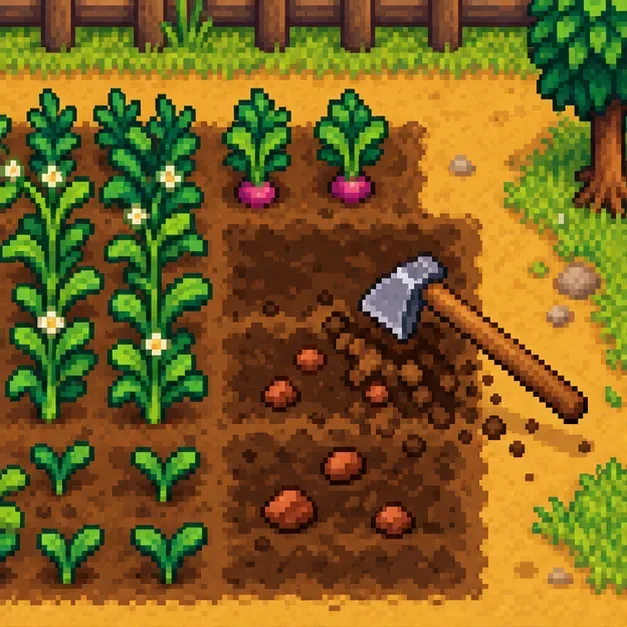
Your Hoe is the main tool for collecting clay. Use it on fresh, tillable dirt or sand: above ground, a dug tile may produce clay, metal ore, or Mixed Seeds. You can find workable patches on the farm and in other areas with exposed soil. The Hoe can also till sand in places such as the Beach, the Desert, and parts of the Mines. See the Stardew Valley Wiki’s Hoe guide for the tool’s full range.
When clay is the goal, try dirt patches in the Mines. The Clay entry in the Stardew Valley Wiki notes that mining-floor dirt has a higher clay rate than dirt outside the Mines and that the floors are easy to reset. Digging there can also uncover Cave Carrots and floor-dependent artifacts. An upgraded Hoe can till several tiles at once when charged, which saves swings; it does not make each tile a guaranteed clay drop. Bombs can clear dirt patches faster if you already have them and are comfortable spending them.
2. Dig artifact spots (the worm tiles)
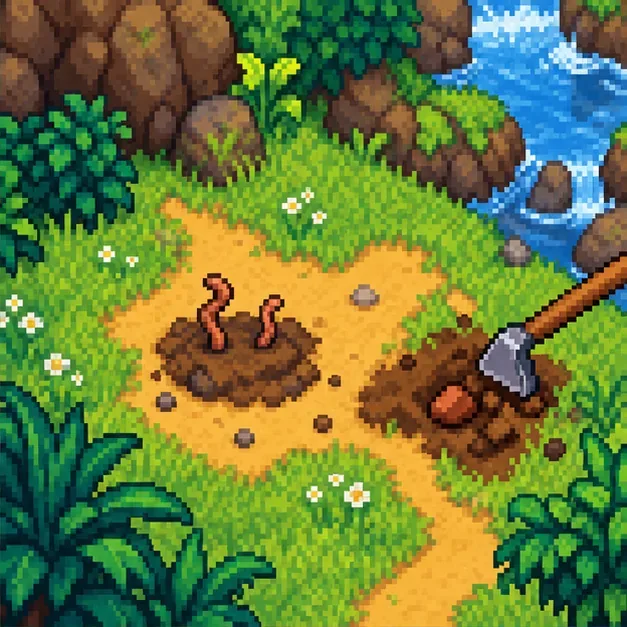
Artifact spots are the small brown patches marked by little wiggling stems that many players call worms. Dig one with the Hoe: it always gives an item, but clay is only one possible result. A clay drop can contain one to three pieces. The odds and other possible items vary with the map, season, and game state, so an artifact spot is a promising find rather than a guaranteed clay deposit.
Look for artifact spots on open, tillable tiles throughout the Valley, including paths and outdoor areas. They spawn at different rates by map, and a spot can remain for more than one day; don’t assume every area gets a fresh set each morning. If you want clay, dig the spots you see as you travel instead of making a special trip for one location. The Wiki’s Artifact Spot guide explains how their contents and spawns vary.
3. Open geodes for a chance at clay
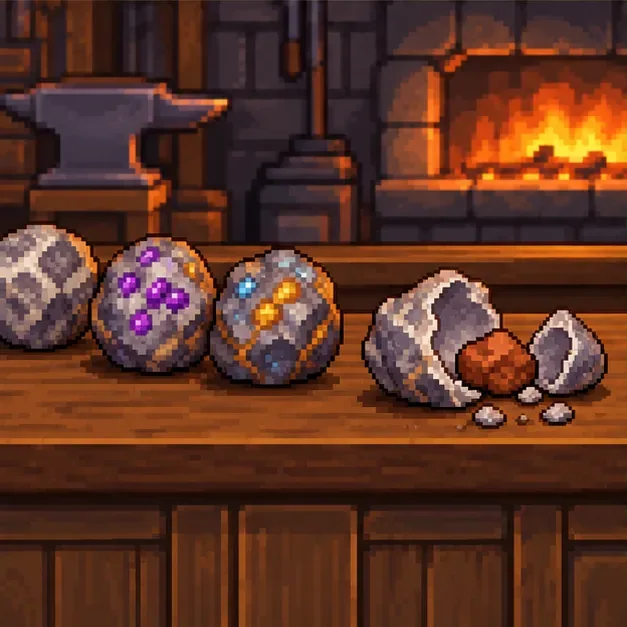
Geodes can contain clay along with minerals, artifacts, ore, stone, and coal. Take them to Clint at the Blacksmith; opening a geode costs 25g. Geodes are random, and a single geode can yield at most one clay, so this is best treated as a bonus from mining rather than a clay-farming plan. If you have a Geode Crusher, it can process geodes as well. Read the Blacksmith page for the processing details.
4. Mine Clay Nodes at Ginger Island
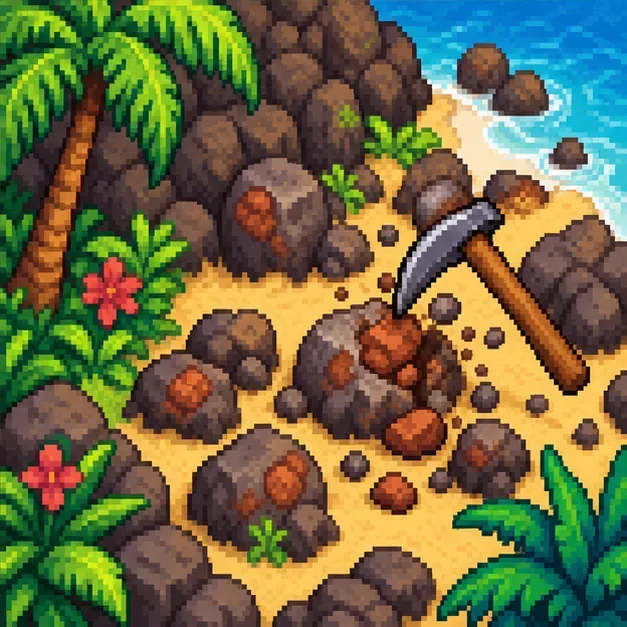
After you unlock Ginger Island, visit the Dig Site and look for reddish-brown Clay Nodes among the rocks. Break a node with your Pickaxe to collect clay. The nodes can appear at this site over time, making the Dig Site a useful source when you are already exploring the island. It is not an early-game option, but it gives experienced players another way to replenish their supply without relying on artifact-spot drops. The Mining guide lists Clay Nodes at the Ginger Island Dig Site.
Other ways to get a few pieces
- Traveling Cart: The cart appears in Cindersap Forest on Fridays and Sundays. Clay may be in its random stock and is listed at 100–1,000g, so check it if you are short, but don’t count on it being available. The Traveling Cart schedule and stock list has the current details.
- Desert Festival: Vincent’s shop sells clay for one Calico Egg during the festival. This is a limited event option, not a year-round shop.
- Feast of the Winter Star: Jas, Leo, or Vincent can give clay as a gift, depending on the gift exchange.
- Pet dog: A dog with maximum friendship can occasionally bring clay as a gift.
These sources are convenient when they line up with your game, but tilling and artifact spots are the options available to most players from the start.
What clay is used for
Clay is a crafting material and a building material. The main early-game reason to keep some is the Silo: Robin’s building costs 10 clay, along with 100 Stone, 5 Copper Bars, and 100g. A Silo stores hay from grass cut on the farm, so save those first 10 pieces if you plan to raise animals. See the Silo requirements before ordering one.
| Recipe or building | Clay required | Output or note |
|---|---|---|
| Silo | 10 | Farm building for storing hay |
| Quality Retaining Soil | 1 | Crafts 2; recipe unlocks at Farming Level 7 |
| Deluxe Retaining Soil | 1 | Also uses 5 Stone and 3 Fiber |
| Garden Pot | 1 | Also uses 10 Stone and 1 Refined Quartz |
| Brick Floor | 2 | Crafts 5 floor tiles |
| Fiber Seeds | 1 | Crafts 4; also uses Mixed Seeds and Sap |
| Bone Mill | 3 | Also uses Bone Fragments and Stone |
| Dehydrator | 2 | Also uses Wood and Fire Quartz |
The older claim that a Well needs clay is incorrect: Robin’s Well costs 75 Stone and 1,000g, with no clay. If you are deciding what to craft first, prioritize a Silo for animals, then spend extra clay on soil, pots, floors, or machines you actually plan to use. Clay is also requested in some Fish Pond quests and has a few decorative and tailoring uses; it is not required for Community Center bundles.
Fastest practical clay plan
- Early game: Keep your Hoe handy and dig Mine dirt patches when you need a larger batch. Till farm soil as part of planting, rather than clearing every outdoor tile at random.
- While exploring: Dig artifact spots you pass. Their rewards vary, but they cost no extra resources beyond the time and energy to use your Hoe.
- Later game: Break Clay Nodes when you visit Ginger Island, and open geodes you already have instead of buying them just for clay.
- Before a build: Set aside 10 clay for a Silo if you plan to keep animals; avoid using that reserve on decorative flooring first.
In short, the best early answer to where to get clay in Stardew Valley is to dig dirt in the Mines and collect artifact spots as you see them. Add Ginger Island Clay Nodes later, and use geodes, the Traveling Cart, and festival gifts as occasional top-ups.
Frequently asked questions
Can you buy clay in Stardew Valley?
Not from a permanent shop. The Traveling Cart sometimes carries it, and Vincent sells it for one Calico Egg during the Desert Festival. Both options are occasional, so they are not a reliable replacement for digging.
Do artifact spots always give clay?
No. Every spot gives an item, but the item depends on its location and other conditions. Clay is one possible drop, not a guaranteed reward.
Does a Well use clay?
No. The Well requires 75 Stone and 1,000g. The Silo is the early farm building that requires 10 clay.