Wondering what to do in winter in Stardew Valley? Spend the 28-day season growing the few crops that survive outdoors, collecting winter forage, mining for upgrades, catching seasonal fish, and preparing your farm for spring. Winter also gives you time to improve friendships, take care of animals, and visit festivals that do not happen at any other time of year.
The biggest misconception is that farming stops completely. In the current game, Powdermelon Seeds, Winter Seeds, and Fiber Seeds can grow outside during winter. Ordinary spring, summer, and fall crops still die when their growing season ends, but the greenhouse remains productive year-round. Whether this is your first winter or a late-game one, the priorities below will help you use your time without turning every day into a grind.
Winter priorities at a glance
| Goal | Best winter activity | Why it matters |
|---|---|---|
| Make money early | Fishing, mining, animals, and artisan goods | Income continues even without a large field of normal crops. |
| Keep farming outdoors | Powdermelons, Winter Seeds, or Fiber Seeds | These are the exceptions to winter's usual crop restrictions. |
| Finish bundles | Collect Crocus, Crystal Fruit, Winter Root, and Snow Yam | The standard Winter Foraging Bundle needs all four. |
| Improve the next season | Upgrade tools, gather resources, plan buildings | Spring planting becomes much easier with better equipment. |
| See seasonal content | Winter events, gifts, Secret Notes | Some opportunities are tied to specific winter dates. |
1. Plant Powdermelons, Winter Seeds, and Fiber Seeds outside
If you want to keep using your fields, Powdermelons are the winter crop to know about. Introduced with the 1.6 update, they take seven days to grow and can be planted in outdoor tilled soil during winter. Their seeds are found through methods such as digging up seasonal seed spots, obtaining certain rewards, and using the Seed Maker. They are not a standard seed packet sold by Pierre.
Winter Seeds, crafted as Wild Seeds (Wi), also grow outside in seven days. Each harvest gives one of four forage items: Crocus, Crystal Fruit, Snow Yam, or Winter Root. At Foraging Level 7, you can craft 10 Winter Seeds from one of each of those four items. Completing the standard Winter Foraging Bundle also rewards 30 Winter Seeds, making the bundle useful even if you do not need its forage immediately.
For a lower-maintenance field, Fiber Seeds grow in any season, including winter, and do not need watering. You unlock the crafting recipe through Linus's Community Cleanup special order. Powdermelons and Winter Seeds still need water, so use sprinklers or a watering can if you plant them. Normal out-of-season crops will not survive outdoors.
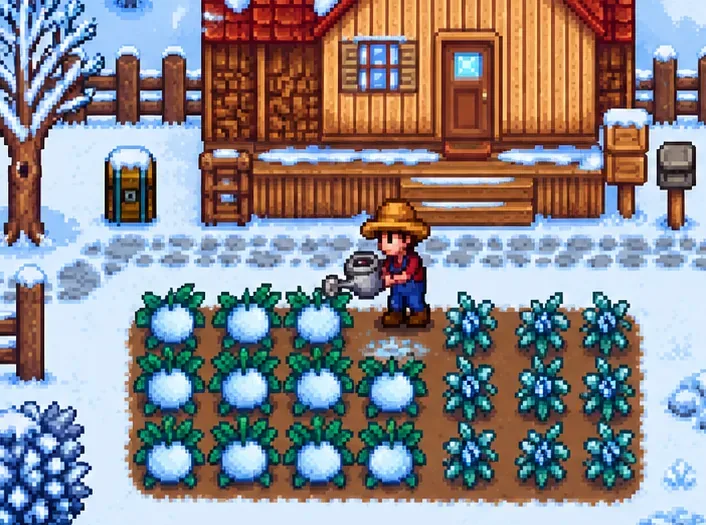
For a full list of what can grow in the snow, check the Stardew Valley Wiki's winter reference.
2. Collect the correct winter forage and finish the bundle
Make a loop through Pelican Town, Cindersap Forest, the Bus Stop, and the Mountain. Look for Crocus and Crystal Fruit on the ground, then use your hoe on artifact spots and suitable soil to search for Snow Yam and Winter Root. Mining monsters can also provide some of these items, so you do not need to rely only on walking the map.
The standard Winter Foraging Bundle in the Community Center's Crafts Room requires precisely four items: Crocus, Crystal Fruit, Snow Yam, and Winter Root. Holly and Nautilus Shell are real winter finds, but neither belongs in that standard four-item bundle. If you selected remixed bundles when creating your save, check your Community Center screen because the required selection can differ.
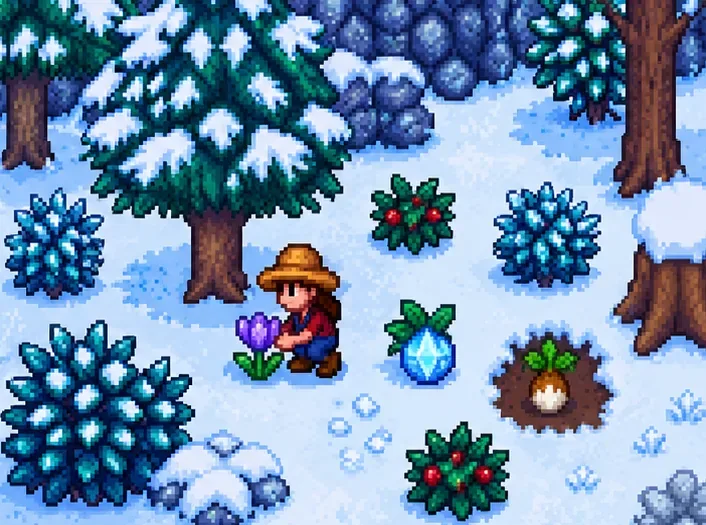
Save one of each bundle item before selling your extras. Once you have a surplus, you can craft Winter Seeds to grow more forage and increase your Foraging skill. The Botanist profession is a Foraging Level 10 choice, not a Farming profession; it improves the quality of collected forage. The original bundle reference lists the standard and remixed requirements.
3. Reach deeper mine floors and upgrade your tools
Winter is an ideal time for a long mining session because crop care usually takes less of your morning. In the regular Mines, push toward floors 80–119 for dependable access to gold ore and toward floor 120 to obtain the Skull Key. Bring food, use the elevator to resume at unlocked checkpoints, and return home before you pass out.
If the Desert is available and you have the Skull Key, try the Skull Cavern for iridium ore. Iridium becomes more common on deeper floors, but reaching floor 100 is not required before any iridium can appear. Unlike the regular Mines, Skull Cavern does not have an elevator; bring healing food, bombs, and staircases for efficient runs. Favor high-luck days for ambitious descents.
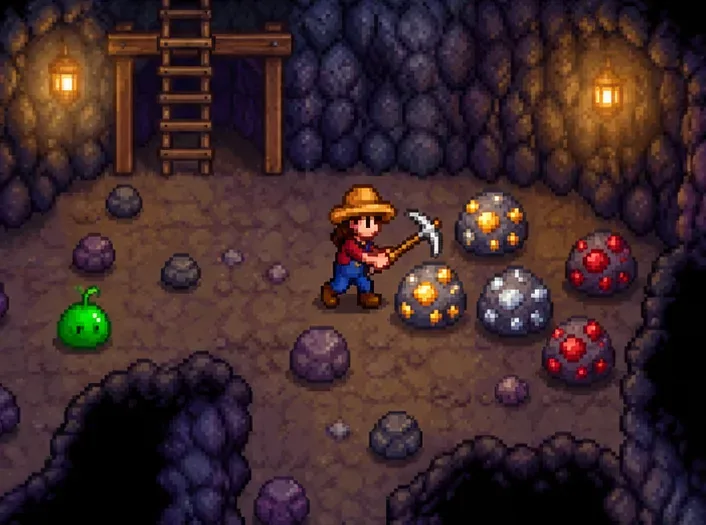
Spend your ore and bars on upgrades at Clint's shop. A stronger pickaxe makes future mining faster, while upgrading your watering can during a low-farming period is often convenient. Remember that an upgrade leaves the tool with Clint until it is ready for pickup; plan mine trips around any pickaxe downtime. If you are short of money, upgrade the tool that is blocking your next goal instead of upgrading everything at once.
4. Fish for Squid, Lingcod, Midnight Carp, and Sturgeon
Winter fishing is one of the most reliable ways to earn gold and complete your fish collection. The following times are in-game clock times, not real-world time zones:
| Fish | Location | In-game time | Seasonal note |
|---|---|---|---|
| Squid | Ocean | 6 p.m.–2 a.m. | Winter; catchable all day during SquidFest |
| Lingcod | River or Mountain Lake | Any time | Winter only under normal fishing rules |
| Midnight Carp | Mountain Lake or Cindersap Forest pond | 10 p.m.–2 a.m. | Fall and winter; also available on Ginger Island |
| Sturgeon | Mountain Lake | 6 a.m.–7 p.m. | Summer and winter; needed for the standard Lake Fish Bundle |

If you have not caught a Sturgeon for the Community Center, prioritize it before winter ends. Lingcod are challenging, so a better rod and fishing skill help. Squid can fulfill Willy's winter fishing request and become a useful ingredient, but they are not one of the three fish required for the standard Night Fishing Bundle. See the fish reference for other seasonal catches and exceptions such as Magic Bait.
5. Keep your greenhouse and artisan machines productive
A repaired greenhouse makes winter feel less restrictive. Complete the Pantry bundles at the Community Center or purchase the Joja greenhouse development project to restore it. The indoor soil accepts crops from any season, and regrowing crops remain productive after their normal outdoor season ends. You must still water greenhouse crops, although sprinklers can handle most of the work.
For a long-term setup, plant Ancient Fruit for repeat harvests or Starfruit when you have seeds and want to process a high-value crop. The perimeter can fit as many as 18 fruit trees if you follow the placement rules; mature trees bear fruit throughout the year inside the greenhouse. These are late-game options, not prerequisites for having a productive first winter.
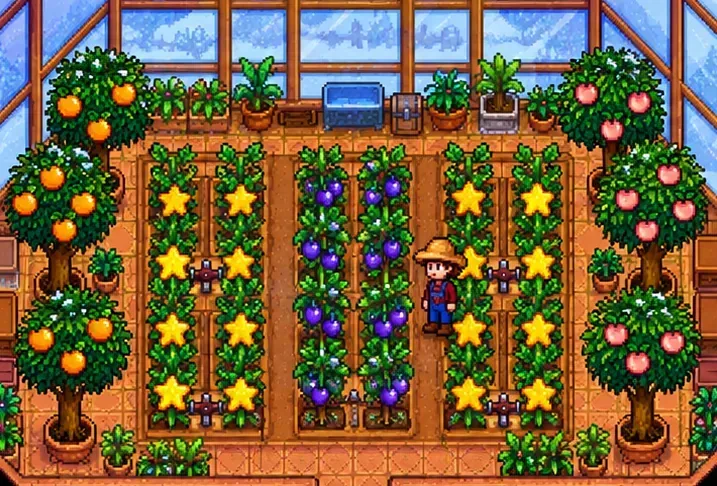
Outside the greenhouse, keep your existing kegs, preserves jars, mayonnaise machines, and cheese presses working. Process stored crops and daily animal products rather than waiting for spring to sell something. The greenhouse layout reference shows the planting area and fruit-tree spacing.
6. Feed animals, place heaters, and improve the farm
Chickens, cows, and other barn or coop animals do not graze outdoors in winter. Each animal normally needs one portion of hay per day, so keep the feeding benches supplied; Deluxe Barns and Deluxe Coops refill them automatically if hay is available. Check your silo before a long stretch of mining days, and buy additional hay if supplies run short.
A heater in each occupied barn or coop helps keep animal mood high during winter. You can buy heaters from Marnie. Continue petting animals and collecting their products, then convert milk and eggs into cheese and mayonnaise for steady income.
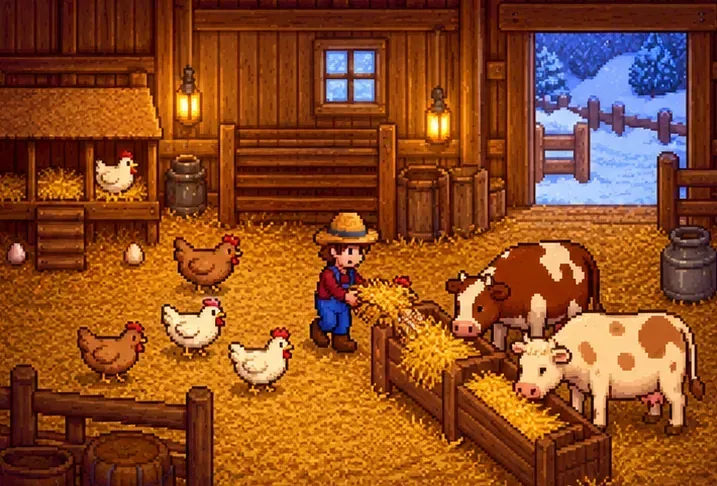
Winter is also a convenient time to ask Robin to construct or upgrade buildings, make space for sprinklers, organize chests, and stockpile wood and stone. If a spring planting plan requires a new barn, coop, silo, or shed, schedule construction while your daily field chores are light. See the animal-care reference for feeding and winter mood rules.
7. Build friendships and unlock the Winter Mystery
Use your free afternoons to talk to villagers, give thoughtful gifts, and catch up on heart events. You can normally give each villager up to two gifts per week, with an additional gift possible on their birthday. Check tastes rather than handing out random winter finds: a pretty item is not automatically a loved gift, and Holly is a particularly poor choice for many villagers.
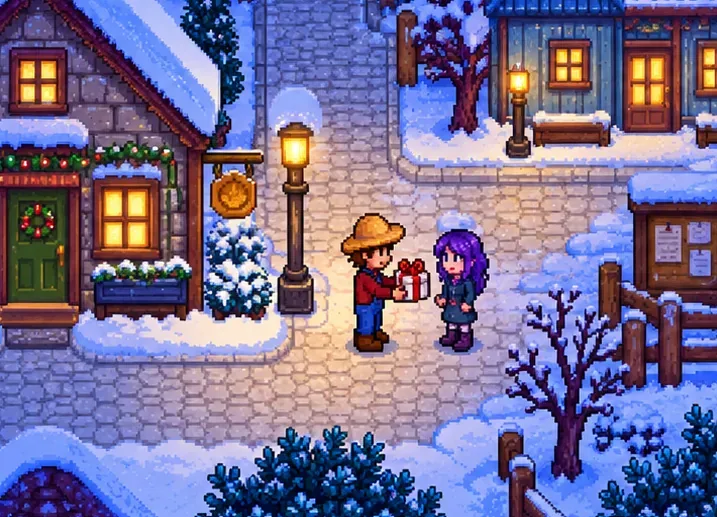
Winter also introduces A Winter Mystery. During winter, walk from your farm toward the Bus Stop during the day to trigger the shadowy figure cutscene, if you have not already done so. Follow the tracks to the bush by the playground near the Community Center and interact with it to receive the Magnifying Glass. That item unlocks the ability to find and read Secret Notes through everyday activities such as mining, fishing, and digging. See the Secret Notes reference for the quest details.
8. Plan around all four winter festivals
Several days of winter deserve a place on your in-game calendar. Festival hours below use Stardew Valley's in-game clock:
| Winter date | Event | What to do |
|---|---|---|
| 8 | Festival of Ice | Enter Cindersap Forest between 9 a.m. and 2 p.m. for the ice-fishing contest. |
| 12–13 | SquidFest | Fish at the Beach, catch Squid during the day, and claim catch-based rewards. |
| 15–17 | Night Market | Visit the Beach from 5 p.m. for merchants, attractions, and submarine fishing. |
| 25 | Feast of the Winter Star | Enter Pelican Town between 9 a.m. and 2 p.m. with a gift for your assigned villager. |

Read Mayor Lewis's Winter 18 letter to learn whom you will give a gift to at the Feast of the Winter Star. At the Night Market, the submarine provides a chance to catch unusual deep-sea fish. SquidFest and the Night Market do not stop the normal in-game clock, so feed animals and manage your day as usual. Festival schedules are documented in the festival reference.
A practical first-winter plan
If this is your first winter in Stardew Valley, avoid trying to accomplish everything every day. Use a simple sequence:
- Winter 1–7: Check hay and heaters; plant any winter-compatible seeds; collect bundle items; start a useful tool upgrade.
- Winter 8–14: Attend the Festival of Ice and SquidFest; spend other days mining or fishing, depending on your resources.
- Winter 15–21: Visit the Night Market, complete A Winter Mystery, and keep building relationships.
- Winter 22–28: Finish winter-specific catches and forage, complete upgrades, buy spring seeds when available, and organize your fields before Spring 1.
Each morning, handle a few essentials first: check animals, harvest or water winter-compatible plants, collect finished artisan goods, and then dedicate the remainder of the day to one main goal. A targeted mine trip often pays off more than wandering between several activities without enough time to finish any of them.
Common winter questions
Can you grow crops outside during winter?
Yes. Powdermelons, Winter Seeds, and Fiber Seeds grow outdoors in winter. Most ordinary seasonal crops do not. The greenhouse and other suitable indoor growing spaces follow separate growing rules.
What is the best way to make money in winter?
Early-game farmers often do well with fishing and valuable mine finds, supported by animal products and artisan processing. Players with a greenhouse can add consistent crop income. Winter forage and Powdermelons are useful supplements, but your best choice depends on the tools, skills, and buildings you already have.
Which winter forage items should I save?
Keep a Crocus, Crystal Fruit, Snow Yam, and Winter Root for the standard Winter Foraging Bundle. Save another set if you want to craft Winter Seeds. Holly and Nautilus Shell can still be useful for other purposes, but they are not part of that standard bundle.
Should I spend winter in Skull Cavern or the regular Mines?
If you have not reached floor 120 of the regular Mines, finish that progression first. If you already have access to the Desert and Skull Key, deeper Skull Cavern runs are a strong way to gather iridium. Bring food and escape tools instead of assuming floor 100 is mandatory for ore.
Make winter work for your spring goals
The best winter strategy is to combine one steady income source with one long-term upgrade goal. Grow what survives in the snow, collect the four correct bundle items, make progress in the Mines, keep animals and the greenhouse productive, and set aside time for the festivals. When Spring 1 arrives, stronger tools, stocked resources, and finished bundles will matter more than how many hours you spent simply passing time. For official game news and updates, visit the Stardew Valley website.