What Is Omnivamp in League of Legends? (2026 Guide)
Omnivamp in League of Legends is a combat stat that restores your health when you deal eligible damage, whether that damage is physical, magic, or true. Unlike ordinary life steal, which primarily rewards qualifying attacks and effects, omnivamp can also heal you through damaging abilities. The 2026 rule is especially important: area-of-effect (AoE) damage to enemy champions is not automatically reduced to one-third healing.
If an old guide tells you that every AoE spell receives a 33% omnivamp penalty, or that life steal no longer exists, it is describing outdated rules. Riot updated omnivamp in patch 24.1 and adjusted it again in patch 26.1. The explanation below focuses on Summoner’s Rift in 2026, not separate Wild Rift, TFT, or rotating-mode balance.
How Does Omnivamp Work?
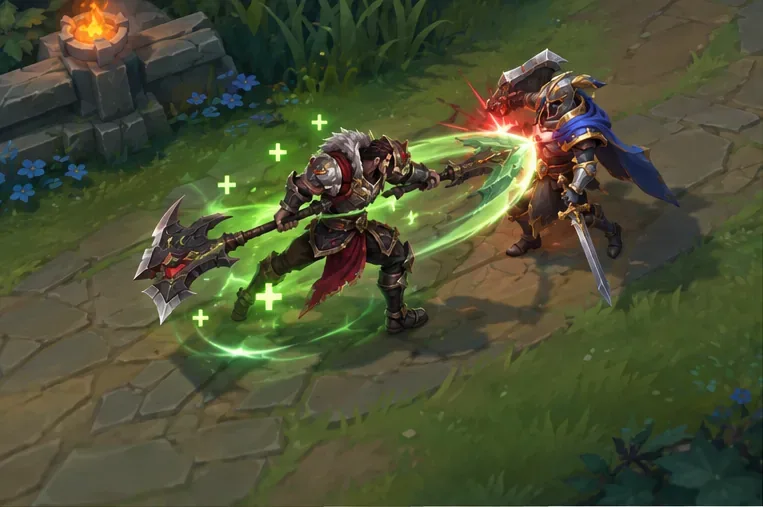
The basic calculation is eligible damage dealt × omnivamp percentage = health restored, before other healing modifiers. If you deal 200 actual damage with 10% omnivamp, the straightforward result is 20 health. This is a simplified example: armor, magic resistance, other damage modifiers, healing reduction, and individual ability interactions can change what happens in a match.
Omnivamp is about the damage you deal, not the damage dealt by your teammates. It does not convert damage you take into healing and does not repair a shield instead of health. The amount of healing also cannot raise you above your normal maximum health unless a separate effect specifically provides an overheal benefit.
Does the damage type matter?
Not by itself. Eligible physical, magic, and true damage can all contribute. A fighter can recover health with attacks and spells in the same trade, while a caster can benefit from qualifying spell damage. That flexibility is the main difference between omnivamp and life steal.
Does Omnivamp Heal From AoE and Damage Over Time?
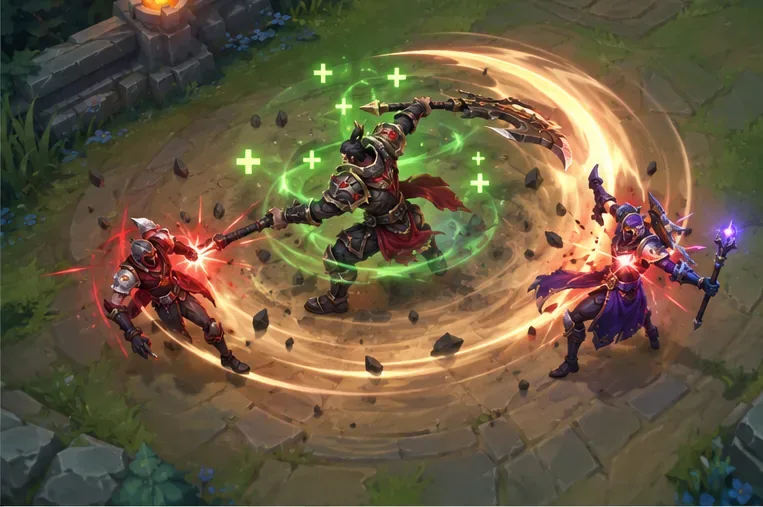
Yes. Against enemy champions, omnivamp applies at full listed effectiveness to qualifying AoE and damage-over-time (DoT) damage under Riot’s 2026 rules. This makes an enormous difference for champions who hit two or three opponents with one ability. For instance, 10% omnivamp applied to a 200-damage hit on each of three champions would yield 60 total health in the simplified example, before other modifiers.
Where does the 33% rule still apply?
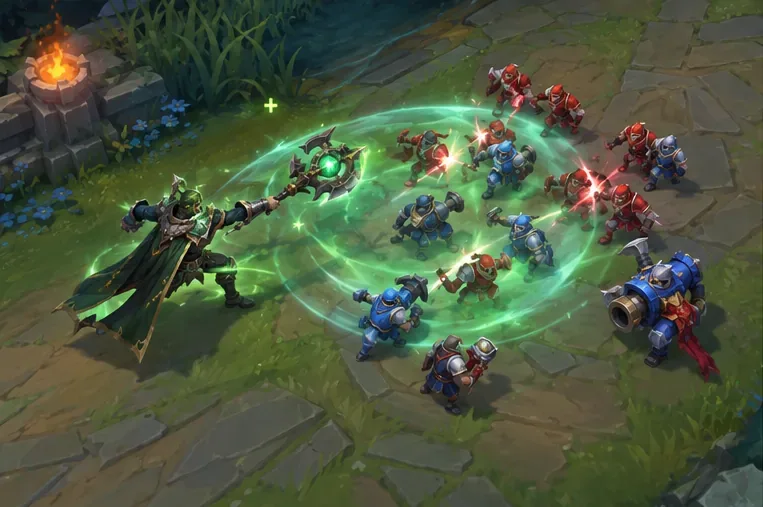
The key 2026 exception concerns minions. Riot specifies that healing from pets, DoT damage, and AoE spells against minions is reduced to 33% effectiveness. Regular qualifying single-target attacks against minions do not inherit the old blanket 20% penalty. Riot described the change directly in Riot’s patch 26.1 notes.
| Damage scenario | 10% omnivamp on 200 damage | Why |
|---|---|---|
| Single-target damage to an enemy champion | 20 health | Full listed effectiveness |
| AoE spell damage to an enemy champion | 20 health | No universal champion AoE penalty |
| Qualifying basic attack against a minion | 20 health | Full effectiveness under the revised rule |
| AoE spell, pet, or DoT damage to a minion | About 6.6 health | 33% of the usual omnivamp healing |
Each row treats 200 as the amount of eligible damage actually dealt to that target. Numbers are illustrative, not recordings from an in-game test. Do not apply the minion-specific 33% exception automatically to every monster, turret, or enemy champion.
Omnivamp vs. Life Steal vs. Spell Vamp
These terms are related, but they are not interchangeable. Most importantly, life steal still exists in 2026; you can see it on items and in champion tuning. Riot’s patch 26.4 notes also documents an older Lee Sin effect being converted from life steal plus spell vamp into omnivamp.
| Healing mechanic | What it generally covers | What to remember |
|---|---|---|
| Omnivamp | Qualifying attack and ability damage, regardless of physical, magic, or true damage type | 2026 minion exception applies to AoE, pets, and DoT |
| Life steal | Qualifying basic-attack damage and specific abilities that explicitly apply life steal | Not removed; check ability descriptions for exceptions |
| Spell vamp | Spell-damage healing in older or specially defined effects | Not the normal general-purpose stat to shop for today |
| Built-in healing | Champion passives, spells, and specific item effects | May scale with damage without being omnivamp |
A champion whose kit says an ability heals for a percentage of damage dealt is not necessarily receiving the omnivamp stat. Similarly, the Conqueror rune’s healing mechanic should not be treated as a permanent omnivamp item bonus. Read the current tooltip rather than assuming all self-healing stacks or follows exactly the same rules.
Which Items Give Omnivamp in 2026?
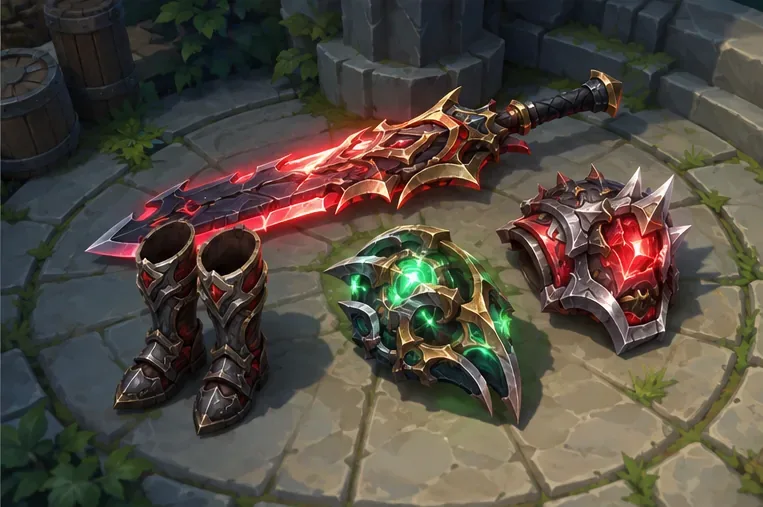
The item system changed substantially from the examples in older guides. Goredrinker and Divine Sunderer are not current Summoner’s Rift recommendations, and Sterak’s Gage should not be advertised as a 20% omnivamp item. More relevant choices include the following items introduced, reintroduced, or adjusted in 2026:
| Item | Documented omnivamp | Typical reason to consider it |
|---|---|---|
| Doran’s Blade | 2.5% (patch 26.1) | Early-lane sustain when trading and last-hitting |
| Doran’s Bow | 1.5% at introduction (patch 26.9) | Alternative attack-oriented starting option |
| Hextech Gunblade | 10% at its 2026 return | Hybrid damage and sustain, plus a targeted active |
| Endless Hunger | 5% base at introduction; 15% additional omnivamp temporarily after a qualifying takedown | AD casters and extended team fights |
| Gluttonous Greaves | 4% base; its takedown stacking was adjusted to +0.6% each, up to ten stacks, in patch 26.10 | Sustain-oriented boots with scaling value |
| Riftmaker | Omnivamp gained through its combat-stacking passive | AP bruisers who can remain in combat |
These are documented examples, not an exhaustive live shop inventory. The listed numeric values are anchored to Riot’s stated patches and can change with later balance updates. For the new starting item and boots, see patch 26.9 notes and the boots follow-up in patch 26.10 notes; the 2026 returning and new items are detailed in Riot’s patch 26.1 notes. The latest patch checked for this rewrite is patch 26.20 notes, dated October 6, 2026.
Who Benefits Most From Omnivamp?
Long-fight damage dealers often get the most practical value because they have time to convert repeated hits into health. AD ability fighters can consider effects such as Endless Hunger; AP bruisers may prefer Riftmaker; and some mixed-damage champions may appreciate Gunblade. An ADC usually compares these choices with traditional life-steal options instead of assuming omnivamp is automatically better.
Contrary to the old rule of thumb, AoE casters are not inherently restricted to one-third healing against champions in 2026. They still need to consider their ability cooldowns, item opportunity cost, survivability, and whether enough damage connects for the stat to matter. A durable champion who stays in range generally uses sustained healing more reliably than a champion who attacks once and disengages.
How to Get More Value From Omnivamp
- Deal real damage to meaningful targets. Healing follows eligible damage, so armor and magic resistance can reduce the amount you recover from attacks and spells.
- Use the minion exception correctly. Single-target lane attacks and AoE wave-clear do not necessarily restore the same amount of health per damage dealt.
- Plan around your item’s activation conditions. Riftmaker needs combat time; Endless Hunger’s larger bonus requires a qualifying takedown; Gluttonous Greaves builds stacks through takedowns.
- Respect Grievous Wounds. Anti-healing effects reduce healing received, including omnivamp healing, so a sustain-heavy build can lose considerable value against opponents who apply the debuff.
- Do not confuse self-healing with immunity. Crowd control, burst damage, range disadvantage, and missed attacks can prevent you from dealing the damage needed to heal.
Frequently Asked Questions
Does omnivamp heal from turret damage?
No. Dealing damage to enemy structures is not a reliable omnivamp healing source. Structure-hitting items may have their own effects, but those are separate mechanics.
Can omnivamp and life steal work together?
Yes, when both effects apply to qualifying damage. They are distinct stats, and an effect that uses life steal is not proof that every spell also benefits from it.
Does Conqueror give omnivamp?
Conqueror can offer healing through its own rune mechanic, but you should not label that healing as a flat omnivamp stat. Its current tooltip and stack requirements determine the effect.
Does omnivamp heal from my teammates’ attacks?
No. Your omnivamp does not heal you when an ally alone deals damage. It rewards qualifying damage attributed to your champion.
The 2026 Takeaway
Omnivamp heals you for a percentage of eligible damage you deal. It can work with attacks and abilities and across damage types. For current Summoner’s Rift rules, remember the important distinction: AoE and DoT damage against champions is not subject to the old blanket one-third penalty, while AoE, pet, and DoT damage against minions has a 33% effectiveness rule. Life steal remains a separate, relevant stat, and newer 2026 items give players more ways to build for sustain. Recheck patch notes and in-game tooltips whenever an item or champion ability changes.