Lethality in League of Legends is flat armor penetration. Each point of Lethality lets your physical damage ignore one point of the target’s armor, regardless of your champion’s level. It does not add attack damage, and it does not increase magic or true damage. Lethality is most useful when an AD champion wants to threaten opponents with relatively low armor. This guide reflects the live game through Riot’s Patch 26.20 notes, published October 6, 2026.
How Lethality works
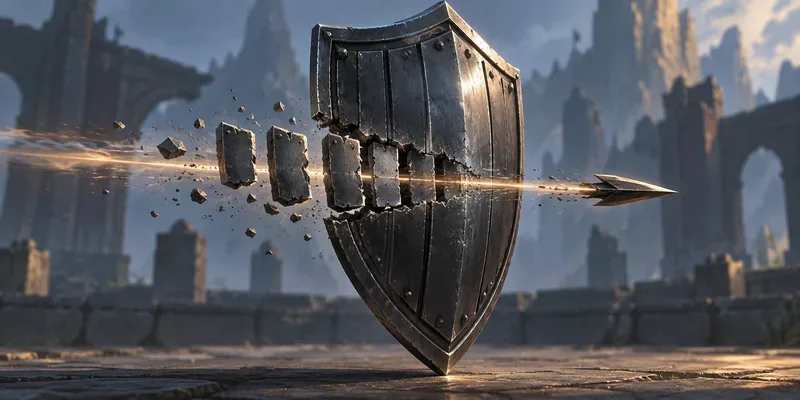
Think of Lethality as a subtraction from the armor that would otherwise reduce a physical hit. If you have 18 Lethality, your hit is calculated as though the target had 18 less armor, subject to the game’s armor-penetration rules. Lethality itself is not damage: the actual damage still depends on your attack or ability, Attack Damage, and other effects.
An important change makes many older guides inaccurate. Before 2024, Lethality converted into flat armor penetration at a rate that rose with level. Riot changed it in Patch 14.1: one point of Lethality now grants one point of armor penetration at every level. So 18 Lethality gives 18 flat armor penetration whether you are level 3 or level 18. Riot’s Patch 14.1 notes record the change. The old level-scaling conversion was removed; the base stat no longer scales with champion level.
Lethality and armor penetration math
When an attack has both percentage armor penetration and Lethality, percentage penetration is applied before flat penetration. Ignoring armor-reduction effects for a simple example, the calculation is:
Effective armor = max(0, target armor × (1 − percentage armor penetration) − Lethality)
For example, against a target with 80 armor, 18 Lethality leaves 62 effective armor. If you also have 30% armor penetration, the percentage step reduces 80 armor to 56, and the 18 Lethality then leaves 38. The game applies other armor-reduction effects before penetration, so a complete combat calculation may include additional steps. See the League of Legends Wiki armor-penetration reference for the full order.
Armor still reduces physical damage after penetration. With no other modifiers, 80 armor reduces a physical hit to about 55.6% of its pre-armor value; 62 effective armor lets about 61.7% through. Lethality therefore makes physical abilities and attacks hurt more by reducing mitigation—it does not turn them into true damage. Penetration cannot push effective armor below zero, so excess Lethality beyond the remaining armor does not provide additional benefit against that target.
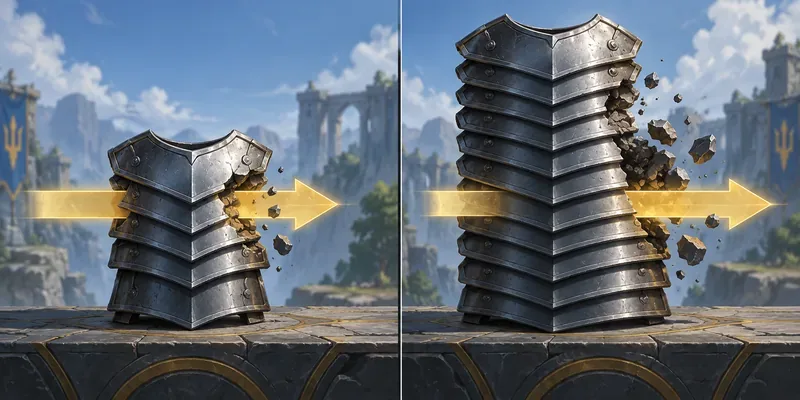
Lethality vs. percentage armor penetration
Both stats help physical damage get through armor, but they answer different matchup problems:
| Stat | What it removes | Usually most valuable against |
|---|---|---|
| Lethality | A fixed number of armor points | Low-armor targets, especially when you want to burst a backliner |
| Percentage armor penetration | A percentage of the target’s armor | Targets that have built substantial armor |
For intuition, 30% penetration removes 24 armor from a 80-armor target and 60 armor from a 200-armor target. A fixed 18 Lethality always subtracts 18, so percentage penetration tends to gain value as the opponent’s armor rises. There is no universal armor threshold where one stat is always better: the crossover depends on the amount of each stat, the target’s armor, and the rest of your build.
Which champions benefit from Lethality?
Lethality helps champions whose damage is primarily physical and whose kit can make good use of Attack Damage. AD assassins and ability-focused fighters often value it because a short combo or repeated poke can land before a low-armor target has time to respond. Zed, Talon, Kha’Zix, Jayce, and Pantheon are familiar examples of physical-damage champions whose builds may include Lethality, depending on the patch, role, and matchup.
That does not make Lethality automatic on every AD champion. A champion focused on sustained attacks, on-hit effects, critical strikes, or survivability may get more from another item path. Lethality also does not amplify magic damage just because an ability scales with AD. Check the damage type in the ability description: the stat benefits only the physical portion.
Choosing Lethality items in 2026
Choose an item for its full package, not just the Lethality number. The live shop tooltip is the authority for current stats and passives; item values can change between patches. Examples in the current item pool include Youmuu’s Ghostblade, Voltaic Cyclosword, and Hubris. Their movement, trade, or takedown-scaling effects can matter as much as their penetration, so match the item to your champion’s pattern and the game state. Riot’s Patch 26.9 notes discuss Hubris, Youmuu’s, and Voltaic; Patch 26.12 later adjusted Voltaic. Check the live shop tooltip for exact stats.
If the opposing team is buying armor, consider a percentage-penetration option instead of continuing to stack flat penetration. For example, Riot raised Serylda’s Grudge to 45% armor penetration in Patch 26.17. Use the current item tooltip to confirm its complete stats. Also note two stale names in older Lethality guides: Riot removed Duskblade of Draktharr in Patch 14.1, and Patch 26.9 removed Opportunity. Do not plan a current build around either item in standard Summoner’s Rift.

A quick build check
- Confirm the damage type. Lethality helps physical damage, not magic or true damage.
- Look at enemy armor. Flat penetration is attractive against low-armor targets; percentage penetration earns more when armor totals are high.
- Choose a useful passive. Mobility, burst, wave control, or a takedown effect may be more valuable than a slightly larger Lethality number.
- Recheck the shop after patches. Older builds may name removed items or quote outdated stats.
Frequently asked questions
Does Lethality scale with champion level?
No. Since Patch 14.1, one point of Lethality grants one point of flat armor penetration at all levels. A specific item passive may separately grant bonus Lethality based on level.
Can Lethality reduce armor below zero?
No. Armor penetration cannot reduce effective armor below zero. Any Lethality beyond the target’s remaining armor is wasted against that target.
Is Lethality better than percentage armor penetration?
Neither is always better. Lethality subtracts a fixed amount and is usually stronger against low armor; percentage penetration removes more points as the target’s armor increases.