The Tom Clancy’s Rainbow Six Video Game Series (2026 Guide)
The Tom Clancy’s Rainbow Six video game series began in 1998 as a planning-focused squad shooter and has since grown into a collection of tactical games with very different formats. The original games emphasized preparing a team before a mission; later entries such as Rainbow Six Vegas and Rainbow Six Siege brought cover-based shooting, destructible maps, and competitive multiplayer to the foreground. In 2026, Siege remains the franchise’s active flagship, Rainbow Six Mobile has launched worldwide, and the newly announced Rainbow Six Tactics is in development.
You do not need to play the Rainbow Six games in order to understand them. Most entries tell their own story or focus on a separate mode of play. This guide traces the major releases, explains how the series changed, and points you to a good starting game based on what you want to play.

What is the Rainbow Six series?
Rainbow Six is Ubisoft’s tactical-shooter franchise about Rainbow, a fictional multinational counterterrorism unit. The series takes its name from Tom Clancy’s military fiction, and its first video game was developed by Red Storm Entertainment. Ubisoft describes the brand as dating to 1998 and credits player strategy and teamwork as central to its identity. The team’s official history also recalls the original game’s focus on planning and precision, where a single mistake could put a mission at risk.
That foundation connects the games, even when the mechanics differ. Players scout, coordinate, and use specialized equipment instead of relying only on fast movement and aim. Older releases lean into mission planning and squad control, while Siege turns information, operator gadgets, sound, and map destruction into a competitive round-by-round puzzle. For background, see Ubisoft’s Rainbow Six brand history and its account of Red Storm’s work on the original game.
Rainbow Six games in order: the major releases
The timeline below focuses on the best-known PC and console releases and major modern spin-offs. It leaves out expansions, handheld versions, and regional release differences. Ubisoft’s historic catalog includes the classic-era titles through Vegas 2, while its store pages document several of the original PC releases.
| Release period | Game or era | What it added |
|---|---|---|
| 1998 | Tom Clancy’s Rainbow Six | The original squad-based tactical shooter, built around choosing a team and planning a mission before carrying it out. |
| Late 1990s–early 2000s | Rainbow Six: Rogue Spear and related releases | Expanded the original planning-and-execution approach across follow-ups and additional versions. |
| 2003 | Rainbow Six 3: Raven Shield | Continued the classic tactical formula; Ubisoft describes it as the series’ third installment. |
| Mid-2000s | Lockdown, Vegas, and Vegas 2 | Experimented with a more immediate action-shooter feel. The Vegas games are particularly associated with cover-based firefights and co-op play. |
| 2015 | Rainbow Six Siege | Shifted the series toward ongoing, objective-based online competition and destructible environments. |
| 2022 | Rainbow Six Extraction | Recast Siege Operators in a cooperative player-versus-environment game about containing an alien threat. |
| 2026 | Rainbow Six Mobile | Brought the franchise’s attacker-versus-defender tactical matches to mobile devices. |
| Upcoming | Rainbow Six Tactics | An announced single-player, turn-based tactical game in the Rainbow Six universe; Ubisoft lists its release date as coming soon. |
For the older chronology, Ubisoft’s 2009 annual report records releases including Raven Shield, Lockdown, Vegas, and Vegas 2. Ubisoft’s current store pages list Rainbow Six 3, Lockdown, Vegas, and Vegas 2.
How the series changed from planning to Siege
The classic games: plan the operation
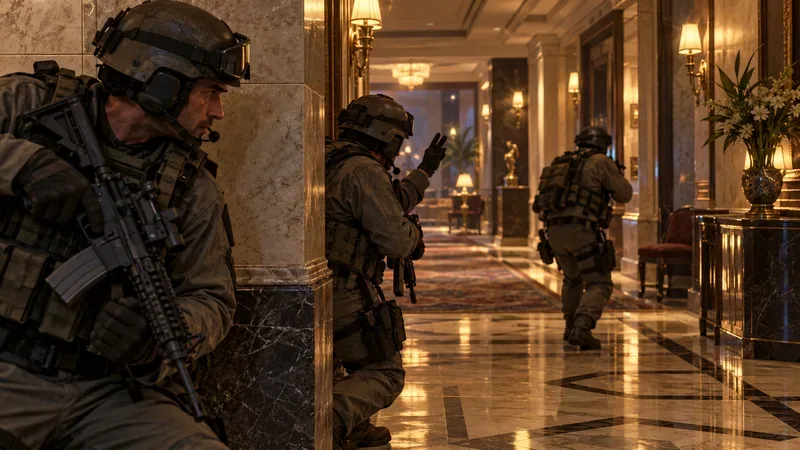
The 1998 original and early follow-ups asked players to think like mission planners. Before a breach, you could organize squad members, assign routes, and decide how the team should approach an objective. The action itself was less forgiving than a conventional run-and-gun shooter: positioning and preparation mattered because an engagement could turn dangerous quickly. Rogue Spear and Raven Shield are the clearest starting points if you want to explore this slower, squad-led side of Rainbow Six.
Vegas: a more direct, cinematic shooter
Rainbow Six: Vegas (2006) and Vegas 2 (2008) made the series more accessible to players who preferred direct control in the middle of a firefight. Their cover system and campaign co-op shifted attention away from plotting every squad movement and toward moving from cover to cover, clearing rooms, and coordinating during combat. The change did not erase the tactical identity; it translated it into a more immediate console-era format.
Siege: attackers, defenders, and destructible maps
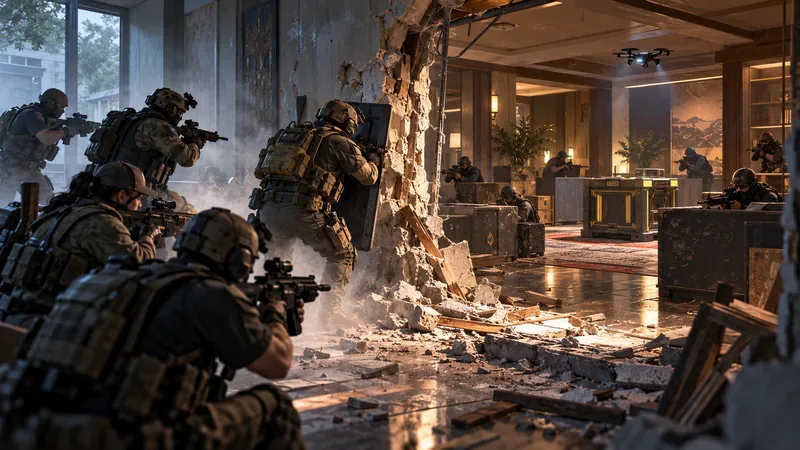
Rainbow Six Siege launched in 2015 and became the franchise’s long-running competitive centerpiece. Its core matches pit attackers against defenders around an objective. Attackers use drones and breaching tools to gather information and create entry points; defenders reinforce surfaces, set traps, and hold angles. Destruction changes the map as a round develops, opening lines of sight through walls and floors. Operators bring distinct gadgets, so team composition and intel are as important as aim.
Where Rainbow Six stands in 2026
Ubisoft launched Rainbow Six Siege X on June 10, 2025, describing it as a major evolution of Siege. The game is available on PC, PlayStation, and Xbox. New players can try its Free Access tier, which offers selected modes and a limited Operator selection; Ranked, Siege Cup, and additional content require an upgrade. Check Ubisoft’s Siege X launch details and the current Free Access listing for the latest mode and edition information.
Two other releases show the franchise branching out. Extraction is a cooperative PvE game for up to three players, with Siege Operators facing an alien parasite; Ubisoft announced its launch on January 20, 2022. Rainbow Six Mobile launched worldwide on February 23, 2026, bringing tactical attacker-versus-defender matches to mobile. The forthcoming Rainbow Six Tactics takes a different route: Ubisoft describes it as a single-player, turn-based game with squad planning and coordinated breaches. Its store listing still says “Coming soon,” so a release date has not been confirmed there. See Ubisoft’s announcements for Extraction, Rainbow Six Mobile, and Rainbow Six Tactics.
Which Rainbow Six game should you start with?
| If you want… | Start with… | Why |
|---|---|---|
| Current competitive tactical multiplayer | Siege X | It is the active flagship and offers a limited Free Access tier. |
| Short tactical matches on a phone | Rainbow Six Mobile | It is designed for mobile play and uses the attacker-versus-defender format. |
| Co-op against AI-controlled enemies | Extraction | Its missions focus on teamwork and PvE objectives. |
| Older mission planning and squad control | Rogue Spear or Raven Shield | These represent the classic planning-heavy style. |
| Turn-based single-player tactics | Watch Rainbow Six Tactics | It is announced but has no confirmed release date on Ubisoft’s store. |
If you simply want to see what the franchise is like today, start with Siege X. If you prefer slower solo missions, choose a classic entry instead. You can move between eras without following a strict narrative order: the recurring ideas are preparation, teamwork, intelligence, and controlled risk.
Frequently asked questions
Is Rainbow Six the same game as Rainbow Six Siege?
Rainbow Six is the franchise that began with the 1998 game. Rainbow Six Siege is one specific entry, released in 2015, and remains its active flagship under the Siege X evolution.
Do I need to play the older Rainbow Six games first?
No. Siege, Extraction, Mobile, and the older campaigns have different formats and do not require you to finish earlier games first.
Is Rainbow Six Siege free to play?
It has a free Free Access tier with selected modes and Operators. Competitive Ranked and Siege Cup access, as well as additional content, require a paid upgrade. The exact included content can change, so check Ubisoft’s current store listing before downloading.









