How to Fix Fortnite Connection Issues
Fortnite connection issues can stop you from signing in, joining a party, finding a match, or playing without lag. Start by checking Epic’s live server status. If Fortnite is operational, restart your modem and router, test a wired connection, install pending updates, and check Fortnite’s region and network diagnostics. These steps help identify whether the problem is Epic’s service, your home network, your platform, or the route between your internet provider and a game server.
Quick diagnosis: identify the connection problem
| What you notice | What to check first |
|---|---|
| You cannot log in or Fortnite says it failed to connect | Epic Games status, your ISP’s service status, then your modem and router |
| Matchmaking spins or you cannot join a party | Epic’s Matchmaking status, your matchmaking region, and platform network test |
| You get high ping, rubber-banding, or packet loss in a match | Ethernet or Wi-Fi quality, other network traffic, and Net Debug Stats |
| The launcher or game reports a damaged or missing file | Update Fortnite and verify its files in the Epic Games Launcher on PC |
How to solve Fortnite connection issues
1. Check Epic’s server status and your ISP
Visit the Epic Games Public Status page and review Fortnite, Login, Game Services, Parties, and Matchmaking. If a relevant service has an incident or degraded performance, wait for Epic to resolve it before changing router settings or reinstalling the game. Refresh the page later; local troubleshooting cannot restore a service that is down.
If Epic reports normal service, check your internet provider’s outage page and test another online service on the same device. If several services fail, troubleshoot the home connection first. Epic’s connection troubleshooting guide also covers common launcher and Fortnite connection symptoms.
2. Restart your modem, router, and gaming device
A restart can clear a temporary network fault. Close Fortnite, shut down your PC or console, and restart your modem and router using the manufacturer’s instructions. If they are separate devices, bring the modem back online first; once its connection is stable, restart the router. Then restart your gaming device and try Fortnite again.
Use the power button or unplug the normal power cable as directed by the manufacturer. Do not press a recessed factory-reset button: that can erase your Wi-Fi name, password, and other router settings.
3. Stabilize your internet connection
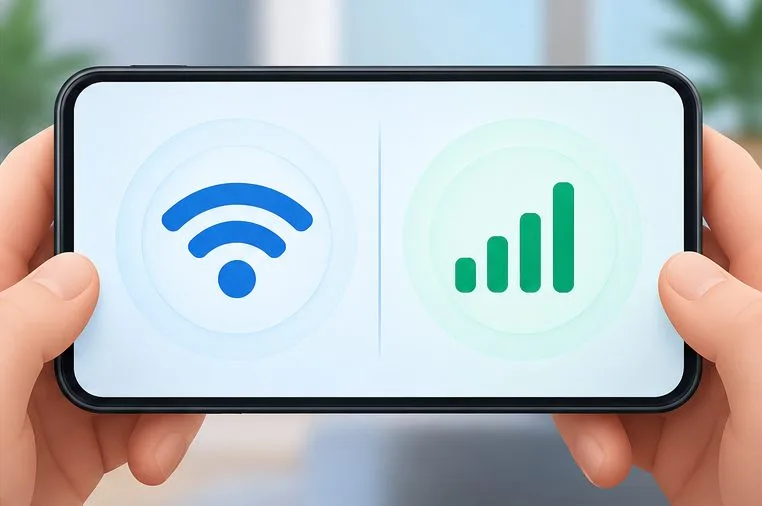
For the clearest test, connect your PC or console to the router with Ethernet. If you must use Wi-Fi, move closer to the router, avoid walls and enclosed cabinets, and test both available bands. A 2.4 GHz network usually reaches farther but may be more crowded; 5 GHz can be faster nearby but has shorter range. Pause large downloads, cloud backups, and video streams while playing, especially uploads that share your connection.
On a console, run its built-in internet connection test and check for a platform network warning. Epic links to the official Xbox, PlayStation, and Nintendo Switch connection-test instructions. If the console test fails, resolve that network issue before changing Fortnite settings.
4. Update Fortnite and repair PC game files
Install any pending Fortnite, launcher, console, or operating-system updates, then fully close and reopen the game. On PC, the Epic Games Launcher can scan and repair the installation: open your Library, select the three-dot menu beside Fortnite, choose Manage, and select Verify. Epic says verification repairs missing or damaged files without affecting saved data. See its current game-file verification instructions.
Consoles do not use the Epic Launcher’s Verify option. Check for Fortnite updates in the console’s game library or store, then restart the console. Reinstalling is a last resort: it takes longer and will not fix an outage, weak Wi-Fi, or a routing problem.
5. Check matchmaking region and network diagnostics
In Fortnite’s lobby, open your player icon, choose Settings, then the Game tab. Under Language and Region, check Matchmaking Region. Epic recommends Auto for the best connection; if the problem continues, compare another region and select Apply. A region can contain multiple subregions, so a region choice does not guarantee every match uses one identical server. Follow Epic’s matchmaking-region instructions.
To inspect network details, open the lobby menu and go to Settings > Game UI. Turn Net Debug Stats on and select Apply; the details appear at the top left. Epic notes that packet loss means data is not reaching the server reliably. Consistent packet loss above about 1% can cause in-game problems. Its Net Debug Stats instructions show the current menu path.
Ping can vary with congestion, the route your ISP uses, and the server selected for a particular match. A high ping reading by itself does not prove Epic is having an outage. Epic’s latency and ping guide explains how to test a route and what to share with your ISP.
Advanced fixes to try only when needed
- Firewall or security software: Check that Fortnite and the Epic Games Launcher are allowed through your firewall. Avoid turning off protection permanently; use the software maker’s instructions to add an app exception.
- DNS or proxy settings: If the launcher cannot resolve or reach Epic services, follow Epic’s connection guide for DNS, proxy, and Windows DNS-cache steps. Change one setting at a time and note the original value so you can restore it.
- Port rules: Do not copy old port-forwarding lists from unrelated guides or open broad ranges as a first step. If Epic Support points you to a port issue, use its current port-unblocking instructions and the documentation for your router or platform.
Frequently asked questions
Why does Fortnite keep saying “Failed to Connect”?
Common causes include an Epic service incident, an ISP outage, a temporary router problem, or a blocked or misconfigured connection. Check Epic’s status first, then restart your network equipment and test another online service.
Will verifying Fortnite files delete my progress or skins?
No. The Epic Games Launcher’s verification checks and repairs local installation files; Epic says saved data is not affected. Your account progress and cosmetics are associated with your Epic account.
Should I use a VPN or forward ports to fix Fortnite?
Neither is a general first-line fix. A VPN changes the route your traffic takes and may improve or worsen latency depending on that route. Port changes can also affect network security. Try the basic checks first, and use Epic’s current guidance if support identifies a specific firewall or port problem.
What if I see “Error Connecting to Epic Services Queue” on Xbox?
Epic directs Xbox players who see this exact message to Microsoft Support. For other Xbox connection problems, check Xbox network status and run the console’s connection test.
Get back to troubleshooting in the right order
For most Fortnite connection problems, the useful order is: check Epic’s status, check your ISP, restart your network, stabilize the connection, update or verify the game, and then inspect region and network stats. This sequence helps separate a service outage from a local issue and avoids spending time on reinstalling or router changes that cannot address the actual cause.