Path of Exile 2: A Complete Beginner’s Guide (2026)
This Path of Exile 2 beginner’s guide explains how to get access, choose a class, handle combat, use skill gems, and make your first character stronger without needing a complicated build plan. Start with one main attack or spell, keep your defenses current, and learn each new system as the campaign introduces it.
Current status: As of October 16, 2026, Path of Exile 2 is still in Early Access. Grinding Gear Games has announced the free-to-play 1.0 release for December 11, 2026, labeled Pacific Standard Time (PST, UTC−08:00). The announcement gives a date, not an exact release hour. Until then, you generally need Early Access access to play, except during any temporary free-play event GGG announces. The full release is also set to add the Duelist and the final two campaign acts. Check the official 1.0 release announcement and the official Early Access page before downloading or purchasing.
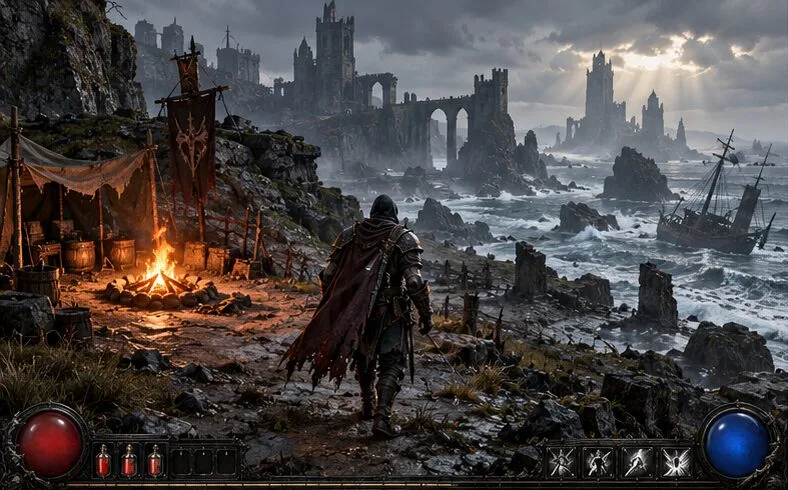
The images in this guide are conceptual illustrations. They help explain the ideas below, but they do not reproduce the live client’s exact interface, class models, or item art.
Before you start: access, platforms, and controls
Path of Exile 2 is an online action RPG from Grinding Gear Games. The current platform list includes PC through the standalone client, Steam, and the Epic Games Store, plus PlayStation 5 and Xbox Series X|S. Early Access access may be platform-specific: if you plan to switch between PC and console, check the official FAQ and confirm access for each platform before buying a key or pack. The game is planned to become free to play at 1.0, but it is not generally a free download-and-play game during Early Access.
On PC, choose the movement style that feels comfortable: keyboard and mouse options include point-and-click and WASD movement, and controller play is supported. Console players can use a controller. You can change control options later, so don’t let the first choice hold you up.
How to play Path of Exile 2: your first steps
1. Create an account and install the current client
Use the official game site or your platform’s store to get the client. Sign in or create a Path of Exile account, then let the game update fully before you start. The title and interface can change as Early Access patches arrive, so use the current patch notes when a menu or tutorial differs from a guide you found online. GGG’s Early Access FAQ explains account access and supported clients.
2. Pick a class for its playstyle, not for a “perfect” build
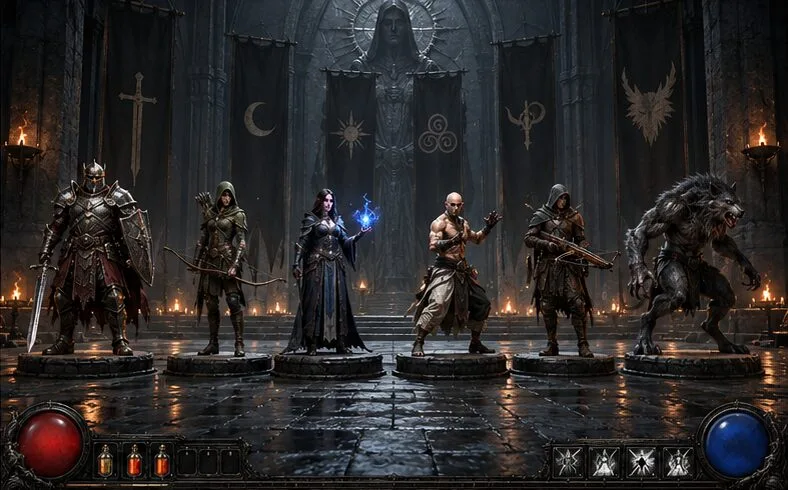
Your class sets a starting point and suggests a combat style; it does not lock you into using only one type of skill. The current Early Access roster includes the Warrior, Sorceress, Ranger, Witch, Mercenary, Monk, Huntress, and Druid. For a direct weapon-focused start, try Warrior or Mercenary. Choose Ranger or Huntress if bows or spears appeal to you, Sorceress for elemental spellcasting, Witch for minions and darker magic, Monk for agile close combat, or Druid for shapeshifting and primal skills. These are broad themes, not strict rules. You can try skills outside a class’s obvious archetype if you meet their requirements.
Later, you can choose an Ascendancy, a class specialization that adds more specific strengths. You do not need to plan every Ascendancy node at character creation. The Duelist is announced for the 1.0 release, so it may not appear in the Early Access character screen yet.
3. Move, dodge, and watch the fight
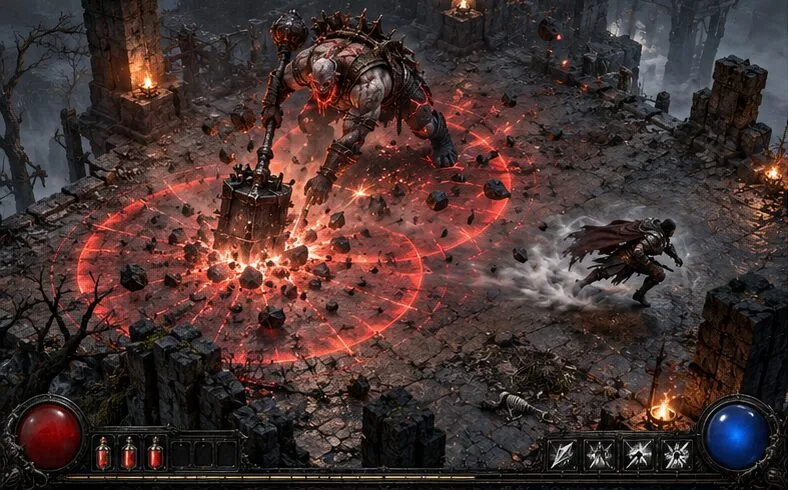
Your red life orb shows how close you are to dying; the blue mana orb tracks a resource many skills spend. Keep your character moving when enemies wind up large attacks. A dodge roll can help you escape a telegraphed strike, but dodging through every attack is not a replacement for positioning: leave the marked danger area, avoid getting surrounded, and attack when you have a clear opening. Use the skill bar for your active abilities and keep a recovery flask equipped.
When you die, look for the cause before repeating the same approach. A weapon that deals too little damage can make a fight drag on, while weak defenses or standing in a boss attack can end it quickly. Changing one thing at a time makes it easier to tell what helped.
4. Build around skill gems and support gems
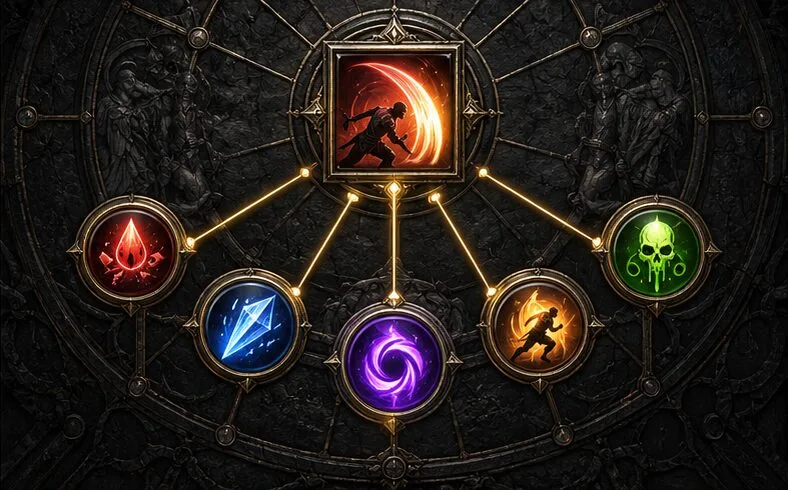
Skill gems grant active abilities. In Path of Exile 2, an Uncut Skill Gem lets you choose a skill when you use it; compatible Support Gems then modify that skill in its own support slots. A support might change damage, coverage, speed, or how an ability behaves. Read the gem’s tags and requirements before using it: a support that sounds useful may not work with every skill.
For a first character, pick one main skill you enjoy and add supports that clearly improve it. Keep a second ability for a different job, such as clearing groups, dealing with a boss, or moving safely. Don’t equip several expensive skills simply because you can; each one needs the right attributes, supports, and resource budget. Skills and supports are rebalanced during Early Access, so treat old build advice as patch-specific.
5. Spend passive points with a simple plan
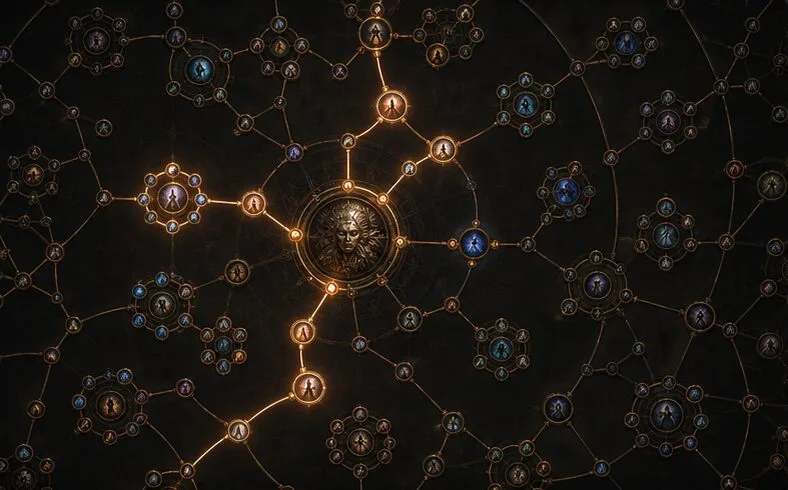
The passive skill tree is a large network of stat bonuses. As you level and complete certain quests, you earn passive points to allocate along connected paths. You do not need to understand the whole tree. Follow a short route toward bonuses that match your main skill and weapon, and take enough life or other defenses to survive the campaign. If you keep running out of mana, choose a practical resource solution instead of adding damage nodes automatically.
Look at the words on your skill and passive nodes: “attack,” “spell,” “projectile,” and damage types point to different bonuses. A passive that sounds powerful may not affect your chosen skill. You can refund points later, but Early Access respecialization costs in-game gold, so use refunds to correct a direction rather than constantly rebuilding. The official passive tree is useful for seeing the scale of the system; it is not necessary to map your entire campaign build before playing.
6. Upgrade equipment and learn what currency does
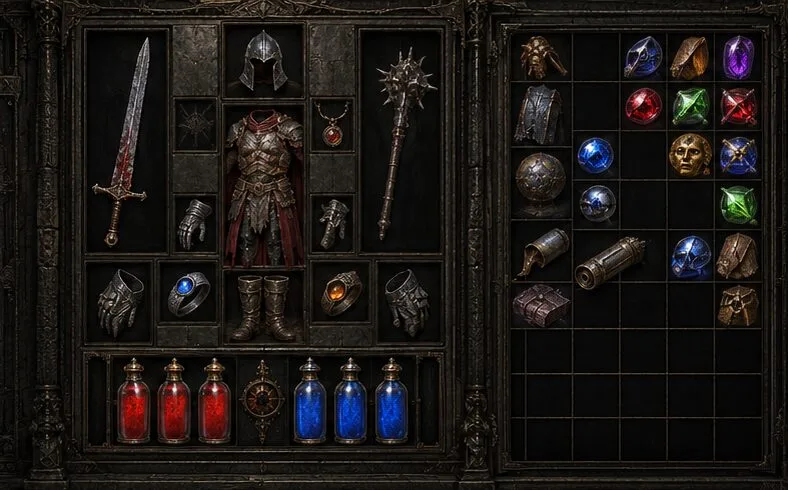
Check new weapons and armor as you explore. A stronger weapon can make attack skills feel much better; armor pieces can add life, resistances, or defenses such as armor, evasion, and Energy Shield. Compare the actual stats and requirements rather than assuming a higher rarity color is always an upgrade. Keep equipment that fits your attributes and active skills, and replace an outdated piece when a clear improvement drops.
Path of Exile 2 has both gold and item currencies. Gold is used for ordinary in-game services, including passive-point refunds; currency items can be spent on crafting and trading. Save rare crafting orbs until you understand what they do, and don’t vendor every unfamiliar item just to clear your inventory. Flasks help you recover during fights, and their charges refill through play, so remember to use them instead of waiting until your life is nearly gone.
7. Follow the campaign and use checkpoints
Use quest text and area exits to keep the campaign moving. Checkpoints and waypoints help you return to places you have reached; towns give you a safe place to speak with characters, sort equipment, and use services. If an area is becoming punishing, pause to check your weapon, life, resistances, skill supports, and passive points before pushing on. A short gear or skill adjustment is often more useful than repeatedly charging the same enemy pack.
Because the final two acts are planned for the 1.0 release, the campaign path and balance may still change before the free launch. The official 0.5.0 patch notes show how much detail can shift between updates; consult current notes if you return after a break.

8. Add co-op when you want company
You can play with friends, and couch co-op is supported on compatible setups. Co-op can make it easier to learn boss patterns, but it is still worth reading skill descriptions and understanding your own defenses. If friends are on another platform, check GGG’s current access and account-linking information first; cross-platform availability does not mean every Early Access purchase unlocks every client.
Beginner tips that make the first campaign smoother
- Keep one main skill strong. Upgrade its supports and make sure your weapon or attributes still meet its requirements.
- Balance damage and survival. More damage helps, but life, resistances, movement, and flask use keep you in the fight.
- Read gem compatibility. Check skill tags and support requirements instead of guessing from a gem’s name.
- Save uncommon currency. Gold and crafting orbs serve different purposes; learn the difference before spending rare items.
- Experiment in small steps. Try one support or a few passive nodes, then see how the character feels. Respecs cost gold.
- Check patch dates on build guides. Early Access balance changes can make an old skill setup or passive route inaccurate.
Path of Exile 2 beginner FAQ
Is Path of Exile 2 free to play right now?
Not as a permanent Early Access offer. As of October 16, 2026, most players need Early Access access to play, although GGG may run temporary free-play events. The developer has announced a free-to-play 1.0 release on December 11, 2026 (PST, UTC−08:00). Check the official access page for the current options.
Do I need to play the first Path of Exile?
No. Path of Exile 2 is a standalone sequel with its own campaign and systems. You can start without knowing the original game.
What is the best beginner class?
There is no single best class for everyone. Warrior is a straightforward choice if you want close-range weapon combat; Sorceress and Witch suit players drawn to spells or minions; Ranger and Huntress use ranged or spear-focused styles. Pick the theme you want to play, then use skills and supports that work together.
Can I change my passive skill tree later?
Yes. You can refund allocated passive points for in-game gold. That gives you room to adjust a build, but the cost makes it sensible to choose a general direction and refine it rather than repeatedly resetting everything.
Official sources to check for changes
For current access requirements and platform details, use the Early Access FAQ. For the 1.0 date and announced additions, use GGG’s full-release announcement. When a mechanic or skill behaves differently from an older guide, look at the official Path of Exile 2 announcements and patch notes.









