How to Play Stardew Valley: Beginner's Guide (2026)
How to play Stardew Valley is simple to learn: choose a farm, plant and water crops, then spend each day on a few activities that move your farm forward. You can grow food, fish, forage, mine, craft, meet the people of Pelican Town, or do a little of everything. There is no required route or final deadline, so the best beginner plan is to learn the daily rhythm and build at a pace you enjoy.
This guide covers the first farm choice, what to do on your first day, how time and energy work, how to avoid wasting seasonal crops, and which goals open up as you play.
Before you begin: choose a farm that fits your style
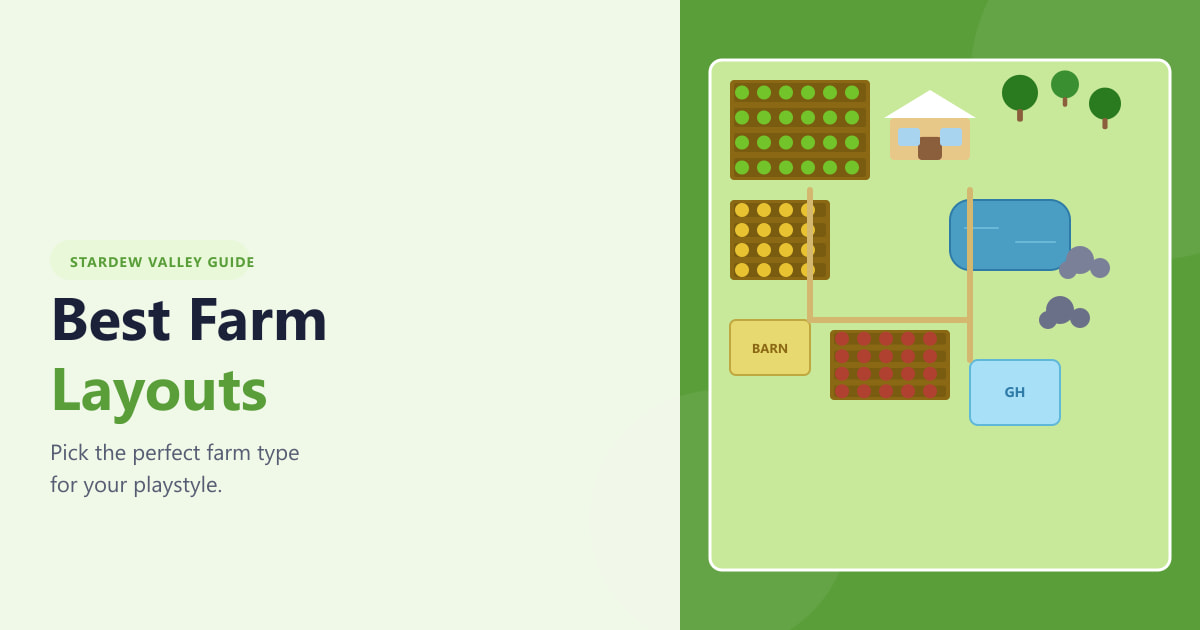
At character creation, select a farm map as well as your farmer's appearance and name. The Standard Farm is a straightforward choice for a first save because it offers plenty of open land for crops and buildings. Other maps emphasize activities such as fishing, foraging, or mining. There are eight maps, and your selection is permanent for that save, so look at the descriptions before starting. Your character's name and appearance are personal choices; they do not set a difficulty level.
Stardew Valley works on several platforms, and controls vary between keyboard, controller, and touch. Check the in-game controls or options menu on your device rather than memorizing a control list for a different platform. The Stardew Valley Wiki's Getting Started page has a useful overview of character creation, controls, and the opening quests.
How to play Stardew Valley step by step
Step 1: Start small on your first day
On most farm maps, Mayor Lewis gives you 15 Parsnip Seeds when you arrive. The Meadowlands Farm is the exception: it starts with a coop and two chickens, and you receive hay instead. Clear only enough space to plant the seeds you have, using the right tool for each task: the hoe tills soil, the watering can waters crops, the axe cuts wood, the pickaxe breaks rocks, and the scythe cuts grass and weeds. Plant and water your starter seeds, then use the remaining time to pick up forage or explore the paths near your farm. You do not need to clear the whole property on day one.
Harvested goods and many other items can go in the shipping box beside your farmhouse. The sale is tallied overnight, so the money appears the next morning. Keep a few useful items instead of selling everything automatically: crops, forage, fish, and minerals can be needed for quests, bundles, cooking, or crafting.
Step 2: Plan around the clock and your energy
Each day begins at 6:00 a.m. in-game. You can go to bed earlier whenever you are ready, but staying up past midnight reduces how much energy you recover overnight. If you remain awake until 2:00 a.m., your farmer passes out; depending on where that happens and who finds you, you may lose some gold. Sleeping by midnight is a good early habit, especially after a busy day.
Using tools consumes energy. When your energy gets low, switch to conversation, walking around town, or other tasks that do not require repeated tool use. Food restores energy and can also restore health, which matters in the mines. In single-player, menus and dialogue pause the clock; multiplayer does not pause automatically. See the day-cycle guide and energy guide for the detailed rules.
A practical routine is to water crops first, choose one main outing, and head home before the night gets late. You do not have to fill every hour. A day spent fishing or meeting villagers can be just as useful as a day spent farming.
Step 3: Grow crops with the season in mind
To plant a crop, till a tile, sow a seed, and water it. Most crops need water each day to keep growing; missing a watering day usually delays growth rather than killing the plant. Rain waters outdoor crops for that day, giving you extra time for errands, fishing, or the mines. You can buy seeds from Pierre's General Store or JojaMart, and the available selection changes with the season.
Each season lasts 28 in-game days. Most crops wither when the season changes, so read the seed description and leave enough days for the crop to mature before the 28th. Some crops can grow across more than one season, but do not assume a plant will survive the change. Spring begins on day one of a new save, making the starter parsnips a low-pressure way to learn watering and harvesting.
For extra early income, forage items you find around the valley and try fishing when you want a break from watering. Sell surplus items through the shipping box, but set aside anything requested by a quest or shown on a Community Center bundle. The season guide and crop list help you check availability and growing seasons.
Step 4: Explore Pelican Town and make friends
Pelican Town has shops, services, festivals, and residents with individual routines and preferences. Talk to people when you pass them, and use the Social tab to see your friendship progress. Gifts can raise or lower friendship depending on what each villager likes, and you can give most villagers up to two gifts per week. Start with items you have spare and check a gift guide before giving away something rare.
The Community Center introduces a collection goal called bundles. To trigger its opening scene, enter town from the Bus Stop on a non-rainy day from Spring 5 onward, between 8:00 a.m. and 1:00 p.m. on the in-game clock. After the introduction, inspect the golden scrolls inside to see which seasonal crops, forage, fish, and other items can be contributed. Completing bundles restores the building and unlocks town improvements. You can instead buy a Joja membership and purchase those upgrades through Joja; that choice changes the route, but neither path is required to enjoy the game.
The gift guide and Community Center guide explain these systems in more detail.
Step 5: Expand the farm and set your own goals
As you earn gold and collect materials, you can ask Robin at the Carpenter's Shop to build farm structures such as a coop or barn. Animals need a suitable building and daily care, but they provide products you can sell or turn into artisan goods. Clint the blacksmith upgrades tools using gold and metal bars; stronger tools make some jobs faster or let you work more tiles at once. Save for upgrades when they will make a task you do often easier, rather than trying to buy everything immediately.
The Mines, in the mountains north of town, add combat and resource gathering. Bring food, use your weapon when monsters appear, and watch your health as well as your energy. Reaching a new set of five floors unlocks an elevator stop, so you can resume deeper exploration later without repeating every floor. Ore and bars become more useful for tool upgrades and crafting as you progress; the Mines guide lists the details.
Long-term goals can include finishing Community Center bundles, upgrading your farmhouse, raising animals, befriending villagers, completing the mines, or collecting every item. Grandpa evaluates your progress at the start of Year 3, but this is a milestone, not a game-over screen: you can continue the same farm afterward and revisit the evaluation later. Pick one goal at a time and let the rest wait.
Beginner tips that save time
- Check the TV in your farmhouse. The weather forecast helps you plan watering and errands, while other programs offer useful information as you unlock them.
- Keep a small reserve of seasonal items. A bundle, request, or recipe may need something you could otherwise sell.
- Use rainy days strategically. Outdoor crops are watered, so you can spend more of the morning away from the farm.
- Bring food into the Mines. It can restore health and energy when you need to keep exploring.
- Upgrade selectively. A better watering can or pickaxe helps most when you use it often; check the forecast before upgrading the watering can so you can plan around the time it is unavailable.
- Do not treat a missed day as a ruined save. You can plant another season, make money in other ways, and return to unfinished goals in a later year.
Frequently asked questions
Is Stardew Valley good for beginners?
Yes. The opening quests introduce basic farming, and the game lets you choose your own priorities. A slow first season is normal; missed crops and unfinished goals can be revisited in later years.
What should I do first in Stardew Valley?
Choose a farm map, plant and water the starter seeds if your map provides them, and learn how the day clock and energy bar work. Then try one activity outside farming, such as foraging or fishing, to discover what you enjoy.
Can you play Stardew Valley with friends?
Yes. Co-op is available, but player limits, setup, online requirements, and cross-platform support depend on the platform. Check the current multiplayer guide for the exact setup for your devices.
Keep building at your own pace
For a first playthrough, focus on a manageable farm plot, a steady daily routine, and one or two goals that sound fun. Crops provide a dependable start, while town activities, friendships, fishing, and mining add new ways to earn and progress. Stardew Valley is designed for open-ended play, so there is no need to rush through every system in your first year. For official announcements and update news, visit the Stardew Valley website.