How to Get Coal in Stardew Valley (All Methods)
Coal in Stardew Valley comes from mining rocks and Coal Nodes, fighting monsters, opening mine carts and geodes, converting wood, shopping, and a handful of side activities. For a repeatable supply, hunt Dust Sprites on Mines floors 41–79: each has a 50% chance to drop coal, so it is dependable over a full run but not guaranteed from every enemy. Early on, mine whatever rocks you can reach and use any coal-filled minecarts you find.
Coal is a basic resource for crafting and smelting. A regular Furnace consumes one Coal for each smelting operation, while a Heavy Furnace uses three per batch; Fish Smokers also need Coal. Because bars and equipment can use it quickly, keep a small reserve before spending the rest on optional recipes.
How to get Coal in Stardew Valley
1. Mine ordinary rocks
Break rocks with your pickaxe in the Mines, the Quarry, or other areas where stones appear. Most rocks can drop Coal, but it is a random result rather than a guaranteed reward. The odds are affected by daily luck, luck buffs, Mining level, the Prospector profession, and some Statue of the Dwarf King powers. If you are still early in the game, take the Coal you find while gathering ore instead of spending a whole day clearing low-yield floors just for fuel. See the official Stardew Valley Wiki’s Coal source list for the factors that affect rock drops.
2. Farm Dust Sprites on floors 41–79
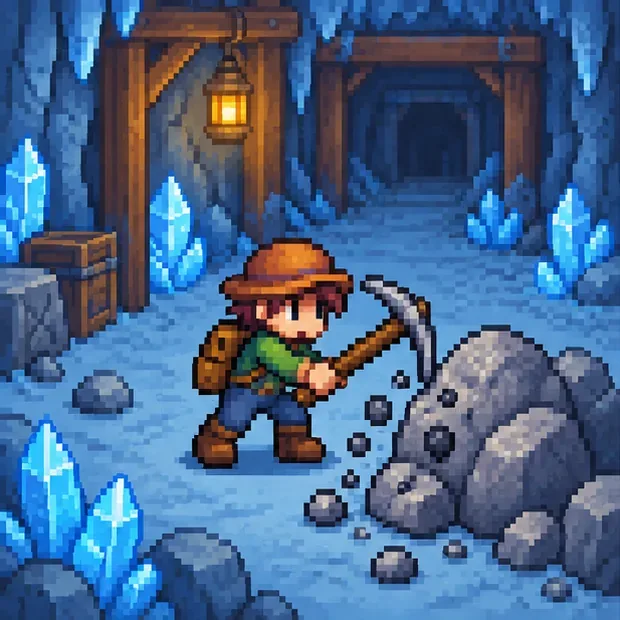
Dust Sprites appear in the icy section of the Mines, from floors 41 through 79. Each defeated sprite has a 50% chance to drop Coal. Use the elevator to check sprite-heavy floors that end in 5, such as 45, 55, and 65, then move between floors to find another group. Bring a weapon and enough food; the goal is to defeat many sprites efficiently, not to assume every one will leave Coal behind.
There is a second long-term reward: killing 500 Dust Sprites completes an Adventurer’s Guild goal and earns the Burglar’s Ring. The ring makes monsters drop, on average, twice as much loot by giving each item another drop roll, which can improve later Coal runs. The Dust Sprite entry and Burglar’s Ring details explain the drop and reward.

3. Break Coal Nodes
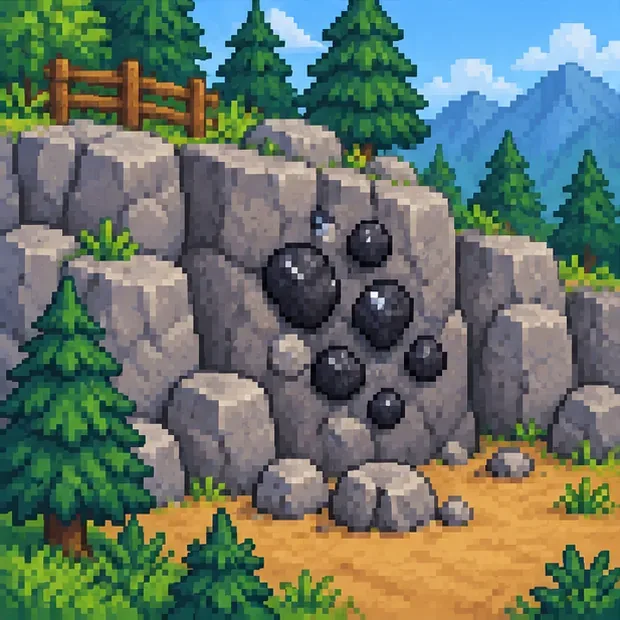
Coal Nodes are dark mineral deposits that drop Coal when mined. Look for them in the Quarry, Quarry Mine, and Volcano Dungeon. The Quarry is a convenient place to check once its bridge is repaired, while the Quarry Mine and Volcano Dungeon are useful detours if you are already exploring those areas. Nodes are a more direct target than ordinary rocks, but they do not appear in unlimited numbers in one location. The Quarry guide describes how rocks and nodes spawn there.
4. Collect mine carts, miner’s bags, and breakable containers
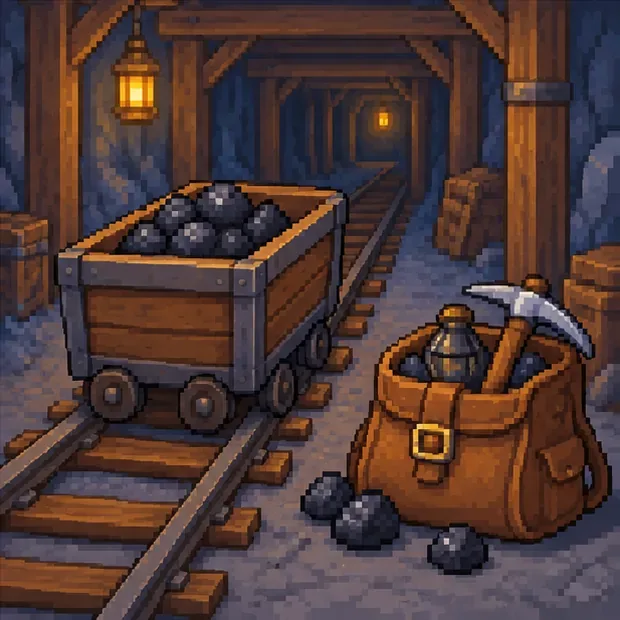
Some Mines floors contain coal-filled mine carts, and brown miner’s bags can appear on random Skull Cavern floors. Each cart or bag holds six Coal. The carts inside the regular Mines refresh at the start of each in-game year, while the bags do not refresh. Also break crates and barrels in the Mines, Quarry Mine, Skull Cavern, and Volcano Dungeon; they can drop Coal along with other items. These are useful pickups when you are already working toward lower floors or other mining goals.
5. Turn wood into Coal with a Charcoal Kiln
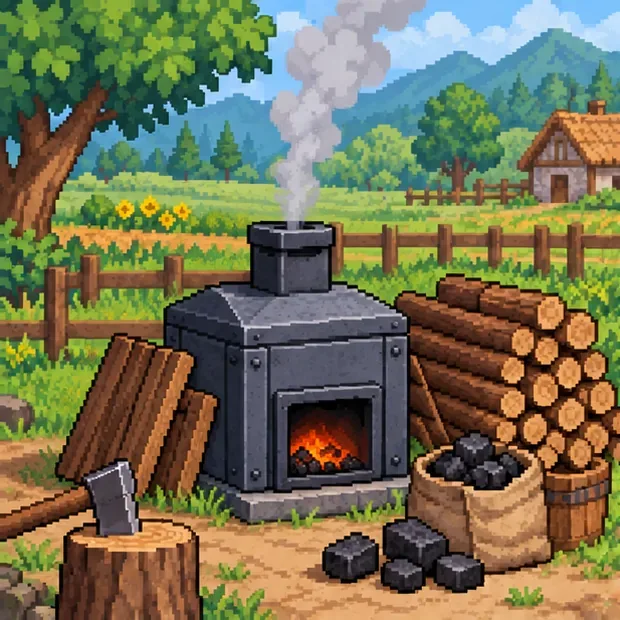
A Charcoal Kiln trades a steady supply of wood for fuel: load 10 Wood to produce one Coal after 30 in-game minutes. The current recipe unlocks at Foraging Level 2 and costs 20 Wood plus two Copper Bars to craft. A Charcoal Kiln is also the reward for completing the Construction Bundle in the standard Community Center route, so you may receive one before crafting the recipe yourself. Older guides may say Foraging Level 4; that requirement changed in version 1.6. The Charcoal Kiln page lists its current recipe and conversion time.
Use this method when you have more wood than Coal and can afford to wait. The kiln does not process instantly, and the 10-to-1 exchange is a significant wood cost. Multiple kilns let you run several batches at once, but they do not improve the amount of Coal each batch produces.
6. Buy Coal from Clint or a traveling seller
Clint sells Coal at the Blacksmith for 150g per piece in Year 1 and 250g from Year 2 onward. Buying a few pieces is convenient when you need to finish a bar or recipe right away. In Year 1, buying 10 Wood from Robin for 100g and converting it in a kiln costs less per Coal, if you already own a kiln and can wait; from Year 2, wood becomes more expensive, so buying Coal directly is usually the cheaper option.
The Traveling Cart may stock Coal for a variable price of 100–1,000g, so compare the price before purchasing. During the Desert Festival, Clint also offers up to 50 Coal for five Calico Eggs each. Check the current Blacksmith and Traveling Cart information for shop details.
7. Open geodes
Regular Geodes, Frozen Geodes, Magma Geodes, and Omni Geodes can all contain Coal. Clint can crack them open at the Blacksmith for a fee, or you can use a Geode Crusher if you have one. This is a bonus source rather than a reliable Coal farm because the contents are random; save geodes for processing when you already have them instead of seeking them out solely for fuel. See the Geode page for its possible contents.
8. Use panning, recycling, fishing, and rare drops
These sources are slower or less predictable, but they can add Coal while you do other tasks:
- Recycle fishing trash: A Recycling Machine has a 30% chance to produce one to three Coal from Trash and a 25% chance to do so from Driftwood. It takes one in-game hour to process an item.
- Pan sparkling water: Coal can appear when you pan in any area. Carry the Pan and use it at a shimmering spot in the water.
- Open fishing treasure chests: Coal is among the possible rewards from regular and golden treasure chests.
- Dig Artifact Spots: Spots on the Farm, in the Mountains, or in the Backwoods may contain Coal.
- Check other monster drops: Several slime variants, Stone Golems, Wilderness Golems, Iridium Golems, Metal Heads, Shadow Brutes, and Shadow Shamans have a 10% chance to drop Coal.
- Pick up chance drops: Trains may drop Coal; the Garbage Can outside the Blacksmith may contain it; and a fruit tree struck by lightning produces Coal instead of fruit for four days.
The Recycling Machine and Panning pages give more detail on those activities. For fishing chests, artifact spots, and the less common drops, use the full Coal source list linked above.
The fastest Coal route by game stage
- Early game: Collect Coal from rocks and mine carts as you work through the Mines. Once you reach Foraging Level 2, craft or obtain a Charcoal Kiln and convert spare Wood. Buy a small amount from Clint only when a delay would stop an important craft or smelt.
- After reaching floor 41: Repeatedly check floors 45, 55, and 65 for Dust Sprites. This is the best repeatable combat route, especially after earning the Burglar’s Ring.
- When you have spare gold: Compare the Blacksmith’s current price with the time and materials required for a kiln. From Year 2 onward, Coal from Clint is generally cheaper than buying Wood to convert.
Common Coal mistakes to avoid
Dust Sprites do not always drop Coal; their drop rate is 50%. The Charcoal Kiln takes 30 minutes in-game per batch, not an instant action, and its current recipe unlocks at Foraging Level 2. Coal itself is not a Community Center bundle item, although completing the Construction Bundle can reward you with a Charcoal Kiln. Finally, Coal is valuable beyond bars: a regular Furnace uses one piece per smelt, and Coal is also required for crafting and fish smoking, so keep enough on hand for your next upgrade.
For exact drop sources and current item behavior, refer to the official Stardew Valley Wiki, which maintains the complete Coal reference.









