Learning how to get better at Apex Legends comes down to a handful of habits that actually move the needle. Raw aim helps, but the players who climb fastest combine smart movement, consistent settings, daily warm-ups, and real teamwork. This guide walks through six practical steps you can start using in your very next match, whether you play on PC, PlayStation, Xbox, or Switch.
None of these tips require buying anything or grinding for weeks. They are the fundamentals that separate average players from those who consistently survive longer, deal more damage, and win more fights.
What you need before you start
- A copy of Apex Legends installed and updated on your platform.
- Ten spare minutes per session for a Firing Range warm-up.
- An honest willingness to review your own mistakes after a match.
- Optional: a microphone, though pings alone can carry your comms.
How to get better at Apex Legends, step by step
-
Step 1: Master movement before everything else
Apex Legends is a movement shooter first. A player who keeps moving is far harder to hit than one who stands still trading shots. Practice the core loop: run, slide down slopes to keep speed, jump to break sightlines, and peek from cover instead of fighting in the open. Bunny-hop while you heal (jump as you use a syringe or shield cell) so you stay mobile, and strafe unpredictably during gunfights. Mastering movement alone will win you fights your aim could not.
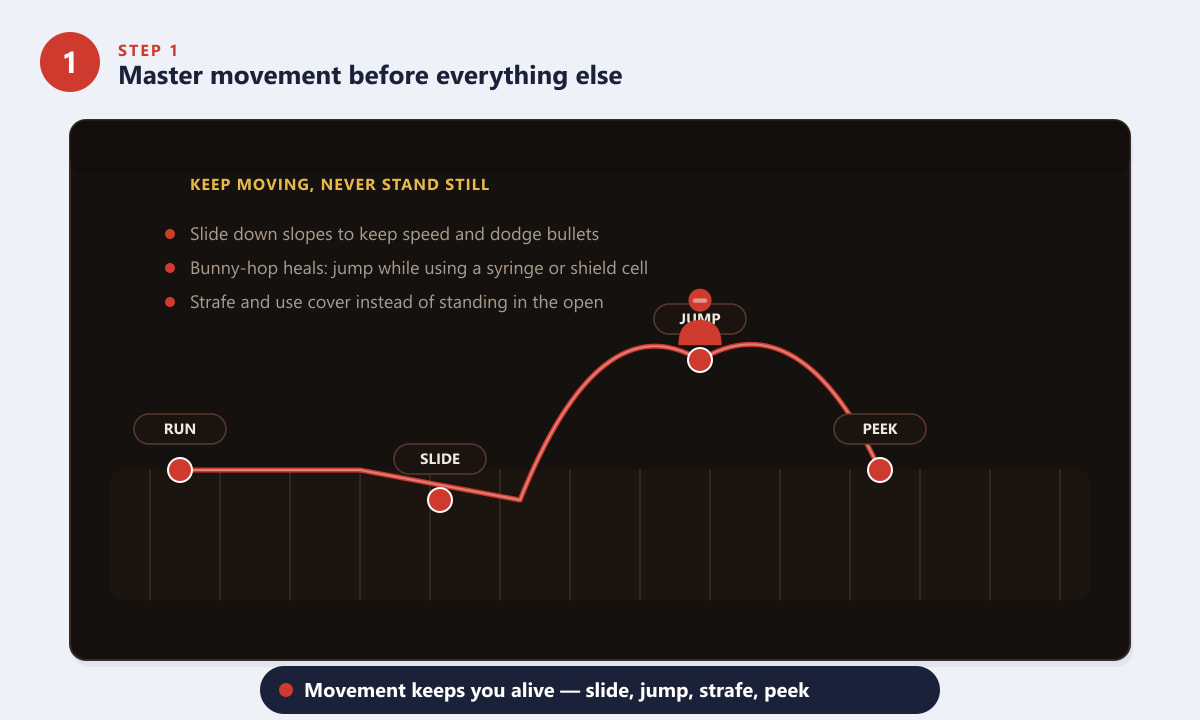
Chain run, slide, jump, and peek to stay unpredictable and survive longer. -
Step 2: Main one legend and a small weapon pool
Spreading yourself across every legend slows your progress. Pick one main legend and learn its kit inside out — ability cooldowns, the best timing for your ultimate, and how the abilities support your squad. Do the same with weapons: settle on a familiar pool of two or three guns covering close, mid, and versatile ranges. Consistent choices build muscle memory, so your reactions become automatic when a fight breaks out.
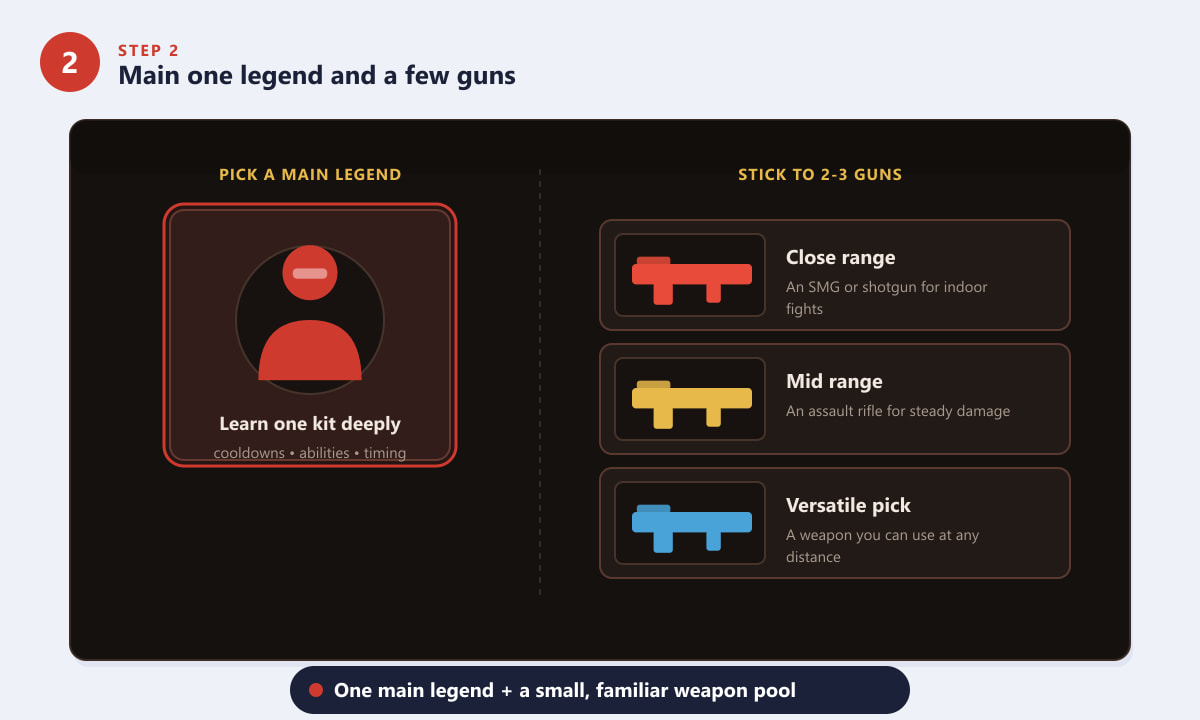
One main legend plus a small, familiar weapon pool builds reliable muscle memory. -
Step 3: Dial in your settings and sensitivity
Good settings remove friction. Find a sensitivity you can repeat and stick with it long enough for your aim to stabilize — constant changes reset your muscle memory. Raise your field of view (FOV) for better situational awareness, and on PC lower demanding graphics options to keep a high, stable frame rate. Tune your ADS (aim-down-sights) multiplier so aiming feels consistent with your hipfire. Small, deliberate adjustments here pay off in every single match.
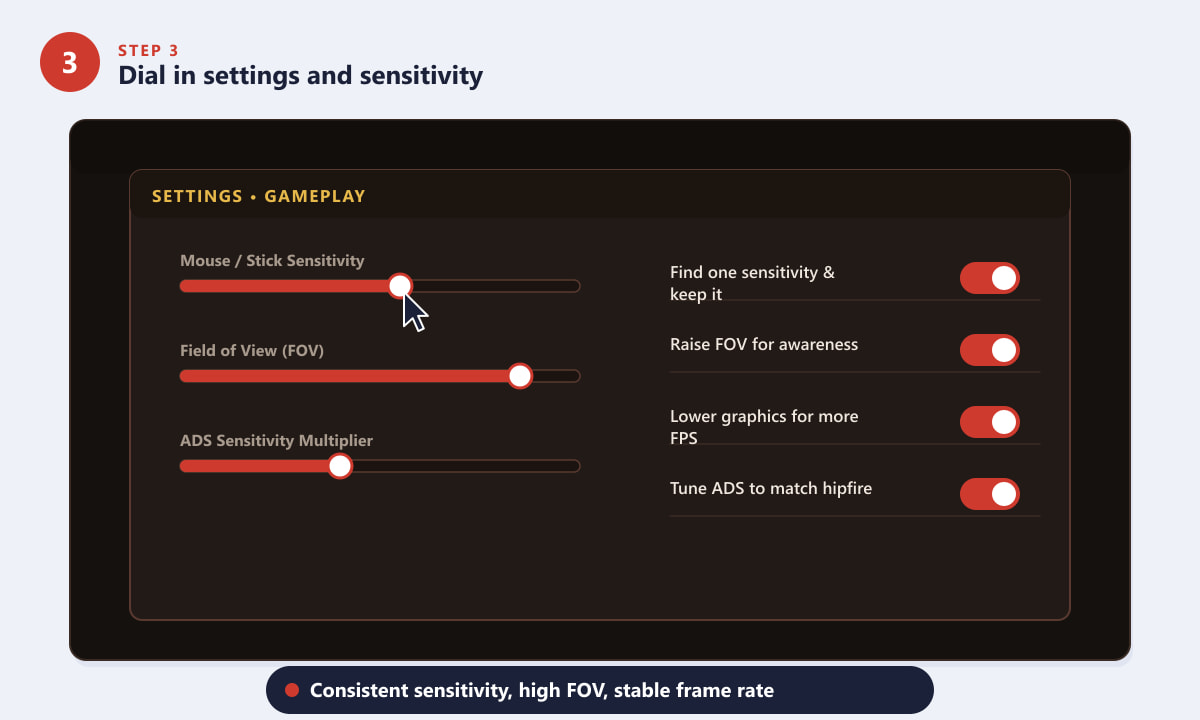
Lock in one sensitivity, raise FOV, and protect your frame rate for cleaner aim. -
Step 4: Warm up and train your aim in the Firing Range
Jumping straight into ranked cold is a fast way to lose early fights. Spend five to ten minutes in the Firing Range before you queue. Work through a simple routine: practice recoil control on each gun you use, track the moving dummies to sharpen your aim, and rehearse fast weapon swaps. A short warm-up gets your hands and reactions ready, so your first real engagement feels like your tenth.
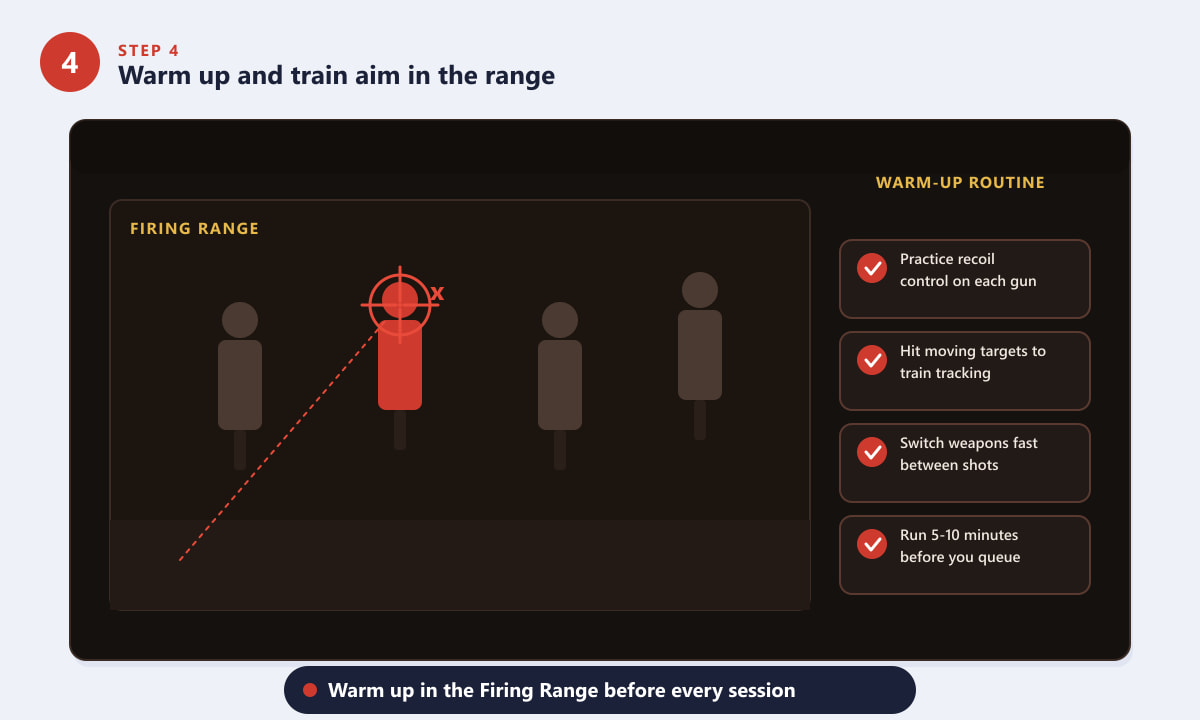
A quick Firing Range routine warms up your aim and recoil control before you queue. -
Step 5: Ping, position, and play as a team
Apex Legends is built around squads, and the best ping system in gaming means you never need a mic to communicate. Ping everything — enemies, loot, and where you want to rotate. Above all, stick together: a squad that moves as one fights three-versus-one instead of getting picked apart. Take the high ground and secure cover before you push, and decide as a team when to engage or back off. Coordination wins far more fights than individual highlight plays.
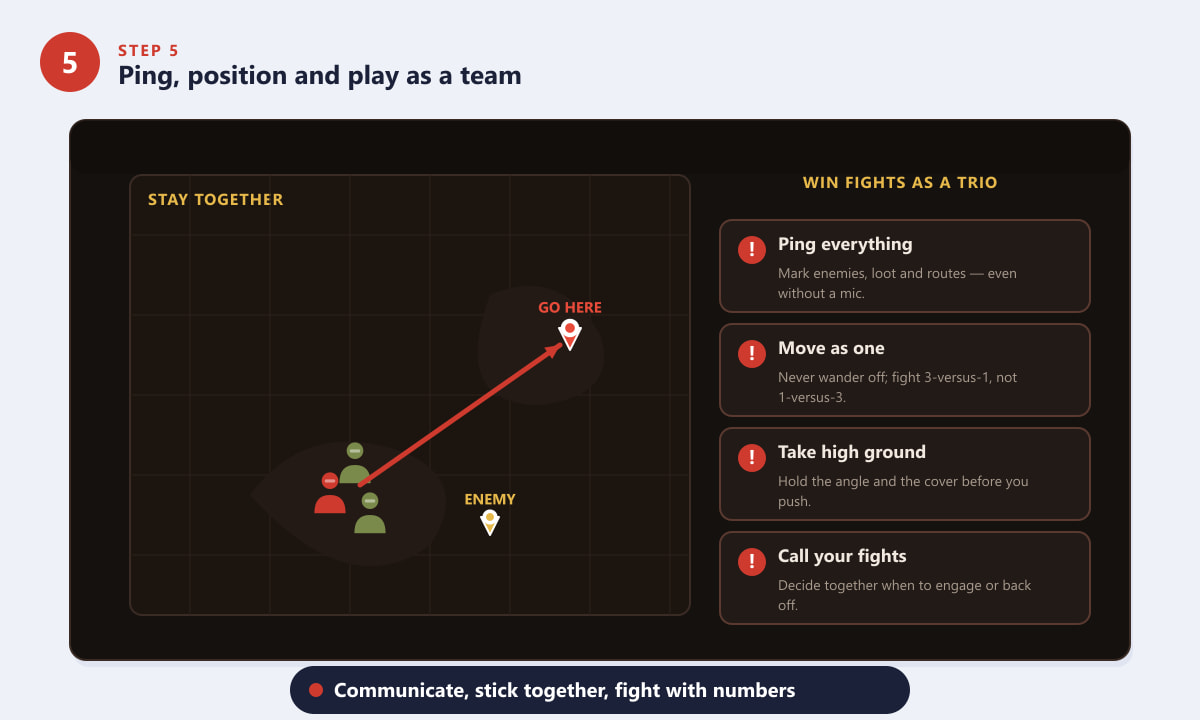
Ping constantly, move as one squad, and fight with numbers on your side. -
Step 6: Review your deaths and fix mistakes
Improvement comes from learning, not just playing. After a rough match, ask the most useful question: where did this fight go wrong? Watch the kill-cam to see what the enemy did better, and look for patterns — getting caught in the open, fighting in unfavorable positions, or pushing into third parties. When you are low, disengage, reset, and heal rather than forcing a trade. Set one small goal each match, and your win rate will climb steadily over time.
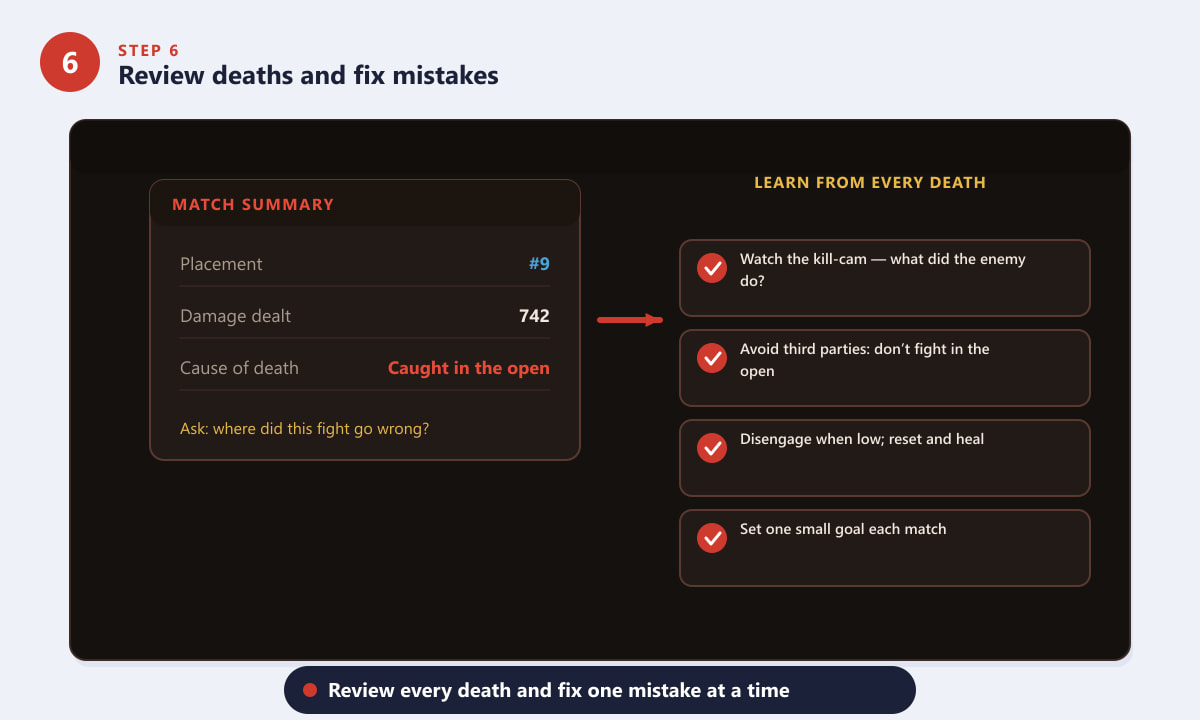
Review every death, spot the pattern, and fix one mistake at a time.
Extra tips that actually work
- Loot fast, fight ready. Grab your core kit quickly so you are armed before another squad finds you.
- Listen carefully. Footsteps, gunfire, and door sounds tell you where enemies are — use headphones.
- Mind the ring. Rotate early with the ring on your side instead of fighting into a closing zone.
- Pick smarter fights. A free third-party kill is good; jumping into a fair fight with low health is not.
- Play to improve, not just to win. Treat losses as data and focus on one fundamental at a time.
If you feel stuck
I keep losing close-range gunfights
Work on movement and hipfire in the Firing Range, and make sure you carry a reliable close-range weapon. Strafe while shooting instead of standing still, and try to fight from cover rather than the open.
My aim feels inconsistent from game to game
Stop changing your sensitivity. Pick one value, warm up before every session, and give your muscle memory a couple of weeks to settle before judging it.
My squad keeps getting wiped
This is almost always a positioning or coordination issue. Ping your intentions, stay within support range of your teammates, and avoid pushing fights without high ground or cover.
Frequently asked questions
What is the fastest way to improve at Apex Legends?
Focus on movement and consistency. Keep moving in fights, main one legend, lock in your settings, and warm up in the Firing Range before you queue. These habits raise your survivability immediately.
Does aim or movement matter more in Apex Legends?
Both matter, but movement is the foundation. A player who is hard to hit wins exchanges even with average aim, while great aim is wasted if you stand still and get melted.
Do I need a microphone to get better?
No. The ping system lets you mark enemies, loot, and routes clearly. A mic helps for faster calls, but disciplined pinging carries most of the communication you need.
How long does it take to get good at Apex Legends?
It varies, but steady improvement comes from regular play plus reflection. If you warm up, review your deaths, and fix one mistake at a time, you will notice progress within a few weeks.
Final thoughts
Getting better at Apex Legends is not about a single secret — it is about stacking good habits. Master your movement, commit to one legend and a small weapon pool, dial in consistent settings, warm up your aim, play together with your squad, and learn from every death. Apply these tips that actually work and your fights will feel calmer, your decisions sharper, and your placements higher. For patch notes and the latest seasonal changes, check the official Apex Legends website.