Home
» 🏀 Basketball
»
NBA Preseason 2026: Which Results Matter for Roster Decisions—and Which Stats Mislead?
NBA Preseason 2026: Which Results Matter for Roster Decisions—and Which Stats Mislead?
As of September 30, 2026, NBA preseason has not started. The league’s current calendar says training camps opened September 29, preseason games begin October 3, opening-day rosters are due October 19 at 5 p.m. ET, and the regular season starts October 20. That timing matters: there are no 2026 preseason results to interpret yet. The useful question for fans is how to tell a meaningful roster signal from a noisy exhibition box score once games begin. The schedule and deadlines are confirmed in the NBA’s 2026–27 key dates.
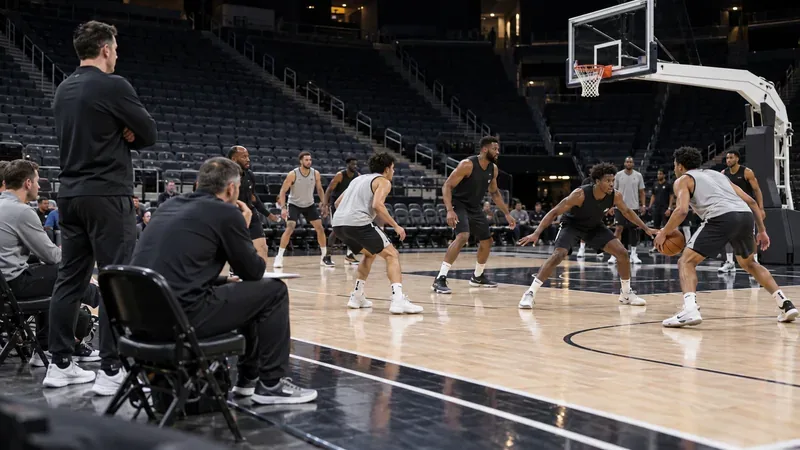
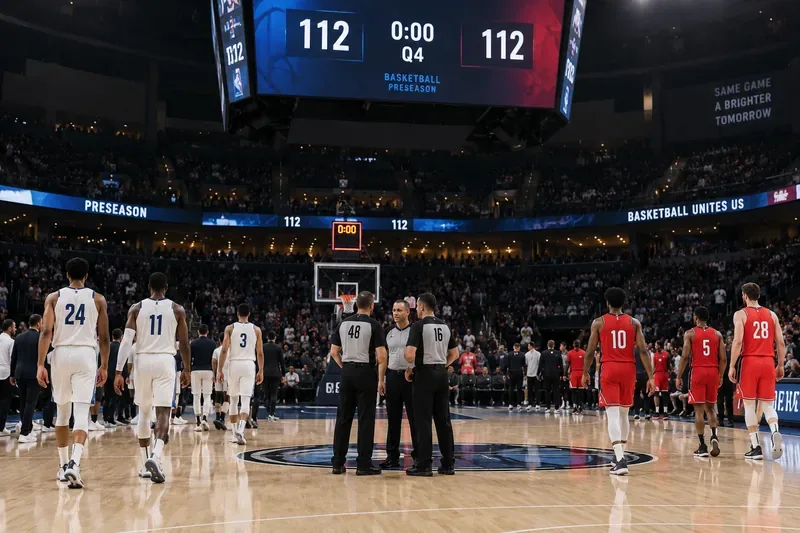
In a preseason game, the possession and assignment can reveal more than the final score.
Preseason is a short evaluation window, not a miniature regular season. Coaches may test lineups, limit veterans’ minutes, give young players unfamiliar roles, and rotate in groups that will not share the floor later. A team can win while learning little about its final rotation, or lose while a fringe player shows a skill the coaching staff needs. Read results as evidence about specific jobs and habits—not as a standings forecast.
What results can actually affect a roster decision?
Roster choices depend on more than performance in a few games. Contract terms, available roster spots, team needs, health, and the player’s developmental path all matter. Preseason can supply fresh evidence, especially for players competing for a final standard-contract place, a two-way role, or a spot in the organization’s development system. It cannot reveal a team’s internal decision by itself.
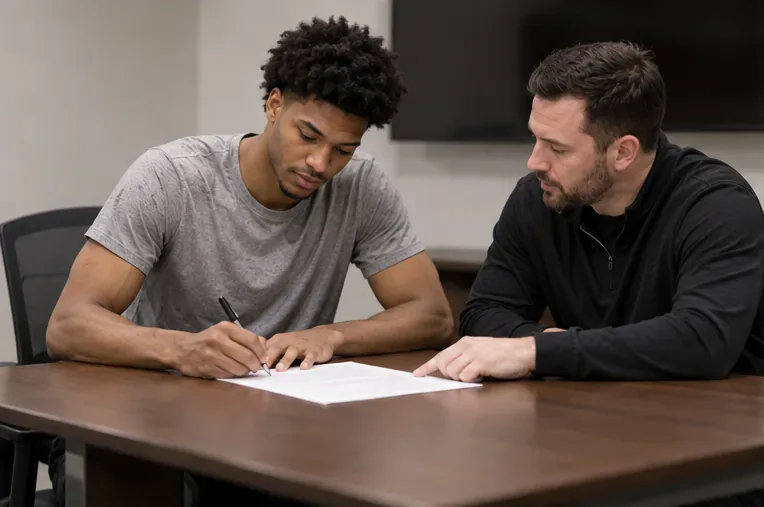
The NBA G League’s official roster explainer describes up to 15 standard NBA contracts plus as many as three two-way contracts. It also explains that teams can seek to keep some waived prospects with their G League affiliate as affiliate players. That gives context to a preseason cut: being waived does not always mean a player is finished with the organization, and a two-way or affiliate outcome is different from securing a standard NBA spot. Check the applicable contract and the team’s transaction announcement before drawing a conclusion. See the league’s roster-building guide and two-way contract explainer.
Signals worth watching
Repeated execution of a defined role. Does a reserve guard bring the ball up against pressure, make the first read in a pick-and-roll, and get the team into its action? Does a wing make timely cuts and space the floor without needing touches? One clean sequence is encouraging; repeating it across different opponents and lineups is stronger evidence.
Defense that travels. Watch whether a player stays connected through screens, communicates a switch, contains a drive without reaching, and finishes the possession with a box-out. These actions often remain useful even when a player is not scoring. Be careful with “good defense” claims based on a single highlight or a broadcast angle that does not show the full assignment.
Decisions under pressure. A player who makes the simple pass, protects the ball, and recognizes a mismatch may fit a team’s second unit better than a higher scorer who stops the offense. Note whether the decision repeats and whether it matches the role the player is being asked to fill.
Lineup fit and coach trust. Track who shares the floor with likely rotation players, who handles late-clock possessions, and who is assigned to difficult matchups. These clues can suggest an audition, but minutes are not proof of a roster promise: coaches may be experimenting or protecting established players.
Availability and conditioning, stated cautiously. A player’s participation and movement can matter, but preseason substitutions may reflect workload management. Do not turn a short absence into an injury diagnosis or a minutes limit into evidence of a demotion. Look for an official team update.
Which preseason statistics are most likely to mislead?
Stat or result
Why it can mislead
Better question
Team wins and losses
Lineups, minutes, and effort priorities differ; a late run by deep reserves can decide a game.
Did the team execute the actions and defensive rules it is trying to install?
Points per game
Scoring depends on playing time, touches, opponent quality, and role. A high-volume audition is not automatically efficient or transferable.
Could the player produce within the team’s expected role, including without the ball?
Three-point percentage
A handful of attempts can swing the percentage sharply. Shot quality and repeatable mechanics are hard to infer from a tiny sample.
Were attempts balanced and in rhythm, and does the player make the defense respect the shot?
Plus-minus
It credits or blames a player for every point scored while on court, including teammates’ shots and opponent runs.
What did the player do on the possessions that drove the run?
Steals, blocks, and rebounds
Box-score events omit missed rotations, screens, box-outs, and assignments that never produce a stat.
Did the player complete the possession and follow the scheme?
Assists and turnovers
These depend on teammates converting shots, the player’s usage, and whether the lineup asks them to create.
Were reads timely, passes safe, and turnovers tied to correctable decisions?
None of these statistics is useless. The problem is treating a short preseason sample as a stable estimate of regular-season ability. Percentages can move dramatically after a few attempts, while a box score rarely tells you whether a player was asked to guard the opposing creator or simply happened to be on court during a scoring run. Use numbers to find questions for film, not to answer them automatically.
A practical way to follow the 2026 preseason
Start with the roster context. Check current contracts, open roster spots, injuries, and the player’s likely competition. The same 15-point game means different things for a prospect fighting for the last opening and a veteran whose contract is already secure.
Watch the role, then the result. Write down two or three observable tasks for the player: defend without fouling, make the extra pass, set a solid screen, or create a shot when the offense stalls. Look for those tasks across more than one game.
Compare like with like. Consider opponent quality, teammates, minutes, and lineup context. If a player only looks effective beside the starters, ask whether the team needs that exact fit or needs someone to organize the bench unit.
Use official transactions as the decision evidence. The league calendar places the opening-day roster deadline on October 19. A preseason performance is a clue; a signed contract, waiver, conversion, or final roster announcement is the verifiable outcome. Check the NBA’s transaction feed and the team’s own release near the deadline.
How to judge whether a signal is strong
A useful rule is to raise confidence only when the same role-relevant behavior appears repeatedly, against different opponents, and in lineups resembling the job the player would actually have. Lower confidence when a conclusion rests on one hot shooting night, a large point total with unusually high usage, or a single highlight. Preseason evidence is strongest for questions about readiness and fit—such as whether a rookie can execute a defensive assignment or whether a reserve can organize possessions. It is weaker for predicting exact regular-season scoring, shooting percentages, or team success.
As the games run from October 3 toward the October 19 roster deadline, separate three things in your notes: what the player did, what the coach asked the player to do, and what the team ultimately decided. That distinction keeps a box-score spike from becoming a false roster story—and helps you recognize the more durable signs when they do appear.