Home
» 🏀 Basketball
»
How the NBA Challenge Rule Works in 2026: Timeouts, Reviews, and Late-Game Limits
How the NBA Challenge Rule Works in 2026: Timeouts, Reviews, and Late-Game Limits
A close foul or out-of-bounds call can swing a game, but a coach cannot simply ask officials to review any disputed play. In 2026, an NBA coach’s challenge is limited by the kind of call, when the request is made, and whether the team still has a timeout. The final two minutes add one important review restriction, but they do not shut off every challenge.
This guide follows NBA Rule No. 14 and the latest full NBA playing-rules PDF located during research, the 2025–26 edition, checked September 30, 2026. I did not find a separate 2026–27 Rule 14 revision in the NBA materials reviewed, so check the live rulebook for any new season update.
The rule at a glance
Question
NBA rule
Who can request it?
The head coach must signal the challenge, even if a player called the timeout.
What does the team spend?
A legal timeout is required to trigger a challenge.
How many?
One challenge per team; a successful first challenge earns a second.
What happens to the timeout?
An unsuccessful challenge costs a timeout. A successful first challenge generally retains it, subject to mandatory-timeout exceptions. A second challenge costs a timeout even when successful.
What is reviewable?
A called personal foul against the challenging team, a qualifying out-of-bounds call, or a goaltending/basket-interference call before the late-game cutoff.
The official NBA Coach’s Challenge rule is the controlling reference for exact procedures and exceptions.
How does a coach start a challenge?
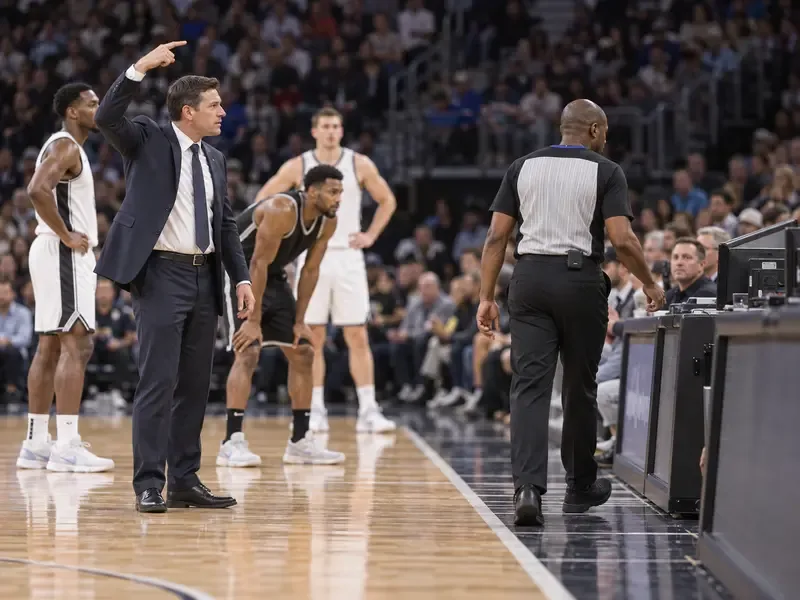
The team must call a legal timeout immediately after the disputed call. During that same interaction with the officials, the head coach must signal for a challenge—the familiar raised, circling index finger—and identify the specific call. If a player on the floor calls the timeout, the coach still has to signal and identify the challenge as the official notifies the scorer.
“Immediately” has a precise meaning in the rule: the timeout must be requested before the ball is handed to the inbounder or free-throw shooter, or tossed for a jump ball, as applicable. Once play has moved past that point, a coach generally cannot return to the earlier call. If a mandatory timeout or the opponent’s timeout is already underway after the disputed play, the coach has up to 30 seconds from the start of that timeout to signal and specify the challenge. If officials confer and announce a final ruling later, the challenge window begins after that final ruling is communicated.
A coach signals toward an official during a dead-ball moment, illustrating the challenge request.
Which calls can be challenged?
A called personal foul charged to the challenging team. A coach may challenge a foul called on one of their players. A foul called on the opponent is not eligible through a coach’s challenge.
A called out-of-bounds violation that gave possession to the other team. This is the only way to trigger replay review of an out-of-bounds ruling. It is not a general review of every boundary or possession dispute.
A called goaltending or basket-interference violation. This is challengeable only before the last two minutes of the fourth quarter or any overtime period.
A no-call is not challengeable. Nor can a coach independently challenge a technical foul, a flagrant foul, traveling, carrying, double dribble, or a call not listed in Rule 14. A review of an eligible foul may allow officials to assess certain closely related matters, but that does not make every separate call on the play reviewable.
To change a ruling, the review needs clear and conclusive visual evidence that the original call was wrong. A coach can be certain and still lose if the available video does not meet that standard. Before challenging, the staff has to weigh the possible correction against the timeout cost.
What counts as a successful review—and what happens to the timeout?
For a foul challenge, success means the foul is no longer assigned to the player who was originally called. If the foul remains on that player, the challenge is unsuccessful even if officials change another detail, such as whether the foul was shooting or non-shooting. For an out-of-bounds challenge, the result must benefit the challenging team under the rule, such as awarding it possession or changing the result to a qualifying jump ball.
The timeout consequences differ on the first and second challenges:
First challenge unsuccessful: the team loses the timeout used to initiate it and does not earn a second challenge.
First challenge successful: the team generally keeps that timeout and earns a second challenge. An exception applies when the timeout taken with the challenge triggers the challenging team’s own mandatory timeout: that mandatory timeout is lost even if the review succeeds.
Second challenge: the team loses the timeout used to start it whether the review succeeds or fails. A team therefore needs another timeout available before using its second challenge.
Special accounting applies when the play happened immediately before an opponent’s timeout or a mandatory timeout. For a successful first challenge of a play before the opponent’s timeout, the opponent may be charged with that timeout; if the first challenge fails, the challenging team is charged. A second challenge in those circumstances is charged to the challenging team even if successful. The rule also prevents an unsuccessful challenge from costing the team two separate timeouts when its own mandatory timeout has already begun.
One trap is attempting a challenge without a timeout left: no review takes place, and the team is charged an excessive timeout, which carries a technical-foul penalty. If a team challenges an event that is not reviewable, it is charged a timeout but keeps its challenge. Check the eligible call and available timeout before the coach signals.
What changes in the final two minutes?
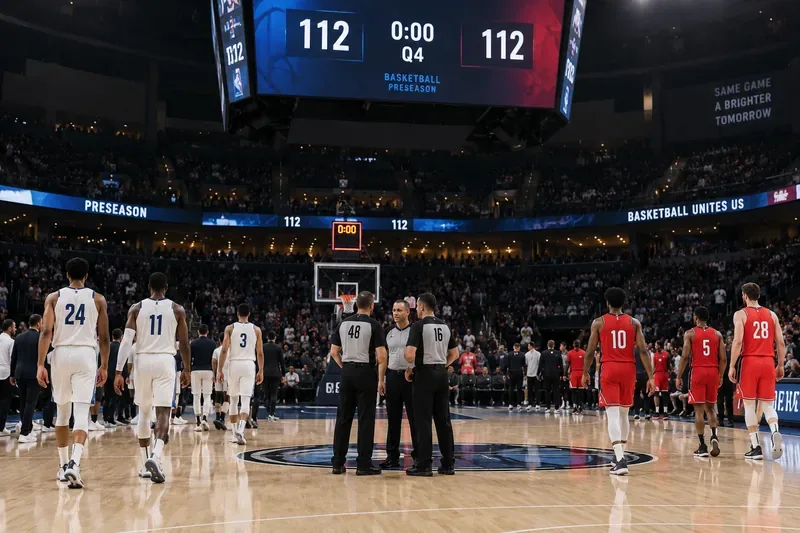
The final-two-minute rule is narrower than many fans assume. Coaches cannot initiate a challenge of a called goaltending or basket-interference violation during the last two minutes of the fourth quarter or the last two minutes of overtime. In those periods, review of those calls is triggered exclusively by on-court officials.
There is no matching blanket cutoff for all challenges. A coach may still challenge a called personal foul charged to their team or a qualifying out-of-bounds call late in the fourth quarter or overtime, as long as the team has a timeout and follows the immediate-request procedure. The short window matters more in a fast late-game sequence, when the ball may be inbounded quickly. Watch for the timeout signal and the coach’s challenge signal together; do not assume a replay will happen just because a play looks close.
Common challenge-rule misunderstandings
“Every team gets two challenges.”
No. Each team starts with one. The second becomes available only if the first challenge succeeds. Check whether the team has already used or earned its challenge before expecting another review.
“A successful challenge always saves the timeout.”
Only a successful first challenge generally preserves the timeout, and mandatory-timeout situations create exceptions. A successful second challenge still costs a timeout. Track which challenge is being used, not just whether the call was overturned.
“Nothing can be challenged in the last two minutes.”
That is incorrect. The late limit applies to coach-initiated goaltending and basket-interference reviews. Fouls and eligible out-of-bounds decisions remain challengeable under the ordinary conditions. Identify the type of call before ruling out a challenge.
“The replay only checks the exact thing the coach says.”
The rule permits certain related matters to be reviewed, but within defined bounds. Since 2025–26, on an out-of-bounds challenge, the Replay Center official—not the on-court crew chief—determines whether a proximate foul should have been called. The NBA’s official announcement of that rule change describes the update. Do not assume a review can reopen every unrelated event from the possession.
When watching a live game, check four things: what kind of call was made, whether the challenging team has a timeout, whether the coach requested the challenge before play resumed (or within the special 30-second timeout window), and whether it is the team’s first or second challenge. For a goaltending or basket-interference call, also check whether the game has entered the final two minutes of the fourth quarter or overtime. Those checks explain both whether a review is allowed and what the team risks by asking for one.
Rule version checked: September 30, 2026. The latest full playing-rules PDF located was the NBA’s 2025–26 edition; consult NBA Official for any subsequent season update.