Home
» 🏀 Basketball
»
NBA Injury Report Timing: Deadlines, Updates, and Where to Check
NBA Injury Report Timing: Deadlines, Updates, and Where to Check
You check the NBA injury report in the morning, see a player listed as questionable, and then find a different status near tipoff. That does not automatically mean a team missed a deadline: the league sets submission windows, and reports can change as teams receive new information. The key is to know which window applies and to check the latest official report for the specific game.
The timing rules below reflect the NBA Official injury-report page available on September 30, 2026. Since the page located during research is labeled for 2025–26, confirm the current season’s policy page when the 2026–27 version is posted.
When must NBA teams submit an injury report?
The NBA says teams must report injuries, illnesses, other medical conditions, and rest that may affect a player’s participation. The standard deadline depends on the game schedule:
Situation
Required reporting window
What to check
Most games
By 5 p.m. local time the day before the game
Look for the player’s participation status and stated reason.
Game day, excluding the second night of a back-to-back
Between 11 a.m. and 1 p.m. local time
This is a required game-day submission window, not a promise that the status is final.
Tipoff at 5 p.m. or earlier
Between 8 a.m. and 10 a.m. local time on game day
Use this earlier window instead of the usual 11 a.m.–1 p.m. window.
Second game of a back-to-back
By 1 p.m. local time on game day
The policy gives this case a separate deadline and excludes it from the regular additional game-day window.
These are team submission requirements. They do not mean fans will see an update at the exact deadline minute. The NBA says reports are updated continually throughout the day, but its public policy page does not specify a fixed posting interval for every change. Allow time for the report to refresh, then check its timestamp.
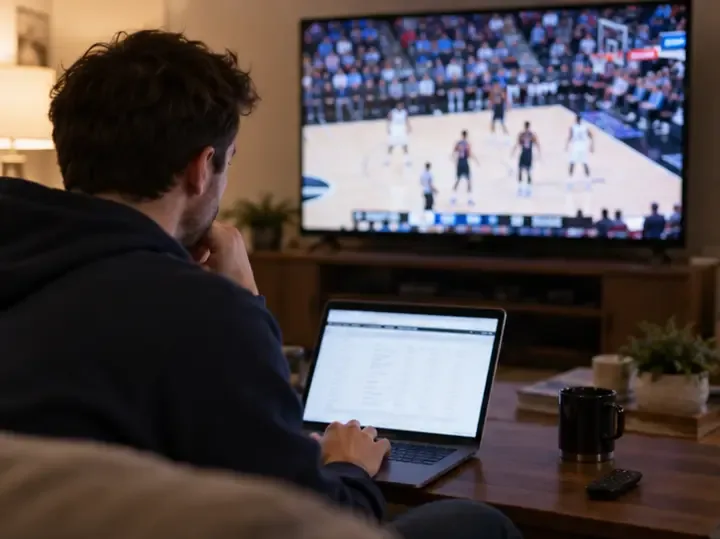
A fan compares a basketball broadcast with information on a laptop while following a player’s status.
Why can a player’s status change late?
A designation describes the team’s reported view at that point in time; it is not a guarantee about what will happen at tipoff. A player can be listed as questionable while the team waits for more information, then become available or be ruled out after evaluation or warmups. Conversely, a player initially listed out may be incorrectly reported if new information is not reflected accurately. The NBA has announced fines in cases involving inaccurate or late injury reporting, as in this official league release, so the report is a formal accountability document as well as a fan reference.
Do not treat “questionable” as a synonym for “will play,” or “probable” as a confirmed active lineup spot. Also, a report’s injury label is not a detailed medical forecast. Use the listed status to understand uncertainty, and wait for a later official update before making plans that depend on the player appearing.
Where should you verify the latest status?
Start with the NBA’s official report. Open the NBA Official injury-report page. It links to the league’s daily team reports, which organize entries by game, team, player, current status, and reason. Match the date and opponent carefully; a similarly named player or a report for another game can mislead.
Check that report’s timestamp. A saved PDF or search-result snippet may be old even if it remains easy to find. Open the newest report for the game and note its publication time. Compare it with the local reporting window rather than assuming the first report of the day is final.
Cross-check the team’s official channel. A team website or verified team account may post a medical update, practice note, or pregame announcement. For example, the Minnesota Timberwolves’ injury-report page identifies itself as a daily report and points readers to the official NBA report. Use team commentary for context, but return to the league report to verify the game designation.
Recheck close to tipoff. If availability matters to your plans, refresh the NBA report before leaving or before locking a fantasy lineup. When the status remains uncertain, wait for a later league or team update rather than relying on an old screenshot or a headline from earlier in the day.
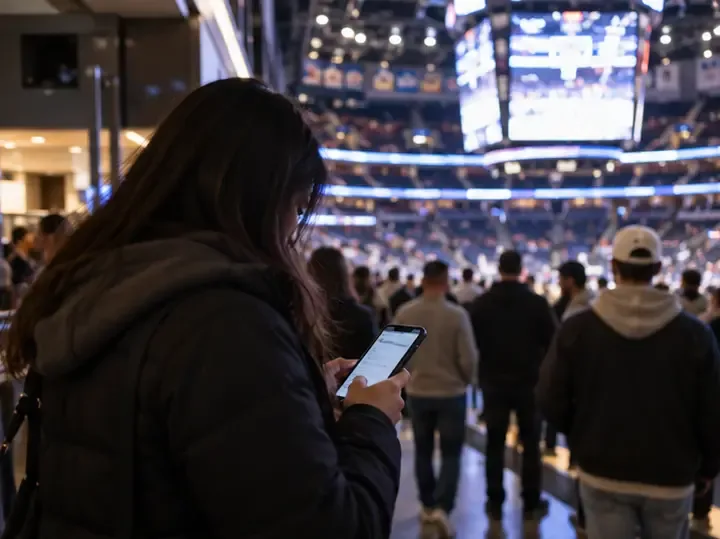
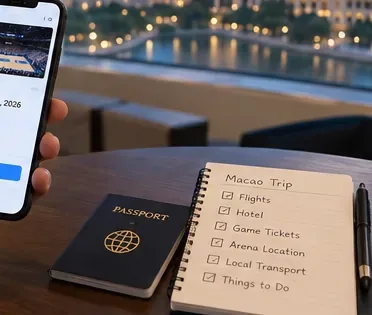
Before entering the arena, a fan checks a phone for a current player update.
How to read the report without overinterpreting it
Find the right matchup first, then confirm the game date and team. Read both the status and the reason; “Out” paired with an injury reason is different context from a rest designation, while a blank or missing entry should not be treated as proof that a player is available. If a team appears as “not yet submitted,” the report itself may simply be awaiting that team’s filing. Check again after the required window and look for a later version.
Keep three questions separate: Has the team submitted the required report? What status is currently posted? Has the player actually been confirmed for the starting lineup or game appearance? The injury report answers the first two, subject to its timestamp. It is not itself a final lineup announcement, and an “available” designation does not promise a specific role or minutes.
For example, suppose a player appears as questionable on the prior evening’s report. The next day, check the required game-day window. If the player remains questionable, do not convert that label into a yes or no. Check again nearer tipoff and use any later official status update. This simple sequence avoids treating an early snapshot as a final decision.
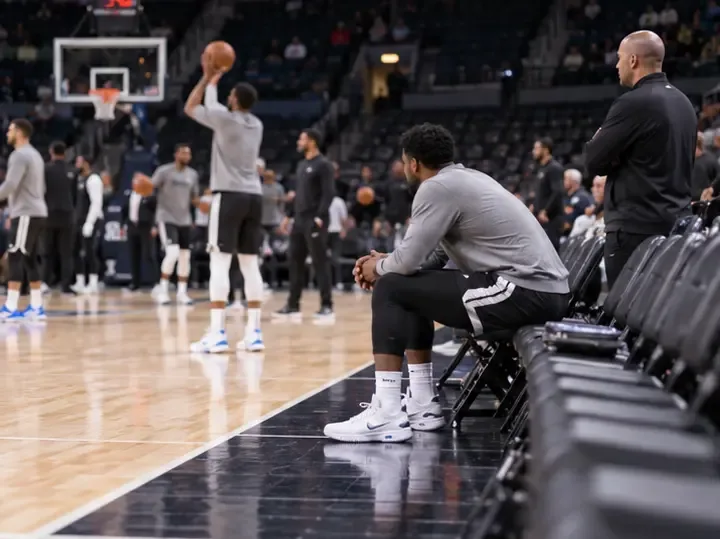
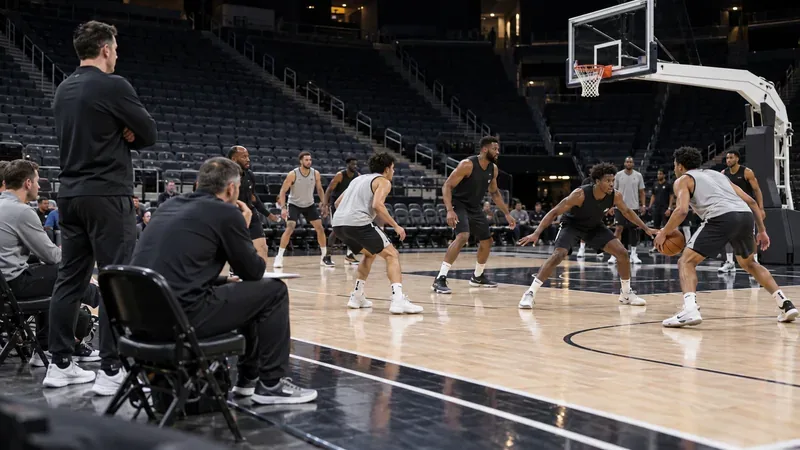
Pregame activity can provide context, but the official report remains the place to confirm the listed game status.
Common mistakes to avoid
Applying the wrong deadline: Check whether the game is an early tipoff or the second game of a back-to-back before using the standard timetable.
Confusing local time with your own clock: The policy states deadlines in local time. Convert carefully if you are following a game from another time zone, and use the game information on the official report.
Assuming an update schedule: The NBA says reports are updated continually, but the policy page does not promise a public update every set number of minutes.
Trusting an isolated social post: A post can be accurate when published and stale later. Verify against the newest league report.
Reading “questionable” as a prediction: It signals uncertainty, not a guaranteed appearance. Wait for a later status rather than inferring a decision.
Quick self-check before you rely on an injury update
Confirm the game date, matchup, player name, report timestamp, and status. Verify that you applied the correct submission window for that game, and check whether a newer report or team announcement has appeared. If any of those details are missing, treat the information as provisional and reopen the official NBA report. That gives you a clear, repeatable way to follow NBA injury report timing without mistaking an early listing for a final decision.
Policy checked September 30, 2026. The official page available at that time was titled for 2025–26; recheck NBA Official for any 2026–27 policy update.
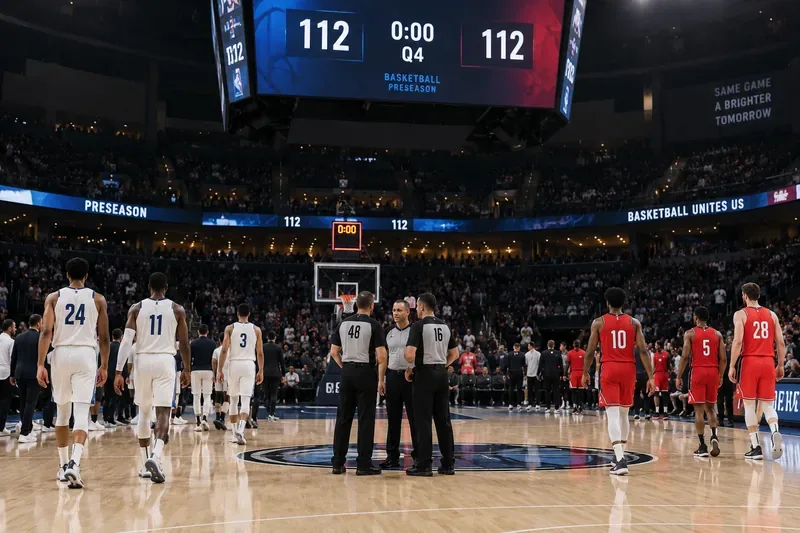
Fans take their seats as players warm up shortly before an NBA game.