Home
» 🏀 Basketball
»
How NBA Exhibit 10 Contracts Work Before Opening Night Roster Cuts
How NBA Exhibit 10 Contracts Work Before Opening Night Roster Cuts
NBA teams are in the 2026 preseason window now: the league calendar lists preseason games from October 3 through October 16, opening-day rosters due October 19 at 5 p.m. ET, and the regular season starting October 20. An Exhibit 10 contract can be part of how a team evaluates a camp player before those cuts, but it is not a promise of an opening-night roster spot. It is a one-year, minimum-salary NBA player contract with a specific CBA attachment that can create a conditional G League bonus or a limited amount of salary protection. The controlling source is Article II, Section 3(s) of the 2023 NBA–NBPA Collective Bargaining Agreement, which is in force through the 2029–30 season. Calendar dates are from the NBA’s 2026–27 key dates page.
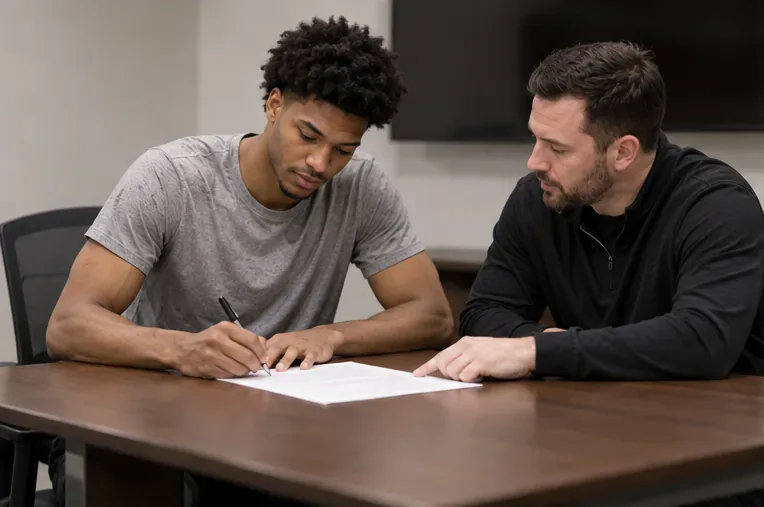
An Exhibit 10 is an attachment to an NBA player contract; the signed terms determine the player’s bonus or protection.
Quick reference: what an Exhibit 10 does
Question
Practical answer
What is it?
An attachment to a one-season NBA player contract at the minimum salary, with no other bonus except an allowed Exhibit 10 bonus.
How many can a team have?
The CBA caps a team at six contracts containing Exhibit 10 at one time.
Does it guarantee an NBA roster place?
No. The player can be waived during camp, converted to a two-way deal if eligible, or retained under the NBA contract.
When can the bonus be earned?
Only after the required waiver, G League signing and affiliate assignment, timely reporting, and 60 consecutive days of G League service, subject to CBA terms.
Is the bonus the same as guaranteed NBA salary?
No. A conditional Exhibit 10 bonus and the contract’s limited conversion protection are related but distinct outcomes.
“Exhibit 10” is a clause name, not a tenth roster slot, a 10-day contract, or a G League contract. The player first signs an NBA contract. The Exhibit 10 language gives the team a defined route to keep a waived player connected to its G League affiliate and may provide a bonus if the player meets the conditions. The NBA G League’s official FAQ also summarizes the arrangement and notes the six-contract limit.
How the preseason pathway works
1. The player signs an NBA camp contract
The team and player execute a one-season contract at the NBA minimum with the Exhibit 10 attachment. The contract can specify an Exhibit 10 bonus between $5,000 and the CBA’s maximum for that salary-cap year. The CBA formula adjusts the maximum with the NBA salary cap, so a figure quoted for another season may be out of date. Check the player’s signed terms and the current CBA rather than assuming every Exhibit 10 player has the same bonus. The team also needs an NBA G League affiliate to include the bonus provision when the contract is signed.
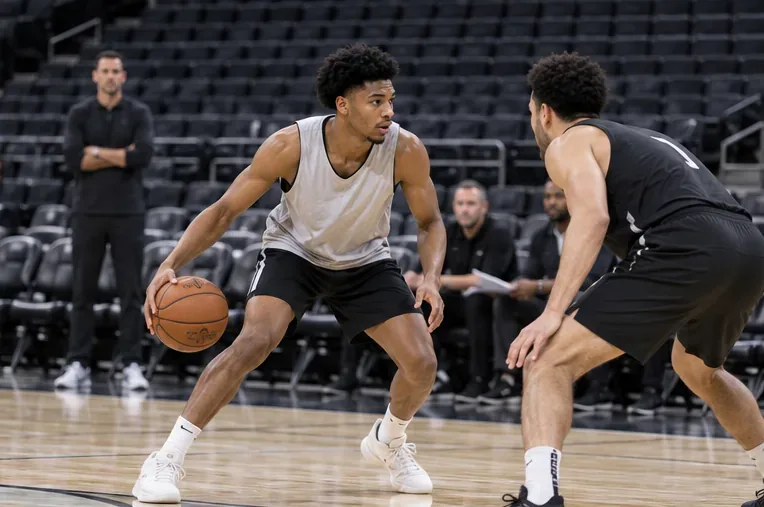
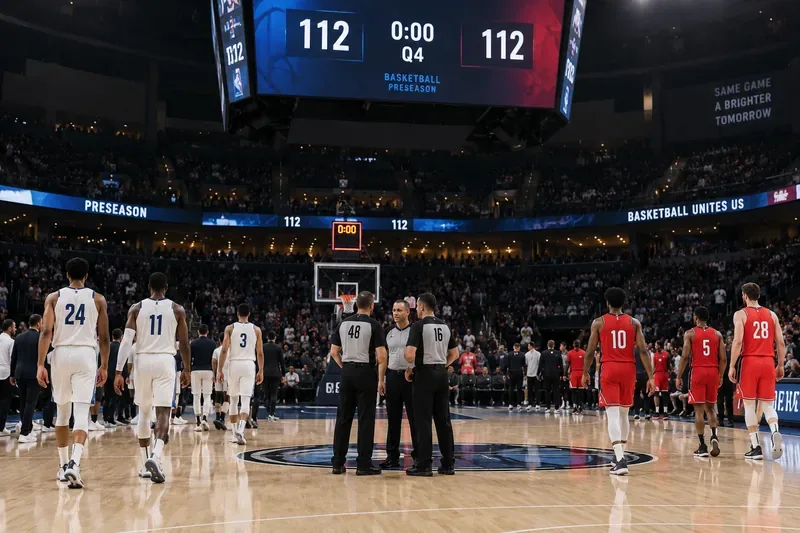
Preseason minutes let a player show how he fits a team’s camp and rotation evaluation.
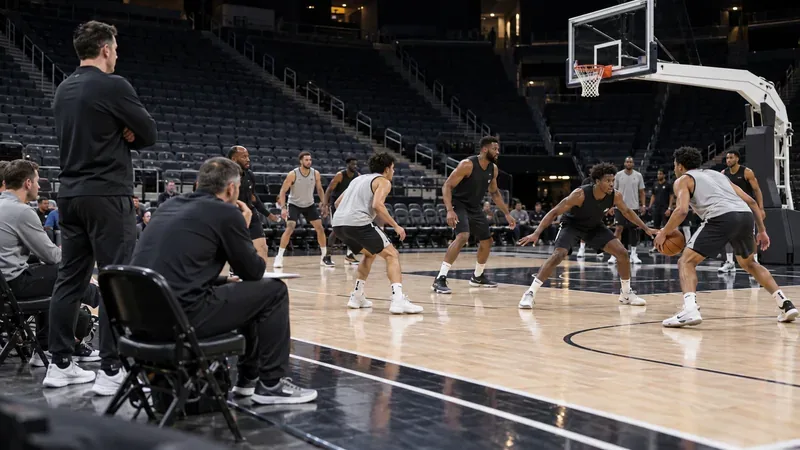
During training camp and preseason, the player is on an NBA contract and competes for a place on the team. That status matters: the agreement is not merely an invitation to G League camp. But signing the deal does not mean the team has decided to keep the player. Teams may carry more camp contracts than standard roster spaces and must make decisions before the regular season begins.
2. The team chooses whether to keep, convert, or waive the player
Before the first day of the regular season, a team can terminate the contract through the NBA waiver process. It may instead retain the player on the NBA roster or, if the player is eligible and a two-way slot is available, exercise the contract’s two-way conversion option. A two-way contract is its own NBA contract type with separate eligibility and playing limits; it is not simply another name for Exhibit 10. A conversion is a roster decision, not proof that the player has already earned the conditional G League bonus.
If an Exhibit 10 contract is not terminated before the regular season begins, or the team exercises the conversion option, the CBA provides a limited “Conversion Protection Amount” for lack of skill and injury or illness. The amount must fall within the CBA’s stated range; if the contract includes an Exhibit 10 bonus, its conversion-protection amount must equal that bonus. This is specific protection set by the contract, not a guarantee of the entire minimum salary. Read the actual agreement before describing the player’s guaranteed money.
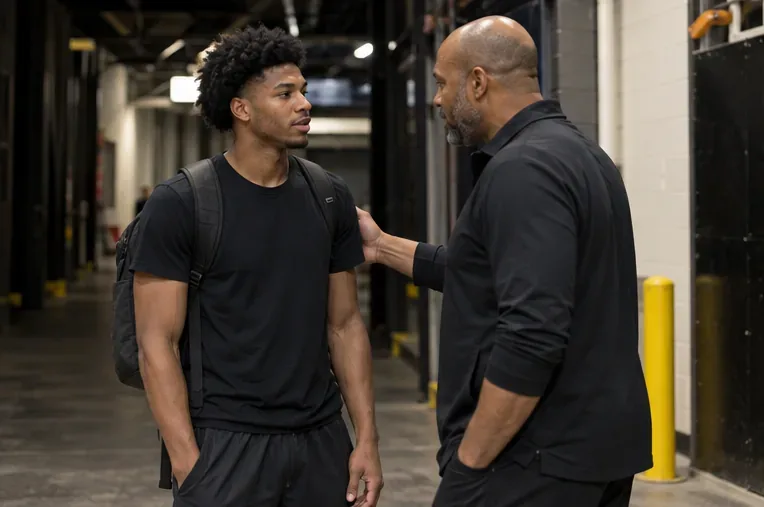
A waiver ends the NBA contract unless the player is later signed again; it can also start the separate affiliate pathway.
3. A waived player must complete the affiliate steps
Waiving the player alone does not earn the bonus. Under the CBA, the player must sign with the NBA G League before its deadline for affiliate designations, be initially assigned by the league to the NBA team’s affiliate named in the Exhibit 10, and report to that affiliate on time. He must then provide 60 consecutive days of service during the G League season. If he signs with a professional team other than the NBA team before completing that service period, he does not meet the stated condition.
There is a narrow return path if the NBA team signs the player to one or more contracts during the 60-day period: he can satisfy the condition by timely returning to that G League affiliate after the NBA contract ends and completing the remaining days. The CBA also preserves the bonus if the player cannot complete the period because of an injury directly resulting from playing for the affiliate. These details are why “waived, so he gets the bonus” is an incomplete summary.
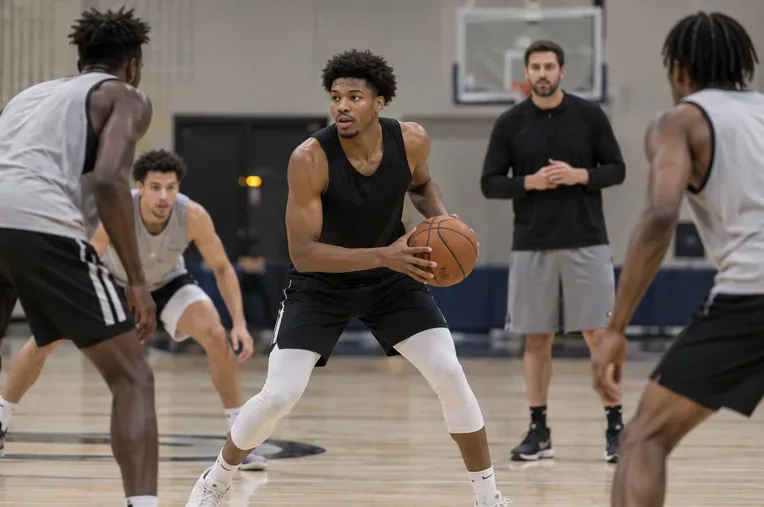
The bonus pathway depends on the player reporting to the named G League affiliate and completing the required service period.
What happens in each common scenario?
Outcome before the regular season
What it means
What to verify
Waived, then signs with named affiliate and meets all conditions
The player may earn the Exhibit 10 bonus stated in his contract, in addition to the applicable G League compensation.
NBA waiver date, G League signing and assignment, report date, and service completion.
Waived but does not join the affiliate by the applicable deadline
The CBA’s bonus conditions are not satisfied on those facts. A later G League opportunity may still exist under league rules.
Whether he signed with the G League and which team initially received him.
Kept on the NBA roster
He has an NBA roster place; the limited conversion protection may apply under the contract and CBA. This is not the same as collecting the waived-player bonus.
Final contract terms and whether he remained under contract on the first day of the regular season.
Converted to a two-way contract
His contract status changes to a two-way deal if CBA eligibility and roster conditions are met. Do not label this the Exhibit 10 bonus route.
Official transaction, two-way eligibility, and team’s available two-way slots.
Waived and later listed with a G League affiliate
That listing does not by itself prove NBA employment or bonus eligibility. Some affiliate players sign with the G League rather than an NBA team.
Whether the player signed with the G League, was assigned as required, and met the Exhibit 10 terms.
Checklist for following a reported Exhibit 10 deal
Confirm the transaction. Distinguish an official NBA team signing from a report that a player is expected to sign or has agreed to terms.
Read the contract description carefully. Confirm it is a one-year minimum NBA contract with Exhibit 10 language. The specific bonus and any conversion protection are contract terms, not automatic league-wide amounts.
Track the right deadline. For 2026, the NBA lists October 19 at 5 p.m. ET for opening-day rosters, and the regular season begins October 20. The G League affiliate designation deadline is a separate league deadline; do not assume it is identical to the NBA roster deadline.
Follow the post-waiver transaction. Check whether the player signs with the G League, is initially assigned to the affiliate named in the contract, and reports in time.
Wait for the service condition. A bonus is conditional on completing 60 consecutive service days, subject to the CBA’s return and injury provisions. A preseason cut announcement is not a confirmation that the bonus has been paid.
Separate roster outcomes. Retention, two-way conversion, a waiver, and G League affiliate signing are different outcomes. Use the team’s and league’s official transaction notices to describe which occurred.
Common misconceptions to avoid
“Exhibit 10 means the player has a guaranteed NBA job.” It does not; the player may be waived before opening night.
“The bonus is paid as soon as the player is cut.” The waiver is only one condition. The G League signing, affiliate assignment, timely report, and service period matter too.
“Every Exhibit 10 player gets the same dollar amount.” The agreed amount may differ, and the maximum adjusts by salary-cap year. Verify the signed contract and applicable CBA cap-year formula.
“A G League affiliate listing proves the player is still an NBA employee.” G League roster status and NBA contract status are not interchangeable.
“Exhibit 10 and a 10-day contract are the same.” They are different contract mechanisms. Exhibit 10 is chiefly a preseason NBA contract attachment; a 10-day contract is a later-season signing mechanism governed by separate CBA provisions.
Sources: Article II, Section 3(s), in the official 2023 NBA–NBPA CBA; the NBA G League’s Exhibit 10 FAQ; and the NBA’s 2026–27 calendar. Calendar details checked September 30, 2026. The player’s individual signed contract may contain terms not visible in a team transaction announcement.