Home
» 🏏 Cricket
»
USA, UAE and Namibia in Dallas: Cricket World Cup League 2 schedule and what the points can change
USA, UAE and Namibia in Dallas: Cricket World Cup League 2 schedule and what the points can change
The next ICC Men’s Cricket World Cup League 2 stop in the United States brings USA, Namibia and the United Arab Emirates together for six ODIs at Grand Prairie Cricket Stadium in Dallas from October 3 through October 13, 2026. For readers trying to understand what matters, the useful goal is not simply to memorize six dates. It is to know which results can materially change the qualification race, which cannot, and what to recheck as the table moves.
At publication on September 30, USA had already secured a place in the 2027 Cricket World Cup Qualifier, while Namibia and UAE were still chasing the fourth and final direct Qualifier berth. The ICC confirmed in August that Scotland, USA and the Netherlands were guaranteed top-four finishes, leaving Oman in fourth and Namibia, Canada, Nepal and UAE in the group still trying to catch them. The official competition format sends the top four directly to the Qualifier; the bottom four must go through the Qualifier Play-off.
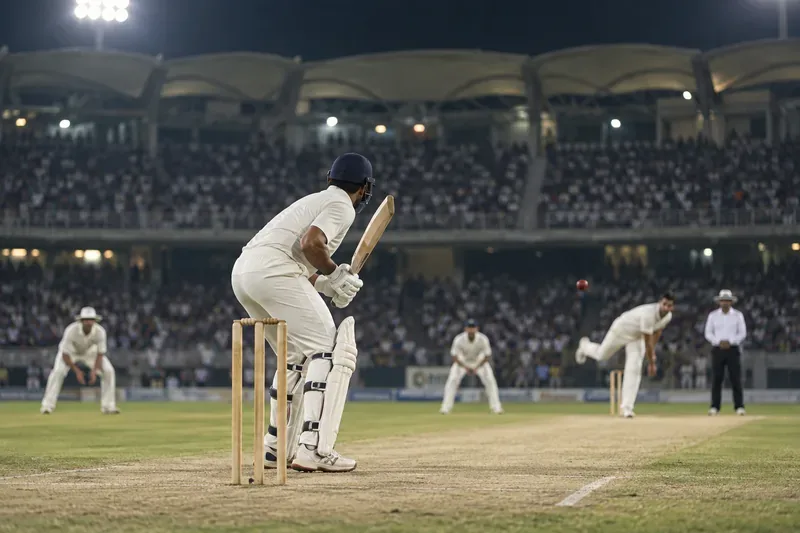
A prepared cricket ground with players warming up before play. Dallas hosts six League 2 ODIs involving USA, Namibia and UAE in October 2026.
Dallas League 2 schedule: all six matches
The ICC fixture list shows the Dallas tri-series beginning with Namibia against UAE on October 3 and ending with USA against Namibia on October 13. Each team plays the other two twice.
Date
Match
ICC match number
Venue
October 3, 2026
Namibia vs. UAE
128
Grand Prairie Cricket Stadium, Dallas
October 5, 2026
USA vs. UAE
129
Grand Prairie Cricket Stadium, Dallas
October 7, 2026
USA vs. Namibia
130
Grand Prairie Cricket Stadium, Dallas
October 9, 2026
Namibia vs. UAE
132
Grand Prairie Cricket Stadium, Dallas
October 11, 2026
USA vs. UAE
134
Grand Prairie Cricket Stadium, Dallas
October 13, 2026
USA vs. Namibia
136
Grand Prairie Cricket Stadium, Dallas
The ICC fixture page currently lists the Dallas matches at 15:00 in its schedule display. Because match pages and calendar integrations can present times according to viewer settings, the safest practice is to recheck the official fixture or match center close to the day rather than rely on a copied time from an older page.
What the table looked like before the Dallas series
Going into the October block, the standings relevant to this tri-series were straightforward: USA were safely through, Namibia were just below Oman in the contest for fourth, and UAE had more ground to make up but also more matches left than Namibia. The broader table at publication had Scotland on 45 points, USA on 43, the Netherlands on 38, Oman on 31, Namibia on 28, Canada on 25, Nepal on 24 and UAE on 18.
Team
Matches played before Dallas
Points before Dallas
What four Dallas matches can do
USA
32
43
Add up to 8 points; qualification is already secured
Namibia
32
28
Add up to 8 points; can finish the Dallas leg on as many as 36
UAE
28
18
Add up to 8 points; can finish the Dallas leg on as many as 26
Oman
28
31
Not in Dallas, but playing an overlapping home series that can change the fourth-place target
Those figures are a snapshot, not a promise about where the teams will be later in October. Oman, Canada and Nepal have their own League 2 fixtures in Al Amerat beginning October 9, so the direct-qualification line can move while the Dallas series is still in progress.
How League 2 points are awarded
The ICC playing conditions make the calculation simple: a win is worth two points, a tie, no result or abandoned match is worth one point to each team, and a loss is worth zero. If teams finish the competition level on points, the first listed separator is number of wins, followed by net run rate, with original seeding used if those steps still do not separate them.
The underlying rules are available in the ICC Men’s Cricket World Cup League 2 playing conditions. That matters because “points impact” is not just a win-loss question: weather can still move the table through one-point no-results, and net run rate can matter if teams eventually finish level after the wins tiebreaker.
What is a good outcome for USA?
For USA, the Dallas series is no longer about securing a top-four place. The ICC stated in August that USA had already done enough to qualify for the 2027 Qualifier. A productive series can still improve their final League 2 points total and shape finishing position, but the core qualification objective has been achieved.
That changes how to judge the outcome. The clearest measure is not “did USA survive the qualification race?” but whether they collect points consistently across four home ODIs and maintain performance standards against two teams still under qualification pressure. The practical checkpoint is the final table after October 13 rather than any single result.
What does Namibia need from Dallas?
Namibia start the series in a much sharper situation. With 28 points from 32 matches before Dallas, they can add a maximum of eight points from their final four League 2 games and reach 36. That gives every Dallas result direct value because there is no later league series available to repair a weak finish.
The comparison to Oman is essential. Oman had 31 points from 28 matches before the October fixtures, and they still had eight games left in their own campaign. Namibia therefore cannot treat 36 points as an automatic qualification number. Even a four-win sweep would only establish Namibia’s final total; Oman’s results would still determine whether that total is enough for fourth.
A useful way to evaluate Namibia’s progress is to update two numbers after every match: Namibia’s points and Oman’s maximum reachable total after Oman’s completed games. If Oman keeps winning, Namibia’s margin for error shrinks quickly. If Oman drops points, Namibia can turn Dallas victories into genuine pressure on fourth place.
What can UAE realistically change in Dallas?
UAE entered the Dallas trip on 18 points from 28 matches. Four wins in Dallas would take them to 26, still below Oman’s pre-October total of 31. So this series by itself cannot carry UAE above the fourth-place benchmark that existed before the month began.
That does not make the games low-impact. UAE still have more league matches to play after Dallas, so the quality test is whether they leave Texas with enough points to keep the later pathway meaningful. A poor return would make the required finish in their remaining games much steeper, while a strong return would preserve options.
UAE also arrive with a refreshed squad. On September 29, the ICC reported that Harpreet Singh would captain a 15-player group for the USA assignment, with first-time call-ups for 17-year-old batter Ayaan Misbah and left-arm spinner Awais Ali Shah. Readers following selection changes can use the ICC’s official UAE squad announcement as the current reference point.
Why the October 9-13 window needs extra attention
The biggest mistake when reading this tri-series is to treat Dallas as an isolated table. From October 9, a second League 2 block involving Oman, Canada and Nepal is scheduled in Oman. That means fourth-place calculations can change on the same day Namibia and UAE are playing in Texas.
For a reliable assessment, do not compare a Dallas result with the September 30 table after the Oman series has started. Reopen the official standings and use the updated points column. This is the point at which a previously sensible scenario can become obsolete within hours.
How to judge whether the qualification picture has really changed
A useful result-quality check has three parts. First, confirm the match result and awarded points on the ICC match center. Second, compare the updated points to the number of matches each contender still has available. Third, check whether the points gap is still mathematically reachable before declaring a team safe or out of the direct-qualification race.
Strong evidence of change: a contender gains or loses points and the maximum remaining total now crosses the fourth-place benchmark.
Possible but not decisive change: a team wins, but rivals still have enough remaining matches to erase the gap.
Do not overread it: net run rate changes before points and wins have created an actual tie scenario.
The ICC confirmed the central qualification rule when League 2 began: eight teams play 36 ODIs each, the top four advance to the 2027 Cricket World Cup Qualifier, and the bottom four go to the Qualifier Play-off. The ICC’s League 2 launch release explains that pathway.
The practical takeaway
Dallas matters differently for each team. USA can add to an already successful League 2 campaign without the risk of losing their Qualifier place. Namibia have four matches left and therefore need to convert Dallas into as many points as possible while watching Oman’s parallel results. UAE cannot close the entire pre-series gap to fourth in Dallas alone, but a strong run can keep their remaining qualification route alive.
The limit of any pre-series points model is that it cannot know future results, no-results or changes in the parallel Oman series. Use the schedule and starting totals as a planning tool, then switch to the live ICC standings once matches begin. That is the point at which the table, not a forecast, should drive the interpretation.