Home
» 🏏 Cricket
»
Pakistan October 2026 ODI Tri-Series: England and Sri Lanka Fixtures, Format, and Tiebreakers
Pakistan October 2026 ODI Tri-Series: England and Sri Lanka Fixtures, Format, and Tiebreakers
Pakistan, England, and Sri Lanka are scheduled to play a seven-match men’s ODI tri-series from October 18 through October 31, 2026. The schedule lists six league matches—each pair meets twice—and a final in Lahore between the top two teams. The first three matches are at Rawalpindi Cricket Stadium; the remaining league games and final are at Gaddafi Stadium. The PCB and ECB have published the same fixture sequence. The ICC’s current men’s ODI playing conditions set the standard table order as points, most wins, head-to-head among the tied teams, then net run rate (NRR).
A common source of confusion is that Pakistan is hosting more than one tri-series around this period. The England event is the senior men’s ODI tournament. It is separate from the Pakistan, Bangladesh, and Sri Lanka Women’s Under-19 T20 tri-series announced for October 2–16. Check the teams and format in the official notice before using a fixture list. The PCB’s men’s tour announcement and its separate Women’s U19 tournament announcement identify the two events.
Confirmed October 2026 fixtures
The schedule below follows the England and Wales Cricket Board’s announcement, which gives dates and venues but does not list start times. The PCB tournament listing also identifies the final as the seventh match. Match times and any later revisions should be checked with the boards close to the event.
Date
Fixture
Venue
Stage
Sunday, October 18
Pakistan vs. Sri Lanka
Rawalpindi Cricket Stadium, Rawalpindi
League
Tuesday, October 20
Pakistan vs. England
Rawalpindi Cricket Stadium, Rawalpindi
League
Thursday, October 22
Sri Lanka vs. England
Rawalpindi Cricket Stadium, Rawalpindi
League
Sunday, October 25
Pakistan vs. England
Gaddafi Stadium, Lahore
League
Tuesday, October 27
Pakistan vs. Sri Lanka
Gaddafi Stadium, Lahore
League
Thursday, October 29
Sri Lanka vs. England
Gaddafi Stadium, Lahore
League
Saturday, October 31
Top two league finishers
Gaddafi Stadium, Lahore
Final
These are scheduled dates, not a guarantee that every match will be played exactly as listed. A governing board can announce changes, and weather can interrupt a game. Before traveling, compare your ticket or itinerary with the latest ECB fixture notice and the PCB’s official tournament match listing.
What does “tri-series” mean here?
A tri-series is a tournament involving three teams. In this schedule, Pakistan, England, and Sri Lanka each meet the other two teams twice during the league phase. That produces six league matches: two Pakistan–Sri Lanka games, two Pakistan–England games, and two Sri Lanka–England games. The top two teams in the standings then advance to a separate final on October 31.
Misconception: each team plays every opponent only once. That would make a three-match round robin, but the published October schedule lists six league fixtures. Count the pairings in the schedule before relying on a generic definition of a tri-series.
Misconception: this is a T20 tournament. The PCB and ECB describe the England–Pakistan–Sri Lanka event as an ODI series. An ODI is the 50-over format, although rain or other interruptions can lead to a reduced-overs match under the playing conditions. The separate Women’s U19 event is T20. Check the competition name and format label when searching for results or broadcast information.
Most points. A win earns 2 points; a tie, no result, or abandoned match earns 1 point; a loss earns 0.
Most wins. If teams are level on total points, the side with more wins ranks higher.
Results among the tied teams. If still tied, compare wins over the other team or teams tied on points and wins.
Net run rate. If the earlier tests still do not separate the sides, the higher NRR ranks higher. A match recorded as a no result does not contribute a run rate.
Misconception: net run rate is always the first tiebreaker. In these standard ODI conditions, it comes after points, total wins, and the specified head-to-head comparison. A team can therefore have the better NRR and still finish below a rival that has more wins. When the table is tight, read the rules in order instead of jumping straight to the NRR column.
Net run rate is the team’s average runs per over scored across applicable matches minus the average runs per over conceded. It is not simply the difference between total runs for and against. The ICC conditions also explain how overs count when a side is all out early and how DLS-adjusted matches are treated. Use the official tournament table or the ICC calculation rules rather than calculating a quick ratio from totals.
What if an ODI is tied or washed out?
A tied score in a one-day international does not automatically mean the teams share league points. Under the current ICC standard ODI conditions, equal scores after both innings trigger a Super Over. If the Super Over is also tied, further Super Overs are played until a winner is found, unless exceptional circumstances prevent completion. If the Super Over cannot be played or completed, the match is recorded as a tie; the standard preliminary-stage points table then awards 1 point to each side.
A rain-affected match can have a different outcome. The Duckworth-Lewis-Stern method (DLS) can revise a target when overs are lost. If a result is achieved under DLS, that is a win or loss for the points table; if the match is declared a no result, each side receives 1 point under the standard system. A washout is not the same thing as a tied score, and the distinction matters for both points and NRR.
Misconception: one abandoned game automatically knocks a team out. It does not. Each team plays six league games, so a no result awards one point and leaves the remaining matches to determine qualification. The effect depends on the other results and then on the tie sequence. Check the updated standings after each match rather than treating one rain interruption as decisive.
What is not settled by the schedule announcement?
The fixture announcement confirms the dates, venues, league structure, and final but does not publish match start times or the event’s full tournament-specific playing conditions. The ICC standard rules are the grounded reference for ODI points and final-qualification tiebreakers, but a later PCB notice could clarify or amend operational details. In particular, the published schedule alone does not establish a reserve day or the champion-determination procedure if the final cannot produce a result. Do not assume a reserve date or shared title without checking the final regulations.
Squads and playing elevens are also separate from the fixture list. A schedule confirms that England and Sri Lanka are due to play; it does not guarantee that any particular player will be selected or fit. For team news, look for a later board squad announcement and the confirmed match XI after the toss.
Quick verification checklist
Confirm this is the senior men’s ODI tri-series, not the Women’s U19 T20 tournament.
Check the match date, opponent, and city; Rawalpindi hosts October 18–22, while Lahore hosts October 25–31.
Use the latest PCB or ECB schedule for start times and schedule changes.
For final qualification, apply points, wins, tied-team results, then NRR—in that order—under current ICC standard ODI conditions.
For a tied match, distinguish the Super Over process from a no result or abandoned match.
As of September 30, 2026, the published schedule has Pakistan, England, and Sri Lanka meeting twice each in the league, followed by a top-two final. The match calendar is confirmed; start times and final-specific contingency arrangements should still be verified in the boards’ latest notices.
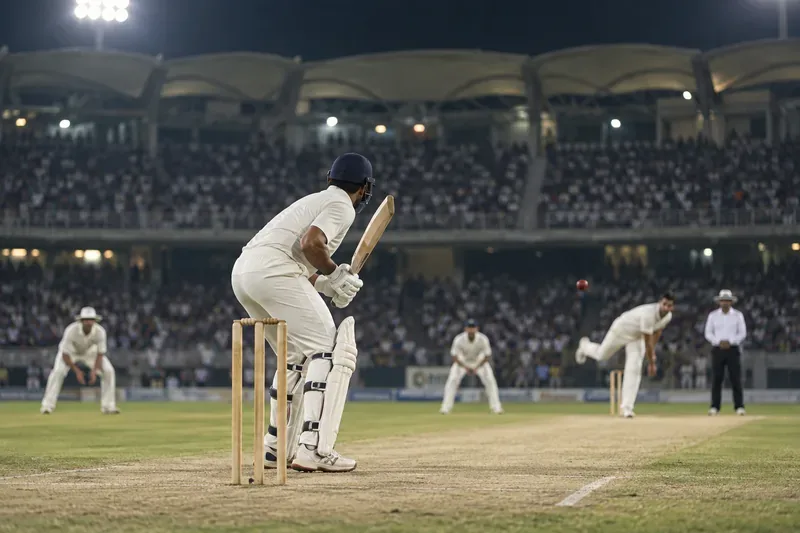
A batter faces a delivery in a floodlit cricket stadium, reflecting the ODI format of the Pakistan tri-series.