How to Check Real-Time Server Latency in the PUBG HUD

Enable PUBG’s network statistics HUD to monitor ping and packet loss in a match. See where to find it, what the numbers mean, and what they cannot diagnose.
Lee Sin in League of Legends pro play stays relevant because his kit gives a team several useful options at once: early pressure, access to targets, ally protection, and a way to reshape a fight. He is not automatically the strongest jungler in every patch, and his picks do not guarantee wins. His value is that a practiced player can adapt his job to the game instead of following one fixed engage pattern.
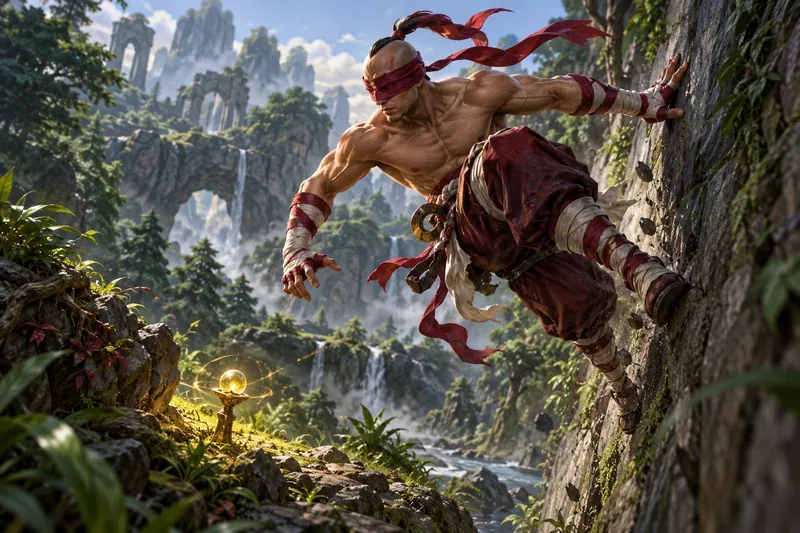
Professional teams prize tools that create choices under pressure. Lee Sin can look for a gank, contest river space, threaten a carry, or stay near an ally and peel for them. His basic kit links those jobs together: Sonic Wave and Resonating Strike offer a skillshot followed by a dash, Safeguard lets him move to an ally or ward, and Dragon’s Rage kicks an enemy away from him. Riot’s Lee Sin champion overview lists those abilities and describes the two-part Q and its follow-up dash.
Lee Sin has tools to make early skirmishes dangerous. Landing Q can start a chase, while his follow-up dash closes distance. His passive, Flurry, rewards weaving basic attacks between abilities by speeding up his next two attacks and restoring energy. That gives skilled players a reason to sequence their spells and attacks carefully instead of spending every ability at once.
That threat can influence the lanes around him. A laner who has pushed a wave may help him contest a camp or river entrance; a lane with reliable crowd control can make a Q hit more punishing. Lee Sin does not create lane priority by himself, though. If his lanes cannot move first, forcing an invade or objective fight can expose him to a counterattack. His early-game reputation comes from the pressure he can convert when the team’s map state supports it.
Many junglers have a clear way to start a fight. Lee Sin’s movement gives him several possible angles. He can use Q to follow a target, or Safeguard to dash to a nearby ally or ward and reposition. A ward hop can take him over terrain, but it depends on having a legal target and a useful angle; it is not a free escape or a source of vision by itself.
Riot’s Patch 26.10 notes, published May 12, 2026, added a shield when Lee Sin jumps to a minion or ward and standardized Safeguard’s cooldown. The same update changed Dragon’s Rage so a kicked champion continues flying, knocking up and damaging on the way even if killed mid-flight. Those are specific patch changes, not timeless numbers, but they illustrate how movement and displacement are central to his play pattern. Read Riot’s Patch 26.10 notes.
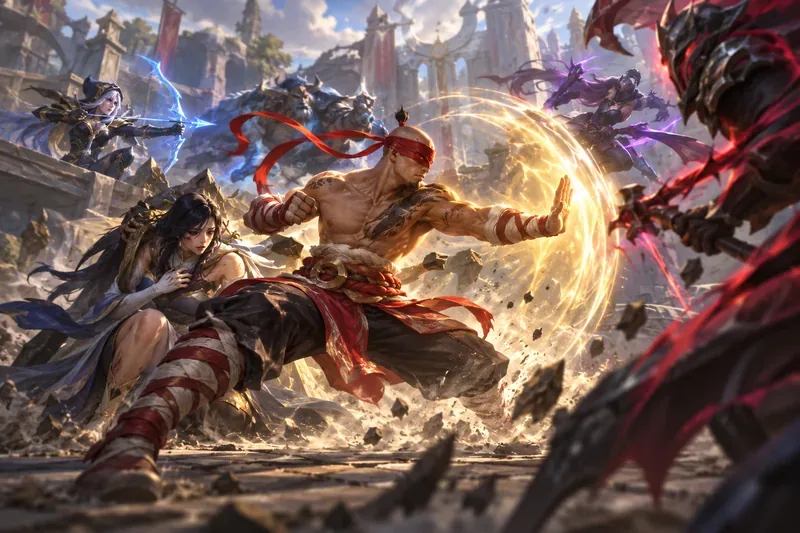
Lee Sin’s ultimate is valuable because the kick changes where a champion is standing. An Insec-style play uses movement and a well-timed kick to send a priority target toward Lee Sin’s teammates. A successful kick can create a pick or start a fight on favorable terms, but it still needs follow-up: the target must land within reach, allies must be ready, and the rest of the enemy team may be able to counter-engage.
The same ability can serve a different purpose. If an enemy diver reaches a carry, Lee Sin can kick that threat away and buy space. That choice between diving forward and protecting the back line makes him harder to draft around than a jungler whose only job is to start a fight.
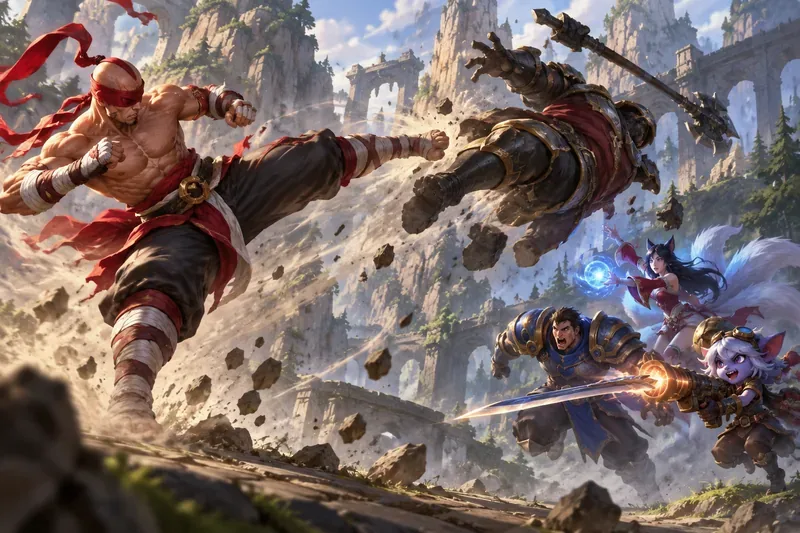
Lee Sin has a straightforward goal—reach a target, deal damage, and use the kick well—but the route matters. Q accuracy determines whether he can take the direct follow-up. Ward placement, movement, timing, energy management, and target selection affect whether he escapes, commits, or protects an ally. The result is a champion whose impact can change sharply with the player’s execution.
That is one reason Lee Sin is a compelling pro-play jungler. Opponents must account for the possibility of a flank or displacement, while spectators can usually understand the payoff when a player threads a difficult route into a clean kick. A highlight is not the entire value of the pick: even the threat of that angle can force carries to stand farther back or use defensive tools early.
Pick and ban rates depend on the patch, region, event format, and date. As one bounded example, Games of Legends lists Lee Sin in the LCK 2026 Rounds 1–2 with 37 picks and 35 bans. Its page reports 66.7% presence by series and a 51.4% win rate across those 37 picks. This is an LCK sample from that stage of the season; it is not a global rate, a Worlds statistic, or proof that Lee Sin is always the best choice.
| Sample | Picks | Bans | Presence by series | Win rate when picked |
|---|---|---|---|---|
| LCK 2026 Rounds 1–2 | 37 | 35 | 66.7% | 51.4% (19 wins, 18 losses) |
The distinction matters: pick/ban presence tells you that teams considered a champion in drafts, while win rate describes results in games where they picked him. Neither statistic explains the whole reason. Lee Sin can be contested because his kit threatens multiple roles in a fight, even when his win rate is close to even.
Lee Sin’s strengths come with real constraints. Q is a skillshot, and missing it removes that direct follow-up dash. His early pressure is less useful when nearby lanes cannot support a play. If he spends movement tools to dive too far, the enemy team can punish him before his allies arrive. Against strong peel or reliable crowd control, reaching a back-line target can be difficult.
That means teams have to judge the draft rather than pick him for reputation alone. A composition with follow-up damage, lane control, and clear targets can make his engages count. A team that needs a reliable front line or a late-game damage source may prefer a different jungler. His best value is often utility and tempo: opening the map, forcing a response, and using Dragon’s Rage to turn a small advantage into a decisive moment.
Lee Sin remains popular in League of Legends pro play because he combines immediate threat with flexibility. He can pressure early, approach fights from unexpected angles, protect an ally, or displace an opponent. Those options reward player mastery and give coaches a meaningful draft tool. His popularity will rise and fall with balance changes and the surrounding meta, but the kit keeps offering teams a way to make individual execution matter.
Enable PUBG’s network statistics HUD to monitor ping and packet loss in a match. See where to find it, what the numbers mean, and what they cannot diagnose.
Learn how to import VALORANT crosshair codes, compare presets with manual settings and spectator copy, and fix common import issues.
Choose Dota 2 minimap size, hero icons, team colors, and background settings by readability, fewer misclicks, and clear results on your own display.
Fix Fortnite texture pop-in on PC with official steps for GPU drivers, file verification, DirectX 12, high-resolution textures, VRAM, SSDs, and stutter.
Learn what Heroes of the Storm minimap size and position options are verified, improve readability, and choose camera-click controls that suit you.
Set Super Smash Bros. Ultimate Quickplay to prefer hazards-off stages. Follow the Preferred Rules menu steps and learn why matchmaking may not always honor them.
Enable Server Latency and Packet Loss in Warzone to monitor connection quality, read the overlay, and use recurring spikes to guide troubleshooting.
Learn how to carry from mid lane in League of Legends by setting up waves, choosing safe roam windows, reading side lanes, and converting pressure into objectives.
Fix Minecraft Evoker spell problems with a safe vanilla test, version checks, log review, and a step-by-step way to isolate mod or datapack conflicts.
Fix PUBG stuck on Initializing on Steam with a focused checklist for PC service notices, launch options, game files, downloads, and connection issues.








