Home
» ⚽ Football
»
The Next Messi and Ronaldo? What World Cup 2026 Revealed
The Next Messi and Ronaldo? What World Cup 2026 Revealed
Short answer:Kylian Mbappé came closest to the “next Messi and Ronaldo” label at the 2026 World Cup, leading the tournament with 10 goals. But the competition did not produce a single player who inherited both legends’ influence. Jude Bellingham and Erling Haaland also delivered seven-goal campaigns, while Spain’s title showed how a gifted generation can rise through a strong team rather than one superstar.
The original question was framed as a forecast. Now that the tournament is over, its results offer a clearer answer: Mbappé is the leading individual candidate, but “the next Messi or Ronaldo” remains a debate about a career, not one summer.
A direct forward can change a match in seconds; becoming an era-defining star takes sustained success.
What the 2026 World Cup actually revealed
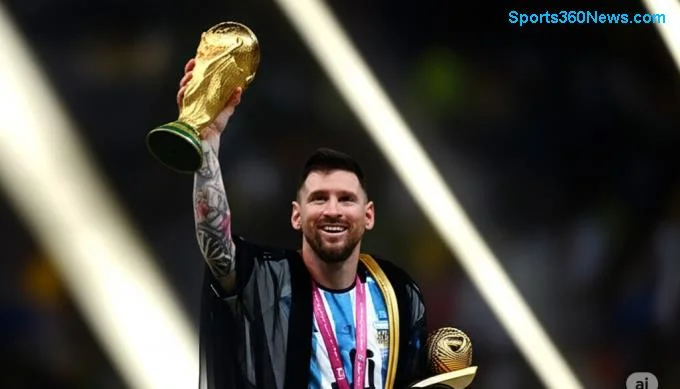
Spain won the title by defeating Argentina 1–0 after extra time in the final on July 19, 2026, at New York New Jersey Stadium in East Rutherford, New Jersey. That ending mattered to the succession question: Lionel Messi was still on the pitch in the final, and he finished the tournament with the Silver Ball and the Silver Boot. The familiar standard was not suddenly vacant.
FIFA’s awards also resist the idea that one young attacker simply took over. Spain midfielder Rodri won the Golden Ball as the tournament’s best player; Mbappé claimed the Golden Boot and Bronze Ball; and Spain defender Pau Cubarsí received the Young Player Award. The standout stories came from different positions and different kinds of influence. FIFA’s final report and official awards list capture that broader picture.
The leading candidates after the tournament
Player
2026 World Cup evidence
What it says about the comparison
Kylian Mbappé
10 goals; Golden Boot and Bronze Ball
The clearest successor candidate as a global scoring star
Lionel Messi
8 goals; Silver Boot and Silver Ball
Still an elite benchmark during the tournament
Jude Bellingham
7 goals; Bronze Boot
A midfielder with unusually high scoring impact
Erling Haaland
7 goals; Norway reached the quarter-finals
A proven finisher who gave Norway a historic run
Pau Cubarsí
FIFA Young Player Award
A reminder that the next generation includes defenders
Mbappé is the closest answer for goals and star power
Mbappé’s 10 goals made him the tournament’s top scorer. Winning the Golden Boot at a World Cup is a stronger answer to “who can dominate the biggest stage?” than a pre-tournament projection. His Bronze Ball recognition added an all-around performance award to the scoring record. France reached the semifinals, where Spain ended its campaign, so Mbappé did not leave with the trophy—but his individual case was the most convincing among the younger attacking stars. FIFA’s tournament goal summary records the final scoring totals.
A midfielder can shape a tournament through control, movement, and timely runs as much as through goals.
Bellingham and Haaland made the race wider
Bellingham scored seven times and won the Bronze Boot, putting a midfielder among the tournament’s leading scorers. His profile differs from Messi’s close-control playmaking and Ronaldo’s penalty-box scoring, but that is precisely why the “next Messi and Ronaldo” question has no simple one-player answer. Bellingham can influence games from deeper positions and still arrive in scoring areas.
Haaland also scored seven goals, giving Norway a potent focal point in its return to the tournament. Norway’s run included a 2–1 win over Brazil in the Round of 16 before its quarter-final exit. Those results turned the old caveat about Norway qualifying into a real World Cup story. Haaland’s output makes him a major name in the next generation, though a strong tournament alone cannot establish a legacy comparable to Messi’s or Ronaldo’s.
Finishing under pressure is one part of a superstar’s impact; consistency across tournaments is another.
Spain’s young stars point to a team-built future
Spain’s victory was not a one-player coronation. Cubarsí earned the Young Player Award for his performances in defense, while Lamine Yamal was part of the young core that reached the final and lifted the trophy. Their routes to recognition are different from the goal-scoring paths associated with Messi and Ronaldo. The tournament’s best-player award going to Rodri reinforces the same point: leadership and control can define a champion as clearly as highlight-reel finishing. FIFA’s Young Player Award announcement details Cubarsí’s honor.
Which pre-tournament predictions held up?
The forecast that Mbappé would be ready to lead a contender proved sound at an individual level: he won the scoring race and helped France reach the semifinals. The prediction that Haaland would be Norway’s talisman also held up; his seven goals powered the team’s run. Bellingham’s importance to England was reflected in his seven goals and Bronze Boot.
The expectation that Vinícius Júnior would lead Brazil toward a sixth title did not come true in 2026. Brazil were eliminated by Norway in the Round of 16, a result that underlines how individual quality cannot guarantee a deep tournament run. The outcome is a useful correction to the earlier article’s confident forecast, not a verdict on Vinícius’s long-term ability. FIFA’s review of Brazil’s exit describes the defeat.
Messi and Ronaldo are not interchangeable roles
Messi and Cristiano Ronaldo shaped football through different strengths, records, and long careers. Messi’s eight goals and Silver Ball in 2026 show that he remained a decisive reference point even as new stars emerged. Ronaldo also appeared at the tournament; after Portugal’s Round of 16 exit, he said he would not return for a seventh World Cup. FIFA’s report on Ronaldo’s World Cup farewell documents that announcement.
That is why calling any one player “the next Messi and Ronaldo” sets an impossible standard. The phrase combines Messi’s creative influence and sustained production with Ronaldo’s scoring, athleticism, and longevity. A player can resemble one part of that legacy without replicating the whole career.
So, who is the next Messi or Ronaldo?
If the question is who made the strongest 2026 World Cup case as a global attacking superstar, the answer is Mbappé. If it is who else could define the next era, Bellingham and Haaland earned serious consideration, while Yamal and Cubarsí represent Spain’s broader generation. Rodri’s Golden Ball and Spain’s team success show that football’s next defining figure may not fit a single template.
The 2026 World Cup did not crown a replacement. It showed that the next generation is already producing its own stars—and that the most useful answer to the next Messi and Ronaldo question may be several players, each building a different legacy.