Home
» 🎮 Esports
»
Xbox Growth in 2026: Is It Really Dominating PlayStation and Nintendo?
Xbox Growth in 2026: Is It Really Dominating PlayStation and Nintendo?
Xbox Growth in 2026: Is It Really Dominating PlayStation and Nintendo?
Short answer: The official numbers available in 2026 do not show Xbox dominating PlayStation and Nintendo. They point to a more mixed story: Game Pass showed an early recovery, Xbox reaches players across several device types, and Microsoft is reworking its gaming business. At the same time, Xbox content and services revenue fell year over year in the latest reported quarter. The best description of Xbox growth in 2026 is “a platform in reset with some positive signs,” not a verified console-market takeover.
This comparison uses company-reported information available as of October 16, 2026. The periods and metrics differ, so the figures below should not be treated as a direct market-share ranking.
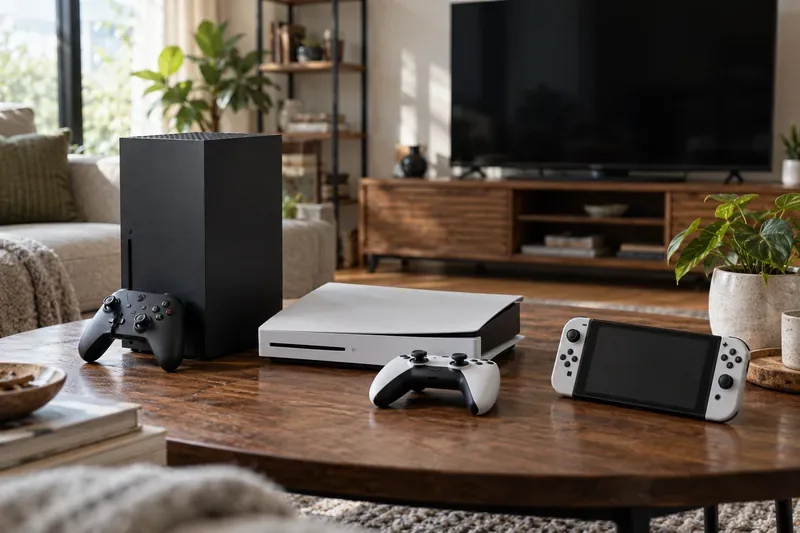
Console platforms span living-room and handheld form factors; the devices shown are illustrative, not evidence of shipment totals.
What the latest 2026 data actually says
Microsoft FY26 Q4 earnings release does not provide an Xbox console shipment total alongside the reported revenue figures. Its reported “Xbox content and services” category includes first- and third-party games, Game Pass and other subscriptions, cloud gaming, advertising, and related services. It is not a count of consoles sold or a stand-alone Game Pass subscriber tally.
Platform
Official figure
What it tells us
Xbox
Xbox content and services revenue decreased 10% year over year in Microsoft FY26 Q4 earnings release, for the quarter ended June 30, 2026.
A real revenue decline in this broad category; it does not reveal console unit sales or market share.
PlayStation
Sony FY26 Q1 investor supplement reports 1.6 million PS5 hardware units sold in FY26 Q1, the quarter ended June 30, 2026, and 125 million PlayStation monthly active users at quarter end. It also reports 66.1 million PS4/PS5 full-game software units for the quarter.
A substantial active platform and a clear quarterly hardware and software snapshot. Sony defines hardware units on a sell-in basis.
Nintendo
Nintendo’s official sales data lists cumulative Switch 2 sales of 23.68 million hardware units and 58.17 million software units through June 30, 2026.
A strong installed base for Nintendo’s new system, measured cumulatively since launch—not a single-quarter sales figure.
Microsoft FY26 Q4 earnings release records the 10% Xbox content-and-services decline; Sony FY26 Q1 investor supplement supplies Sony’s FY26 Q1 figures; Nintendo’s official sales data lists Switch 2 totals through June 30. Those reporting windows and definitions are different, but none supports the old article’s claim that Xbox had 18.5 million 2026 shipments and a 32% market share.
The previous comparison also gave Game Pass 40 million subscribers, 35% annual growth, and a 44% jump in Xbox gaming revenue. Those figures are not established by the official 2026 sources cited here. Microsoft’s June update said Game Pass had started growing again after more than eight months of decline, but it did not publish a subscriber total or growth rate. Treating “40 million” or “+35%” as confirmed 2026 data would overstate what the company has disclosed.
Where Xbox does have a credible growth story
Game Pass has a recovery signal, not a public subscriber count
In Xbox’s June 2026 update, Xbox leaders said the service had begun growing again after a period of decline. That is meaningful evidence of improving momentum, but it is not enough to calculate how many subscribers returned, how quickly the service grew, or whether it surpassed PlayStation Plus and Nintendo Switch Online combined. Microsoft’s public update supplied no comparable subscriber totals for those services.
For readers comparing Xbox Game Pass growth with rival subscriptions, the useful distinction is between direction and scale: Microsoft described the direction as positive; the exact scale remains undisclosed in that update. Any article assigning a precise 2026 subscriber figure should point to a company filing or announcement that actually states it.
Xbox is measuring reach beyond console sales
The same June update said more than one billion players choose to play Xbox and its games each year, accounting for 72 billion hours across console, PC, mobile, and streaming. Xbox noted that the count excludes much of China and some other properties. This is the strongest official headline figure for the breadth of the ecosystem—but it is an annual reach measure spanning multiple platforms, not a count of Xbox consoles, Game Pass subscribers, or monthly active users.
Xbox’s 2026 player-reach statement covers activity across console, PC, mobile, and streaming; it is not a console-sales comparison.
That difference matters when comparing Xbox with Sony’s 125 million monthly active users. One is an annual audience statement covering Xbox and its games across several device categories; the other is Sony’s estimate of unique accounts active online on PlayStation during the final month of its quarter. The numbers answer different questions and should not be placed side by side as if they were equivalent.
Why Microsoft’s reset matters to the comparison
In Xbox leadership’s July 2026 reset memo, Xbox leadership said the business was not healthy, that the console generation began with a smaller install base and higher cost structure, and that Game Pass, multiplatform publishing, and a broader content portfolio had not grown as quickly as expected. The memo also said the core business had weakened. That candor is difficult to square with claims that Xbox had already pulled decisively ahead of its rivals.
It does not mean Xbox lacks valuable franchises or a path to growth. Microsoft’s strategy is to reach more players through services, PC, cloud, and games released on more than one platform. But a strategy and a large audience are not the same as proof of higher hardware sales, revenue growth, or market share. The company’s own reported numbers should remain the test.
Cloud gaming expands access, with new limits to consider
Cloud gaming can make Xbox titles available on supported devices without requiring every player to buy a current-generation console. However, Xbox’s September cloud-gaming announcement says that beginning in November 2026, Game Pass plans will include monthly cloud-gaming allowances: 15 hours for Ultimate, 10 for Premium, and 5 for Essential. Xbox said it expects the change to affect 4% of subscribers; additional hours will be available to purchase, with availability varying by market. Pricing and further details were still to come in the announcement.
A generic mobile-play scene illustrates cloud gaming’s convenience; it is not a screenshot of an Xbox service or interface.
For a player who streams occasionally, this may have little impact. For someone who uses cloud gaming for long sessions, the new allowance is relevant to the value calculation. It is a practical caveat to the idea that cloud access alone guarantees an advantage over PlayStation or Nintendo.
Xbox vs. PlayStation and Nintendo: the fair 2026 takeaway
Xbox has a broad, cross-device strategy and a reported Game Pass recovery signal, but Microsoft’s FY26 Q4 content-and-services revenue declined 10% year over year.
PlayStation remains a large networked platform, with Sony reporting 125 million monthly active users and 1.6 million PS5 units sold in FY26 Q1.
Nintendo has a substantial Switch 2 base, with 23.68 million hardware units sold cumulatively through June 30, 2026.
These measures cannot produce a clean league table, and they do not validate the old shipment or market-share percentages. They do show that each company has a different source of strength: subscription and cross-device reach for Xbox, a large online platform for PlayStation, and a strong hybrid system ecosystem for Nintendo.
Bottom line: recovery is not the same as dominance
The evidence supports a more careful headline than “Xbox is dominating.” Xbox growth in 2026 is real in the sense that the company is pursuing wider reach and reported that Game Pass began recovering. Yet its most recent reported Xbox content-and-services revenue was down, and Microsoft described the business as needing a reset. Sony and Nintendo also report substantial platform activity and hardware sales.
If you are choosing where to play, focus on the games you want, the people you play with, device preferences, and the actual subscription terms in your market. If you are evaluating the console race, wait for comparable, company-reported measures rather than relying on unsupported shipment totals or market-share tables.
Frequently asked questions
Did Xbox sell 18.5 million consoles in 2026?
The official 2026 company sources reviewed for this article do not substantiate that figure. Microsoft’s cited earnings materials report revenue growth rates for Xbox content and services, not an 18.5 million Xbox shipment total.
Did Game Pass reach 40 million subscribers in 2026?
The June 2026 Xbox update said Game Pass had started growing again but did not provide a subscriber number. A 40 million total should not be presented as a verified 2026 figure without a newer primary source.
Is Xbox beating PlayStation and Nintendo?
Not on the evidence in the latest company disclosures. Xbox has cross-platform reach and a subscription recovery signal, while PlayStation and Nintendo report large platform audiences and hardware bases. The available figures are not like-for-like enough to declare a winner.