Home
» 🎮 Esports
»
Ultimate Guide to League of Legends Tower Diving Without Dying
Ultimate Guide to League of Legends Tower Diving Without Dying
Ultimate Guide to League of Legends Tower Diving Without Dying
A League of Legends tower dive is an attempt to finish an enemy champion while fighting inside their turret’s range. No dive is death-proof. You lower the risk by setting up the minion wave, checking the target’s escape tools and the enemy jungler, assigning who takes turret fire, and choosing an exit before anyone commits. If the kill will not create a useful advantage, take the safer play: crash the wave, pressure the turret, or reset.
This guide covers dives on Summoner’s Rift. As of October 16, 2026, Riot’s latest published balance notes are Patch 26.20, dated October 6. Champion damage and cooldowns can change, so treat the decisions below as a framework rather than a fixed damage script.
What makes a tower dive worth the risk?
A good LoL tower dive has both a kill plan and an exit plan. Before you enter range, make sure your team can deal enough damage before the defender escapes, the arriving wave gives you time to work, and the enemy team cannot easily turn the play around. The reward matters too: a kill that leads to a plate, an objective, or a safe recall is more valuable than a risky chase with no follow-up.
Wave: An allied wave is reaching the turret, giving your team room to stage the play. Minions can draw turret attacks, but they do not make a dive safe by themselves.
Target: The defender is in range of your team’s available damage, and you have accounted for their dash, crowd control, shield, ultimate, or summoner spell.
Information: You know where the enemy jungler and nearby laners are, or you have a clear route to disengage if they appear.
Team tools: Someone can start the play, someone can follow up, and the group has enough health and cooldowns to leave afterward.
Payoff: The dive creates pressure you can convert instead of leaving your team low and exposed.
How turret aggro changes the plan
When you damage an enemy champion under their turret, plan as though the turret may turn its fire onto you. Watch the in-game targeting cue and projectile rather than counting a memorized number of shots. The incoming threat depends on the structure, your champion’s defenses and abilities, and the game’s current balance. A minion wave buys time; it is not a shield that guarantees the turret will ignore you.
Assign the first contact before the dive. A durable champion with a defensive tool or a reliable exit can often take the opening risk, but “tank” does not automatically mean “safe.” A low-health frontliner with key abilities down may be a worse first diver than a healthier teammate with a shield, damage reduction, or escape ready. Do not let the most fragile teammate accidentally take the first turret shot.
Riot’s 2026 gameplay preview outlined turret-pushing rule changes, while later patches continue to tune champions. That is another reason old “shots to kill” tables and blanket health thresholds can mislead. Use your current game state and champion kit instead of treating a static chart as a guarantee.
Four steps to execute a safer tower dive
1. Stage behind the wave and check the map
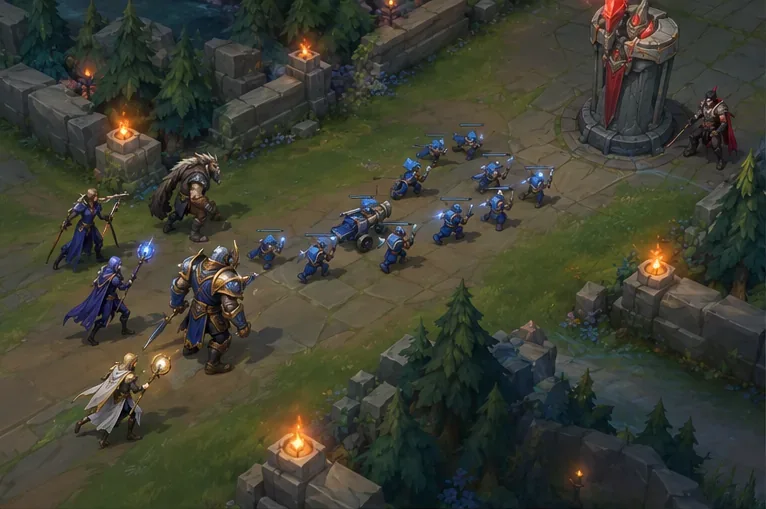
Let your allied minions reach the turret before your team walks into its range. While the wave advances, check river and jungle entrances, track missing opponents, and ping the intended target. If the enemy jungler could arrive before you finish and you cannot see or ward the route, delay the play. Do not begin a dive just because the defender looks low.
A large allied wave gives your team room to set up before entering turret range.
2. Confirm the kill window, not just the health bar
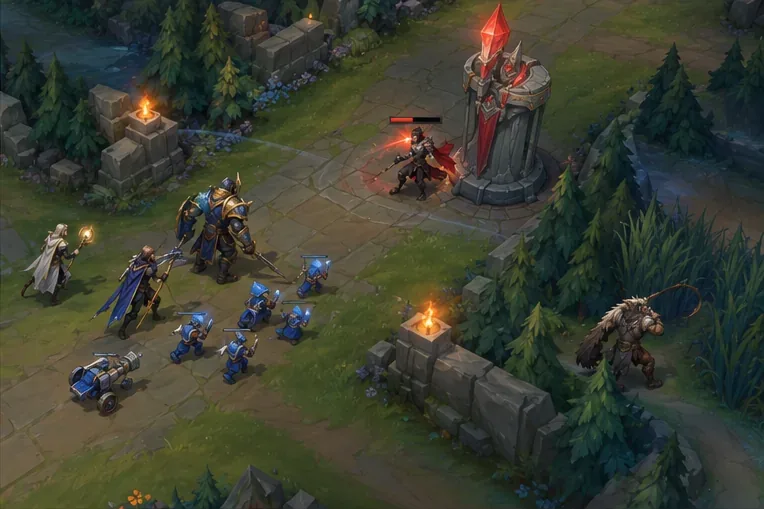
Check whether the target still has a dash, crowd-control ability, shield, ultimate, or summoner spell that can break your combo. Compare the target’s remaining health with the damage your team can deliver right now, including any defensive response from the enemy. There is no universal “under 40 percent” rule: champion levels, items, cooldowns, and damage vary. If one missed skillshot means the target survives while your team stays under turret, do not commit.
Pause at the edge to confirm the target’s escape options and check for a countergank.
3. Enter in a planned order and control aggro
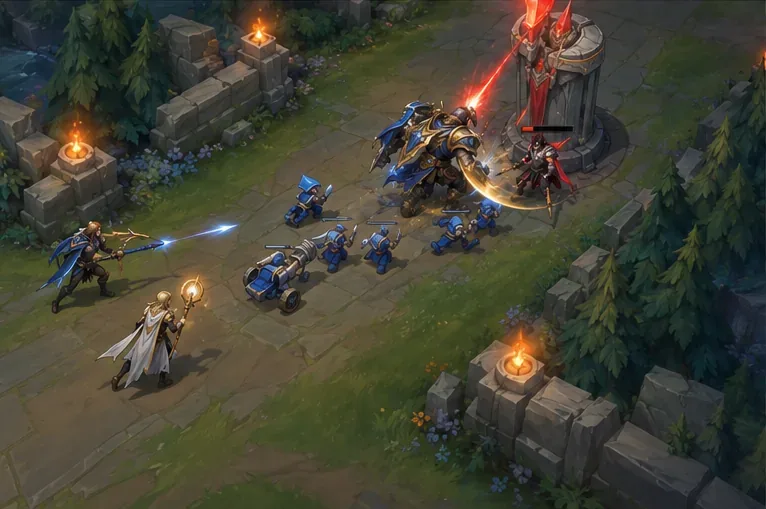
Call who goes first, who lands crowd control, and who follows with damage. The first diver should be prepared to draw turret fire and should have a way to survive or leave; teammates should be close enough to finish the target without piling into the same danger. Use crowd control to prevent the defender from escaping, but avoid spending every tool before you know whether the target can answer. If the turret switches to you, communicate it and start the agreed handoff or exit immediately.
Choose the first contact in advance so the most vulnerable teammate does not take turret aggro by accident.
4. Leave as soon as the window closes
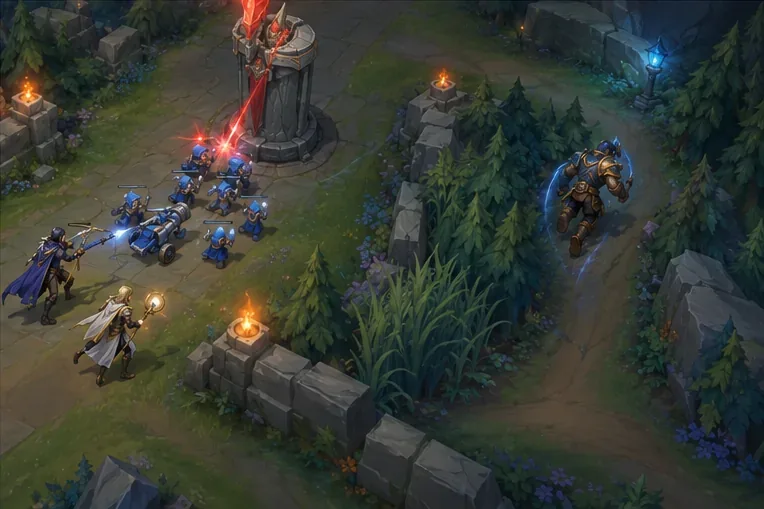
Before the first ability is used, choose a route out that does not send the team deeper into enemy territory. Once the kill is secured, stop chasing and turn toward that route; if the target escapes or a second enemy arrives, abandon the dive. Keep a dash, Flash, shield, or other defensive tool for the exit when possible. A clean retreat preserves the advantage you earned and prevents a one-for-one trade from turning into a lost wave or objective.
Use the exit route you agreed on before the dive, and stop pursuing when the kill window ends.
Common tower-diving mistakes
Diving by health percentage alone: A low target can still escape, stun you, or survive your burst. Check abilities and your actual damage first.
Ignoring the missing jungler: If nearby enemies are unaccounted for, assume they may punish the dive.
Starting without the wave: Walking in early can make your team take turret pressure before the minions arrive.
Letting aggro happen by accident: Agree on the first diver and watch the turret’s target cue.
Staying after the kill: Do not spend extra time attacking the turret or chasing a second target while low and exposed.
Saving no exit tool: If every mobility or defensive ability is used to enter, the team may have no answer when the turret or a countergank turns the fight.
Practice turret dives without risking ranked LP
Riot’s support page says the Practice Tool unlocks at level 9. Use it to learn your champion’s range, turret warning cue, and escape timing under repeatable conditions. Try the same approach with a minion wave, then repeat after changing one variable, such as starting health or which defensive cooldown is available. The goal is to notice how quickly your health falls and how much time your exit takes—not to memorize a universal number of shots.
Then rehearse the communication with a duo in a custom or normal match: name the target, call the first diver, and ping the exit. Review the replay afterward and ask four questions: Was the wave ready? Did you know where the enemy jungler was? Who took turret aggro? Did everyone leave when the kill window ended?
There is no safe universal shot count. Turret type, champion defenses, shields, level, and the current patch all affect the outcome. Use the targeting cue and your health bar during the play, then practice your own champion in the Practice Tool.
Do minions make a dive safe?
No. An allied wave can absorb turret attention and create a better timing window, but the turret can still become a threat when you attack a champion under it. Keep an aggro plan and an exit route.
Can you tower dive alone?
Sometimes, but solo dives leave fewer ways to control crowd control, turret fire, and counterganks. Attempt one only when your champion’s kit gives you a clear kill and escape window; otherwise, use the wave to pressure the turret or reset.
The rule to remember
The safest League of Legends tower dive is the one your team can start together and end together. Wait for the wave, confirm the target’s cooldowns and nearby threats, assign first contact, then leave the moment the advantage is secured or the plan breaks. A dive is a calculated play, not a promise that the turret will spare you.