Home
» 🎮 Esports
»
Master League of Legends Itemization: Tank vs. Bruiser Builds for Better Matchups
Master League of Legends Itemization: Tank vs. Bruiser Builds for Better Matchups
Master League of Legends Itemization: Tank vs. Bruiser Builds for Better Matchups
Choose a tank build when your champion needs to start fights, absorb pressure, or protect teammates. Choose a bruiser build when your champion needs damage to win extended trades or threaten the backline while staying alive. The best League of Legends itemization is matchup-specific: start with your champion’s kit and teamfight job, then buy the defense or damage that answers the game in front of you.
This is a decision framework, not a fixed pro-player shopping list. Champion builds change with patches, drafts, lane matchups, and team compositions. The examples below reflect the Summoner’s Rift item data in Riot’s Data Dragon 16.20.1 and the game’s Patch 26.20 notes, released October 7, 2026. Check the client tooltip before buying if the game has since updated.
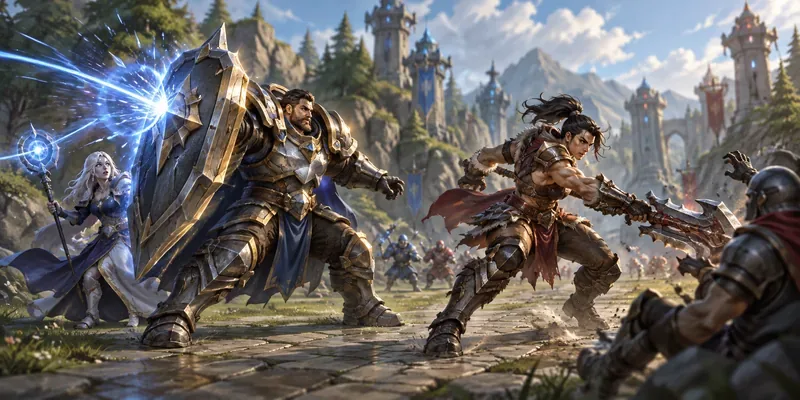
A tank holds space and protects allies; a bruiser adds pressure while remaining durable enough to keep fighting.
Tank vs. bruiser: the job decides the build
“Tank” and “bruiser” describe what a champion contributes, not two rigid item sets. Ornn and Maokai commonly serve as front-line tanks because their control and engage help a team take space. Darius, Sett, and Aatrox often fill bruiser roles by combining damage with tools that help them stay in a fight. Some champions can shift their balance depending on the draft, but a role change does not erase their ability ratios or item synergies.
Build direction
What it needs
Typical team job
Main risk
Tank
Health, the relevant resistance, and useful ability haste or mobility
Engage, peel, occupy space, or soak cooldowns
Surviving without creating enough pressure or control
Bruiser
Champion-scaling damage plus enough health, sustain, or defense to stay active
Duel, dive, side-lane pressure, or sustained damage
Buying damage you cannot safely deliver—or defense that leaves you harmless
Health increases your buffer against physical and magic damage, while armor is aimed at physical damage and magic resistance at magic damage. Resistances become more valuable when they match the damage actually hitting you; health helps against mixed threats and true damage. Neither health nor resistances replace the other in every game, so avoid a universal “health first” or “armor first” rule.
How to build a tank without wasting defensive gold
A tank’s item slots should help it reach the fight and perform its control or protection job. If you cannot get close enough to engage, pure durability will not solve the problem. If you can reach the enemy but are removed by one damage type, buy defense that directly addresses that threat. Ability haste, movement speed, and tenacity can also matter when they let your champion use key crowd control or reposition more reliably.
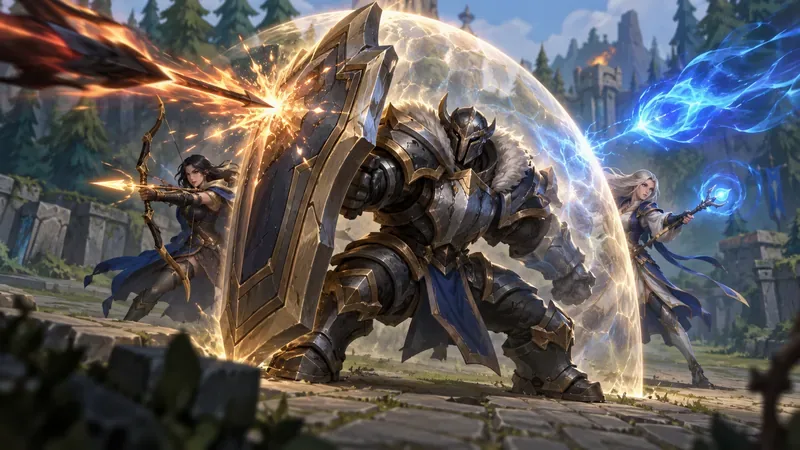
Tank defenses work best when they let you stand between incoming threats and your damage dealers.
Current tank-item examples
Heartsteel is a health-focused choice with a champion interaction that can add health over time. It makes more sense when you can stay near opponents and take repeated opportunities to trigger it; do not choose it automatically if an early resistance is needed to survive lane.
Sunfire Aegis combines health and armor with nearby damage after you take or deal damage. It fits champions that can remain close to opponents, but the passive is less useful if your job is to stay at range or you cannot maintain contact.
Thornmail supplies health and armor and applies Wounds after an enemy champion hits you with an attack. It can answer relevant healing, but buying it just because an opponent has any sustain may delay a more useful defensive item.
Kaenic Rookern provides health and magic resistance, with a magic shield that becomes available after you have avoided magic damage for a period. Consider it when enemy magic damage is a meaningful threat; repeated incoming magic damage affects how reliably you can use that protection.
These are examples of item functions, not mandatory first buys. Match the first defensive component to the lane opponent and the damage source most likely to punish your next play.
Bruiser itemization: keep damage and durability working together
A bruiser needs enough damage to make an opponent respect its threat. After that, extra survivability is valuable only if it helps the champion stay in range, complete another ability rotation, or survive long enough for healing and shields to matter. Build around the champion’s actual scaling: many bruisers use attack damage, but ability power bruisers should not force an AD item path just because the role is called “bruiser.”
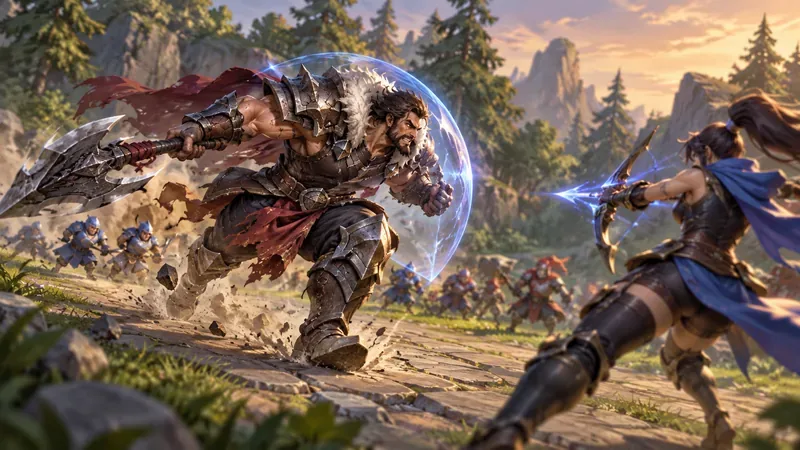
A bruiser’s protection should buy time to deal damage, not replace the damage that makes the champion a threat.
Bruiser items and the situations they answer
Trinity Force pairs attack damage, attack speed, health, and ability haste with Spellblade and movement speed on attacks. It can suit champions that weave attacks between abilities and benefit from chasing or sticking to a target.
Black Cleaver offers attack damage, health, and ability haste while reducing an enemy’s armor through repeated physical damage. Its value rises against armor-heavy opponents when your champion—or your physical-damage teammates—can apply the effect consistently.
Sterak’s Gage adds health and tenacity and grants a protective shield when incoming damage would push you below its threshold. It is a survival option for champions that enter the middle of fights; its shield does not make an otherwise poor engage safe.
Spirit Visage combines health and magic resistance with increased healing and shielding received. It is most relevant when the matchup includes magic damage and your champion’s own sustain or allied shielding can use the added effect.
Do not copy all four items into one build. Pick items whose passives fit your champion’s pattern, then reserve a slot for the problem the enemy team is creating.
Counterbuild by damage, healing, and teamfight role
Read the threats that can reach you and your carry; the correct resistance depends on who can actually deal damage in the fight.
What the game is asking
Tank response
Bruiser response
Physical attacks are the main threat
Prioritize armor and health; use attack-focused protection when it fits the enemy lineup.
Keep your damage core, then add armor or health if it lets you stay in range.
Magic damage is deciding fights
Buy health and magic resistance; compare options such as Kaenic Rookern or Spirit Visage by their passives.
Add magic resistance or a shield-oriented option without dropping below a useful damage threshold.
A high-healing champion is surviving your trades
Consider Thornmail when you can apply its Wounds effect reliably by being attacked.
Coordinate anti-heal with your team and choose an effect your champion can actually apply.
The enemy frontline is stacking armor
Use crowd control and protect teammates who can damage the frontline.
Consider Black Cleaver when your physical damage can stack its armor reduction.
You need to pressure a side lane
Buy only the wave clear or mobility that your champion needs to hold the lane safely.
Favor dueling and sticking power if the matchup lets you threaten a tower without losing the next objective.
A practical four-question buy check
Who is dealing damage to me? Check damage type and who can reach you, rather than reacting only to the scoreboard’s largest total.
What must I do next? Start a fight, peel for a carry, hold a side lane, or reach a backline target? Let that job determine whether you need durability, access, damage, or wave control.
Does my champion use this item’s passive? A strong tooltip is not useful if your kit rarely triggers it or you cannot stay close enough to benefit.
What is the best next component? You do not need to finish a full item before responding to a lane threat. Buy the useful component now, then reassess after the next recall or major fight.
For more reliable League of Legends itemization, compare your build with the in-client shop and the champion’s current ability scaling. Patch changes can alter item stats, costs, and champion priorities; a static build copied from another patch—or even another game in the same patch—may not fit your lane.