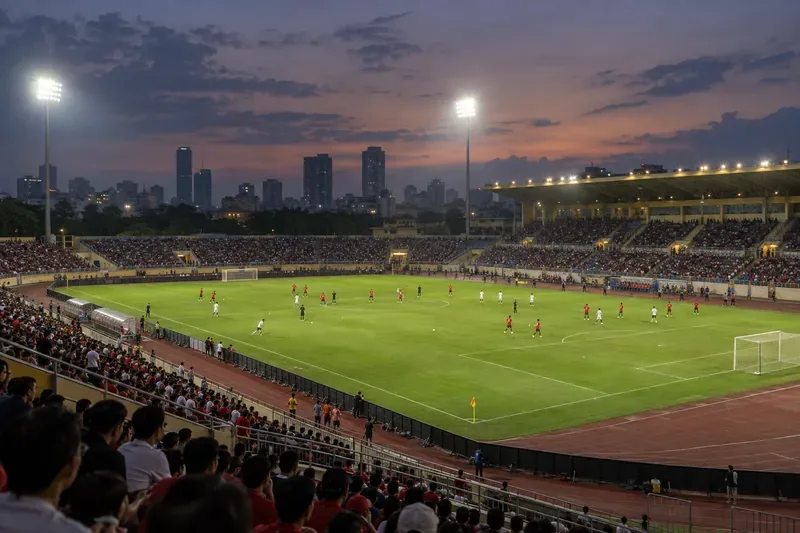
Get ready for a football spectacle unlike any other! The FIFA World Cup 2026 is set to make history as the first tournament to be hosted by not one, not two, but three nations. This unprecedented event promises to deliver a truly global celebration of the beautiful game. So, where exactly will the world's biggest sporting event unfold? Let's dive into the details. ✨
The Historic Co-Hosts: USA, Canada, and Mexico
For the first time ever, the World Cup will be spread across an entire continent. The successful "United 2026" bid saw North America win the rights to host, with matches scheduled to take place in the United States, Canada, and Mexico. This tripartite hosting arrangement is a direct response to the expanded format of the tournament, which will now feature an incredible 48 teams.
This expansion means more matches, more teams, and naturally, a greater need for world-class stadiums and infrastructure. The three co-hosts are well-equipped to meet this demand, boasting state-of-the-art facilities and passionate football fan bases.
A Closer Look at Each Host Nation
Let's explore what each of the three co-hosting nations brings to the table for the 2026 World Cup.
1. United States 🇺🇸: The Lion's Share
The USA will host the majority of the matches, including the final. With its vast size and extensive network of modern stadiums, many of which are NFL venues, the U.S. is uniquely positioned to handle the logistical scale of an expanded World Cup. Football (soccer) continues to grow exponentially in popularity across the country, ensuring enthusiastic crowds.
- Key Facts: The USA previously hosted the World Cup in 1994, which remains the highest-attended tournament in history. This experience, combined with significant infrastructure, makes it a powerhouse host.
- Anticipated Host Cities: While the final list is 11 cities, some prominent venues include MetLife Stadium (New York/New Jersey), SoFi Stadium (Los Angeles), AT&T Stadium (Dallas), and Mercedes-Benz Stadium (Atlanta).
2. Canada 🇨🇦: A Rising Football Nation
Canada will host its first-ever men's FIFA World Cup matches, having previously hosted the highly successful FIFA Women's World Cup in 2015. The country's football scene has been on an upward trajectory, highlighted by the men's national team's qualification for the 2022 World Cup.
- Key Facts: This marks a significant milestone for Canadian football, showcasing the sport's growth and passion in the country.
- Anticipated Host Cities: The designated Canadian host cities are Vancouver (BC Place) and Toronto (BMO Field), both vibrant urban centers with strong sporting traditions.
![A stadium in one of the World Cup 2026 host cities, ready for matches.]()
3. Mexico 🇲🇽: A Legacy of Football History
Mexico will etch its name in history as the first nation to host the men's World Cup three times! They previously welcomed the tournament in 1970 and 1986, delivering iconic moments like Pelé's triumph and Maradona's "Hand of God" and "Goal of the Century." The passion for football in Mexico is unparalleled, promising an electric atmosphere.
- Key Facts: Estadio Azteca in Mexico City will become the first stadium ever to host matches in three separate World Cups. 🤩
- Anticipated Host Cities: The Mexican host cities include Mexico City (Estadio Azteca), Guadalajara (Estadio Akron), and Monterrey (Estadio BBVA), each with a rich footballing heritage.
Key Features of the World Cup 2026
The 2026 FIFA World Cup isn't just about the number of hosts; it also introduces a groundbreaking new format:
| Feature |
Details for World Cup 2026 |
| Number of Teams |
Expanded from 32 to 48 teams |
| Number of Matches |
Increased from 64 to 104 matches |
| Group Stage Format |
12 groups of four teams, with the top two and eight best third-placed teams advancing to the Round of 32. |
| Tournament Length |
Expected to be longer than previous editions to accommodate more matches. |
| Logistics |
Significant travel between host cities and countries will be a key aspect for teams and fans. |
![Football fans celebrating in a stadium, anticipating the World Cup 2026.]()
The sheer scale of this event presents unique logistical challenges, but also unparalleled opportunities for cultural exchange and economic impact across the three nations. Fans can look forward to diverse experiences, from the vibrant energy of Mexican cities to the vast landscapes and modern amenities of the USA and Canada.
Conclusion: A New Era for the World Cup
The 2026 FIFA World Cup represents a new frontier for international football. With the USA, Canada, and Mexico joining forces, fans are guaranteed an epic tournament that will push the boundaries of sports hosting. This truly integrated North American World Cup promises to be a memorable event, celebrating football on a grander scale than ever before. Get ready to witness history! 🏆