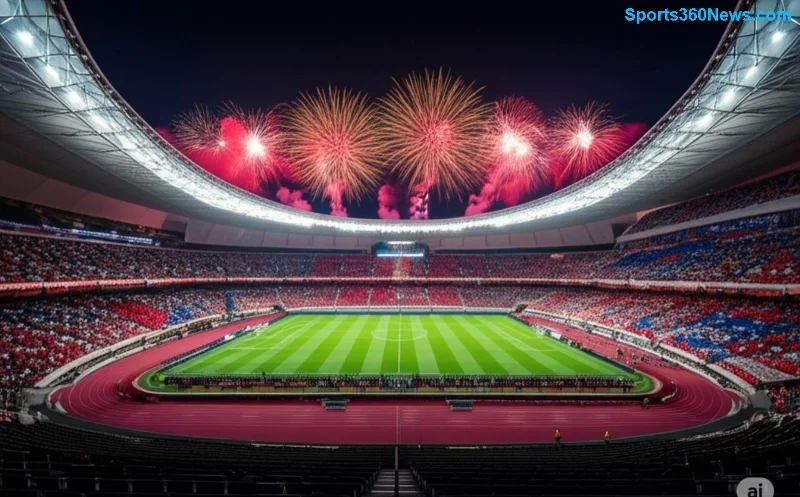
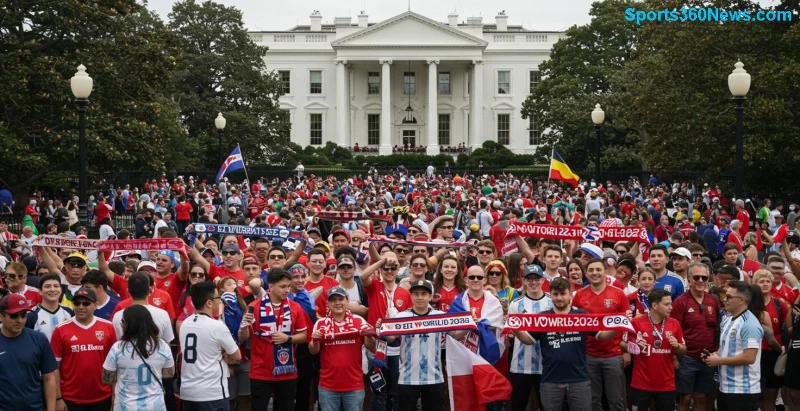
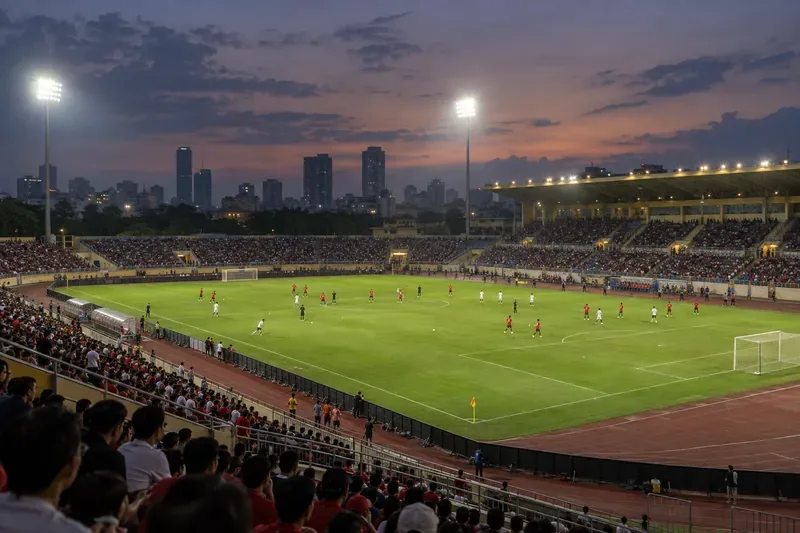
In the ever-evolving landscape of global football, the Asian region official participation slots have undergone a transformative shift. With FIFA's bold decision to expand the World Cup to 48 teams starting from 2026, Asia—represented by the Asian Football Confederation (AFC)—stands to benefit immensely. But exactly how many official participation slots does the Asian region now have after this increase in teams? This article dives deep into the details, providing clarity on the new allocation and its implications for Asian football nations.
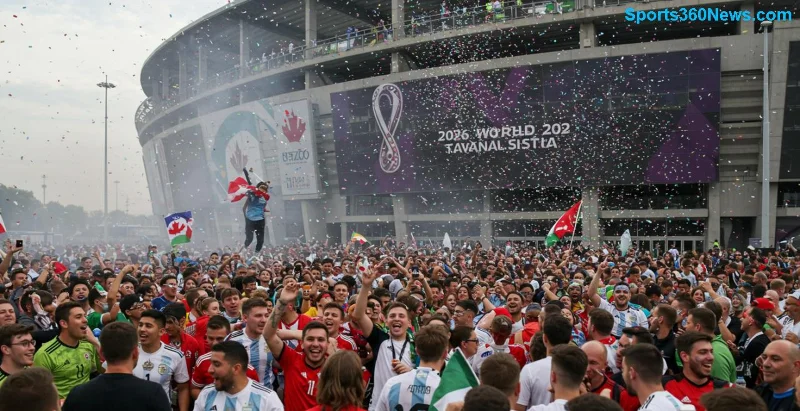
Understanding the FIFA World Cup Expansion
The FIFA World Cup has long been the pinnacle of international football, but its format was due for an upgrade. In 2017, FIFA approved an expansion from 32 to 48 teams, effective for the 2026 tournament hosted by the USA, Canada, and Mexico. This change aims to include more nations, promoting global inclusivity and growing the sport's reach.
For the Asian region, this expansion is a game-changer. Previously, AFC teams had limited direct access, often relying on inter-confederation playoffs. Now, with the total teams increased, the distribution of slots has been recalibrated to reflect each confederation's size and competitive strength.
- 🌟 Key Fact: The new format includes 12 groups of four teams, with the top two advancing directly and an additional round for third and fourth places.
- 👆 This structure ensures more official participation slots across all regions.
Total Official Slots for Asia Post-Expansion
So, to the core question: How many official participation slots does the Asian region have in total after the increase in teams? According to FIFA's latest allocation, approved in 2023, the AFC is entitled to 8.5 direct qualification slots for the 2026 World Cup.
Breaking it down:
| Confederation |
Previous Slots (32-Team Format) |
New Slots (48-Team Format) |
Increase |
| AFC (Asia) |
4.5 |
8.5 |
+4 |
| CAF (Africa) |
5 |
9.5 |
+4.5 |
| CONMEBOL (South America) |
4.5 |
6.5 |
+2 |
| UEFA (Europe) |
13 |
16 |
+3 |
| CONCACAF (North/Central America) |
3.5 |
6.5 (host +5) |
+3 |
| OFC (Oceania) |
0.5 |
1.5 |
+1 |
This table highlights Asia's significant gain. The 8.5 slots mean eight teams qualify directly, while the half-slot represents a guaranteed spot in the inter-confederation playoffs. This is a 100% increase from the previous 4.5 slots, underscoring FIFA's commitment to balancing representation.
Why 8.5? FIFA's formula considers confederation membership (AFC has 47 member associations) and performance in recent World Cups. The Asian region's consistent showings—think Japan's upsets and South Korea's semifinal run in 2002—justify this boost.
![Asian football teams celebrating World Cup qualification]()
Implications for Asian Football Nations
The expansion doesn't just add numbers; it reshapes qualification pathways. For AFC World Cup slots 2026, the process will span multiple rounds, starting with preliminary qualifiers involving over 20 teams. Top performers advance to the third round (12 teams in two groups), where the group winners secure direct spots.
Here's what this means for key Asian powerhouses:
- 🇯🇵 Japan: As consistent qualifiers, they now have a clearer path to a fifth straight appearance.
- 🇰🇷 South Korea: With stars like Son Heung-min, they're poised to capitalize on the extra slots.
- 🇸🇦 Saudi Arabia: Their 2022 upset over Argentina shows emerging talent ready to grab a spot.
- 🏆 Emerging Teams: Nations like Australia, Iran, and Uzbekistan could see breakthroughs, with the increased slots reducing cutthroat competition.
However, challenges remain. The qualification will be fiercer among mid-tier teams, demanding better infrastructure and youth development. FIFA estimates this expansion could inject billions into Asian football through broadcasting and sponsorships.
Historical Context: From Limited Access to Global Stage
Looking back, Asia's World Cup journey started modestly. In 1930, no Asian teams qualified. By 1998, only three slots were available, leading to Japan's debut. The jump to 4.5 in 2006 allowed more entries, but the 2026 expansion to 8.5 official slots is unprecedented.
For the latest updates, check FIFA's official site: FIFA World Cup 2026. As of 2024, qualification draws are set for July, with rounds kicking off in October.
Why This Matters: Boosting Asia's Football Future
The increased teams Asia football scenario isn't just about numbers—it's about inspiration. More slots mean more young athletes in countries like India, Vietnam, and Thailand dreaming big. Expect a surge in grassroots programs, with AFC investing in academies to nurture talent.
Economically, hosting more qualifiers will stimulate local economies. Imagine packed stadiums in Doha or Tokyo, buzzing with anticipation for those precious Asia World Cup qualification slots.
![Diverse Asian national teams in action during qualifiers]()
Potential Challenges and Opportunities Ahead
While the expansion is exciting, it's not without hurdles. Travel logistics across Asia's vast geography could strain smaller federations. Climate variations—from Japan's winters to the Middle East's heat—add complexity to scheduling.
Yet, opportunities abound. The extra slots could elevate the AFC Asian Cup as a stronger proving ground. Teams failing to qualify directly might still shine in playoffs, gaining valuable experience.
🔥 Pro Tip: Follow AFC's official channels for draw details and match schedules to stay ahead of the FIFA team expansion Asia wave.
Conclusion: Asia's Brighter Horizon in World Football
In summary, the Asian region now boasts 8.5 official participation slots after the World Cup's team increase—a monumental leap that promises to diversify and energize global football. This isn't just an allocation; it's a catalyst for growth, equality, and unforgettable moments on the world stage.
As qualification ramps up, keep an eye on underdogs who might steal the spotlight. Will your favorite Asian team make the cut? The journey to 2026 has just begun—stay tuned for more thrilling developments!
(Word count: 852)