Home
» ⚾ Baseball
»
2026 MLB Wild Card Series Game 3 Scenarios: Who Played, Hosted, and When
2026 MLB Wild Card Series Game 3 Scenarios: Who Played, Hosted, and When
2026 MLB Wild Card Series Game 3 Scenarios: Who Played, Hosted, and When
Only one 2026 MLB Wild Card Series Game 3 was played: the Philadelphia Phillies visited the Atlanta Braves on Thursday, October 1, 2026, at Truist Park in the Atlanta area. Three other Wild Card matchups ended in two-game sweeps on September 30. As a result, MLB activated its single-game Thursday scenario and moved Phillies–Braves from the originally possible afternoon window to a primetime national broadcast. Atlanta won the deciding game 6–2 and took the series 2–1.
The official broadcast listing was 8:00 p.m. Atlanta time, Eastern Daylight Time (EDT, UTC−04:00), corresponding to 00:00 UTC on Friday, October 2. NBC Sports separately listed 8:15 p.m. EDT (00:15 UTC October 2) as the scheduled first pitch. That distinction matters: a published TV window is not necessarily the precise time the first ball is thrown. See NBC Sports’ Game 3 broadcast and first-pitch details and official October 1 MLB scoreboard.
Which teams actually needed Game 3 in 2026?
Four best-of-three matchups began Tuesday, September 29. A third game was required only if the two clubs split Games 1 and 2. The results settled the scenarios as follows:
In the MLB Wild Card Series format, all games of a best-of-three series are held at the higher seed's ballpark, not split between the two cities. That rule gave the Braves, Astros, Yankees and Padres hosting rights for every possible game in their respective 2026 series. It also eliminated the need for an off-day of travel between the Tuesday, Wednesday and Thursday games.
For Phillies–Braves, the venue was Truist Park for Games 1, 2 and 3. Philadelphia's extra-inning victory in Game 2 forced the decider but did not give the Phillies a home date. Atlanta remained the Game 3 host whether it entered Thursday ahead, behind or tied in the series; only the series score and broadcast assignment determined whether the third game would exist and when it would be shown.
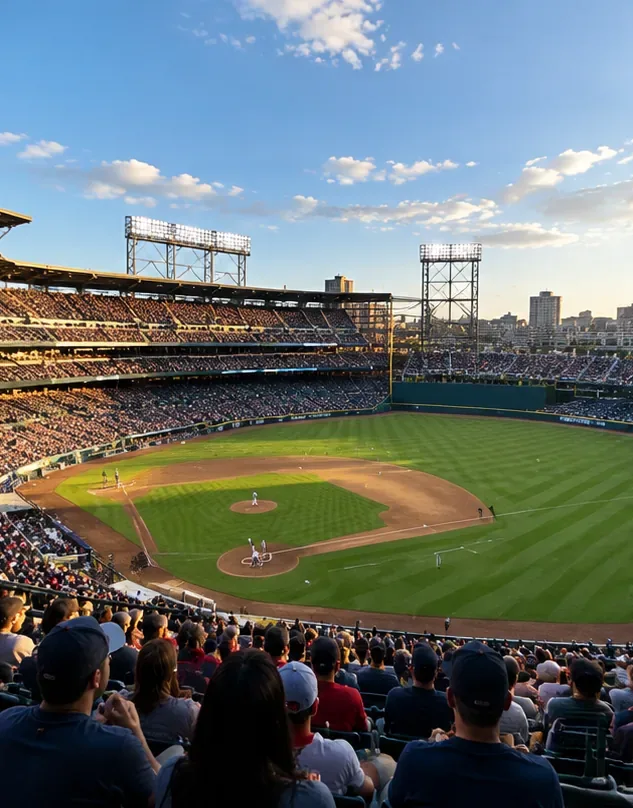
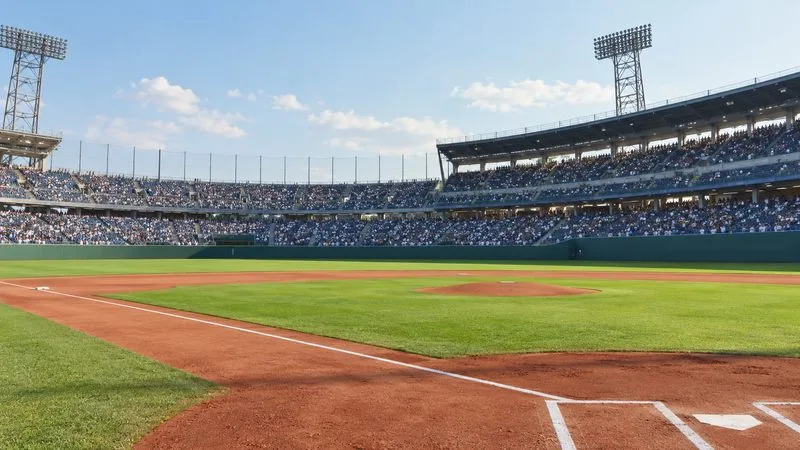
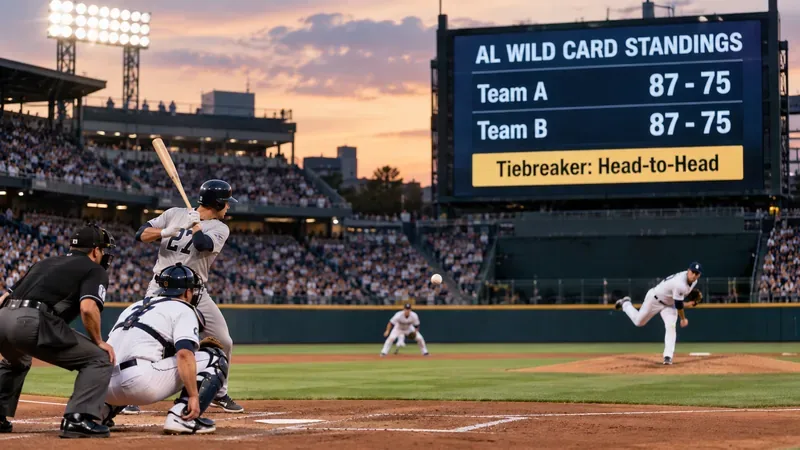
A daytime ballpark view. In the initial four-game schedule, Phillies–Braves occupied the early national broadcast window before the matchup moved to primetime.
How the Game 3 time changed after Wednesday's results
MLB's original 2026 Wild Card Series Game 3 schedule was conditional, not four guaranteed games. On September 27, MLB published different October 1 combinations for one, two, three or four deciding matchups. Every time in that bulletin used Eastern Time; on October 1, 2026, that meant EDT (UTC−04:00), because daylight saving time was in effect.
Atlanta's provisional slot in a four-game Thursday was 2:00 p.m. EDT (18:00 UTC October 1). Once the White Sox, Yankees and Padres completed sweeps and the Phillies–Braves matchup stood alone, MLB's one-game rule placed the broadcast at 8:00 p.m. EDT (00:00 UTC October 2) on NBC and Peacock. The six-hour shift illustrates why fans could know the venue long before knowing the final game time. The full original decision tree remains available in MLB’s September 27 conditional game-time schedule.
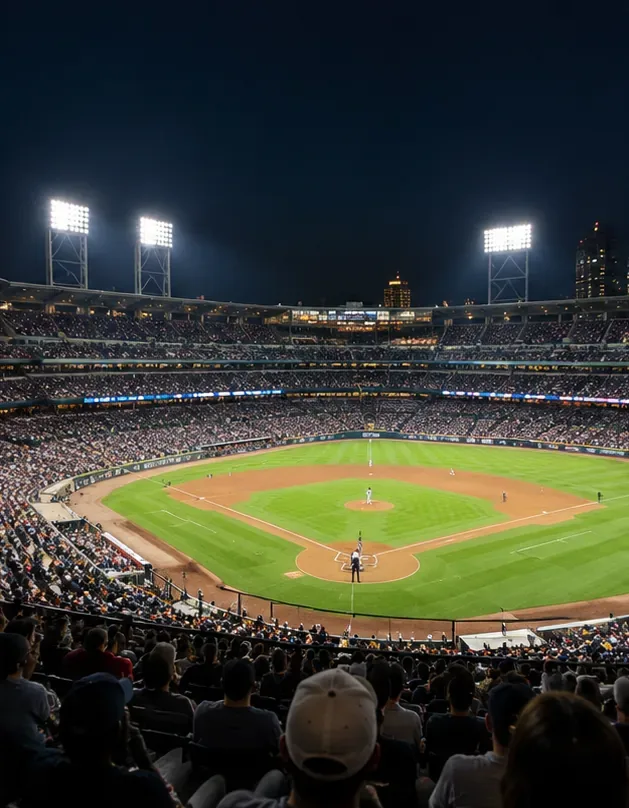
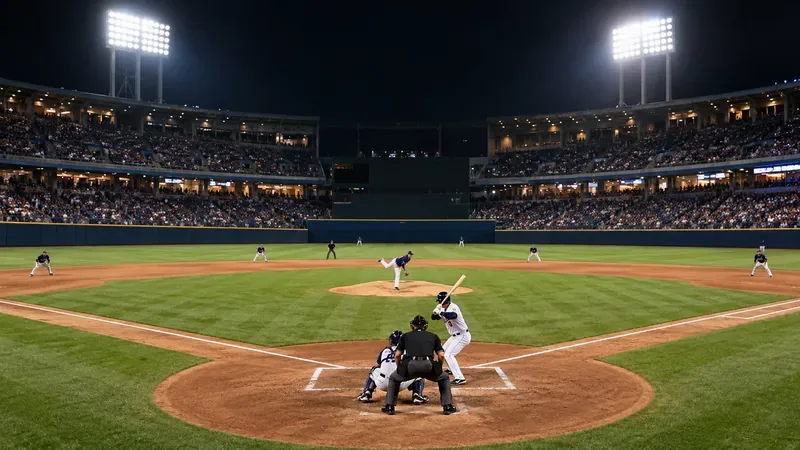
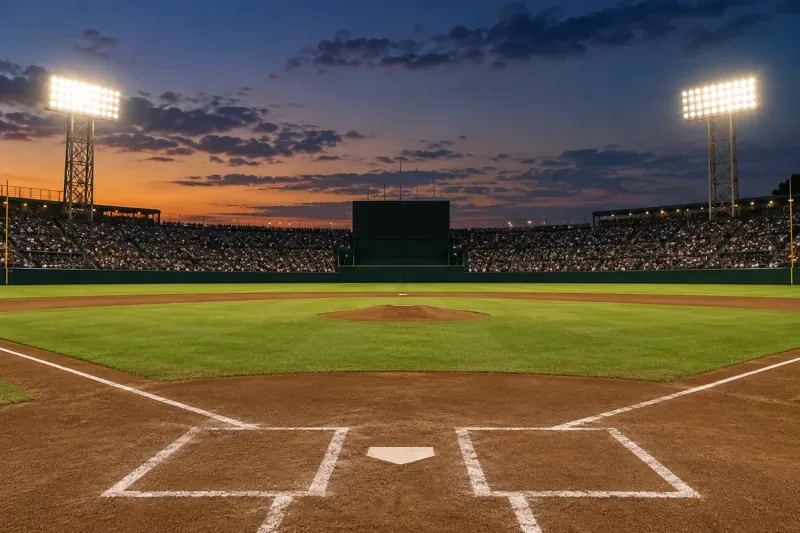
A night-game scene illustrates the prime-time window used when Phillies–Braves became the only remaining 2026 Wild Card decider.
What if all four Wild Card Series had reached Game 3?
In MLB's unused four-game scenario, every matchup retained its originally assigned Thursday window. Times below are Thursday, October 1, 2026, in EDT (UTC−04:00), with corresponding UTC dates.
Potential Game 3
Original EDT window
UTC equivalent
Original U.S. platforms
Phillies at Braves
2:00 p.m.
18:00, Oct. 1
NBC / Peacock
White Sox at Astros
5:00 p.m.
21:00, Oct. 1
Peacock / NBC Sports Network
Red Sox at Yankees
8:00 p.m.
00:00, Oct. 2
NBC / Peacock
Cubs at Padres
10:00 p.m.
02:00, Oct. 2
Peacock / NBC Sports Network
Those were national Eastern Time listings, not the same wall-clock hour in each host city. For example, the hypothetical Houston slot of 5:00 p.m. EDT would have been 4:00 p.m. Houston time, Central Daylight Time (CDT, UTC−05:00). The San Diego 10:00 p.m. EDT slot would have been 7:00 p.m. San Diego time, Pacific Daylight Time (PDT, UTC−07:00).
What were the three-game scenarios?
If one series had been swept while three reached 1–1, the finished matchup would have dropped from the Thursday slate. MLB's published possibilities were:
Series already finished
Three possible Thursday broadcasts (all Oct. 1 EDT)
Phillies–Braves
White Sox–Astros 2:00 p.m.; Red Sox–Yankees 8:00 p.m.; Cubs–Padres 10:00 p.m.
Cubs–Padres
Phillies–Braves 2:00 p.m.; White Sox–Astros 5:00 p.m.; Red Sox–Yankees 8:00 p.m.
Red Sox–Yankees
Phillies–Braves 2:00 p.m.; White Sox–Astros 5:00 p.m.; Cubs–Padres 8:00 p.m.
White Sox–Astros
Phillies–Braves 2:00 p.m.; Red Sox–Yankees 8:00 p.m.; Cubs–Padres 10:00 p.m.
Two shifts stand out: Chicago–Houston would have moved from 5:00 to 2:00 p.m. EDT if Philadelphia–Atlanta ended early; Chicago–San Diego would have moved from 10:00 to 8:00 p.m. EDT if Boston–New York ended early. The accompanying channel also depended on the precise combination, so the September 27 schedule—not a generic team page—was the proper reference for the conditional network allocation.
What if exactly two Game 3 matchups remained?
MLB laid out six two-game Game 3 scenarios. They differed according to which two series had already ended, not merely the number of games left. All times in this historical table refer to Thursday, October 1, 2026, EDT (UTC−04:00).
Series already decided after Game 2
Remaining Game 3 windows
Red Sox–Yankees and White Sox–Astros
Phillies–Braves 2:00 p.m.; Cubs–Padres 8:00 p.m.
Phillies–Braves and Cubs–Padres
White Sox–Astros 2:00 p.m.; Red Sox–Yankees 8:00 p.m.
Red Sox–Yankees and Phillies–Braves
White Sox–Astros 2:00 p.m.; Cubs–Padres 8:00 p.m.
Red Sox–Yankees and Cubs–Padres
White Sox–Astros 2:00 p.m.; Phillies–Braves 8:00 p.m.
White Sox–Astros and Phillies–Braves
Red Sox–Yankees 7:00 p.m.; Cubs–Padres 9:30 p.m.
White Sox–Astros and Cubs–Padres
Phillies–Braves 2:00 p.m.; Red Sox–Yankees 8:00 p.m.
That fifth combination was distinctive: the only schedule with 7:00 p.m. and 9:30 p.m. EDT slots. Translated to the host cities, it would have placed Boston–New York at 7:00 p.m. New York EDT and Chicago–San Diego at 6:30 p.m. San Diego PDT; in UTC, these would have been 23:00 October 1 and 01:30 October 2. Under MLB's announcement, both hypothetical games in this two-series setup would have aired on NBC and Peacock.
What actually happened under the single-game rule?
The one-game scenario was the one used in 2026. Atlanta beat Philadelphia 5–3 on September 29; the Phillies responded 4–3 in 10 innings on September 30, keeping the NL series alive. Meanwhile, Chicago's White Sox eliminated Houston, New York swept Boston and San Diego swept the Cubs. By the end of Wednesday's games, the only required Game 3 was at Truist Park.
The Braves then defeated the Phillies 6–2 on October 1. MLB's account credits a strong outing by Atlanta's pitching staff and home runs from Michael Harris II, Ozzie Albies and Matt Olson. That result sent Atlanta onward and closed the only winner-take-all contest of the 2026 Wild Card round. For the result and game narrative, consult MLB’s Game 3 recap.
How did TV coverage and local time work?
The one-game listing was NBC and Peacock, rather than the original mixture of NBC, Peacock and NBC Sports Network windows available if several games survived. MLB's MLB’s 2026 viewing guide confirms that Thursday became a single-game broadcast. Spanish-language viewing and national radio arrangements for the Wild Card round were announced separately in MLB's September 27 bulletin; viewers should distinguish those services from the network that carried the specific Game 3.
For readers checking an archived listing, use this conversion for the actual Atlanta broadcast: October 1, 8:00 p.m. EDT (Atlanta and New York, UTC−04:00) equals 7:00 p.m. CDT (Houston and Chicago, UTC−05:00), 5:00 p.m. PDT (San Diego, UTC−07:00) and October 2, 00:00 UTC. NBC's scheduled 8:15 p.m. EDT first pitch corresponds to 7:15 p.m. CDT, 5:15 p.m. PDT and 00:15 UTC on October 2. These offsets are specific to October 1, while U.S. daylight saving time was active.
A home viewer watches baseball on television. The lone October 1 deciding game was assigned to NBC and Peacock, but the broadcast window and scheduled first pitch were distinct times.
What should fans take from the 2026 scheduling scenarios?
Three separate questions produced three different levels of certainty during the 2026 Wild Card round. Who would play? Only series tied 1–1 after Wednesday. Who would host? The higher seed throughout—Atlanta, Houston, New York or San Diego. When would Game 3 start? That depended on all four Wednesday outcomes and could change from the first provisional listing.
The actual answer is no longer conditional: Phillies at Braves was the only October 1 Game 3; Atlanta hosted and won 6–2. The unused three- and two-game possibilities remain useful for understanding why MLB published multiple Thursday start times instead of one fixed start per team. When reading postseason schedules in any season, check the round's official conditional announcement, the completed Game 2 scores and the rights holder's first-pitch listing before treating a TV window as a precise first-pitch time.