Home
» ⚽ Football
»
Why a Football Kickoff Time Can Change After Tickets Go on Sale — and Where Fans Should Recheck It
Why a Football Kickoff Time Can Change After Tickets Go on Sale — and Where Fans Should Recheck It
A ticket can be genuine, the seat can be confirmed, and the kickoff time printed in the original confirmation can still change. That is not a contradiction: football fixtures are often published before every scheduling dependency has been resolved.
A recent 2026 example shows how this happens. On September 10, Tottenham Hotspur announced that three Premier League fixtures over the festive period had new dates or kickoff times after the league's broadcast selection process was completed. Brighton at home moved to Tuesday, December 29 at 7:30 p.m. UK time; the away match at Manchester City was set for Sunday, January 3 at 4:30 p.m.; and the trip to Fulham received a 7:30 p.m. kickoff. The club's notice is available on its official website.
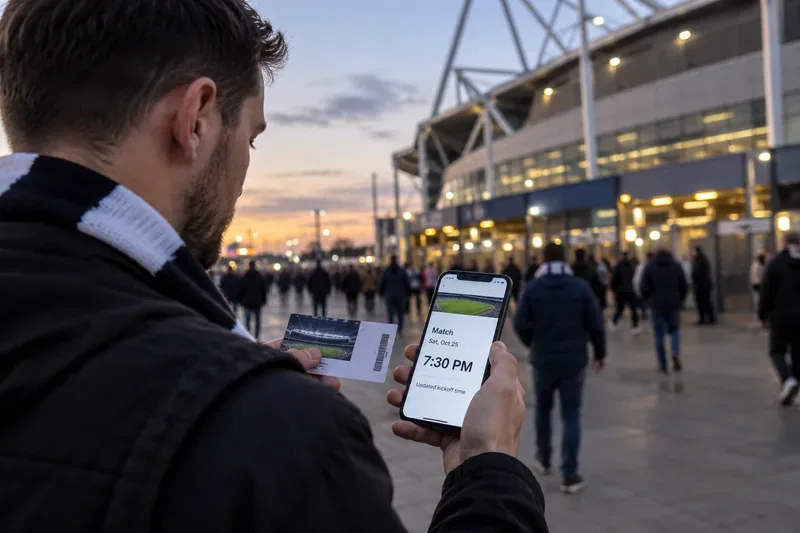
A fan checks an updated kickoff time outside a stadium before entering. The safest habit is to recheck the league and club's official fixture information before making the trip.
Why does a kickoff time change after tickets have already been sold?
The key distinction is between a fixture being listed and every detail of that fixture being final. In major competitions, clubs may begin selling tickets while the match is still subject to television selection, cup progression, or other scheduling adjustments.
The Premier League states that fixtures can be moved for live television, domestic cup clashes, and European competition commitments. Its general fixture guidance also warns supporters to check official club information before making transport or accommodation arrangements, especially for longer journeys. Fans can review that guidance on the Premier League's official fixture information page.
1. Television selections can move the day, the time, or both
Broadcasters do not necessarily choose every televised match at the same moment the season's full fixture list is released. Once a game is selected for live coverage, a Saturday afternoon fixture may move to a Friday evening, Saturday lunchtime or evening, Sunday, or Monday slot.
That is why the fixture shown when tickets first go on sale may be better treated as the current schedule rather than an immutable appointment. For the 2026/27 season, the Premier League published target windows for later broadcast announcements and said it aimed to give supporters at least six weeks' notice up to the end of the calendar year and five weeks from January onward. The same announcement also warned that European progress could force shorter-notice changes. See the official 2026/27 fixture schedule release.
2. European competition can force another adjustment
A club playing in the UEFA Champions League, Europa League, or Conference League may need extra recovery time or may have a European tie on a date that affects its domestic fixture. The Premier League explicitly identifies UEFA participation as a reason matches can move and maintains a page listing fixtures that may still be amended because of European or domestic cup commitments.
FA Cup and EFL Cup progress is another moving part. A league match may sit on a weekend that later becomes occupied by a cup tie, semifinal, or final. Because nobody knows in August which clubs will still be in every cup months later, some calendar risk cannot be removed when league tickets first go on sale.
This is especially important late in the season. A fixture can look stable for weeks and then become conditional on whether one of the clubs advances in another competition.
4. Postponements and operational decisions are a separate category
Not every change is part of the planned broadcast-and-cup scheduling process. Weather, stadium issues, safety concerns, transport disruption, or other operational circumstances can lead to postponement or rescheduling. The exact decision-making process depends on the competition and local authorities, so fans should avoid assuming that a previously confirmed time is immune from late change.
When a match is postponed, the ticket itself often remains associated with the same fixture, but refund, exchange, or validity rules are set by the club or ticket seller. Do not assume the policy is identical across clubs.
Where should fans recheck the kickoff time?
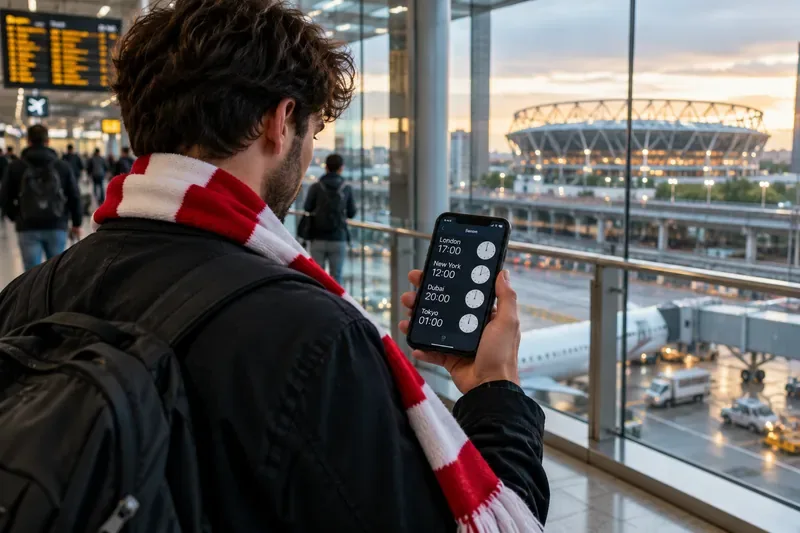
For a match that matters enough to book trains, flights, hotels, or time off work, use more than one official source. The following order is practical because each source answers a slightly different question.
What to check
Best official source
Why it matters
Current date and kickoff time
Competition fixture page
The league or tournament publishes the official competition schedule and later amendments.
Club-specific confirmation
Home and away club websites, apps, emails, or verified official social channels
Clubs usually communicate broadcast changes, ticketing instructions, entry times, and supporter logistics.
Whether your ticket is still valid
The club or authorized ticket seller that issued it
Ticket validity, exchange, and refund terms are seller-specific.
Travel consequences
Rail, airline, bus, hotel, or travel provider
A fixture move does not automatically change or refund separate travel bookings.
What should you trust if different pages show different times?
If an old email, saved PDF ticket, calendar screenshot, or travel itinerary disagrees with the current competition and club pages, treat the older copy as historical information. Check the timestamp or publication date on the newer official announcement.
A useful hierarchy is: current competition schedule first, current club fixture announcement second, then the ticketing account or ticket office for ticket-specific questions. If those official sources still conflict, contact the club before traveling rather than relying on a search result snippet or an old confirmation email.
How often should you recheck?
You do not need to refresh the fixture page every day. A few well-timed checks usually cover the biggest risks:
Check again before booking nonrefundable transport or accommodation.
Check when the competition's next broadcast selection window is due.
Check after either club advances in a domestic or European cup.
Check again 24 to 48 hours before departure.
Check on matchday if weather, transport, or safety conditions are causing disruption.
For Premier League matches specifically, the league also offers a digital calendar that updates when fixtures are rescheduled. That can reduce the chance of overlooking a routine change, but it should not replace a final manual check before a long or expensive trip.
Why the original ticket time is not always the final word
Fans understandably read a ticket confirmation as a promise about when the event begins. In practice, the ticket primarily confirms the right to attend a particular fixture under the seller's terms; the surrounding schedule can remain conditional.
The 2026/27 Premier League schedule is a useful illustration. The league warned at the start of the season that nine clubs would be involved in UEFA competitions and that progress into later rounds could produce shorter-notice fixture changes. That warning matters because a match can already be on sale before the eventual European path is known.
The sensible response is not to distrust ticket sales. It is to separate two questions: “Do I have a valid ticket for this match?” and “What is the latest official date and kickoff time?” They are related, but they are not the same question.
A simple rule before you travel
When the cost of being wrong is high, do one final cross-check. Open the competition's official fixture page, then the club's official match or ticket page. Confirm the date, local kickoff time, venue, and any supporter notices. If the match has been moved, read the ticketing instructions before changing your travel plans.
Football scheduling will always have some uncertainty because television choices and knockout competitions develop during the season. What fans can control is the verification step. The most reliable kickoff time is the latest one published by the competition and confirmed by the clubs—not necessarily the one that appeared when tickets first went on sale.