Home
» ⚽ Football
»
UEFA Nations League Squad Replacement Rules: Late Injuries and Goalkeeper Exceptions Explained
UEFA Nations League Squad Replacement Rules: Late Injuries and Goalkeeper Exceptions Explained
Start with the competition phase
A late injury does not always require the same kind of “replacement.” In the UEFA Nations League, the answer depends on whether the team is preparing a league-phase match, contesting the finals, or has already exchanged its match sheet at the stadium. Goalkeepers also have a specific exception that does not apply to outfield players.
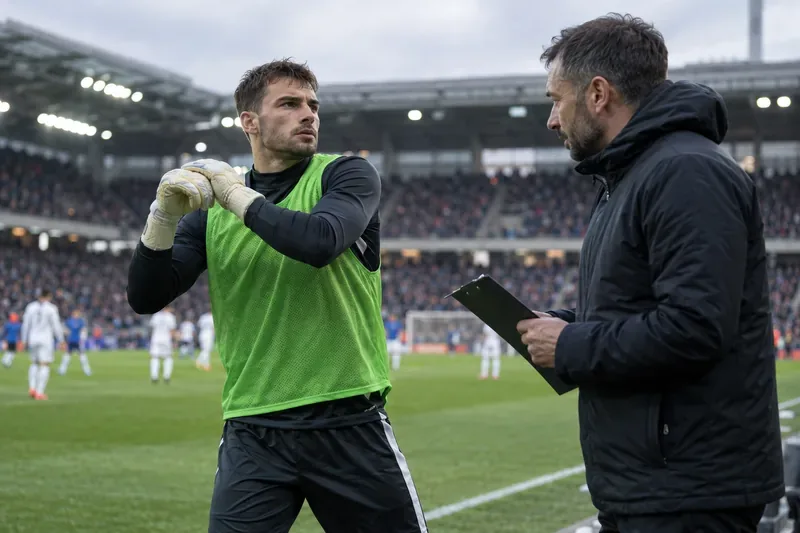
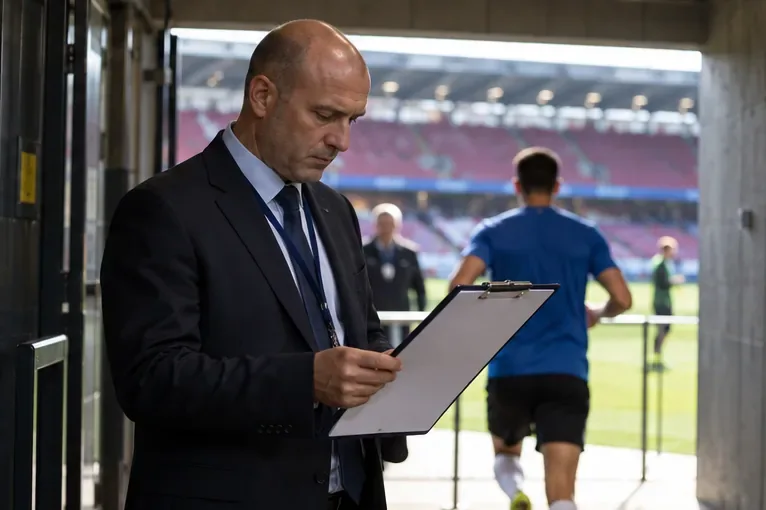
A goalkeeper warms up as a team official checks matchday paperwork near the touchline.
The 2026/27 regulations took effect on September 15, 2026. The useful result is a simple classification: before the list deadline, select the players for that match; during the finals, a serious injury or illness can justify a limited roster replacement; after match sheets are exchanged, only the narrow pre-kickoff exceptions in the rules apply. UEFA must approve finals-list injury replacements, and matchday exceptions require the association to submit medical documentation.
Three different documents, three different deadlines
It helps to separate the team’s nominated list from the match sheet. A “player list” is the association’s official list for the match or, in the finals, the tournament roster. A “match sheet” is the final 23-player document exchanged before kickoff, identifying the starters and substitutes.
Situation
Roster rule
Deadline or limit
League phase, quarter-finals or promotion/relegation play-offs
A new list of 23 players for each match, including three goalkeepers
Complete online by 23:59 CET the day before the match
Nations League finals
A 26-player list, including three goalkeepers
Complete online seven days before the first semi-final
Matchday sheet
23 players are confirmed for that match
Submitted at least 75 minutes before kickoff; exchanged no earlier than that point
For each league-phase game, the association submits a 23-player list by the stated deadline. The rules do not describe a separate long-term injury-replacement window for this phase. Instead, the list is match-specific. If a player is injured before the next match’s list is due, the association can select another otherwise eligible player for that match’s 23, while observing the three-goalkeeper requirement and the competition’s player-eligibility rules.
This gives teams a practical way to respond to injuries between fixtures without treating every call-up change as a tournament-roster amendment. It does not mean a coach can add anyone at any time. The association still has to submit the required list on time, and UEFA eligibility requirements continue to apply. An initial press-release squad is not the operative list for every later match.
For a league-phase injury after the list deadline, do not assume the roster can be rewritten freely. The next question is whether the player is already on the match sheet and whether the narrow physical-incapacity procedure applies. If the case falls outside that procedure, the association should check with UEFA match operations rather than rely on a club-squad rule or an informal announcement.
Finals: injury replacements are limited and need approval
The Nations League finals use a 26-player list. If a listed player becomes seriously injured or ill and cannot take part in a match, Article 28.04 allows a replacement only subject to UEFA approval.
Goalkeeper: may be replaced before any match in the finals.
Outfield player: may be replaced only before the team’s first match in the finals. Once replaced, that player cannot take any further part in the finals.
The association must send UEFA a medical replacement form and any necessary medical evidence by 23:59 CET the day before the match. If the injury or illness begins on matchday, the deadline is three hours before kickoff. That is a submission deadline, not a guarantee of approval. The injury or illness must be serious enough that the player cannot take part, and UEFA retains the approval decision.
The outfield rule is deliberately tighter: it is not a rolling right to replace an unavailable field player after every match. If an outfield player becomes unavailable after the team has started the finals, the association should plan from the existing list and consult UEFA for any exceptional issue. Do not infer the goalkeeper’s more flexible timing applies to every position.
After match sheets are exchanged: what can still change?
Article 53 starts from a firm rule: once the match sheets have been exchanged, no changes are allowed. Before kickoff, it then sets out three limited exceptions for physical incapacity:
If a named starter cannot start, the team may replace that starter with a substitute already listed on the match sheet. The injured starter is removed from the sheet and the number of substitutes available for that match is reduced by one.
If a listed substitute cannot be fielded, that substitute cannot be replaced. The team simply has one fewer available substitute.
If a goalkeeper selected on the match sheet cannot be fielded, the team may replace that goalkeeper with a goalkeeper not previously selected on the match sheet and not registered on the Article 28 player list. The player list is automatically amended.
The third provision is the goalkeeper exception most likely to be misunderstood. It allows a goalkeeper to be added at this late matchday stage when a goalkeeper already selected for that match becomes physically unable to play. It is not a general permission to add a late outfield replacement, to make a tactical change, or to bypass the 23-player limit whenever a team has an injury.
For these matchday changes, the association must give the UEFA match delegate a printed copy of the changed match sheet signed by the team doctor. It must also submit the medical replacement form and supporting evidence to UEFA within 48 hours after the match ends. Failure to provide the form, or inaccurate information, may be referred to the UEFA disciplinary bodies. A player removed from the match sheet cannot play or sit on the team bench or other team-official seating for that match. See the detailed Article 53 replacement procedure.
How to judge whether the replacement worked
A replacement process is on track when the decision matches the stage, the named replacement satisfies eligibility requirements, and the association meets the deadline with the required paperwork. For a finals injury replacement, look for UEFA approval and a published official player list. For a matchday change after sheets have been exchanged, check that the player’s reason is physical incapacity, the exception fits the player’s role, the doctor signed the updated sheet, and the medical form is filed within 48 hours.
If an outfield starter is injured after sheets are exchanged, the listed-substitute route may preserve the starting lineup, but it reduces the team’s available substitutes. If a listed substitute is injured, there is no replacement slot under this exception. If the injured player is a goalkeeper named on the match sheet, the special goalkeeper route can add another goalkeeper, even if that goalkeeper was not on the prior match sheet or player list.
When to change the plan
Use the list deadline when the injury is known early enough. Use the finals medical-replacement process only for a serious injury or illness that prevents participation, and allow time for UEFA approval. If the match sheet has already been exchanged, stop treating the case as a normal squad update and apply Article 53 narrowly. If the affected player is a goalkeeper, confirm that the precise goalkeeper exception is met rather than assuming any goalkeeper can be swapped.
For all routes, verify the current season’s regulations, the official list or amended sheet, the relevant deadline, and the medical evidence requirements. The rules describe the available procedure; they do not guarantee a specific approval or resolve questions about an individual player’s nationality eligibility. UEFA’s Article 27 assigns player-eligibility decisions to the UEFA administration. When a case is unusual or the public documents do not show the latest status, the association should obtain direct confirmation from UEFA.
Rules checked against the 2026/27 UEFA Nations League regulations, in force from September 15, 2026. Match-specific decisions and approvals can change the outcome, so confirm the latest official list and any UEFA correspondence for the fixture.