Home
» ⚽ Football
»
Shakhtar vs. AEK Athens: Champions League Kickoff, Team News, and Matchday Guide
Shakhtar vs. AEK Athens: Champions League Kickoff, Team News, and Matchday Guide
Shakhtar Donetsk face AEK Athens on Wednesday, October 14, 2026, in Matchday 2 of the UEFA Champions League league phase. UEFA’s schedule lists the kickoff at 19:00 UTC. That corresponds to 9:00 p.m. Central European Summer Time, 3:00 p.m. Eastern and noon Pacific in the United States. In Bangkok, the match begins at 2:00 a.m. Thursday, October 15. The official UEFA fixture list is the reference for the date and competition schedule; local broadcast coverage may begin earlier, so check your provider’s program time separately.
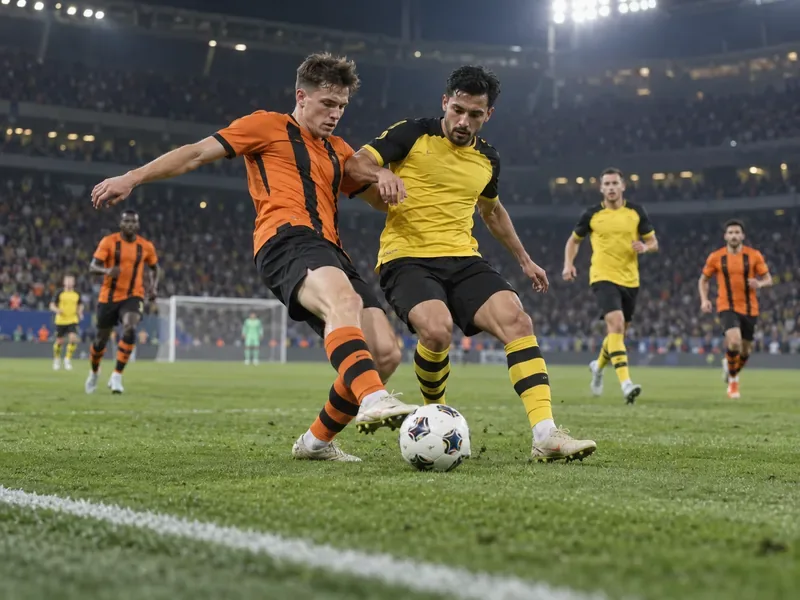
Players in orange-and-black and yellow-and-black kits battle for possession under stadium lights.
Quick reference: kickoff and team status
Item
Official pre-match listing
What to do
Fixture
Shakhtar Donetsk vs. AEK Athens, Matchday 2
Use UEFA’s fixture page for schedule changes.
Kickoff
19:00 UTC, October 14
Convert from UTC once and check the local calendar date.
Shakhtar availability
Eguinaldo and Azarov listed out; Marlon Santos doubtful
Recheck before locking in a fantasy selection.
AEK availability
Strakosha listed out; Varga doubtful
Wait for the official starting XI if a specific player matters.
The availability entries come from UEFA’s Matchday 2 team-news preview, last updated October 12. They are a dated snapshot, not a promise that no late change will occur. UEFA also publishes a possible lineup for each side, but a predicted XI is not the confirmed team sheet. If you are choosing fantasy players or want to know who will start, the confirmed lineup shortly before kickoff is more useful than an earlier projection. If you just want to follow the match, the out and doubtful lists give a practical first pass; verify later updates through UEFA’s team-news page and the clubs’ official channels.
How does the first matchday affect this game?
Both teams earned a point in their league-phase opener. UEFA’s results page records Shakhtar’s 1–1 draw with PSV Eindhoven and AEK’s 1–0 win over LASK. So AEK arrive with three points and Shakhtar with one. A Shakhtar win would move the Ukrainian side to four; an AEK win would give the Greek club six after two rounds. A draw would preserve AEK’s early lead over Shakhtar in the table, although many clubs will still have six matches remaining.
That makes the game relevant without making it an elimination match. In the 36-team league phase, each club plays eight opponents. The top eight qualify directly for the round of 16, while teams ranked ninth through 24th enter a two-legged play-off; the rest are eliminated. These progression rules are in Article 17 of the 2026/27 UEFA Champions League regulations. A useful viewing choice is to track the live table if you care about qualification, but avoid reading too much into a single result this early. Goal difference and later fixtures can also shape a team’s final position.
Which team-news detail matters most?
For Shakhtar, UEFA lists forward Eguinaldo as out with a shoulder issue and defender Azarov as out with an unspecified issue. Marlon Santos is listed as doubtful with a muscular problem. For AEK, goalkeeper Thomas Strakosha is out with a hand injury, while Varga is doubtful with a muscular issue. These statuses can affect how coaches select their teams, but a pre-match injury note does not tell you the replacement, formation or tactical adjustment. Check the official XI before concluding that one absence creates a decisive advantage.
There is also a player connection in the fixture: UEFA notes that AEK midfielder Oleksandr Zubkov previously played for Shakhtar, scoring 20 goals in 107 matches across two spells. That is useful background for viewers, but it does not guarantee he will start or determine the result. If you are interested in that storyline, first confirm his selection, then watch whether he is involved in AEK’s attempts to progress the ball. The official lineup tells you participation; the match itself shows the role.
What do the historical records suggest?
UEFA’s match preview says Shakhtar are unbeaten in five meetings with Greek opposition, with one win and four draws. It also notes that AEK have lost only three of their last 20 UEFA competition matches, winning 12 and drawing five. Those are useful but different measures: Shakhtar’s figure covers opponents from Greece, while AEK’s covers all UEFA competition opponents. They cannot be compared as if they were a direct head-to-head record.
The practical trade-off is between using recent form for context and treating it as a prediction. Historical records can help explain why a matchup is interesting, but they do not account for the current squads, injuries, venue, or a goal scored early in the match. If you want a concise statistical overview, consult UEFA’s Matchday 2 key facts. For a stronger read once play starts, compare the first-half chance creation and shots on target rather than relying on an old unbeaten run.
Choose what to follow based on your needs
If you need the correct start time: Anchor your reminder to 19:00 UTC. For Bangkok, use October 15 at 2:00 a.m.; for U.S. viewers, use October 14 at 3:00 p.m. Eastern or noon Pacific.
If you are following a player: Treat the October 12 availability notes as provisional and check the official XI close to kickoff.
If you care about qualification: Follow the full league-phase standings after the round, not only this match’s result.
If you want tactical context: Use historical records as background, then watch how each side responds to pressure and transitions in this specific game.
For a quick pre-match routine, confirm the kickoff in your time zone, review UEFA’s latest player-status page, and wait for the official lineups if your decision depends on who starts. That combination is more reliable than choosing between a prediction and an injury list as if either were final. The venue is not named in the cited fixture listing, so check UEFA’s match center or club travel information if you need location-specific details.