Home
» 🎮 Esports
»
Dominate Late Game: How to Carry in League of Legends
Dominate Late Game: How to Carry in League of Legends
Dominate Late Game: How to Carry in League of Legends
To carry the late game in League of Legends, build a repeatable path to the enemy Nexus: keep collecting safe gold and experience, identify the next win condition, prepare waves and vision before an objective, then take fights from a position where you can keep dealing damage. A late-game carry does not have to win every duel or secure a highlight-reel pentakill. The player who avoids a needless death and turns one won fight into a turret, inhibitor, Baron, or Nexus often has the biggest impact.
Use this late-game carry guide for Summoner's Rift. The game state matters more than a fixed clock or build: check levels, items, open lanes, enemy respawn timers, and which champions can threaten you.
Find your win condition before looking for a fight
Before leaving base, ask what will actually let your team finish. An exposed inhibitor may be more valuable than chasing a low-health opponent. If your team has a strong front line and reliable engage, grouping may create the cleanest fight. If a side-lane champion can win a duel and the other four can stay safe, pressure on the opposite side can force the enemy to split. When behind, clearing a wave or defending a structure may be better than walking into a dark river to contest an objective on the enemy's terms.
Check the scoreboard and map for the details that change the call:
Which enemy can reach and burst your main damage dealer?
Which important enemy ability or summoner spell has already been used?
Can your team arrive together, or is someone too far away or too low to fight?
Is there a lane that needs to be pushed before the team moves?
Pick one immediate goal and signal it with a ping. Clear communication gives teammates a chance to move together instead of starting separate fights.
Keep your scaling without giving away a shutdown
Late-game macro starts with consistent income, not a magic CS number. There is no universal target such as 300 minions by 30 minutes that fits every role, champion, and match. Collect side-lane waves when the route is safe, then move toward your team before a major fight can start. Mid lane is often easier to defend because it is close to both sides of the map, while an unattended side wave can pull an opponent away from an objective.
Do not cross unwarded enemy territory alone just to reach one more wave. Late-game deaths cost time, map control, and the ability to contest an objective. If the wave is dangerous, leave it and regroup. Take jungle camps only when it is safe and does not deprive a teammate who needs the gold more. Scaling champions such as Kayle, Kassadin, Jinx, and Viktor are familiar examples, but their strength depends on the current patch, team composition, and whether they can reach a fight safely.
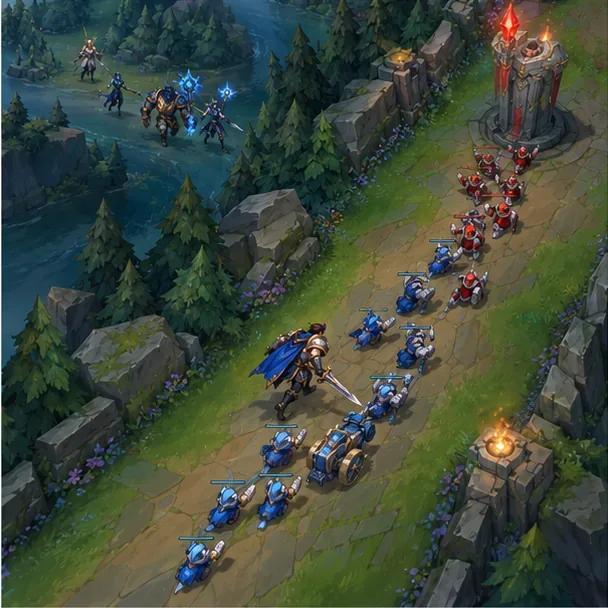
A pushed side wave can create pressure, but check where enemy champions are before stepping up to the turret.
Build for the threat that can stop you
A late-game build should answer the next fight, not copy a static item list. Before buying, identify what is preventing you from doing your job:
If a durable front line is blocking your damage, consider the appropriate penetration or anti-tank option for your champion.
If an assassin or diver kills you before you can contribute, a defensive stat or survival effect may be worth more than another damage item.
If healing is deciding repeated fights, consider healing reduction when it fits your champion and the enemy team.
If hard crowd control is the reason you cannot attack or cast, plan your positioning and defensive tools around that threat.
Keeping boots can be important for dodging skillshots, kiting, and reaching the fight on time; selling them for a sixth item is situational, not a default rule. Item names and balance change over time. Riot's Patch 26.20 notes, published October 6, 2026, include champion and item adjustments, so check the current patch and in-client shop before copying any build.
Prepare waves and vision before major objectives
Do not wait until a major objective is already under attack to decide where to go. Push the nearest safe lane, recall to spend gold if needed, and move with a teammate toward the part of the map your team can control. Use wards and vision-clearing tools together. A carry who walks alone into an unlit brush can give up the very objective the team was preparing to contest.
Baron is valuable because its buff strengthens the team and empowers nearby minions, which can help turn map control into turret pressure. That does not make every Baron call correct. Check your team's health, numbers, objective damage, and the enemy's ability to contest before committing. Riot's official How to Play guide explains how objectives, champion levels, gold, turrets, and inhibitors connect to the goal of destroying the Nexus.
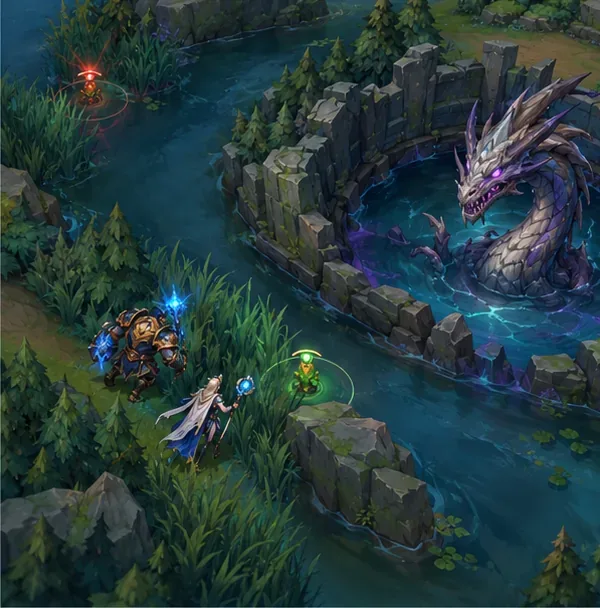
Clear and place vision with a teammate before committing to a major objective.
Position to survive the late-game teamfight
In late-game teamfights, staying alive long enough to deal damage is usually more useful than reaching the enemy carry at any cost. Marksmen should attack the closest safe target and keep space between themselves and threats that can dive them. Mages can hold an important control spell for an assassin or diver instead of spending every cooldown before the fight begins. A flanker should wait for a safe route and for key enemy defenses to be used. A tank or support should choose whether the team needs an engage or protection based on the allies who are actually present.
Look at enemy positions before using a dash, Flash, or other escape tool offensively. If the enemy back line is out of reach, hit the front line, kite backward, and let your team create another opening. Track the most dangerous crowd-control ability, stand where your allies can help, and leave yourself a route out. One patient rotation can keep you alive through several enemy cooldowns.
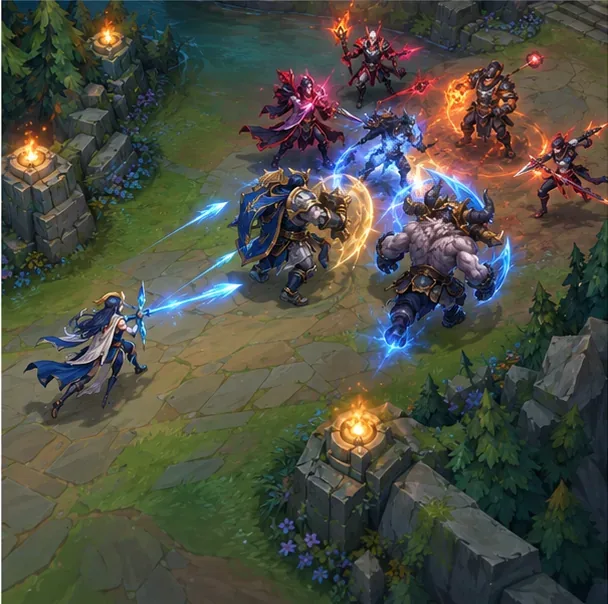
A carry can deal steady damage from behind the frontline without diving through the enemy team.
Choose between split-pushing, grouping, and defending
Map situation
Better default
Key condition
Your team has strong engage or needs to protect its main carry
Group near the next objective
Arrive together and establish vision before starting the fight.
Your side-lane champion can pressure or win a duel
Split-push while the team holds safely
The other four must avoid a fight until the split-pusher can draw a response or rejoin.
Your team is behind and the enemy controls the area
Defend, clear waves, and look for a safe trade
Do not face-check or force a 5v5 without a real advantage.
Split-pushing is not useful if your team starts a fight before the side-lane pressure matters. Grouping is not automatically correct if an opponent can take a structure uncontested. Recheck the minimap after every wave, kill, or recall and change the plan when enemy positions change.
Convert a won fight into a structure or the Nexus
After a pick or teamfight win, stop and count the players who can act. Check health, nearby minion waves, enemy respawn timers, and which route is open. Take the highest-value safe reward your team can reach: end the game if the Nexus is exposed, take an inhibitor or turret if the wave supports it, or secure an objective when the base cannot be reached in time. Avoid splitting a low-health team between distant targets while opponents are respawning.
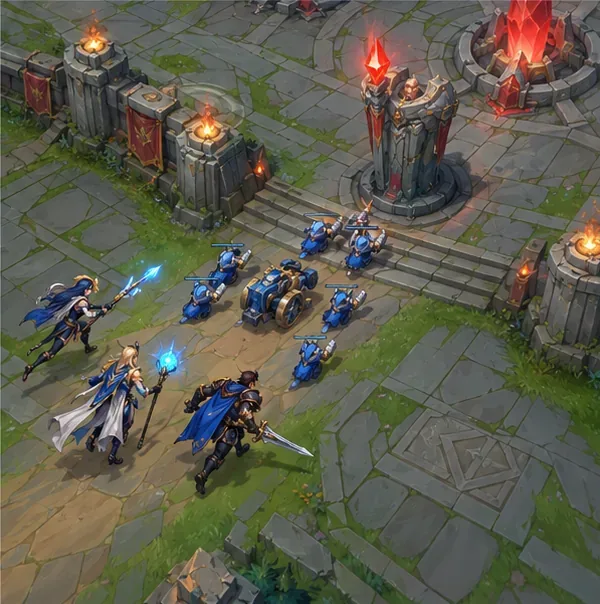
After winning a fight, move with the minion wave to a structure the team can safely take.
If there is no safe objective, reset together, spend your gold, and push the next waves before the enemy can take control again. The League of Legends late game rewards the team that repeatedly turns a small advantage into map pressure, not the team that chases the most kills.
Quick late-game carry checklist
What objective or structure can actually move us closer to the Nexus?
Which lane needs to be pushed before we group?
Who can kill me, and what cooldown do I need to respect?
Can we enter the area with vision and arrive together?
If we win the fight, what is the next safe conversion?
Answer those questions before each high-stakes move. That simple habit makes your late-game carry play more consistent, whatever champion or role you are using.